Hoardings make sense when a site is already drawing attention
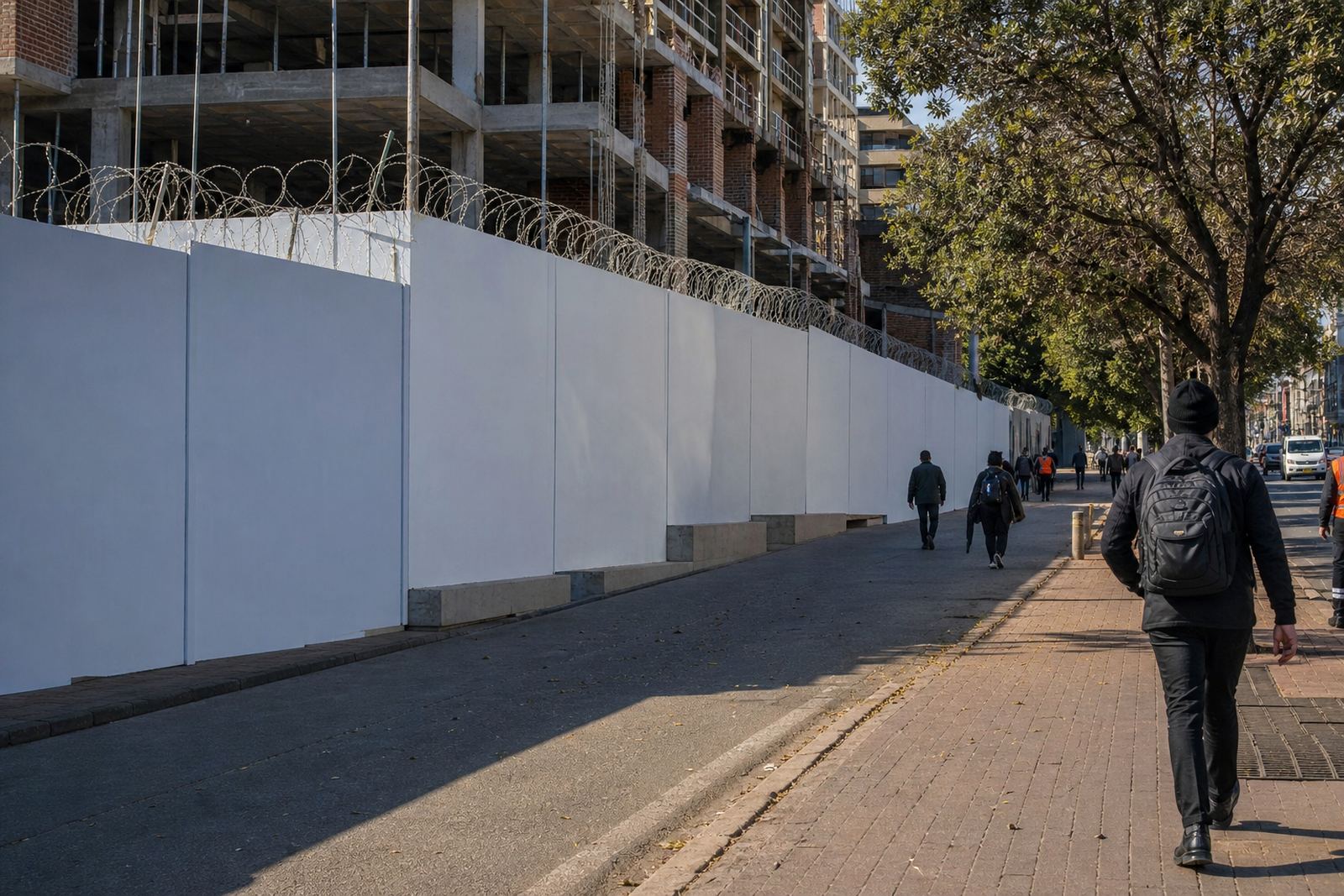
Construction hoardings are most useful where people are already slowing down, looking around or walking past a boundary that cannot be ignored. Think roadworks, new developments, building refurbishments, demolition sites, retail upgrades and public projects in progress. In those moments the hoarding is doing two jobs at once: it hides the works behind it and gives you a large flat surface for a message that can be read quickly.
That is why hoardings often suit temporary campaigns better than a fixed wall on an ordinary street. The setting itself creates interest. People notice the change in the area, and that makes the space worth using for a simple offer, launch notice, or brand message that does not need a long explanation.
Use them for short campaigns that need a strong presence
If you only need a placement for a few weeks or a couple of months, hoardings can be practical. They work well for openings, event periods, seasonal trading, relocation notices and property marketing. They are also useful when you want to cover a fence or site boundary while still making the frontage useful. In a city like Johannesburg, where streets change fast and building activity can shift from month to month, a hoarding gives you a visible surface without waiting for a permanent structure.
Hoardings are not always the right answer for every brief. If your message needs detailed reading or repeated exposure over a long period, a more permanent wall or billboard space may suit you better. But for a direct call to action, a simple image and a few words, hoardings can carry a campaign cleanly.
- Product launches that need quick awareness
- Store openings or re-openings
- Temporary route changes or site notices
- Property promotions while works are underway
- Event advertising near the venue or access roads
Good hoarding sites usually sit in changing urban areas
Not every blank panel is worth renting. The best hoarding sites are usually in areas where people move slowly enough to notice the artwork but steadily enough for repeated exposure. Busy inner city streets, redevelopment zones, transport corridors and mixed use precincts often offer the strongest fit. In Braamfontein for example, a building site near offices, student footfall and taxi movement can give a campaign a steady stream of passing glances through the day.
Local context matters too. In Durban, moisture and salt air can affect print and fixing methods, so the material choice needs to suit the coast. In Pretoria or Bloemfontein, strong sun can fade weak artwork quickly. A hoarding that holds up well in one place may need extra protection in another, and that is worth checking before you commit.
Before booking, check consent, bylaws and the installation plan
Hoardings are not just about finding an empty fence or a temporary wall. The property owner must consent to the use of the space, and the local municipal bylaw process must also be followed where required. That is especially important for anything visible from a public road or placed near an active construction site. If the paperwork is incomplete, the placement can be delayed or removed and that wastes time for everyone.
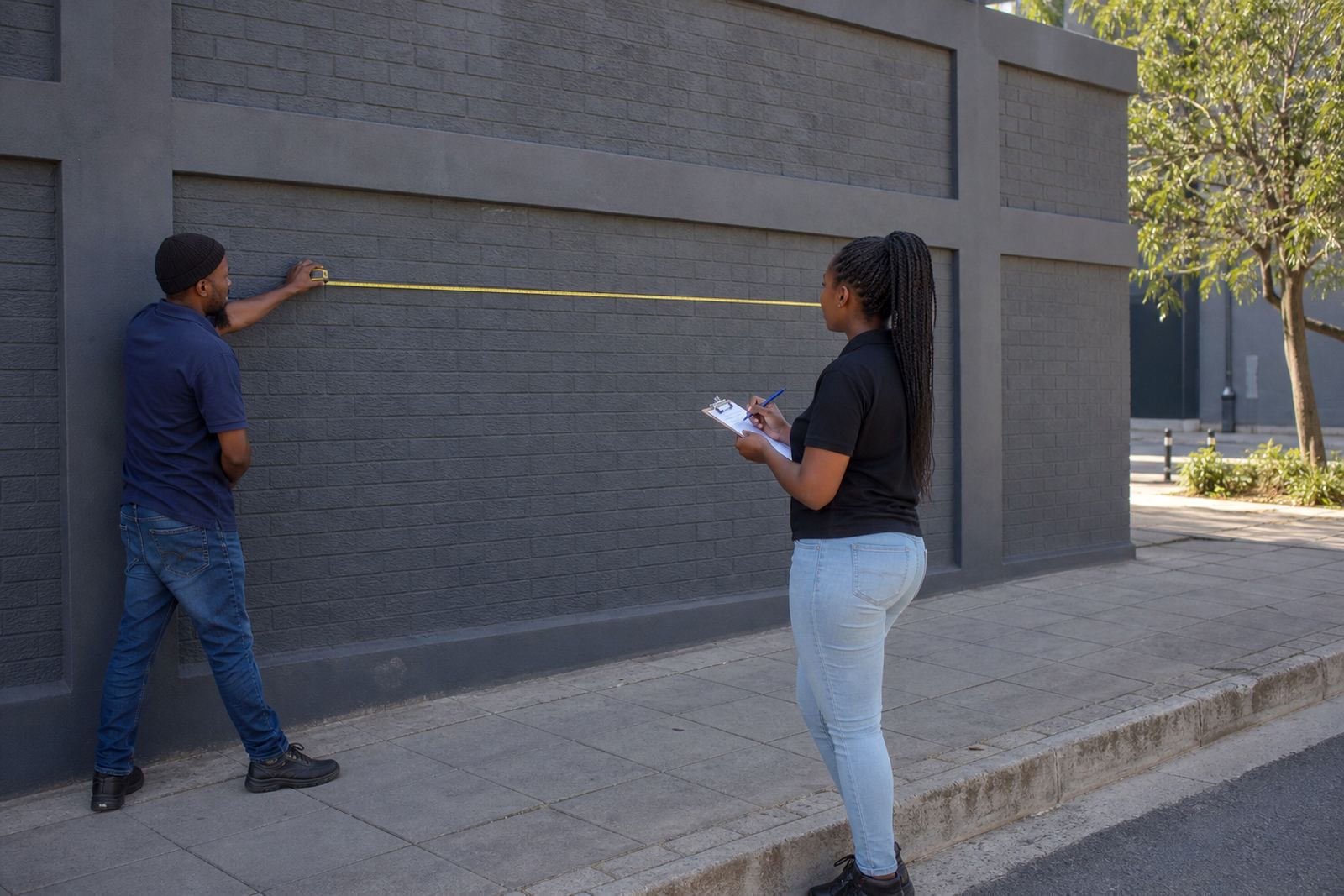
A sound booking starts with the basics. Confirm who controls the property, whether the site is suitable for advertising, what the municipality expects, and how the installation will be handled. It also helps to check artwork size, fixing points and visibility from the intended approach route. If the site has power cuts, night work limits or access restrictions, those need to be noted early on.
- Written consent from the property owner or authorised agent
- Municipal bylaw approval where needed
- Artwork that suits the exact panel size
- Clear installation dates and access arrangements
- Weather checks for exposed or coastal sites
Use simple artwork that works at street speed
Hoardings are seen quickly, so the message should be easy to take in at a glance. A clean image, a short line and strong contrast usually work better than a crowded layout. Drivers, pedestrians and commuters do not spend long studying the panel, and on some sites the view is partly blocked by traffic, trees or parked vehicles. Keep the idea direct and make the brand easy to recognise.
Artwork also needs to match the physical conditions of the site. On a windy corner, loose edges can become a problem. Near dusty roads or building activity, the print surface may need more regular cleaning. In areas affected by load-shedding, a campaign that relies on night viewing should be planned carefully, since reduced lighting can change how the image reads after dark.
When the hoarding is part of a longer programme, ask for a fresh check on the artwork before each new phase. Small changes in site access, nearby structures or nearby hoarding panels can alter the way the message reads from the road.
A practical Johannesburg example
Picture a redevelopment site in Braamfontein with a long boundary facing daily traffic and pedestrian movement. The project is already drawing attention, the frontage needs screening, and the owner wants the outside to do more than just look unfinished. A hoarding ad can turn that boundary into a straightforward campaign for a nearby restaurant, an office park, a student service or a property launch in the same area.
That works because the setting and the message support each other. The site is temporary, the audience is local and the space has a clear line of sight. If the artwork is set up properly, the hoarding can stay useful for the full duration of the works without constant changes. It is a good example of how outdoor advertising can follow the pace of a changing neighbourhood rather than fight against it.
When hoardings are not the best fit
Hoardings are useful, but they are not the answer every time. If the site is hidden from the street, if access is too limited for installation, or if the message needs a long uninterrupted viewing distance, another format may work better. The same applies where the owner cannot give consent or the municipality will not approve the proposed use. In those cases, it is better to hold back than push ahead with an unsuitable panel.
A good advertising decision is usually the one that matches the site, the timing and the legal requirements. If the plan is clear and the location is changing, a hoarding can be a practical way to make temporary space work hard without overcomplicating the campaign.