Start With the Space You Can Actually Use
When people speak about wall advertising, they often mean the full wall. In practice, the usable area is usually smaller. Pipes, windows, roller shutters, fire escapes, boundary lines, lights, air-conditioning units and surface damage can all reduce the space you can work with. The first job is to measure only the part of the wall that is open, visible and suitable for a sign or poster panel.
On a site visit, stand back and look at the wall from the normal viewing angle. If the location is in Braamfontein, for example, a wall that looks wide from across the road may narrow once you account for a gate, a column or a tenant entrance. Measure the full width and full height first, then subtract anything that blocks layout or installation. That gives you a true working area, not just a rough estimate.
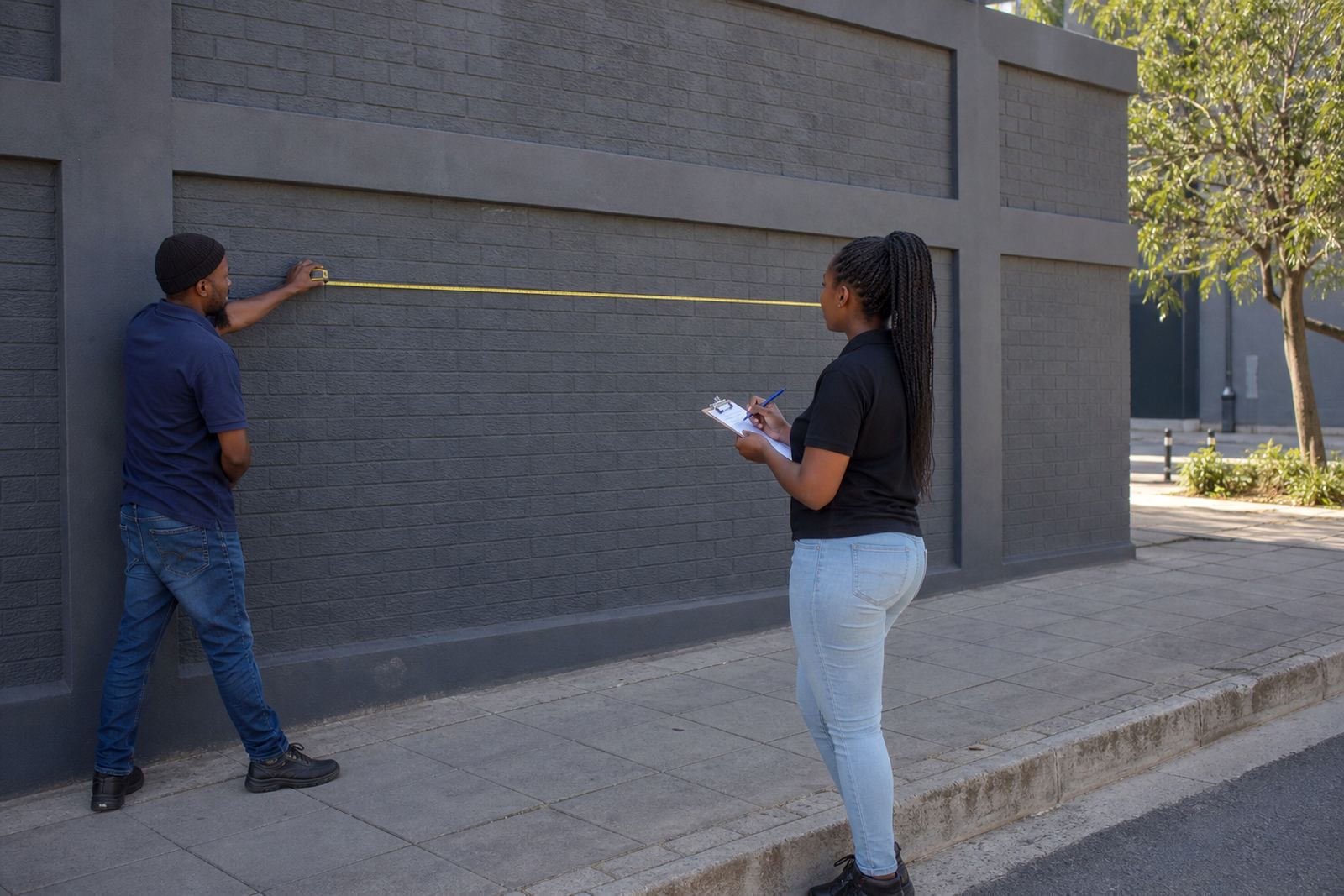
A tape measure is still the best starting point. If the wall is high or awkward to reach, use a laser measure or measure in sections from a safe point. Record everything in metres and centimetres so the information is easy to share with the installer, designer and property owner. A neat sketch with dimensions on it can save a lot of back and forth later.
Check Height, Width and Any Hidden Obstacles
For wall space, the main measurements are width and height, but the details matter just as much. Note where the usable area starts from ground level or from a fixed ledge, and check whether the top edge is straight or stepped. Older buildings often have uneven plaster, sloping parapets or sections that are not the same height across the full length of the wall.
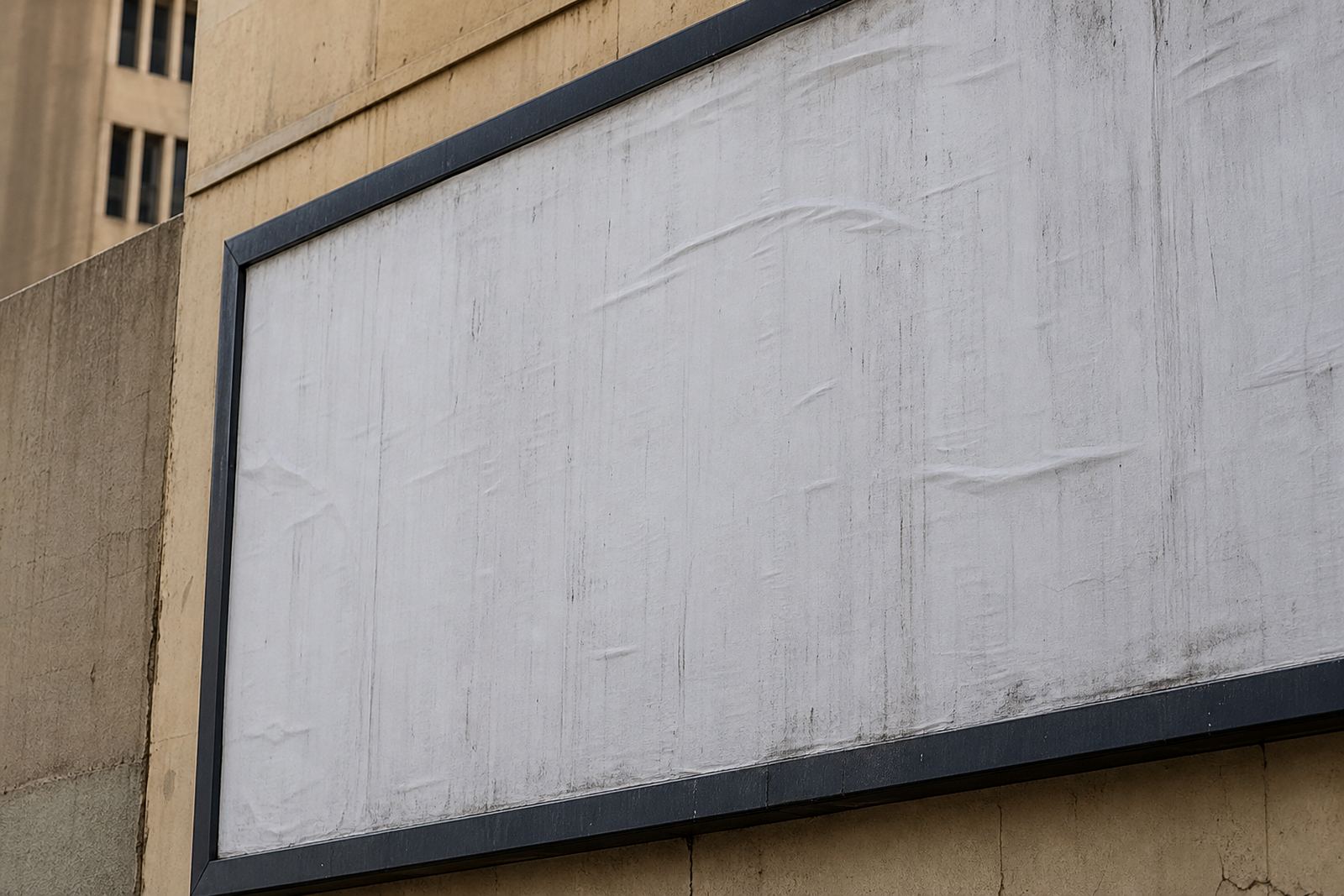
Look closely for anything that will affect installation. This includes electrical conduits, brackets, security wires, vents, cracks, damp patches and rough surfaces that might weaken adhesive or drilling points. In coastal areas such as Durban, salt and humidity can affect finishes, so the condition of the wall is part of the measurement too. A surface that looks fine from a distance may need extra preparation before any sign goes up.
It helps to measure the distance from the edge of the sign area to nearby features, especially if the wall sits near a corner or a vehicle entrance. That extra clearance matters for safety, visibility and compliance. If the wall has a return side or wraps around a corner, measure each face separately rather than assuming both sides are the same. They are often not.
Measure for the Artwork, Not Just the Wall
Once you have the wall size, think about the actual artwork size. A full wall may not be the final print size because installers often need margin for fixing, trimming or overlap. If the artwork is too tight, text can end up too close to the edge, or a logo may be cut off during fitting. Leave working allowance around the design area and confirm the exact finished size before production starts.
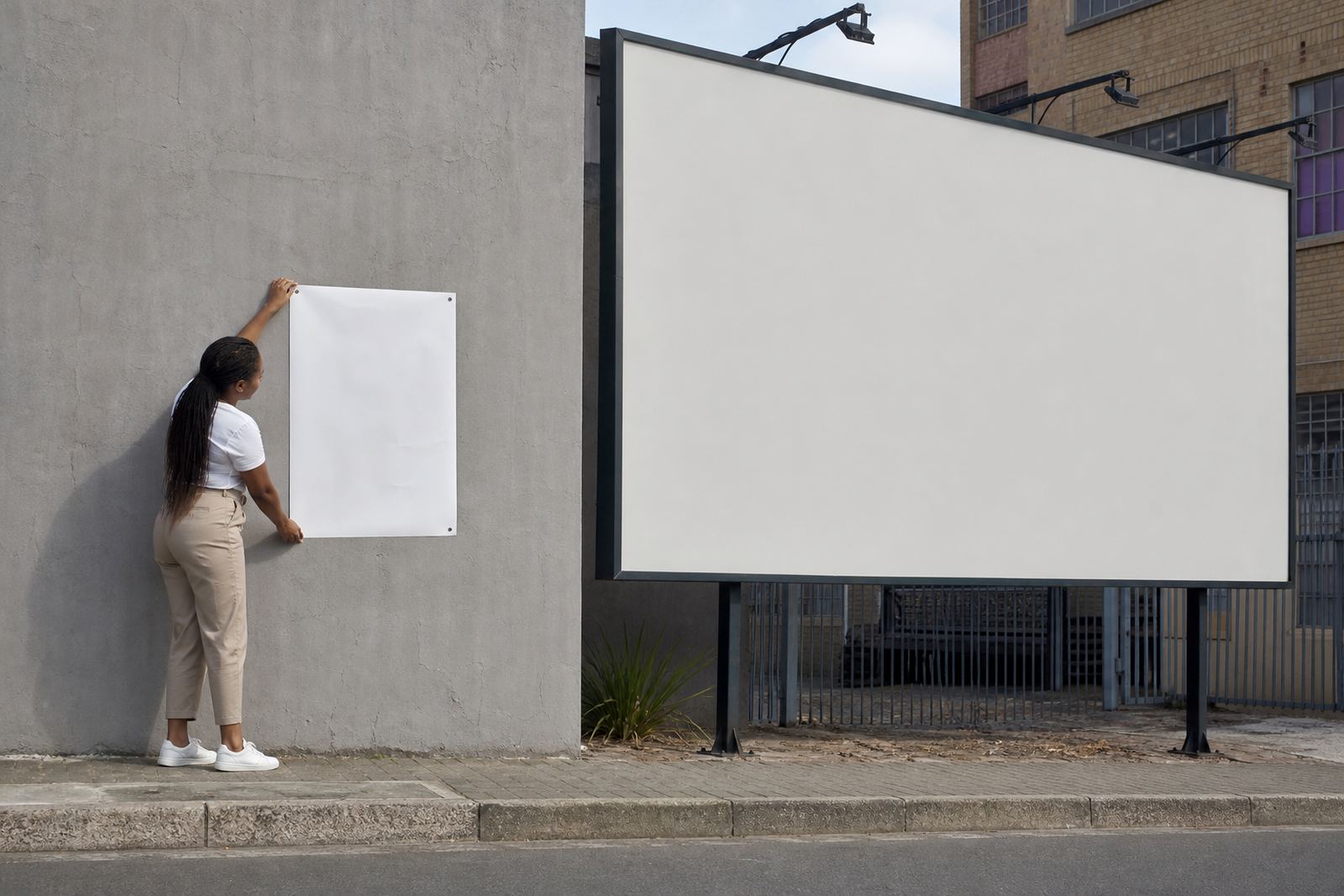
Keep the message simple and readable from the usual viewing point. A tall narrow wall and a wide low wall need different layouts, even when the square metre count is similar. A clean vertical poster on a mid-rise building in Sandton will not behave like a long horizontal panel beside a warehouse yard in Midrand. The wall shape should guide the design, not the other way round.
Also check the viewing angle. If the wall is seen from a moving road, a pedestrian route or a parking area, the most important detail is where the eye lands first. Measure the space, then think about how people will see it in motion. That helps with font size, image placement and the amount of empty space you leave in the layout.
Access, Fixings and Installation Conditions
A wall can only be used properly if the installer can reach it safely. Measure access routes from the ground, the loading point and any platform or ladder position that may be needed. If the wall is above a tenant shopfront, above a driveway or behind a fence, include those obstacles in your notes. Access affects the installation method, the time needed on site and sometimes even the kind of advertising that is suitable.
Also note the wall finish. Brick, painted plaster, concrete and cladding all behave differently. If the surface is loose or uneven, the installer may need a different fixing method. In Johannesburg, many commercial walls are shared with older services or patched repairs, so a proper check is worth the time. It is better to find a weak section before booking than after a crew arrives on site.
For sites that may need lighting or periodic maintenance, check where power is available and whether there is any safe route for servicing after hours. Load-shedding can affect illuminated signage, so if the advertising depends on lighting, the plan should account for backup options and safe access during dark periods.
Get Property Owner Consent and Municipal Approval in Order
No matter how good the wall is, signage needs the property owner’s consent and local municipal bylaw approval. That includes exterior walls, boundary walls and any structure visible from public space. The measurement process should support the approval process, not sit apart from it. Keep notes of the address, the wall dimensions, the location on the property and any restrictions the owner has given.
Municipal rules can vary by area, so the same wall size may still need different treatment in Pretoria, Cape Town or Bloemfontein. Some sites may need more detail on placement, while others may ask for supporting drawings or confirmation that the sign will not obstruct traffic sightlines or safety access. If the wall forms part of a heritage or mixed-use property, check those requirements early. It saves time and avoids unwanted changes later.
Property owners also want to know what the wall will look like once installed. Clear measurements help with that conversation. They show exactly where the sign sits, how much of the wall stays open, and whether the layout respects the building. Good records make the consent process far easier, and that matters for both one-off campaigns and long-term bookings.
A Simple Braamfontein Example
Say a property owner in Braamfontein has a side wall facing a busy pedestrian route near offices and student housing. From the street, the wall looks like one large rectangle, but a closer check shows a drainpipe on one side, a light fitting near the top and a rough patch in the centre. The full wall might measure more than the final usable panel, but only the clear section can be booked for advertising.
In that case, the site notes should record the total wall size, the working width after obstacles are allowed for, the height to the top edge, and any access restrictions along the pavement or driveway. If the wall is visible at angle from a passing taxi route, the layout should leave enough room for large text and a simple message. That is the sort of detail that makes the space easier to list, easier to match and easier to install.
When the measurements are right, the rest of the process moves faster. The advertiser gets a more accurate brief, the owner understands what is being used, and the installation team knows what they are working with. It avoids confusion, and a small mistake on the tape measure can cost a full day on site.
What to Record Before You Share the Listing
Before you send a wall space listing through, keep a clear record of the essentials. Write down the exact address, the measured width and height, the position on the property, the surface type, the access notes and any visible issues. Add photos from a few angles so the wall can be checked properly from a remote briefing. If the site changes often, note that too so availability can be managed correctly.
- Full wall dimensions and the usable layout size
- Obstacles, fixtures and surface condition
- Access points, working height and safety constraints
- Owner consent status and municipal approval notes
- Any lighting, power or maintenance considerations
That sort of record makes the site easier to compare with other options in Johannesburg, Pretoria, Cape Town, Durban or Bloemfontein. It also helps when a campaign needs renewal or a different format later on. Good measurements do not just help today, they keep the listing useful over time.