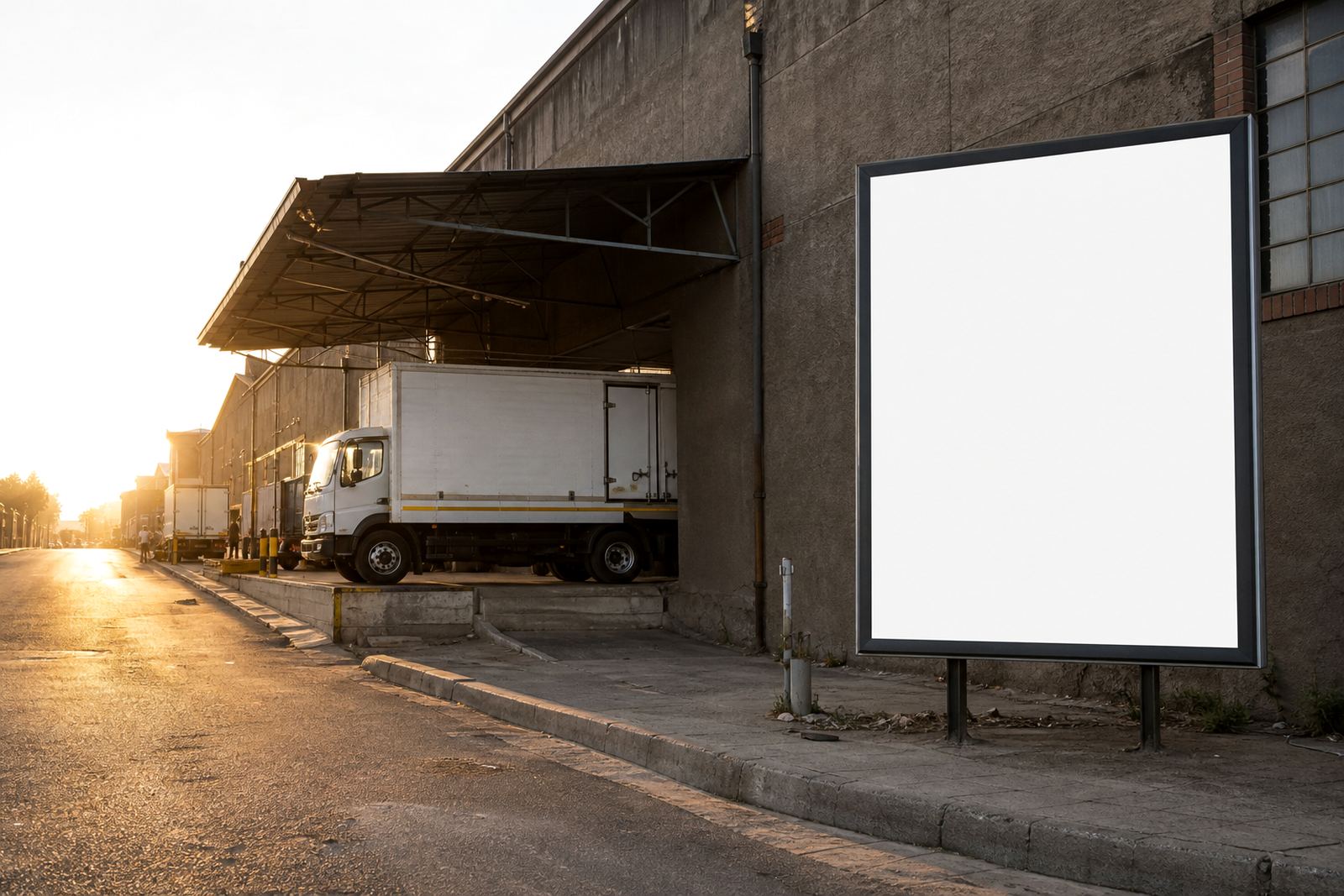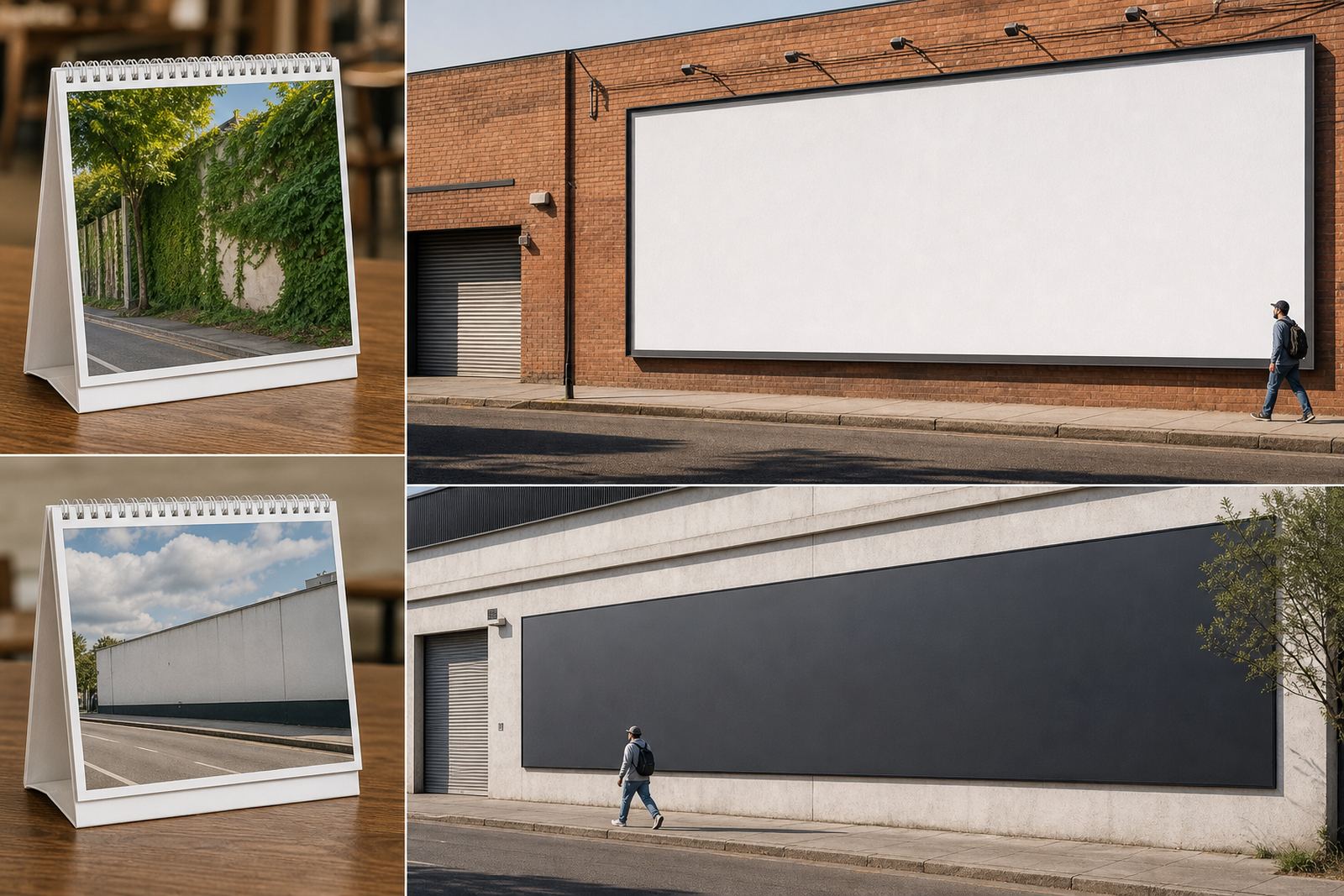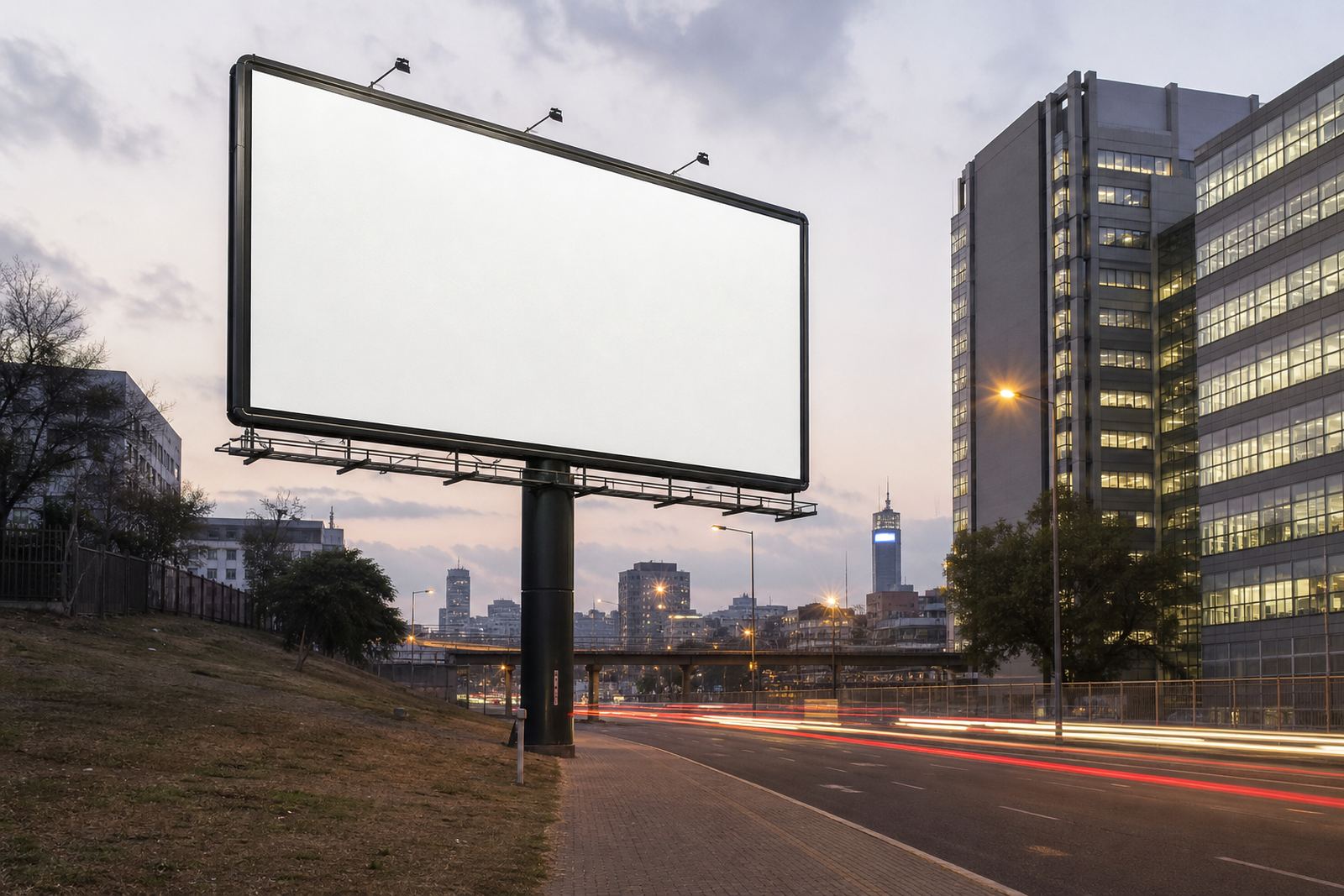
Why evening visibility should be planned before the artwork is signed off
Many advertisers only think about lighting once the artwork has been approved, but the light source can change how a sign reads from a distance and at an angle. In Johannesburg, where commuters move through Braamfontein, Sandton and Midrand at different times of day, a board that looks fine in daylight can become hard to read after sunset if the copy is too fine, the contrast is too weak or the surrounding area is poorly lit.
A basic visibility check should start with the viewing time. Ask when the site is most useful, whether that is early-morning traffic, evening peak or late night movement near fuel stations, taxi routes or mixed-use precincts. For wall-space advertising, nearby streetlights, building lights and any shadows from trees or other structures all affect how the message is seen. It is worth checking the site in low light before booking, not after the first installation crew has already arrived.
Lighting types that usually suit outdoor advertising
Outdoor signs do not all need the same lighting treatment. The right option depends on the property, the wall surface, the mounting method and the local power setup. In some areas a simple external light is enough, while in others the advert needs its own dedicated lighting so it can remain visible during load-shedding or at sites where ambient light drops off quickly.
Common approaches include front lighting, top lighting and back lighting where the structure allows it. Some wall installations use fixed fittings that throw even light across the face, while others rely on nearby building lights or existing street lighting. The main aim is to avoid harsh glare, dark patches and reflected shine on printed material or vinyl.
- Choose a lighting setup that matches the size of the panel and the distance from the viewer.
- Keep the illumination even across the full face so the corners do not disappear in shadow.
- Use fittings that can handle wind, dust and coastal humidity where relevant.
- Check that maintenance access is practical, especially on higher walls or tight urban sites.
What to check on site before you commit to a night-facing location
A site can look excellent in daylight and still underperform after dark. Before confirming a booking, look at the location at the time your campaign will actually be viewed. If the site is in Cape Town near a route with mixed traffic flow, for example, consider how mist, wind and changing winter light may affect visibility. In Durban, coastal moisture can reduce clarity if fittings are not suitable for the conditions. In Pretoria and Bloemfontein, early winter mornings can mean your sign is competing with low sun angle and patchy light.
These checks are simple, but they save problems later. A property owner may already have consent for the display area, yet the final use still needs to fit the wall, the frontage and the local rules. Our team also checks whether the listing details make sense for the space, whether the artwork dimensions are workable and whether the lighting approach suits the intended viewing window.
- Look for nearby streetlights, security lights and reflective building surfaces.
- Check for obstructions such as poles, branches, signs or parked vehicles.
- Confirm whether power is available for lighting or if another arrangement is needed.
- Ask how the site behaves in rain, mist or heavy evening traffic.
Consent, bylaws and the practical side of lit signage
Any outdoor sign that depends on lighting must be treated as both an advertising matter and a property matter. The property owner's consent is required, and local municipal bylaw approval may also be needed depending on the size, position, electrical setup and visibility of the sign. This is important whether the site is on a major road, on a commercial wall or in a mixed-use area with stricter controls.
For advertisers, the best approach is to confirm the consent and bylaw process before artwork production starts. That way there is no waste if dimensions need changing or if the lighting plan has to be adjusted. At RentThisWall, we guide clients through consent check guidance, bylaw process support and artwork spec checks so the campaign matches the site and the paperwork is in order.
Where a display is installed on a building edge or a wall close to foot traffic, the lighting should also be safe for people moving past the property. Cable routes, mounting points and access for maintenance all need to be planned carefully. A neat installation is easier to approve, easier to maintain and far less likely to cause problems later.
A simple Braamfontein example of a sign that stays visible after dark
Take a wall-space campaign in Braamfontein, Johannesburg, aimed at evening commuters and people moving between offices, student areas and transport links. In daylight the layout may look strong, but after sunset the same sign can lose impact if the lettering is too thin or the wall is partly shaded by adjacent buildings. If the route has uneven street lighting, the advert needs clearer contrast and a lighting plan that does not leave the message half lit.
A practical setup might use a simple, evenly spaced light source, weather-safe fittings and copy that is short enough to read quickly from a moving vehicle or on foot. The key is not decoration, it is legibility. If the sign can be understood in a few seconds in low light, it is doing its job. If not, the lighting needs to be rethought before the campaign goes live.
- Keep the wording short and the font weight clear enough for night reading.
- Avoid pale text on a pale background, especially where nearby light is already weak.
- Make sure the installation does not create glare for pedestrians or drivers.
- Test the final look after dark, not only in daylight.
How RentThisWall helps with night-ready listings
For advertisers looking across Johannesburg, Pretoria, Cape Town, Durban and Bloemfontein, the site details matter as much as the space itself. We help with space listing setup, site photo curation, listing copywriting, availability management and brief matching so clients can compare options without guessing how the space will perform after sunset. Where lighting is part of the brief, we also look at installation scheduling, campaign monitoring and listing renewal support.
Property owners also benefit from clear listings that explain how the wall behaves at night, whether access is practical for fitting, and whether a power source or lighting method is already in place. That helps avoid misunderstandings and keeps the process straightforward. For any evening-facing campaign, the question is simple: will the message still be readable when the sun is gone? If the answer is yes, the site is worth serious consideration.
Clients can reach us through the enquiry form on our contact page for help with available spaces and campaign planning.