Why City Centre Sites Need More Checking
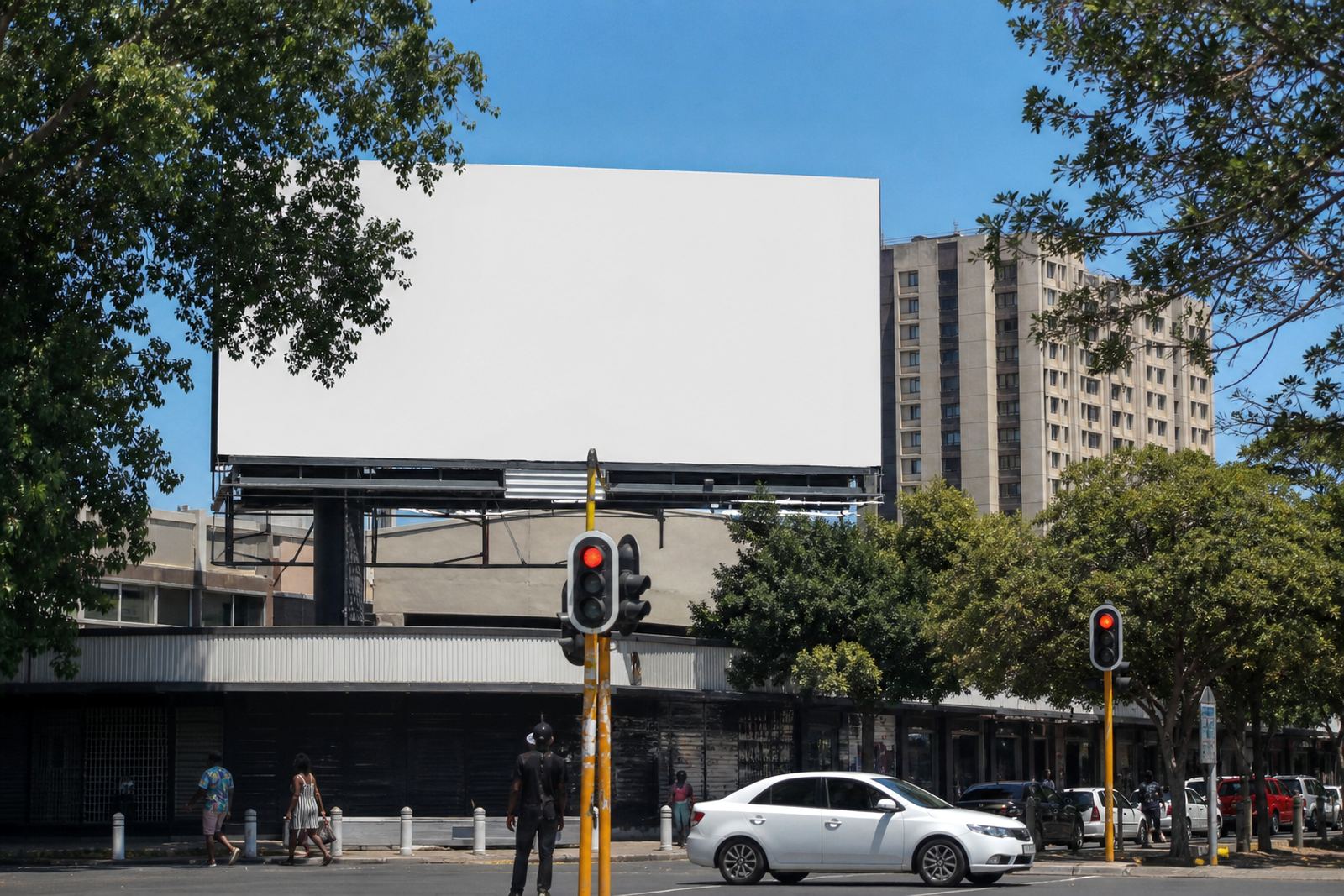
Central business areas are different from suburban roads or industrial strips. There are more pedestrians, more vehicles, more neighbouring buildings and a tighter mix of land uses, so a sign that looks fine on paper can become difficult in practice. In Johannesburg CBD and Braamfontein for example, the wall may be visible from a busy route but still sit behind barriers, trees or loading activity that affects install access and day to day viewing.
That is why the first check is not only visibility, but whether the property can actually support the use. The owner must consent, the structure must be suitable, and the planned signage must comply with the local municipal bylaw process. If a site sits in a managed precinct or near a heritage edge, there may be extra conditions too. A clean booking depends on understanding all of that early, not after artwork has already been prepared.
- Confirm who owns or controls the wall or structure
- Check whether installation equipment can reach the face safely
- Review the local bylaw requirements before confirming timing
- Make sure the proposed use suits the building and surrounding activity
Access Is Often the Real Constraint
In a dense centre, access can matter more than the wall itself. Narrow roads, one way streets, delivery bays, taxi movement, paid parking and foot traffic can all affect how an install is scheduled. A site may be highly visible during the day but hard to reach after hours, or only workable when nearby operations are quiet.
That is why scheduling must be practical. Installation teams may need a lift, rope access, a permit for temporary stopping space or an agreed loading window with the building manager. In Braamfontein, for instance, a frontage near student movement and office activity may be available for viewing but still require strict timing so the work does not interfere with neighbouring tenants. It sounds simple until someone has to bring equipment onto a narrow pavement with security on the gate and traffic moving past the door.
- Check whether there is a safe place to load and unload materials
- Confirm the hours when the site can be accessed
- Identify any security or building control process at the property
- Allow time for municipal or precinct conditions that may affect the job
Consent and Bylaw Approval Must Come First
Signage in central areas should never move ahead without the property owner’s consent and the relevant municipal bylaw approval. That is not a box ticking exercise. It protects the advertiser, the owner and the installer from disputes, removal notices or costly delays. It also helps keep the site legal when a campaign runs near public walkways, transport routes or sensitive buildings.
Where a wall faces a busy street, the approval path may involve clarifying dimensions, placement, lighting if any, and whether the structure needs special review. In some cases, a landlord may allow the use but the municipality may still require changes before the sign can be installed. The sooner that is checked, the better. No one wants artwork printed and ready only to discover the location needs another round of paperwork.
For property owners, clear consent terms also matter. They should know what will be attached, for how long, how it will be fixed and who is responsible for removal. For advertisers, a proper approval trail gives more certainty that the campaign can go live and stay live.
Artwork Needs to Match the Street Conditions
City centre advertising is often viewed from a moving vehicle, a footpath, a taxi rank or an upper floor window. That means the artwork has to work quickly and clearly. Fine detail that might look neat in a studio can disappear once it is placed above street level or across a busy intersection. The format, viewing distance and placement all affect how the message reads.
Spec checks are important here. If the file size, colours or finishing method are wrong, the print can suffer in bright sun, strong wind or wet weather. Central sites also need more attention to materials because they can sit under dust, pollution and regular shade changes from nearby buildings. In coastal cities, humidity can affect the finish. In inland cities, strong summer sun and winter dust can wear a sign faster than expected.
A practical artwork check should cover both the message and the install method. If the site uses vinyl, mesh or painted letters, each one has a different response to wind and maintenance. The choice should suit the building, not just the brand brief.
A Braamfontein Example: Good Space, Careful Timing
A central Johannesburg location like Braamfontein can be attractive because it links office activity, student movement and mixed-use buildings. But the same area also demands careful coordination. Access may be affected by security arrangements, neighbouring tenants, road use and any building rules on signage. A wall that looks ideal from the opposite side of the street may still need a detailed check before it can be offered for rent.
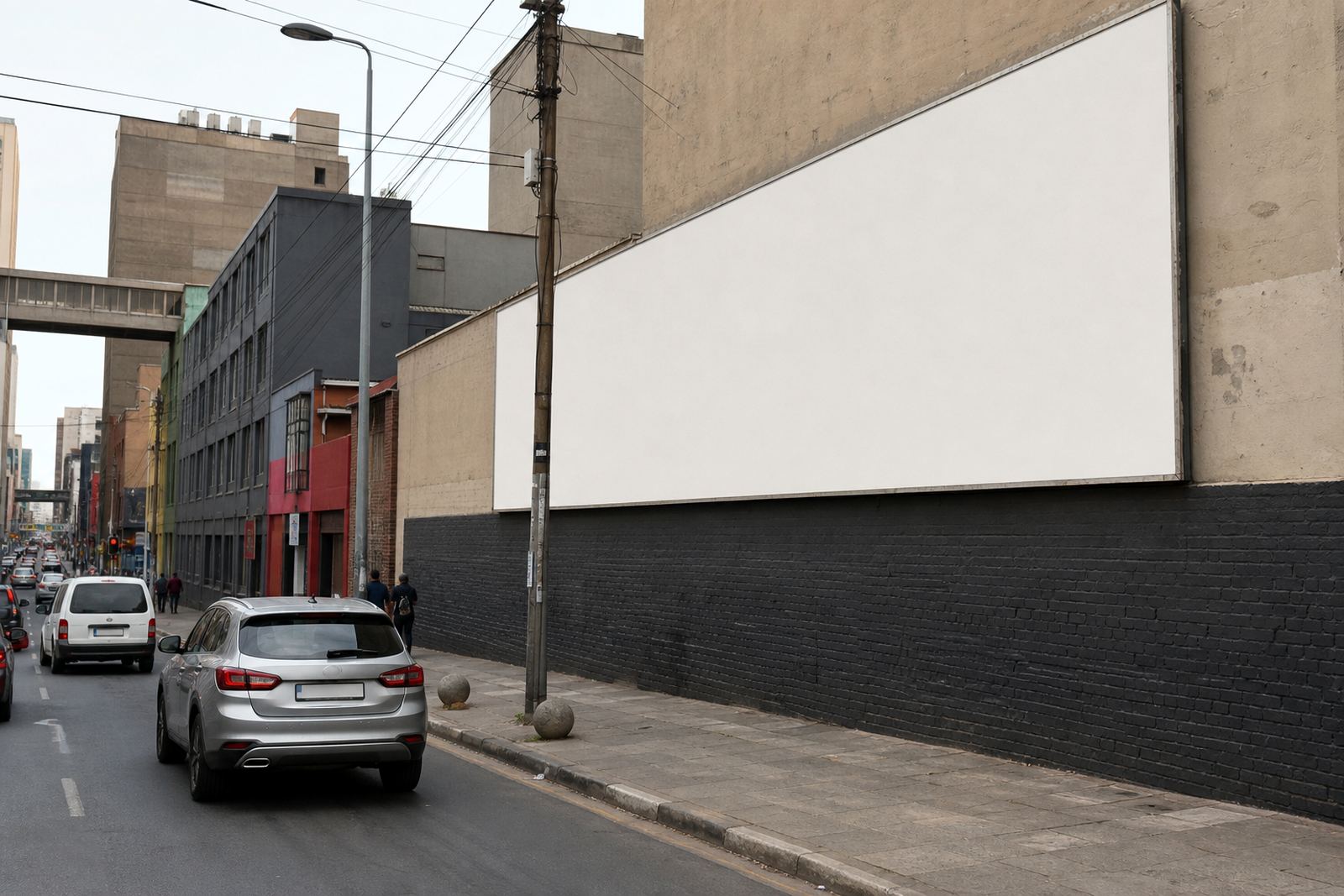
Imagine a property owner with a visible side wall near a busy intersection. The advertiser likes the position, but the site needs consent from the owner, confirmation that installation can happen without blocking access, and a clear understanding of the municipal process. If the wall is partially shaded by a tree or a nearby structure, the photo set needs to show that too. It is far easier to match the site to the brief when all those details are visible from the start.
That is the value of an organised marketplace approach. The owner knows what is being offered, the advertiser knows what is possible and the campaign team can work through the practical steps in order.
How to Keep a City Centre Campaign Moving
Once a site is approved, the work still needs coordination. Availability changes, artwork may need one more spec check and the installation date has to line up with access at the property. In dense areas, even a small delay can affect traffic management, contractor scheduling and site safety. That is why updates matter from the first enquiry through to renewal or removal.
For advertisers and owners, the best process is simple and disciplined. Keep the listing accurate, confirm the consent trail, and allow enough time for each step. Central areas reward preparation. When the site is properly matched to the brief, the campaign can run without unnecessary pressure on the property or the team.
At RentThisWall, support can include listing setup, photo curation, listing copywriting, availability management, brief matching, booking coordination, consent check guidance, bylaw process support, artwork spec check, installation scheduling, campaign monitoring and renewal support. That matters most in city centres, where the details are what keep a good site usable.