Why warehouse walls suit direct outdoor messaging
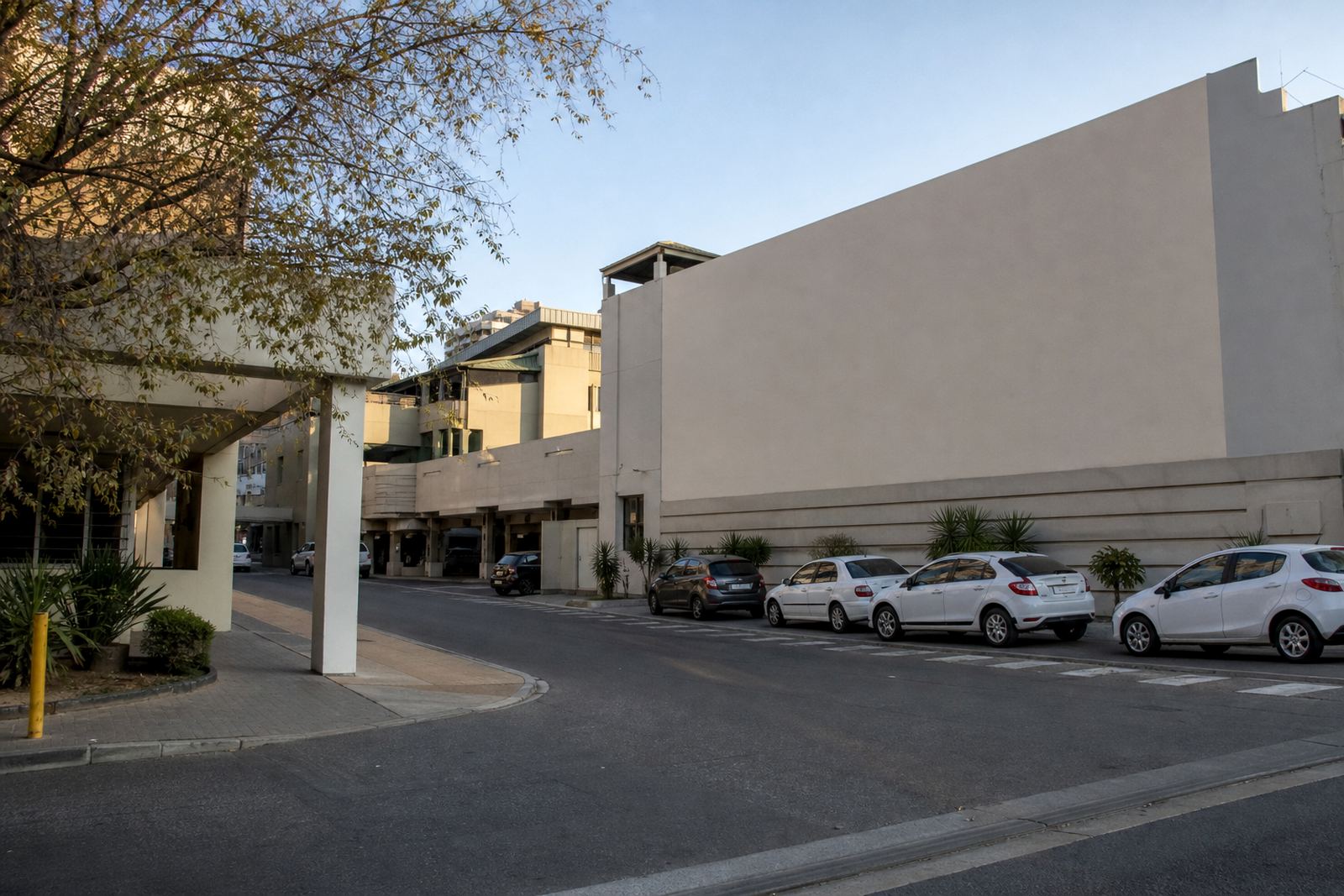
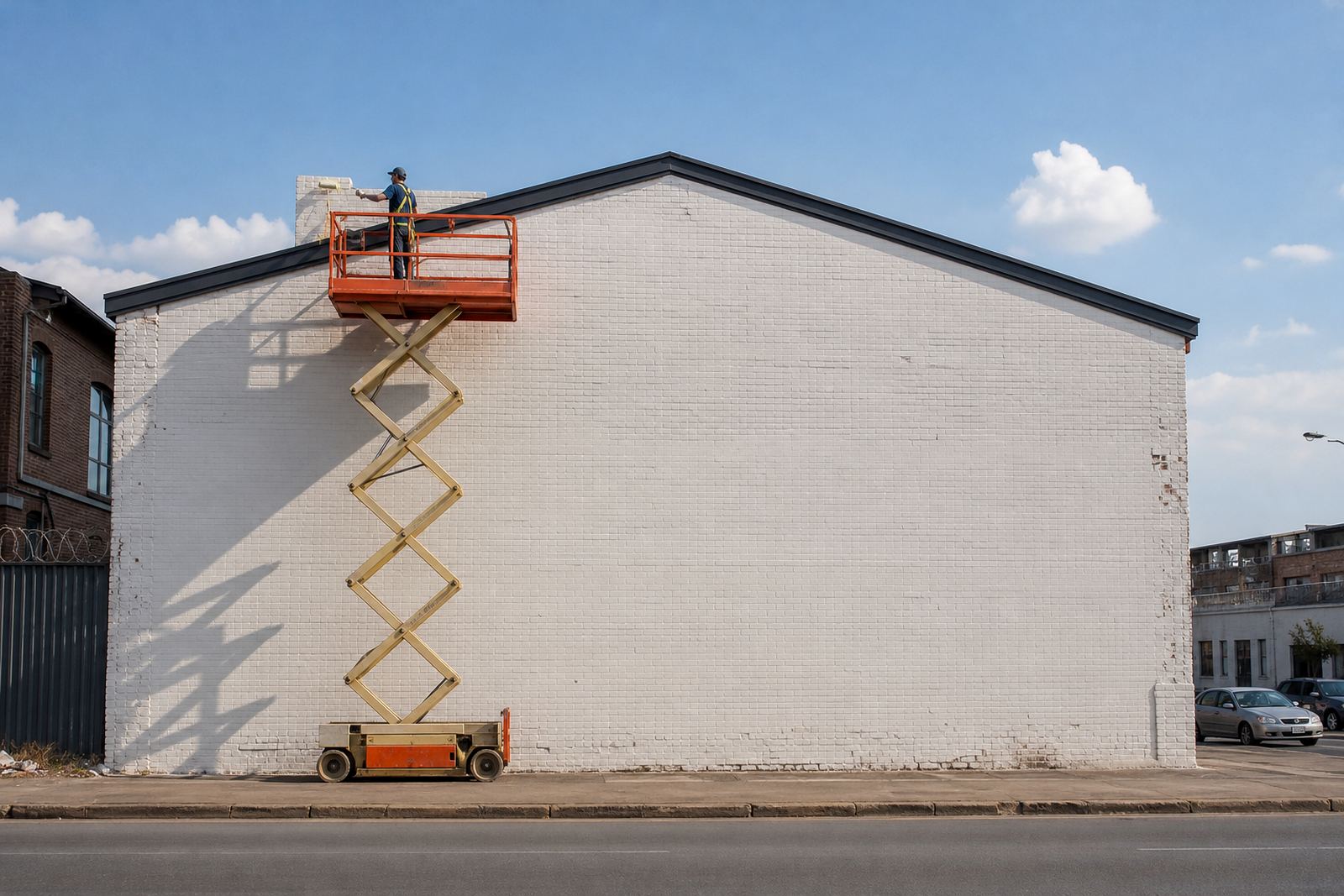
Warehouse and factory walls are often plain, broad and visible from approach roads, service lanes and loading areas. That makes them useful for messages that need to be read quickly from a moving vehicle or from across a yard. There is less fuss on the surface, so the artwork can stay simple and the point can stay clear.
These sites also tend to sit in working areas where people are arriving for shifts, deliveries, collections and site visits. In places like Braamfontein and the wider Johannesburg area, an industrial wall can speak to a practical audience without trying too hard. The message does not need a lot of explanation, and that is often the strength.
- Large flat surfaces suit bold wording and simple visuals
- Industrial zones often allow stronger visibility than cluttered retail streets
- Wall faces can work well for short campaigns or longer runs
- Messages can be matched to nearby activity, such as logistics, storage or building supply routes
What to look for before a wall is booked
Not every wall is worth using. A good industrial wall needs a clean viewing angle, sensible access for installation and enough open space around it so the message is not blocked by parked vehicles, trees or stacked materials. Height matters too, but so does the angle from which people will actually see it.
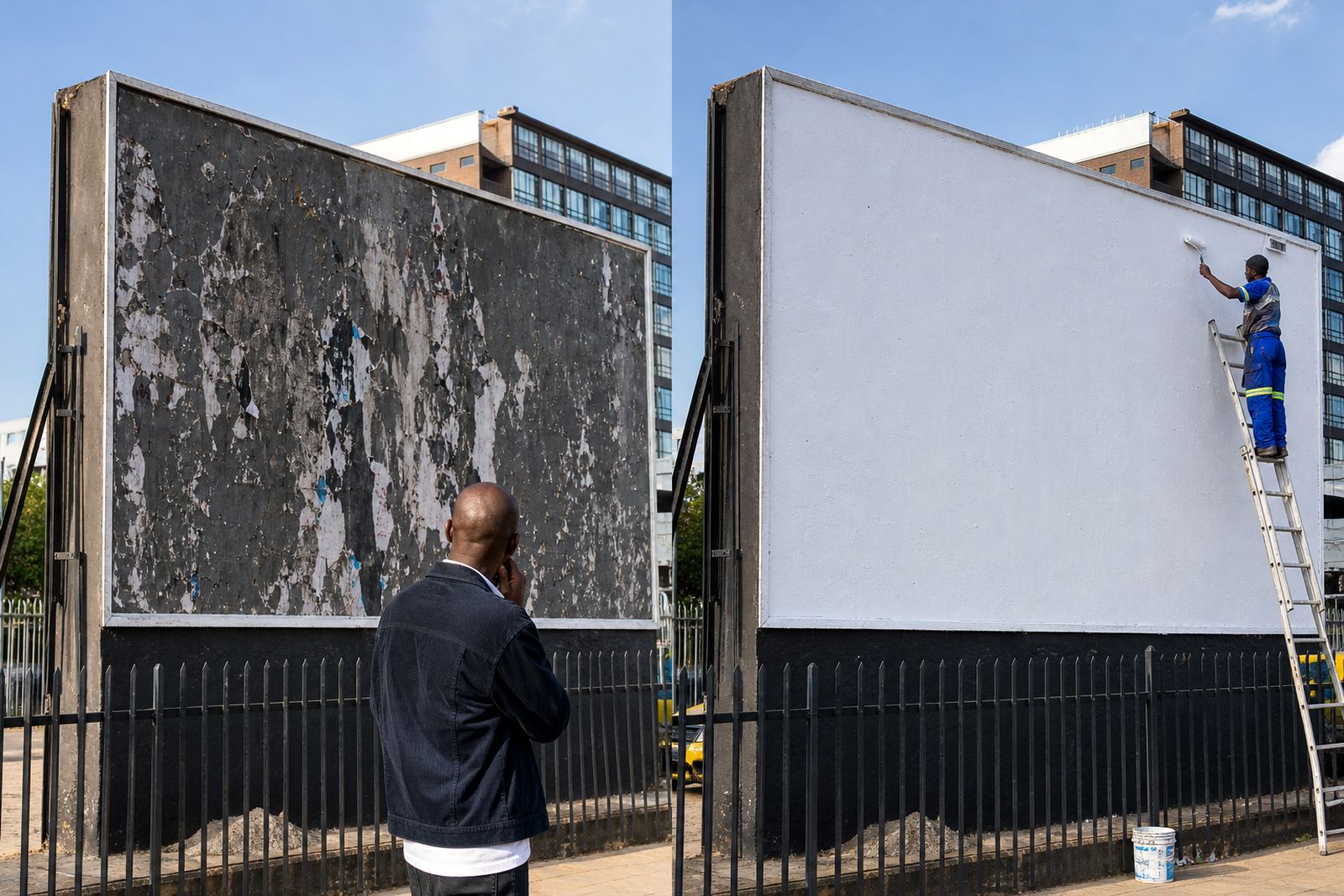
In practice, the best wall faces are usually those that sit near roads where vehicles slow down, turn, queue or park. The wall should not be so far back that the message becomes part of the background. It should also be in reasonable condition, since damaged plaster, corrosion or patched sections can affect how the artwork is finished and how long it lasts.
- Check the wall surface for cracks, rust or uneven panels
- Confirm there is enough room for installation and maintenance access
- Look at the direction of travel and where the eye naturally falls
- Make sure lighting, poles or other fixtures will not interfere with the copy
Consent, by-laws and the practical side of approval
Wall advertising always starts with the property owner’s consent. Without that, there is no proper basis to proceed. Once the owner is on board, the local municipal bylaw approval process must also be checked before any installation takes place. That part is easy to overlook, but it matters, especially in urban areas where signage rules can vary by district.
It is also worth checking whether the wall forms part of a leased site, shared industrial yard or managed complex. A site may look suitable from the road yet still need sign-off from more than one party. Clear records help everyone stay aligned and reduce delays when the artwork is ready and the installer is booked.
- Get written permission from the property owner first
- Confirm whether the local municipality requires an application or specific drawings
- Check if the site has any lease or body corporate conditions
- Keep a record of approved artwork sizes and installation timing
Artwork that works on a warehouse face
Industrial walls reward plain speaking. Short copy, large type and a strong contrast usually perform better than detailed artwork with too many moving parts. A wall face has distance on its side, so the message needs to hold together from far away and in passing light. On a cloudy day in Johannesburg or in the dusty heat of a Pretoria afternoon, clarity still has to carry the job.
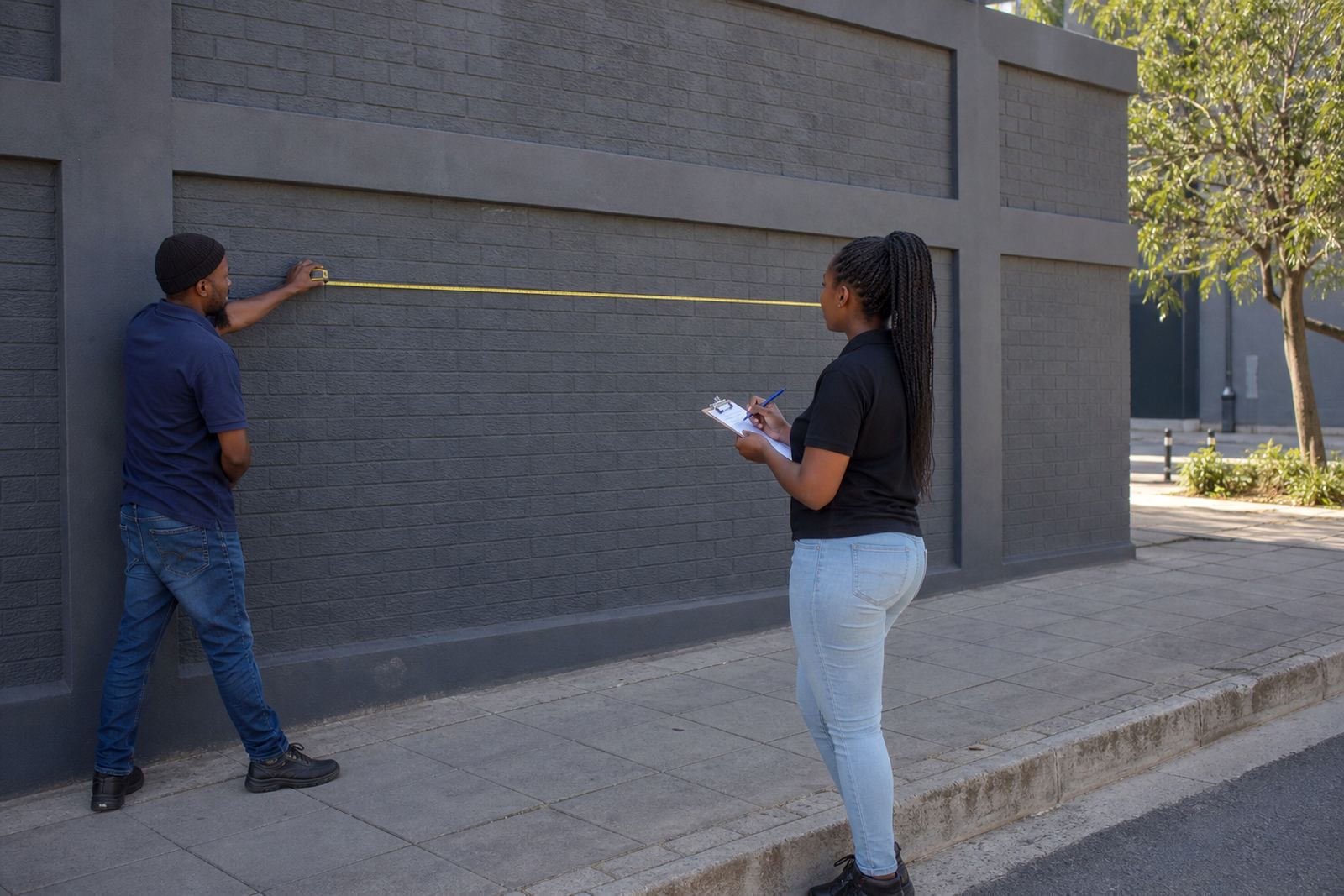
For wall-space advertising, the artwork spec check is just as important as the location. The layout needs to suit the actual measurements of the surface, the fixings available and the finish chosen for the site. Coastal humidity in Durban can affect material choices, while strong sun in Bloemfontein or Midrand can change how colours and edges hold up over time. A practical spec check saves a lot of trouble later.
- Keep the main message brief and easy to read
- Use strong colour contrast for daylight visibility
- Allow for exact wall measurements, joints and breaks
- Choose materials and finishes that suit heat, wind and moisture
How warehouse walls fit local business patterns
In Braamfontein, Johannesburg and nearby business areas, warehouse walls often sit along routes used by couriers, contractors, wholesalers and site teams. That makes them useful for offers and messages aimed at trade, building, storage, transport and related services. The wall is not trying to catch everyone. It is trying to say the right thing in the right place.
A local example might be a long side wall near an access road where delivery trucks move in and out through the day. The message can support a campaign for a builder’s merchant, a storage business or a service company with a clear area of operation. The point is not to flood people with detail. It is to make the location do some of the work for the campaign, while the copy stays straightforward.
For many owners, that same wall is also a source of extra income from unused space. For advertisers, it offers a simple way to place a message where the surroundings already match the product or service. That kind of fit is often more practical than chasing a site that looks busy but has little relation to the offer.
Booking and managing the site from start to finish
A good booking process keeps everyone clear on what happens next. Once a wall face has been matched to the brief, the details need to be handled in order: consent, bylaw checks, artwork approval, installation timing and then ongoing monitoring. When these steps are lined up properly, there is less back and forth and fewer surprises on site.
For property owners, that means the site is handled with care and the terms are clear. For advertisers, it means the chosen wall is checked against the brief, the measurements are confirmed and the campaign stays within the agreed scope. Renewal support also matters, because some walls perform well enough to keep running with only minor updates. That saves time and keeps the site active without starting over from scratch.
- Space Listing Setup
- Site Photo Curation
- Listing Copywriting
- Availability Management
- Brief Matching
- Booking Coordination
- Consent Check Guidance
- Bylaw Process Support
- Artwork Spec Check
- Installation Scheduling
- Campaign Monitoring
- Listing Renewal Support
Why wall faces stay useful in a changing city
Outdoor advertising changes with the city around it, but warehouse walls remain useful because they are honest surfaces. They give a message room to breathe, they suit clear thinking and they are usually in places where work is already happening. That makes them a sensible option for businesses that need visibility without overcomplicating the brief.
In Johannesburg, Pretoria, Cape Town, Durban and Bloemfontein, the best wall sites are often the ones that fit the area rather than fight it. A well chosen industrial wall can support a campaign for months, or just long enough for a seasonal push. Either way, the value lies in the fit between the site, the message and the local setting.
At RentThisWall, the process is built around matching property owners with advertisers who need this kind of practical space. If you are looking at a warehouse wall, start with the basics: consent, bylaw approval, clean artwork and a site that suits the message. The rest follows more easily when those parts are in place.