Why Corner Walls Catch the Eye From More Than One Direction
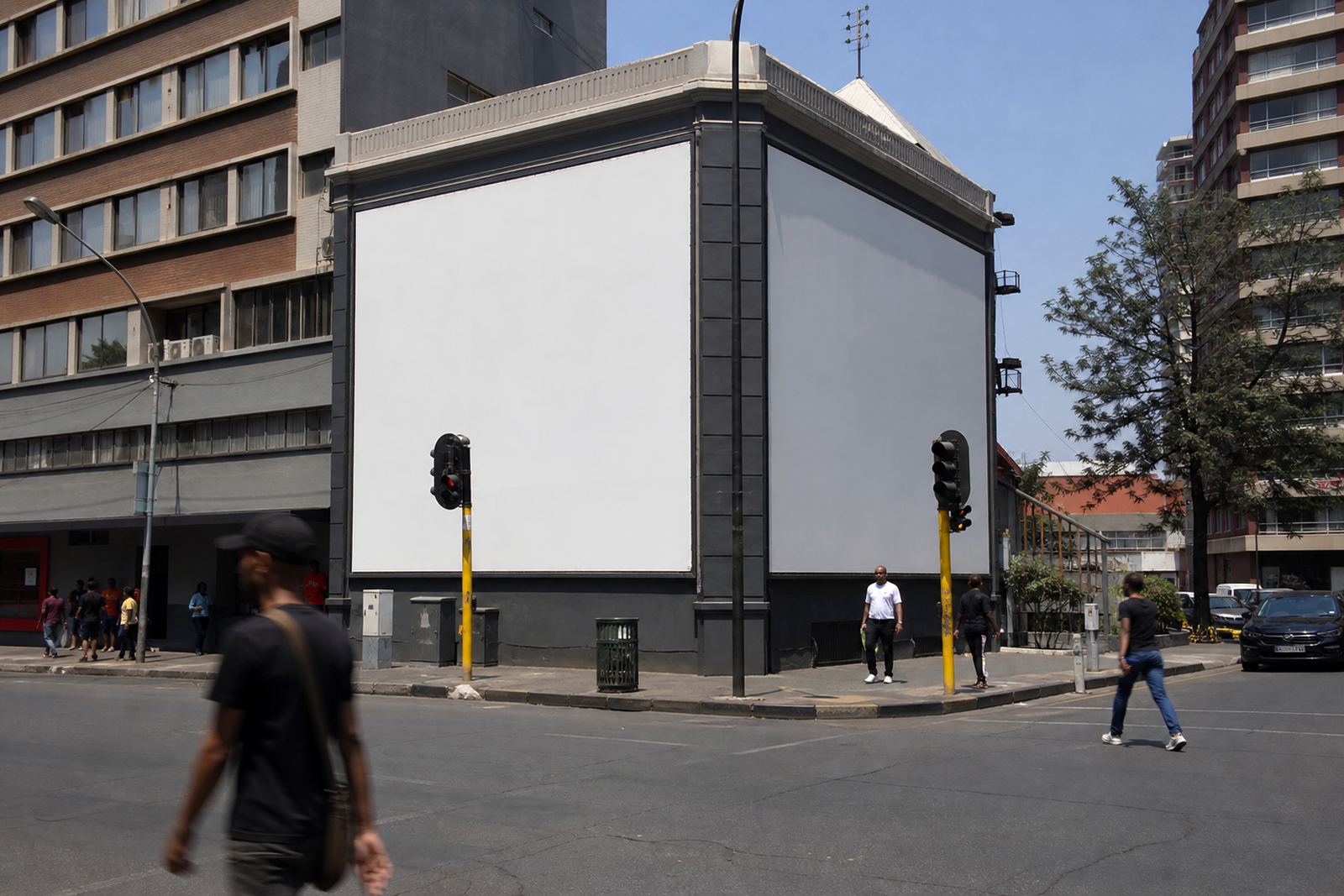
A corner wall can be a strong choice when vehicles and pedestrians approach from two streets or when the building sits at a turning point. Unlike a flat wall that is only read from one side, a corner-facing surface can give multi-angle exposure if the artwork is set out with the viewing lines in mind.
In practical terms, that means the message should still make sense from a slight side angle, not only straight on. A corner wall near a taxi route, busy intersection, light industrial area, or mixed-use block can work well if the site is clear, the wall is clean, and the surrounding structures do not block the view.
The best corner sites are not always the biggest. A smaller wall with a clean line of sight and steady approach traffic can be more useful than a large wall hidden behind trees, poles, or layered street furniture. In Johannesburg and Pretoria, where roads can change quickly from main route to side street, a well-placed corner wall often gets attention from people turning, slowing, or waiting at a light.
What to Check Before You Commit to a Corner Wall
Before a booking is confirmed, the property owner’s consent must be in place and the local municipal bylaw process needs to be followed where required. This is especially important for exterior wall advertising, because corner walls can fall under different sightline and placement considerations than a simple flat wall.
We always suggest checking the following points early:
- Whether the wall is visible from both approach directions
- Whether trees, cables, poles or balcony edges interrupt the view
- Whether the surface is suitable for the selected artwork size
- Whether the building owner has given written consent
- Whether local municipal bylaw approval is needed before install
- Whether nearby road works, scaffolding or seasonal trimming may affect visibility
If a site is in a coastal area like Durban, salt air and humidity can also affect the wall finish and any fixed materials, so the condition of the surface matters. In colder, windier spots such as parts of Bloemfontein, loose edges and weather exposure need attention too. A corner wall is only worth renting if the site can hold up for the full campaign period, and if the install plan is realistic.
Matching the Artwork to the Angle of View
Corner walls need artwork that reads quickly. The main headline, logo or key line should be easy to catch in a short glance because viewers are often moving, turning, or checking traffic. If the design is too crowded, the eye will not know where to land.
Useful artwork habits for corner-facing walls include:
- Keeping the strongest message high enough to clear parked vehicles and street clutter
- Using large type that stays readable from the pavement and the road
- Keeping important details away from the seam or wrap point of the corner
- Allowing extra space around logos and calls to action
- Checking the image at both left and right approach angles before print
For corner walls, a simple layout often does better than a busy one. The message should not force the viewer to stop and think. If the site is near Sandton or Midrand, where traffic can move slowly at certain times, a cleaner design gives the brand more time to register. If the area is faster moving, the layout needs to work even quicker.
Our team checks artwork against the site shape and the likely viewing line before anything is sent for scheduling. That helps avoid awkward cuts, clipped text or a headline that lands in the wrong part of the wall.
When a Corner Wall Works Better Than a Straight Wall
Corner walls are often the better option when the advertiser wants reach from multiple streets without taking two separate sites. They can suit retailers, service businesses, property launches, events, or brands that need a steady presence at a turning point. In some locations, a corner wall also gives better clearance above street activity than a lower flat wall.
A straight wall may be the better option when the street is narrow, the approach is only from one direction, or the building’s edge creates a weak viewing angle. Corner walls also need enough open space around them. If the wall is tucked behind a tree line or squeezed by nearby structures, the corner advantage is lost.
This is why site selection matters so much. A wall facing a busy junction in Braamfontein can be useful if the sightline is clear and the message is suited to the pace of the area. A similar-looking wall a few blocks away may be less effective because the angle, height or road layout changes the way people see it. Small differences matter, and sometimes the best site is the one with the least clutter.
A Local Example From Braamfontein and the Inner City
Consider a building edge near a route that feeds into Braamfontein from the inner city. A corner wall there can catch people approaching from one street and turning into another, while still staying visible to pedestrians walking past the frontage. If the site is properly approved and the wall is maintained, the setting can support a calm, repeated presence rather than a one-time flash.
That kind of location suits advertisers who want to stay visible to commuters, students, office staff and visitors moving through the area. It can also suit campaigns that need a practical, urban feel rather than a high-gloss shopping centre look. The wall must still be checked against bylaw rules, and the owner’s consent must be confirmed before any schedule is set.
In our Braamfontein base, we often see that the strongest corner sites are the ones with simple access, a neat wall surface, and a booking process that is organised early. Load-shedding, weather and installation windows can affect timing, so a clear plan helps keep the booking on track.
How We Handle Corner Wall Bookings
Corner wall campaigns need careful coordination because the site, consent and install details all have to line up. We help with space listing setup, site photo curation, listing copywriting, availability management, brief matching, booking coordination, consent check guidance, bylaw process support, artwork spec checks, installation scheduling, campaign monitoring and listing renewal support.
That matters because corner walls usually involve more than one viewpoint and sometimes more than one practical constraint. A wall may look ideal in photos, but the real test is whether the angles, height, surface condition and approval steps all work together. If any of those pieces are off, the booking can become slow and costly.
Our team, including Pieter Smit on municipal compliance and Musa Khumalo on campaign logistics, keeps the process grounded in what the site can actually support. From Johannesburg and Sandton to Pretoria, Cape Town, Durban and Bloemfontein, the same rule applies: the right wall is the one that can be approved, installed and maintained properly.