
What changes when the message is painted or printed
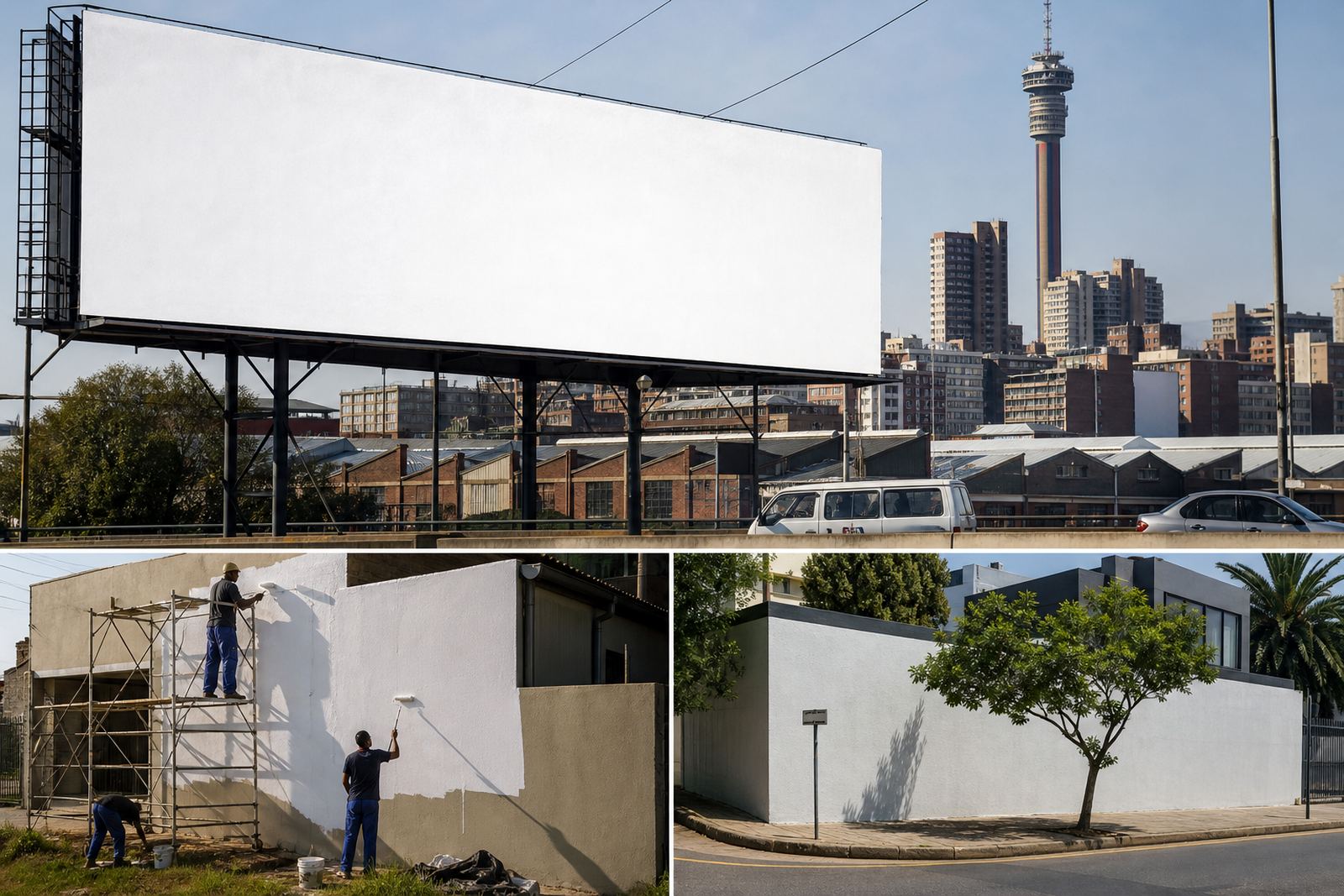
Painted wall graphics are applied directly onto a prepared surface, while printed display surfaces use a finished panel, banner or other removable material fixed to the wall or frame. That simple difference affects cost, timing, maintenance and how easily the space can be changed later. A painted message often suits a long running presence on a solid wall, while printed material is better when the advertiser needs to rotate creative or remove the display after a set period.
In practice, the surface matters just as much as the artwork. A rough brick wall in Braamfontein may take paint well once it has been cleaned and sealed, while a coastal site in Durban may need printed material that can be replaced if moisture or salt starts to affect the finish. The aim is not just to make it look neat on day one, but to keep it readable after sun, dust and rain.
Why painted graphics still work on the right wall
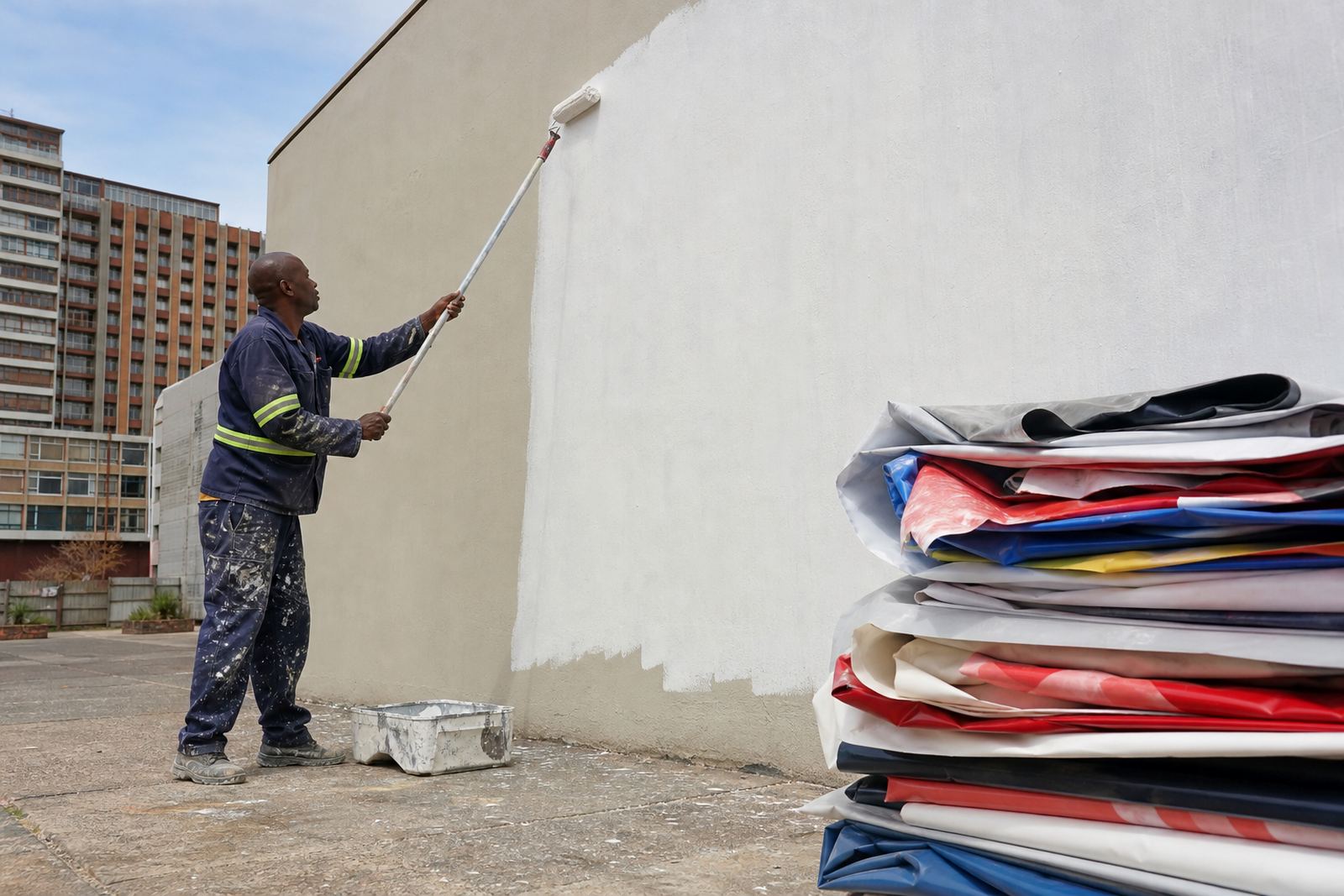
Painted graphics can look permanent and tidy when they are done on a suitable wall with proper preparation. They work well for landlords or property owners who want a direct, site specific message that becomes part of the building for a while. If the wall is visible from a busy street in Pretoria or near a transport route in Johannesburg, paint can give a clean result with no visible seams or joins.
There are also practical benefits. With no separate face material to loosen in high wind, there is less hardware to check once the work is complete. That said, painted surfaces need a careful base coat, the right weather window and a painter who understands outdoor exposure. A rushed job can fade fast or peel at the edges, and then the wall starts looking tired far quicker than anyone planned.
- Best for long term installations on stable, well prepared walls
- Useful where the property owner wants a fixed look without changing panels
- Needs dry weather and enough time for priming, curing and touch ups
- Can be harder to update if the campaign details change
Where printed display surfaces make more sense
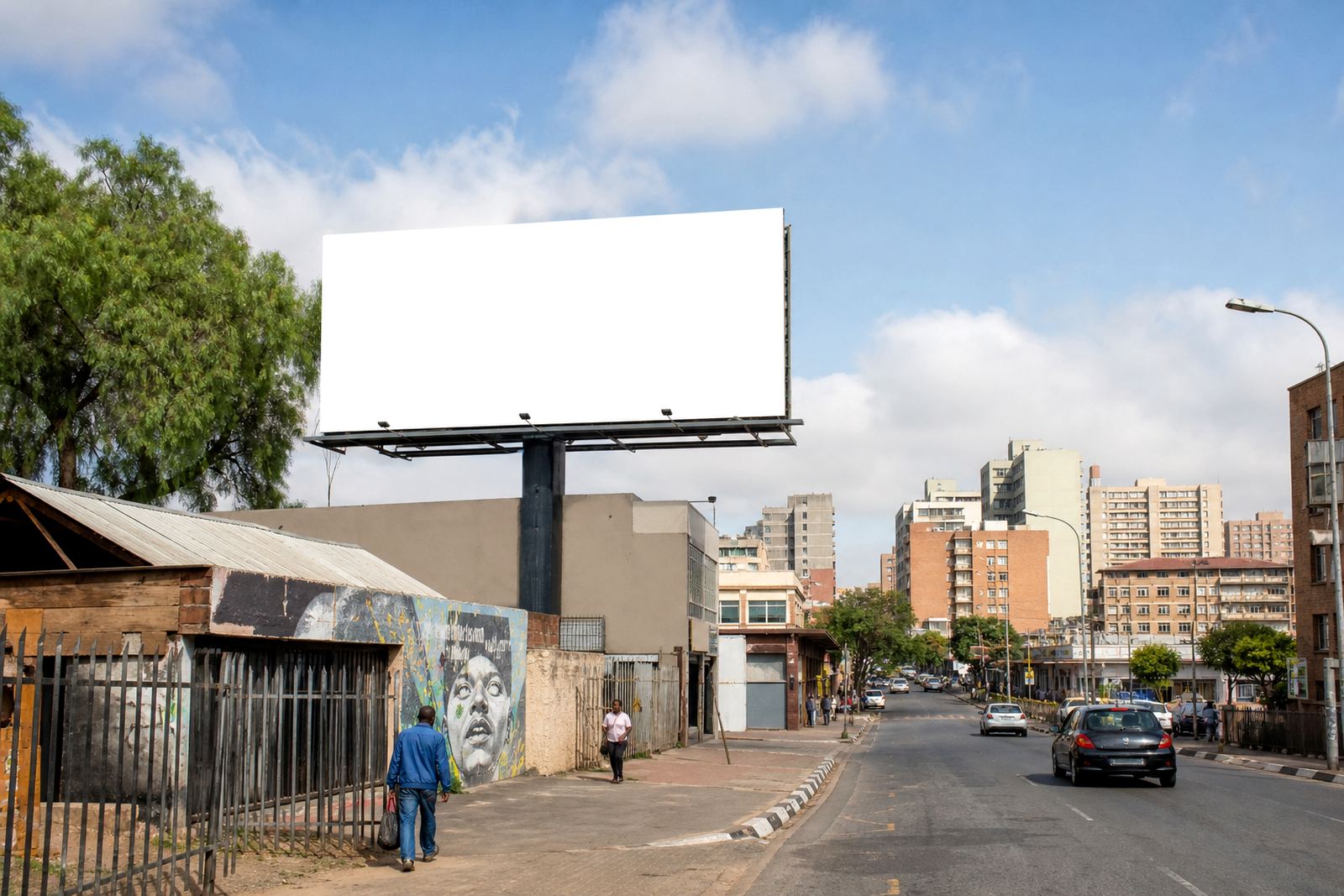
Printed display surfaces are often the better choice when a campaign needs flexibility. An advertiser may want to change the message at short notice, test different creative or move the display between sites. Printed panels and graphic faces can also be easier to plan around when the wall condition is not ideal for paint, or when the surface needs to be kept clean and removable for later use.
For wall space in areas like Sandton or Midrand, printed material can work well on a frame or fixed structure because it allows clearer control over size, finish and replacement. If the installation has to sit through strong sun, wind and summer storms, the material choice matters. A good print should stay readable from a distance and still hold its colour after weeks outdoors, though no material is invincible.
- Better for shorter campaigns and changing artwork
- Handy when the owner wants the option to remove or replace the face
- Can suit walls that need a cleaner, more controlled finish
- Needs correct fixing so wind does not lift corners or seams
What South African weather does to both options
South African weather can be hard on any outdoor advertising surface. In Johannesburg, dust and strong summer sun can dull a painted wall if the coating is not prepared properly. In Cape Town, wind can test fixings and edges. In Durban, humidity and salt in the air can affect both paint and printed material if the surface, frame or fasteners are not chosen carefully.
This is why the same format does not work everywhere. A site near a municipal road in Bloemfontein might stay dry and stable for long periods, while a wall in a coastal suburb may need a more maintenance friendly solution. The practical question is not which format sounds better, but which one will still look acceptable after the first season of weather and load shedding related delays can affect installation timing too.
For property owners, that means planning beyond the artwork itself. The wall must be sound, the surface must be clean and the installation method should suit local conditions. If the site is poorly prepared, even the most polished graphic will start to lift, crack or look patchy.
The consent and bylaw checks you should never skip
Outdoor wall advertising is never just a creative decision. The property owner must give consent, and local municipal bylaw approval may also be required depending on the site, the size and the type of display. This applies whether the wall is painted or printed. A neat installation that skips the paperwork can still become a problem if the municipality asks for changes or removal later.
It helps to check the property status before any artwork is finalised. Is the wall part of a private building, a shared structure or a site with frontage onto a regulated road? Are there visible neighbours or adjoining tenants who need to be informed? Those details can affect the process, especially in busy areas where signage rules are stricter than expected.
- Get the property owner’s written consent before any work starts
- Confirm whether municipal bylaw approval is needed for that exact site
- Check wall condition, access and safe installation points
- Keep artwork sizes aligned to the approved space and viewing area
A Braamfontein example: the same wall, two different outcomes
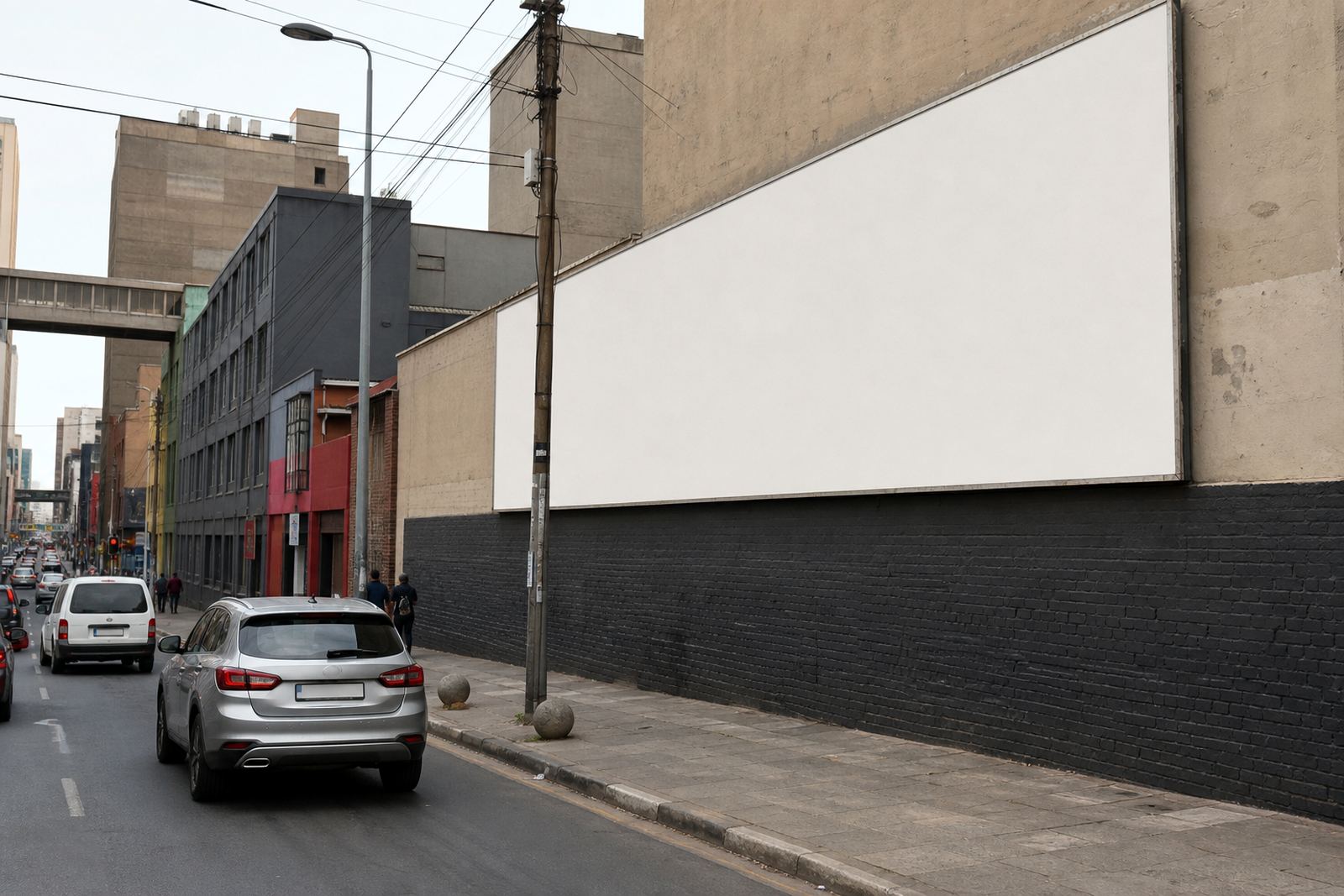
Take a wall in Braamfontein facing a steady stream of pedestrians and passing vehicles. If the owner wants a long term identity piece for a building, a painted graphic may suit the site because it becomes part of the facade and can be maintained with periodic touch ups. If the advertiser only wants a seasonal campaign, a printed face can be easier to replace when the message changes.
The better choice will depend on the wall condition, the access for installers and the approval path. In a dense inner-city area, access planning matters just as much as the artwork. If scaffolding, lifting equipment or evening work is needed, the schedule has to fit the building and nearby activity. A project that looks simple on paper can quickly become a juggling act if the timing is not sorted early.
That is where clear listing information helps. Good photos, correct dimensions and accurate notes about access let advertisers compare options without guessing. It also helps property owners understand what type of use their wall can realistically support.
How to choose the better format for your site
If you are deciding between painted or printed outdoor advertising, start with the wall itself. Then think about how long the message needs to stay up, how often it may change and how much maintenance the site can handle. For a fixed branding feature on a stable wall, paint can be a good fit. For a campaign that may change or rotate, printed material usually gives more control.
Before booking, it is worth asking a few direct questions about the site and the process. That keeps expectations practical and avoids wasted time later.
- How long does the advertiser need the space for?
- Will the wall be exposed to wind, salt air or heavy sun?
- Is the surface suitable for paint or better for a removable face?
- Has the owner consented and has the bylaw route been checked?
- Can the artwork be installed and removed without damaging the property?
For businesses looking across Johannesburg, Pretoria, Cape Town, Durban and Bloemfontein, the smartest choice is the one that fits the wall, the weather and the approval process. Painted or printed, the message only works when the site is ready and the paperwork is in order.