Why city walls work best where movement is constant
In dense urban areas, wall advertising often suits short messages, launches and campaigns that need repeated exposure. In places like Braamfontein, parts of Johannesburg CBD and central Pretoria, people move on foot, by taxi, by bus and by private vehicle, so the viewing pattern is different from a suburban road. There is less time to read a long message, which means clear copy and simple artwork matter more than size alone.
City placements also tend to sit near offices, student housing, public transport stops and retail strips. That can make them useful for brands that need regular daily contact rather than one long read. If your artwork includes too much detail, it can blur into the background very quickly. Keep the main line short, use strong contrast, and make sure the property wall itself gives a clean surface. A busy block in the city can carry a strong presence, but only if the face is visible from the correct angle and not blocked by poles, trees or parked vehicles.
What suburban roadside placements give you that inner-city sites may not
Suburban roadside sites usually give a longer viewing window. In areas like Sandton, Midrand and parts of Cape Town or Durban's outer corridors, drivers may see the same wall or billboard repeatedly during the week. That repetition is useful for service businesses, property promotions, schools, medical practices and local retail. The message can be a little more descriptive because the viewer has more time to take it in.
Roadside options in suburban areas can also be better for larger formats where the aim is clear route presence rather than foot traffic. That said, the space still needs to work with the road layout. A site facing fast traffic needs a bolder layout than one near a slower intersection, and the surrounding homes or shops can affect how much clutter sits in the view. If you are advertising in a quiet suburb the campaign may feel more local, but it should still be planned carefully so the wording remains easy to read at a glance.
- Best for repeat exposure over longer routes
- Useful for local services, new developments and regional promotions
- Artwork can carry a little more detail than a fast urban read
- Placement must still suit the road speed, height and angle
Choosing between walk-by attention and drive-by attention
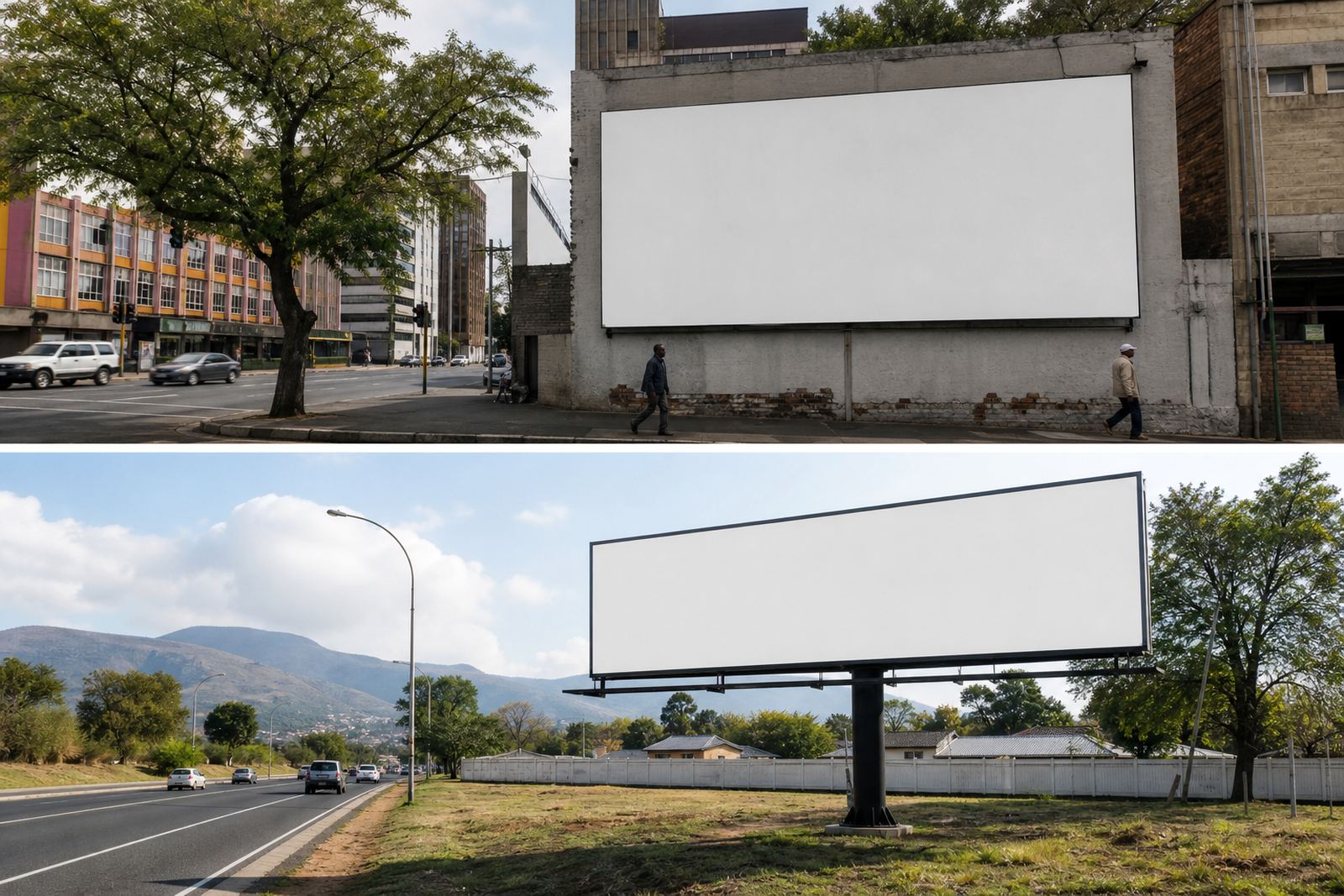
The biggest difference between urban and suburban placements is how people encounter the message. In the city, people often pass on foot or in slow traffic and the eye is closer to the wall. In suburbs, the message is often viewed from farther away while the vehicle is moving. That changes the layout, the font size and even the number of words that should appear.
If you need people to remember a phone number, website or call to action, a suburban site may give you more space to present it. If you need awareness around a trading node, a commuter route or a busy pedestrian area, an inner-city wall may be better. The practical question is not which is bigger, but which space suits the behaviour of the people passing it. A sign that looks strong online can fail on the street if the message is too long or the contrast is poor.
Load-shedding also matters for some placements. If the site is near a retail cluster or a building that depends on evening visibility, you need to think about whether the message still reads when streetlights are the main source of light. Coastal humidity in places like Durban can also affect how materials hold up over time, so the site and the print spec should be checked before anything goes up.
The checks that matter before you book any wall space
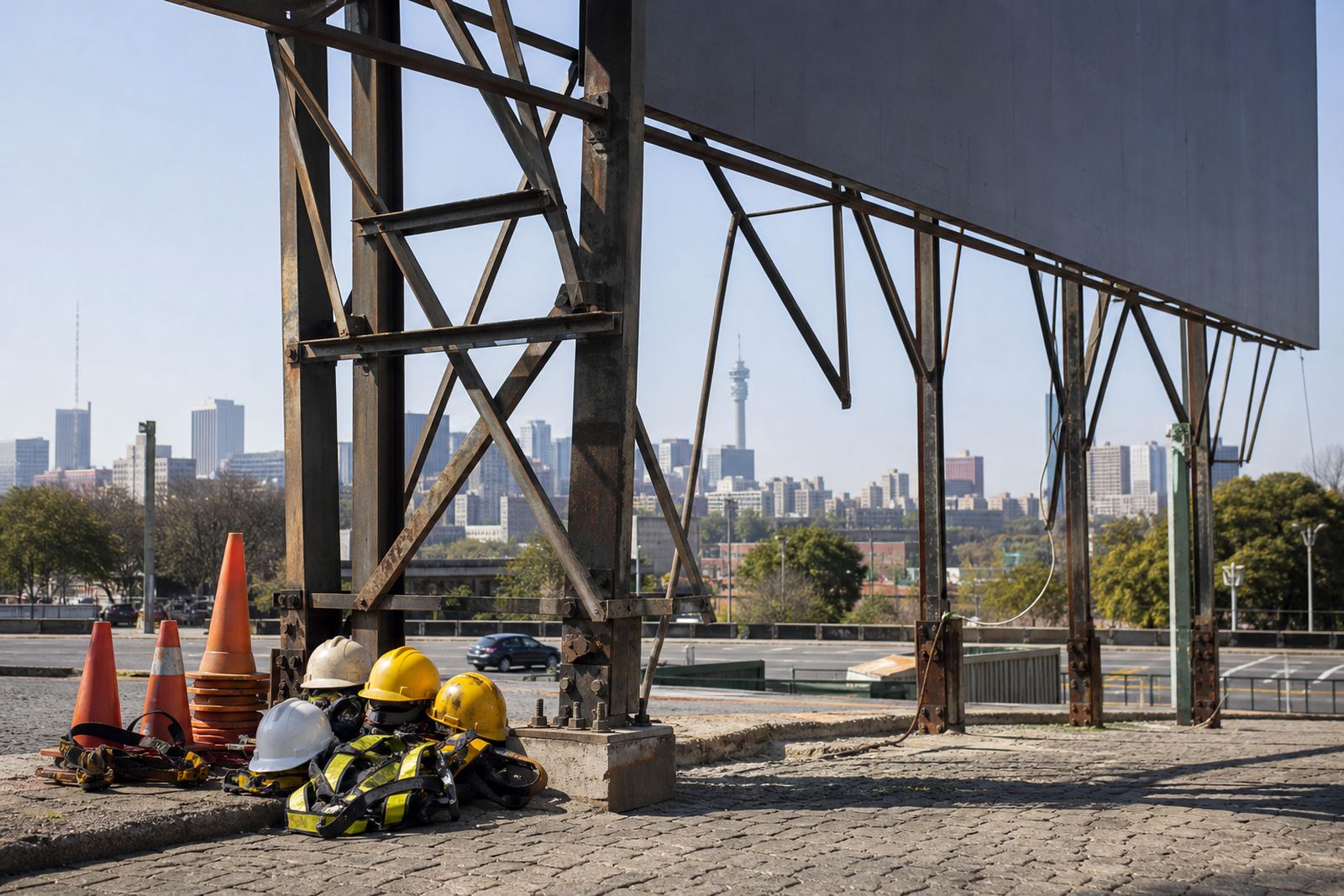
Whether the site is in Johannesburg, Bloemfontein or Cape Town, the basic checks stay the same. The property owner must agree to the use of the wall or billboard face, and the local municipal bylaw approval needs to be in place where required. Do not rely on assumptions, because a good-looking wall is not enough on its own. The legal side must be sorted before artwork is finalised or installation dates are discussed.
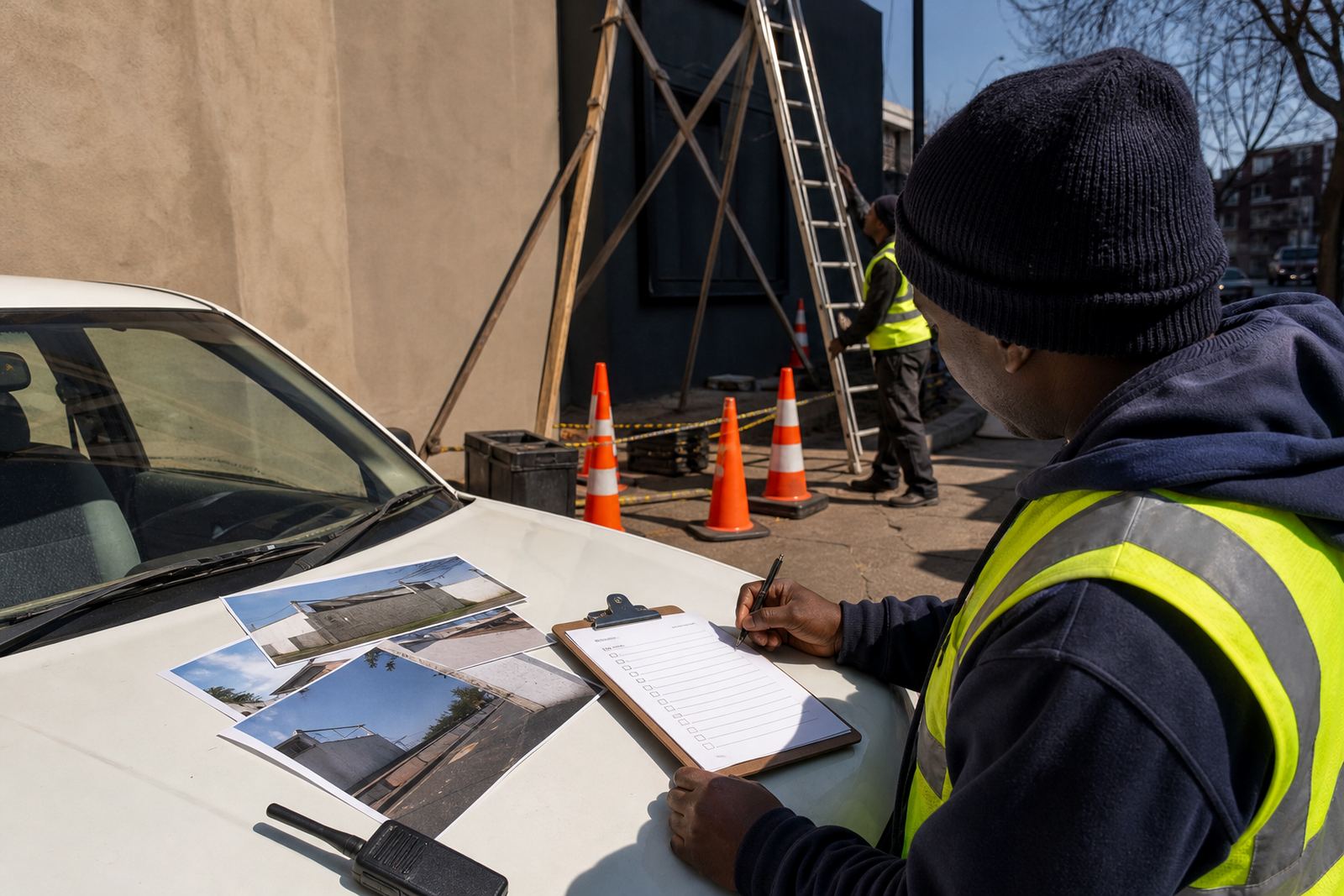
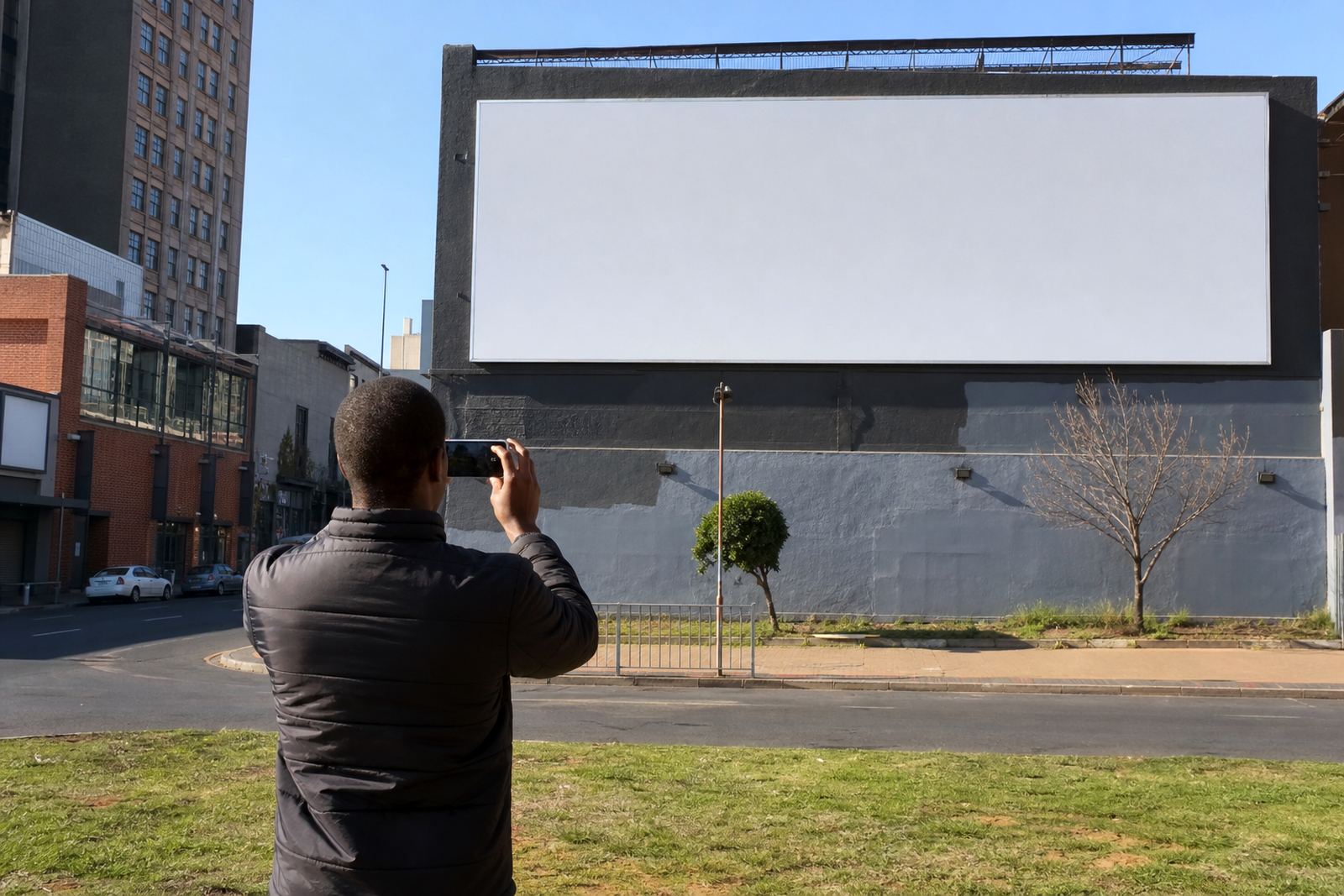
A proper listing should include clear site photos, the exact face being rented, the viewing direction and any obvious obstacles. It should also be clear whether the surface suits a temporary campaign or a longer run. For wall advertising, condition matters a lot. Cracked paint, uneven brickwork and water damage can affect the finish, and in some parts of Johannesburg or Pretoria the building line, zoning or nearby road controls can also shape what is allowed. Practicle planning here saves a lot of trouble later.
- Confirm property owner consent in writing
- Check the relevant municipal bylaw process before booking
- Review site photos for trees, poles, cables and other blockers
- Ask whether the wall condition suits the chosen artwork method
- Confirm the expected installation and removal timing
How a local campaign might differ between Braamfontein and Midrand
A Braamfontein wall can suit a message aimed at students, office workers and people moving between transport links, while a Midrand roadside site may suit commuters who pass the same route regularly. Both are urban or suburban in different ways, but the planning is not the same. Braamfontein often rewards sharper copy and a stronger visual read. Midrand may suit a message that stays visible for longer and carries a clearer service or location cue.
In both cases, timing matters. If the campaign is tied to a product launch or seasonal promotion, the booking should line up with installation, municipal approval and any print lead time. Campaigns around Johannesburg, Pretoria, Durban and Bloemfontein can also move at different speeds depending on the property owner, the site type and the paperwork. A proper booking process helps keep the handover clean and avoids last minute changes that can disrupt the schedule.
What advertisers should ask for before signing off a site
The most useful questions are the practical ones. Where exactly will the viewer stand or drive? Is the surface visible in daylight and after dark? Is there enough time for the message to be understood? Will the site stay available for the full campaign period? These are the details that shape whether the placement works in the real world, not just on paper.
For first-time advertisers, it helps to compare a city site with a suburban option side by side. One may offer stronger daily footfall, while the other gives longer road visibility and a more consistent route pattern. Ask for artwork checks, installation scheduling and renewal support as part of the process, so the campaign does not fall apart once the face is approved. If the listing is clear and the consent is right, the rest becomes much easier to manage.