Start With the Property, Not the Artwork
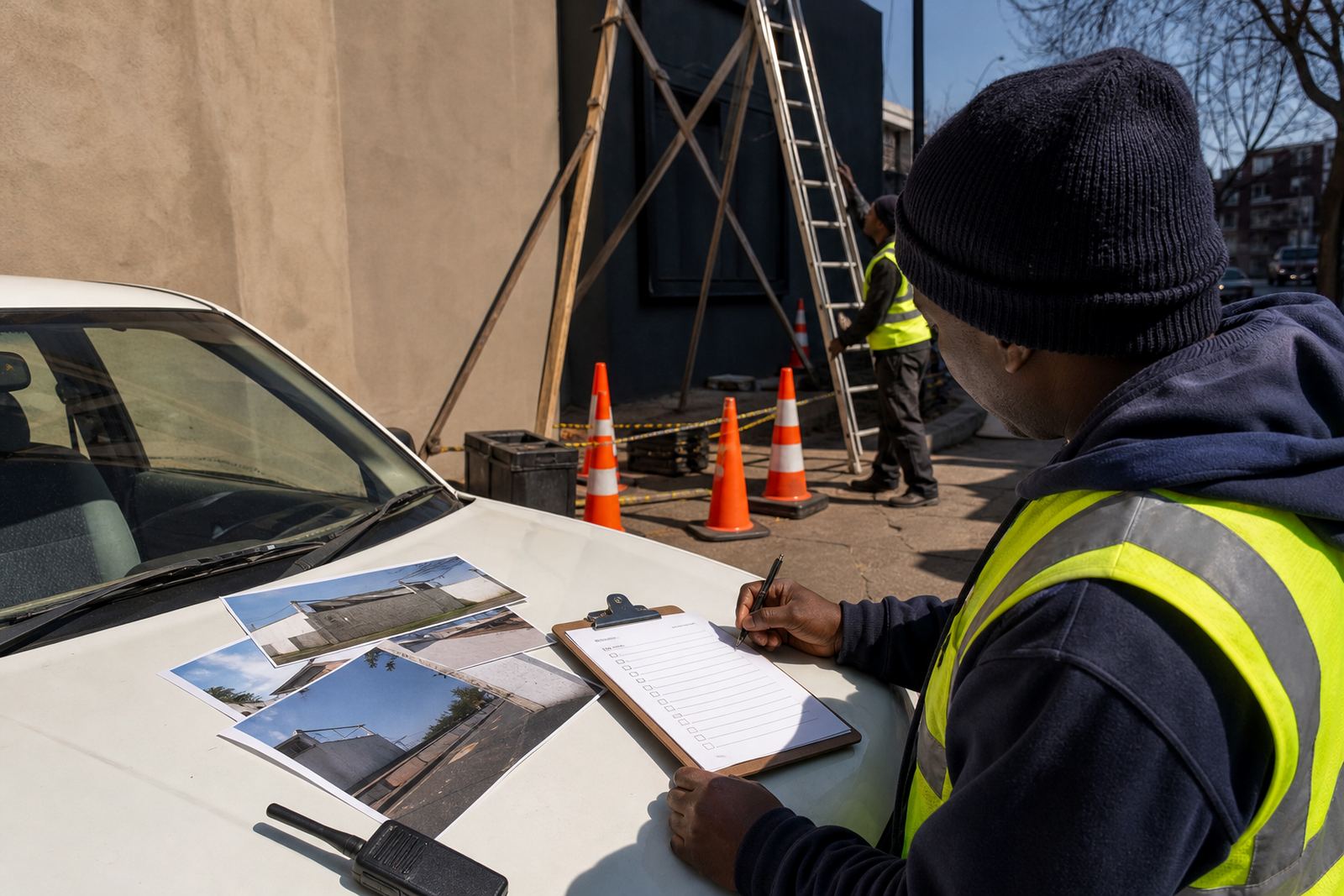
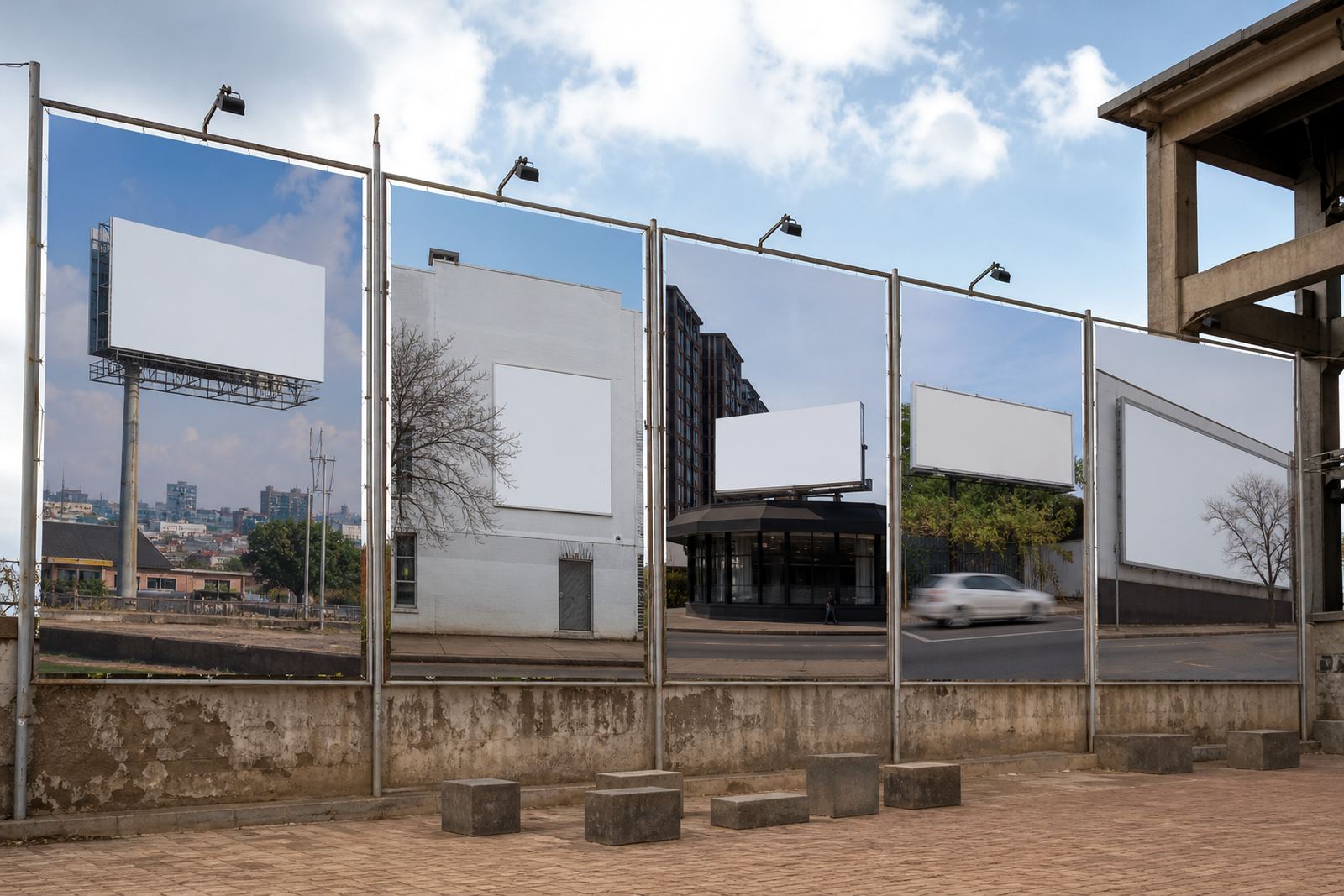
Before any printed panel, frame or wall wrap is booked in, the property itself must be checked. The owner’s consent is essential, and the site must also fit the relevant municipal bylaw process. That means looking at where the display will sit, how it will be reached, and whether the structure or wall can take the fixings without damage.
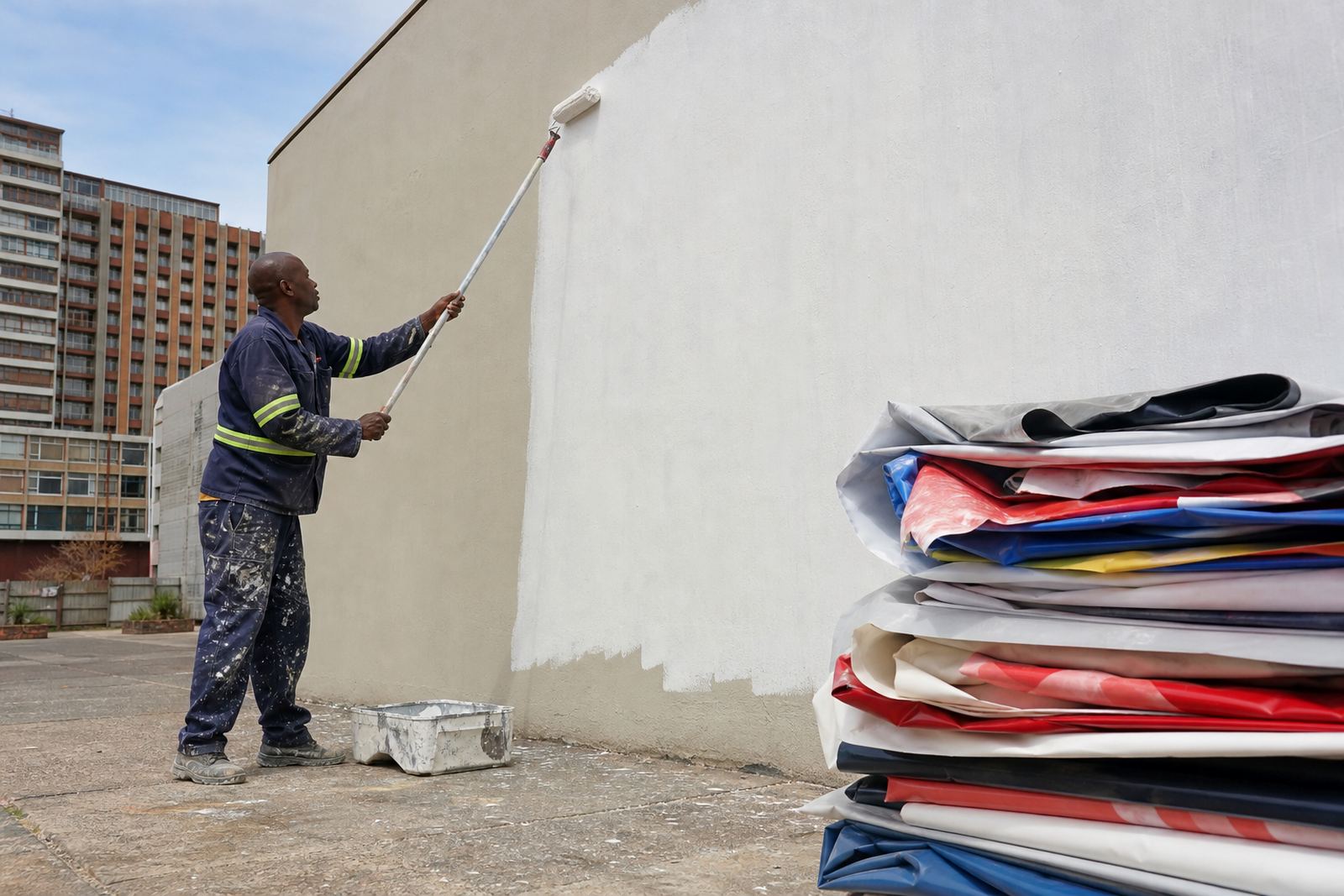
On a busy Johannesburg street or a mixed-use building in Braamfontein, the first safety questions are practical ones: can installers access the face without leaning over live pedestrian space, are there overhead cables nearby, and is the surface sound? If the wall is cracked, damp or flaking, the job may need extra preparation before any mounting begins.
- Confirm written owner consent before booking installation.
- Check if the site needs municipal approval or a bylaw sign-off.
- Inspect access points, ladders, parking and loading space.
- Look for broken plaster, loose panels, rusted brackets or water damage.
Plan the Access Route and Working Area
Safe installation depends on how people and equipment move around the site. A narrow alley in Sandton is handled differently from a freestanding wall in Midrand or a roadside face in Cape Town. The team needs a clear route for tools, panels and lifting gear, plus enough space to stage materials without blocking tenants, deliveries or public walkways.
Good planning also considers the time of day. In some areas, it makes more sense to work early morning or after office hours when the site is quieter. Where there is load-shedding, installers may need a back-up light plan and an agreed stop time if visibility drops. That sort of prep keeps the job moving and avoids rushed decisions.
- Reserve parking or loading space where possible.
- Keep pedestrians and unauthorised people away from the work zone.
- Check whether lighting is adequate for dusk or early starts.
- Agree on a clear handover point with the property contact.
Match the Fixing Method to the Surface
Not every wall takes fixings in the same way. Brick, painted render, concrete and cladding each need a different approach. If the wrong anchors, adhesives or brackets are used, the display can loosen over time, especially in coastal humidity or during strong wind conditions. Durban and parts of Cape Town need particular care because moisture and salt air can affect materials faster than in inland areas.
That is why artwork spec checks matter before installation day. Hole positions, panel weight, edge clearance and any protective finish should be confirmed in advance. A small error here can create an unsafe point load or damage the surface, and once that happens the repair bill can become ugly very quickly.
- Use fixings suited to the wall type and finish.
- Check for moisture ingress, corrosion or loose mortar.
- Allow for expansion, vibration and wind exposure.
- Keep spare hardware on hand in case the first set-up needs adjusting.
Keep the Crew and Passers-By Safe
Installation safety is not only about the sign itself. It is also about the people moving around it. A team working above pavement level should have proper barriers, warning signs and a clear system for tools and materials so nothing can fall into a public area. In places with steady foot traffic, such as Braamfontein or central Pretoria, that control is non-negotiable.
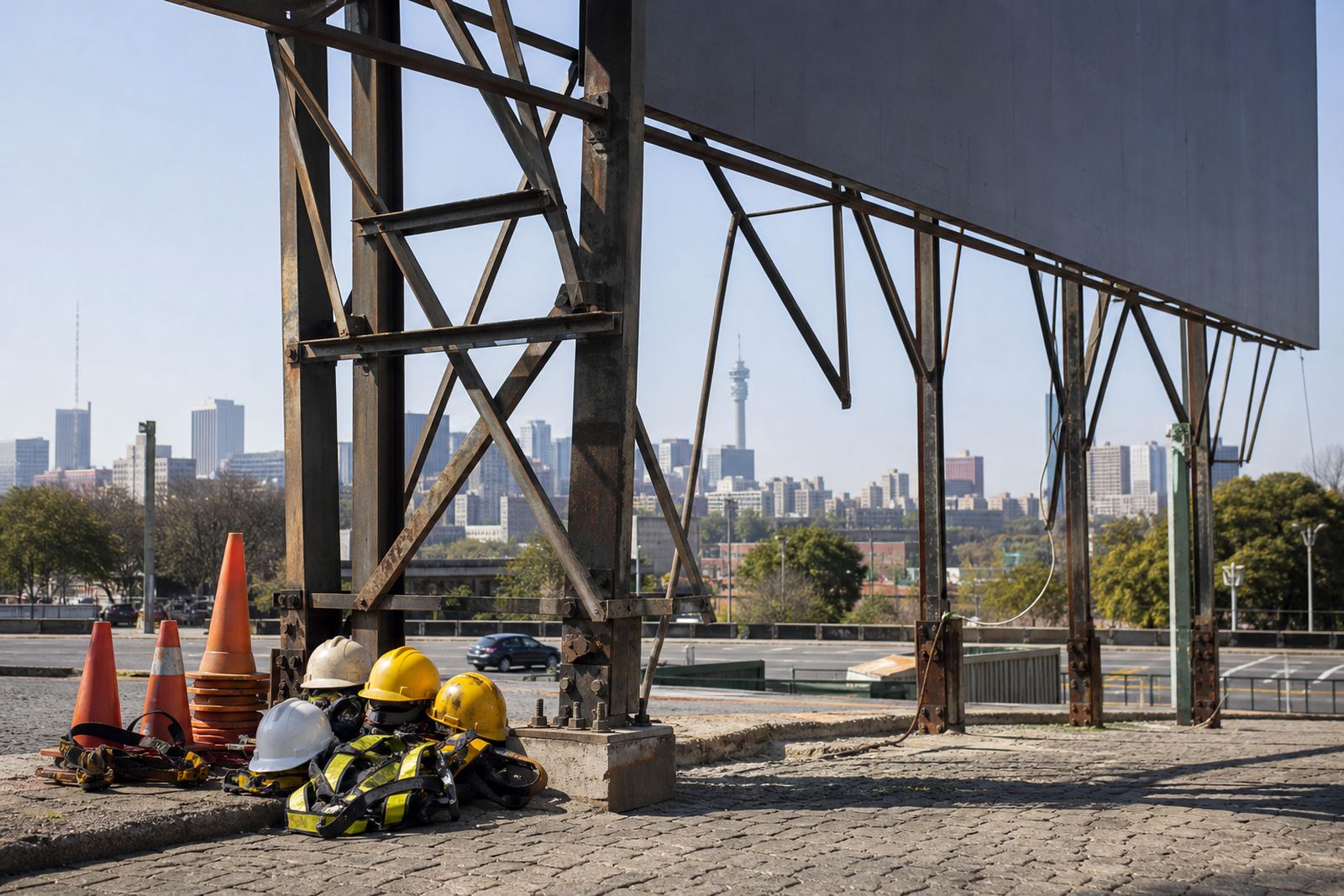
Everybody on site should know who is in charge, who is spotting hazards and what to do if a panel shifts, a bracket fails or a vehicle enters the area unexpectedly. Gloves, helmets and suitable footwear are basic kit, not an extra. If the work is happening near a road shoulder, extra visibility for the crew is also sensible.
- Use barriers or cones to mark the work zone.
- Keep tools tethered where overhead work is involved.
- Brief the crew on emergency stops and site hazards.
- Do not leave loose materials on ledges, pavements or roofs.
Build for Weather, Not Just Day One
South African weather can change quickly. Wind, rain and heat all affect outdoor display safety, and a job that looks fine in calm conditions may behave differently a week later. A face mounted in Bloemfontein dry conditions may need checking again after a storm or a heat wave. The same goes for adhesive performance, banner tension and bracket movement.
Scheduling should leave room for weather delays. If the forecast is poor, it may be safer to move the job rather than force it through. Campaigns get damaged faster when teams try to save time by skipping steps, and the result is often a second visit, which costs more time and effort anyway.
- Check wind exposure before scheduling a lift or ladder job.
- Pause work during rain, lightning or very strong gusts.
- Inspect tension, fixings and edges after the first few days.
- Plan for a return visit if the site needs a tighten-up.
A Braamfontein Example: Safer Planning Saves Rework
Take a wall-space booking in Braamfontein, where a building owner wants a large outdoor display near an active entrance. The safe approach starts with consent from the owner, then a check against the local bylaw process. After that, the team looks at access, surface condition, pedestrian flow and lighting before any materials are brought in.
If the building has older plaster and the area often loses power, the schedule may need to be adjusted so the crew can work in daylight and finish before visibility drops. The display can still go up on time, but the site is handled in a way that protects people and property. That is the practical side of good campaign work, not fancy but it matters.
- Confirm permissions before setting a date.
- Inspect the wall and surrounding access route.
- Coordinate installation timing with the building manager.
- Set a follow-up check once the display is in place.