Sun, UV and why colour fades faster than expected
In South Africa, direct sun is often the first thing that shortens the life of an outdoor display. Strong UV exposure can dull colours, weaken inks and make whites look yellow before the job has reached the end of its intended run. That is why a design that looks fine on screen can age differently once it is mounted on a wall facing north in Johannesburg or sitting in full afternoon sun in Cape Town.
When planning a wall or billboard display, it helps to think beyond the first week. Dark colours absorb more heat, and lighter colours can show grime more quickly near busy roads or industrial areas. If the artwork needs to stay sharp for a longer period, ask for print methods and outdoor materials that are made for UV exposure rather than short-term indoor use.
- Choose weather-rated inks and substrates for any display meant to stay up for more than a brief campaign.
- Keep text large enough to remain legible after some fading, not only on day one.
- Avoid very fine lines if the site faces strong sun for most of the day.
Rain, damp walls and the risk of peeling edges
Rain is not only a visibility issue, it also affects how a material bonds to the surface. If a wall carries moisture from driving rain, morning dew or seepage through plaster, adhesive may struggle to hold cleanly. Edges lift first, then dust and water start working under the print. On brick walls in older areas of Johannesburg, or on coastal buildings in Durban, this can happen faster than expected if the surface was not properly prepared.
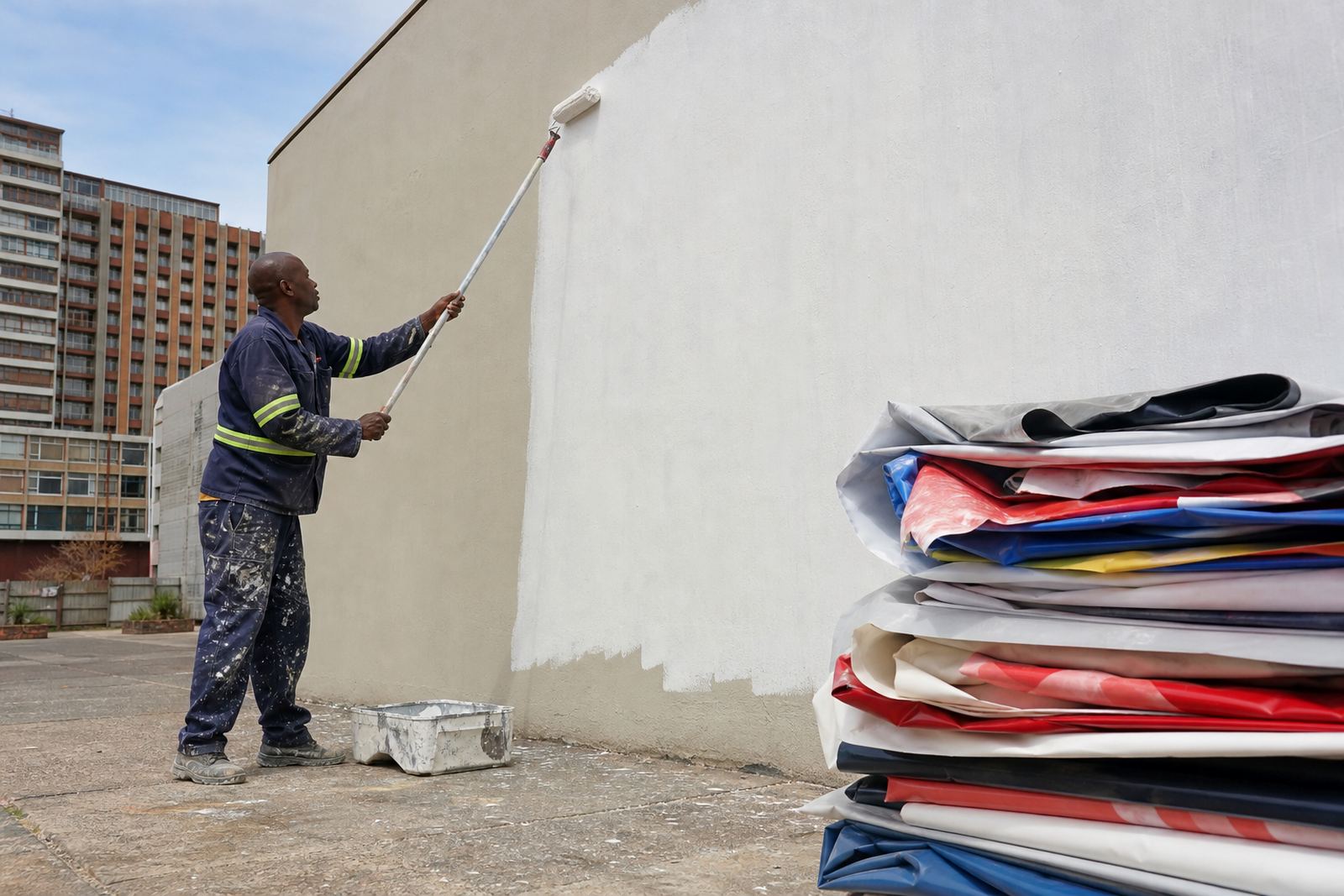
Before installation, the wall should be checked for flaking paint, loose plaster, salt marks and damp patches. A dry, stable surface gives the material a better chance of staying neat. If the site is exposed to heavy rain or wind-driven water, ask whether a protective laminate or a more suitable outdoor face material is needed.
- Do not install over damp, dusty or powdery surfaces.
- Check corners and joins carefully because those are the first areas to fail.
- Allow enough drying time after rain or washing before mounting signage.
Wind load, corners and the places where damage starts
Wind does not need to be extreme to cause trouble. Even regular gusts can work loose at a corner, flap a flexible panel or stress the fixings on a frame. For large wall graphics, the edges and fastening points take the most strain. If the material is not suited to the site, the result is often a noisy display that looks tired well before the campaign ends.
Open streets, tall buildings and corner sites can create a tunnel effect where air moves harder than expected. In places like Braamfontein or Sandton, where buildings and traffic patterns create constant movement in the air, the installation method matters as much as the print itself. A tighter fixing plan, stronger edging and proper spacing for the substrate can reduce the risk of tearing.
- Use fixings that suit the wall type, not just the size of the display.
- Ask how the material handles flutter, pull and repeated movement.
- Inspect corners after storms, especially on high or exposed sites.
Dust, coastal salt and how grime changes a message
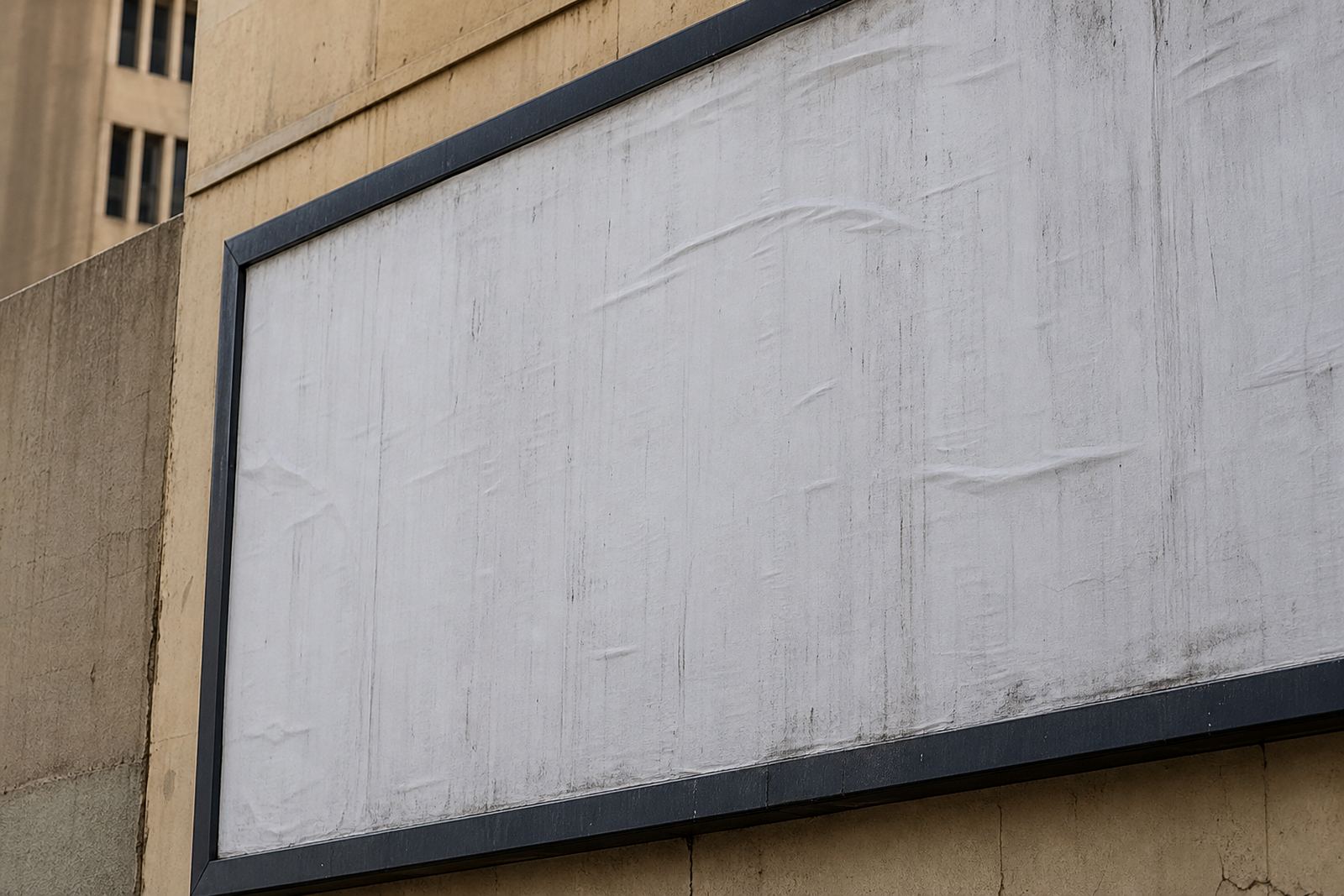
Outdoor surfaces collect dust, exhaust residue and general city grime. Near the coast, salt in the air can leave a film on metal frames and can affect some finishes over time. In inland areas, dust from construction and busy roads can settle into textured surfaces and make colours look flat. This is less about dramatic damage and more about a steady decline in clarity.
For short campaigns, the main concern is legibility. For longer placements, the finish should be easy to wipe down without scuffing the printed face. Smooth, weather-safe surfaces usually clean better than rough or porous ones. If a site is in a high-dust area or close to the sea, it may be worth planning more frequent checks rather than waiting for the end of the run.
- Pick finishes that can be cleaned without marking the image.
- Expect quicker wear near construction zones, taxi routes and coastal roads.
- Build in regular inspection days for longer bookings.
Load-shedding, lighting and visibility after dark
Material choice also affects how a display performs once the light drops. In many parts of South Africa, load-shedding means illuminated signs and nearby street lighting are not always dependable. If a billboard or wall site depends on evening visibility, the material should still hold contrast in low light, not only under bright midday sun.
Reflective elements, clear contrast and good artwork spacing help the message stay readable when lighting is weak. For illuminated frames, check that the face material diffuses light evenly and does not show patchy areas. In some cases, a simpler design works better at night than a detailed one with thin type and busy imagery.
- Keep contrast strong for evening viewing.
- Test the artwork under both daylight and low light conditions before approval.
- If the site relies on power, plan for interruptions and darker periods.
A Johannesburg example: choosing materials for a mixed-weather site
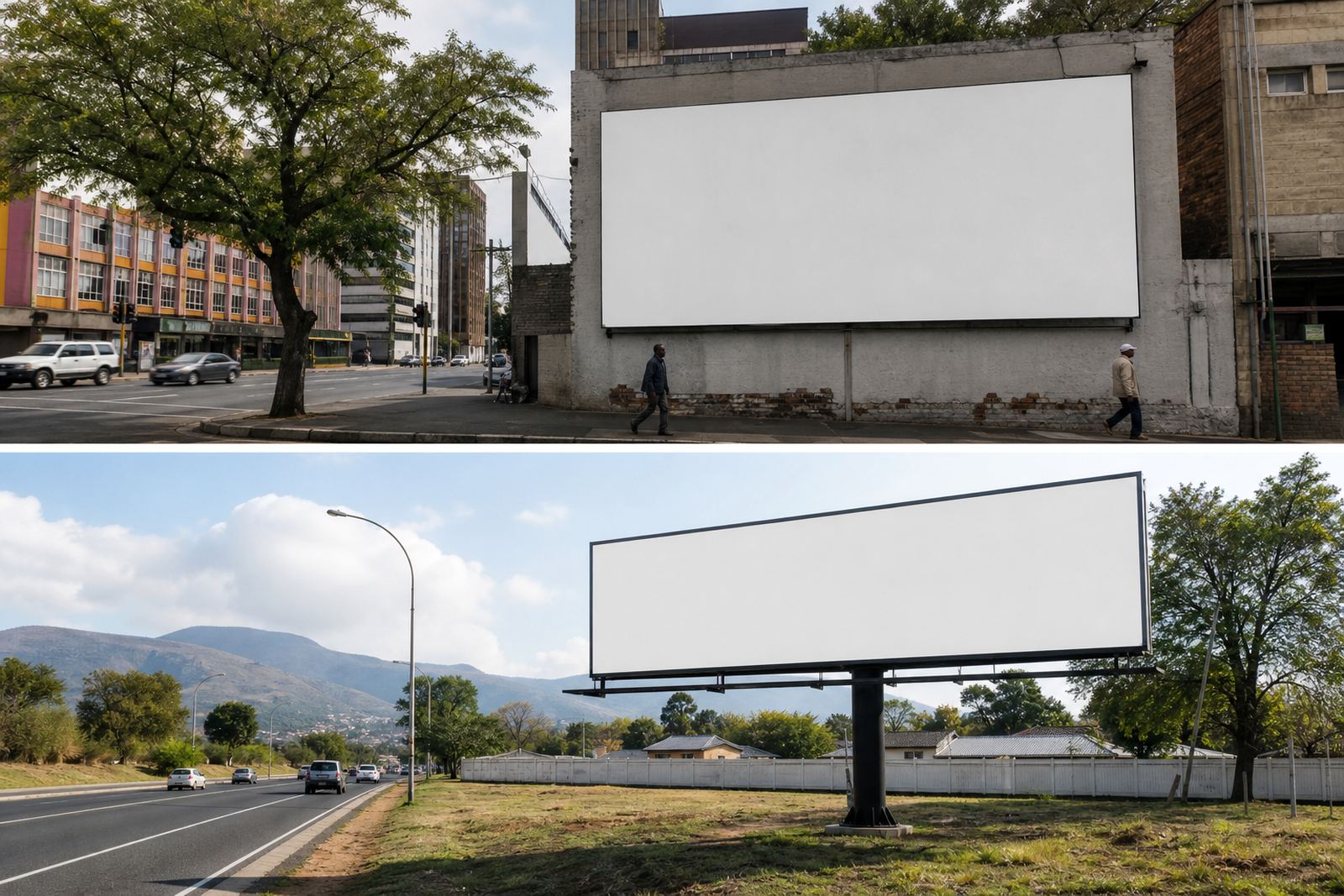
Take a wall space in Braamfontein that faces a busy street and catches afternoon sun, summer rain and winter dust. The surface may look suitable at first glance, but the practical checks tell the full story. Is the wall dry? Is the paint stable? Is there enough protection from wind at the top edge? Will the colour hold if the site stays up for several weeks?
For a site like this, a durable outdoor face with well-prepared edges and a clean mounting plan often gives better results than a cheaper material that looks fine indoors. If the same campaign is moved to Durban, the coastal humidity may change the recommendation again. That is why material choice should follow the site, not the other way around. The best result is usually the one that takes weather seriously from the start and then keeps the message clear with fewer surprises.
It also helps to remember that outdoor signage needs the property owner’s consent and local municipal bylaw approval before any installation is booked. Consent, compliance and material choice all work together. If one is ignored, the whole project can slow down or be removed.
What to check before booking a site
A good booking starts with the surface, not only the location. The same print can behave very differently on painted plaster, metal cladding or a freestanding frame. Before confirming a wall or billboard space, ask for clear site photos, basic measurements and notes on exposure. That gives you a better sense of how the material will age over the full campaign period.
For practical planning, compare the site against the weather it will face and the length of time it must stay presentable. A one-week activation has different needs from a long-term booking that must survive a full season of sun, rain and dust. The more the site is exposed, the more important material quality becomes.
- Check the wall condition and the fixing method.
- Confirm who is responsible for consent and municipal process steps.
- Match the material to the exposure, duration and viewing distance.
- Ask about installation timing so the work is not rushed in bad weather.