
Start with the launch date and work backwards
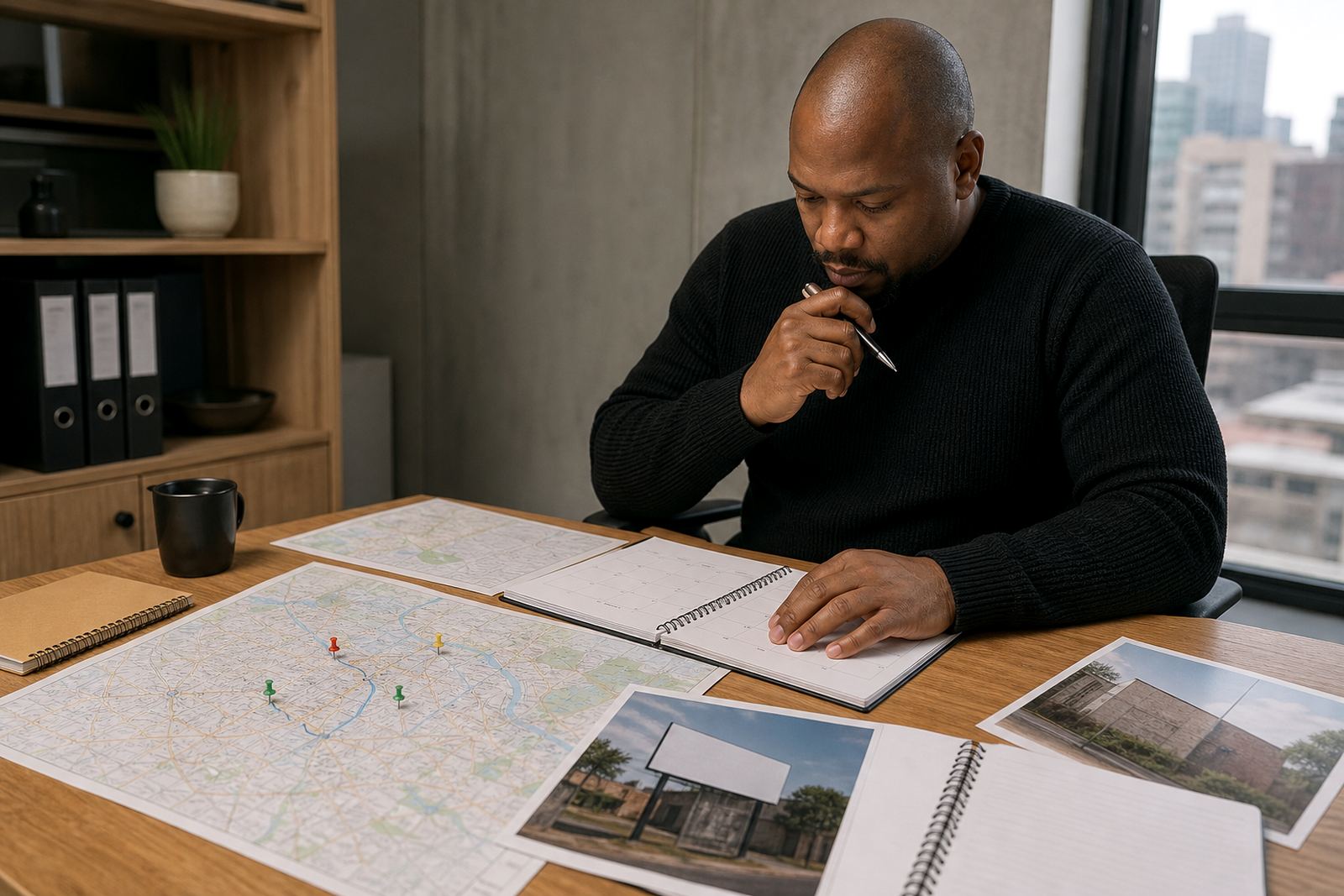
Before you book any billboard or wall space, fix the date you want the campaign live. Then work backwards from that point and allow time for site selection, owner consent, municipal bylaw checks, artwork preparation and installation. If a launch is tied to a sale, event or opening, the timing needs to be tighter still because one missed step can push the whole schedule out.
In practice, this means you should treat the launch date as the last step, not the first. Outdoor sites can look ready on paper but still need sign off from the property owner and, where required, approval under local municipal bylaws. In Johannesburg, Pretoria, Cape Town, Durban or Bloemfontein, that process can differ from one area to the next, so do not leave it until the week before. A bit of lead time helps avoid costly reprints and rushed installs.
Allow enough time for site matching and booking
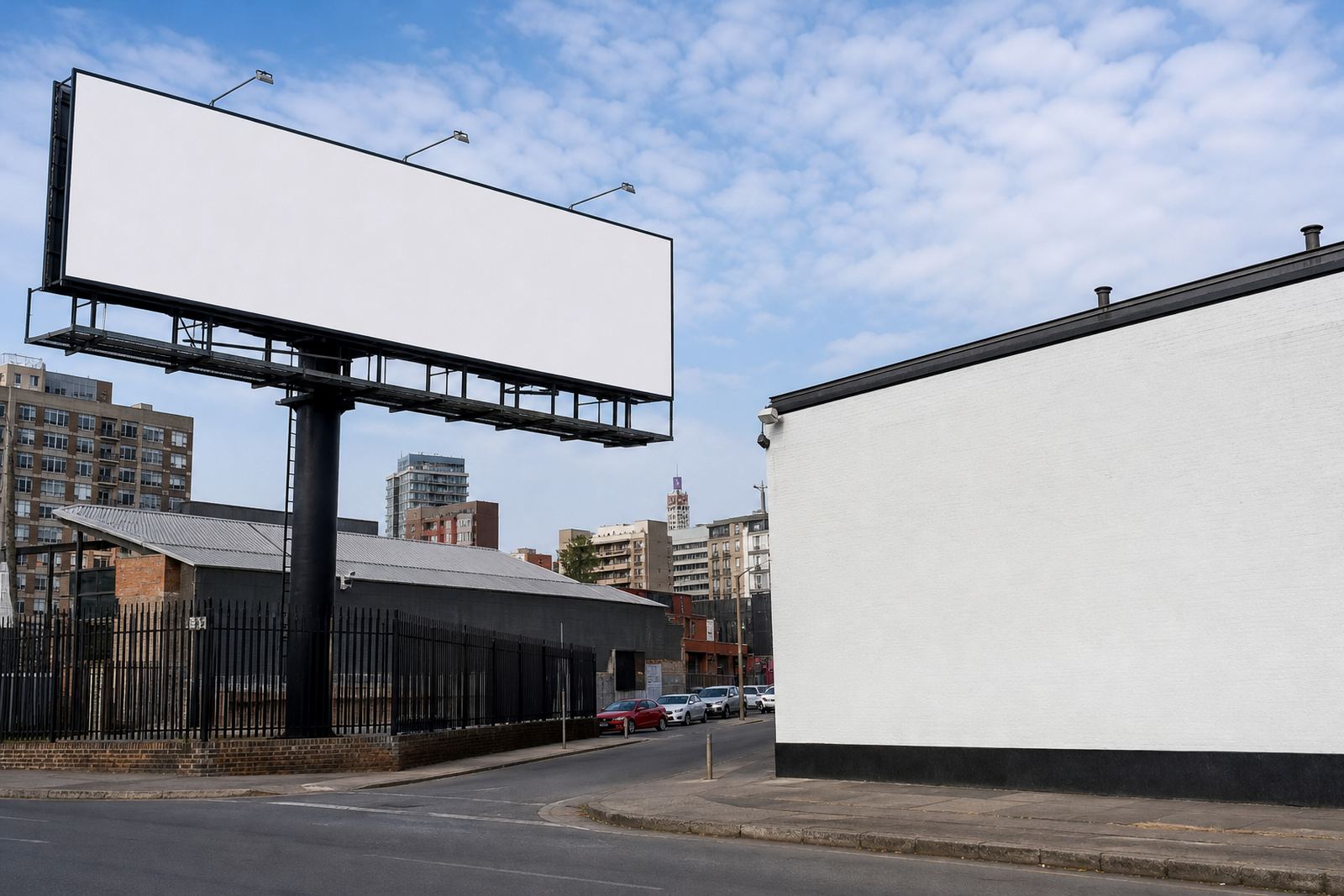
Not every space suits every brief. Some campaigns need long viewing distances, others need close range visibility near intersections, retail strips, taxi routes or transport links. The matching stage is where you confirm that the size, direction and site type suit the message and the budget.
For property owners, listing accuracy matters just as much. Clear photos, exact measurements and current availability make it easier to book quickly and reduce back and forth. A proper booking window should leave room for questions about access hours, power if needed, and any restrictions on working near the street or inside a building precinct. If the space is in Braamfontein or Sandton for example, access control and building management can affect timing as much as the print itself.
- Confirm the site size and viewing angle early
- Check whether the space is available for the full campaign period
- Allow time for owner approval before any production starts
- Ask whether the site has access limits after hours or on weekends
Count backwards from artwork handover
Artwork should only move to print once the space details are final and the campaign dates are confirmed. That sounds obvious, yet many delays come from artwork being prepared before the final specifications are checked. A wall wrap, billboard panel or other exterior display needs the correct dimensions, bleed and file setup before anyone books production.
It also helps to check the environment. Coastal humidity in Durban can affect how materials are handled and stored, while strong sun and wind exposure in many parts of Gauteng can influence install planning. During load-shedding, power interruptions may affect printing schedules, lighting checks or tools on site, so build a small buffer into the plan. The goal is not to overcomplicate the process, just to avoid last minute surprises.
- Use the final site measurements only
- Allow time for artwork review and corrections
- Check if the site needs special mounting or access equipment
- Plan for weather, load-shedding and after-hours work where relevant
Sequence the consent and bylaw steps before install day
Outdoor signage is never just about the graphic. The property owner must give consent, and local municipal bylaw approval may also be needed depending on the site and the type of display. That is why consent check guidance and bylaw process support should sit early in the timeline, not as an afterthought.
If a campaign is going onto a wall in a busy commercial area, the sequence usually runs like this: match the brief to the right site, confirm owner consent, check municipal rules, approve artwork, then schedule the installation. Skip one of those steps and the install can stall at the last moment. A clean sequence saves everyone time and keeps the site owner, advertiser and installer on the same page.
In a city like Johannesburg where buildings may sit under different precinct rules, that order matters even more. A site that looks ideal from the street may still need extra checks for access, loading space or mounting conditions. Better to confirm now than to discover it on install morning.
Build in space for installation and changeovers
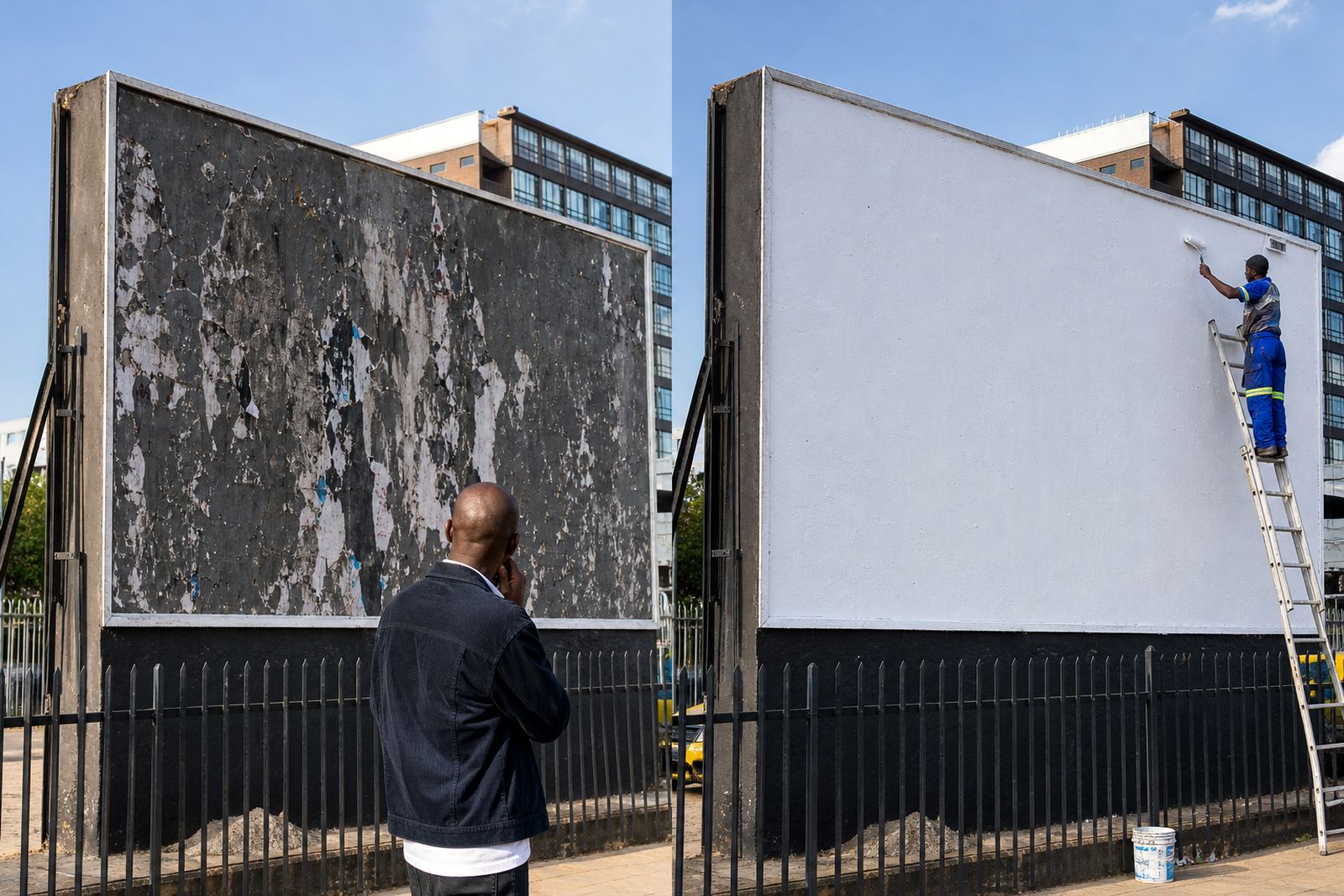
Installation is not just a single day event. It can involve access booking, safety checks, delivery timing, ladder or lift requirements, and making sure the site is ready before the crew arrives. If another campaign is ending, allow enough time for removal and cleaning before the next one starts.
For advertisers, this means a launch should include a buffer between approval and install. For property owners, it means managing site access so the installer can work without disrupting the building or tenants. In places like Pretoria, Midrand and Cape Town, building management may have set hours for loading bays, so the install plan should match those rules. A site can be booked correctly and still miss its start date if access is not confirmed early enough.
- Schedule removal before the new installation date
- Confirm loading bay or street access requirements
- Check if the install needs daytime or after-hours work
- Keep a small buffer for weather or access delays
Use a practical timeline for a local example
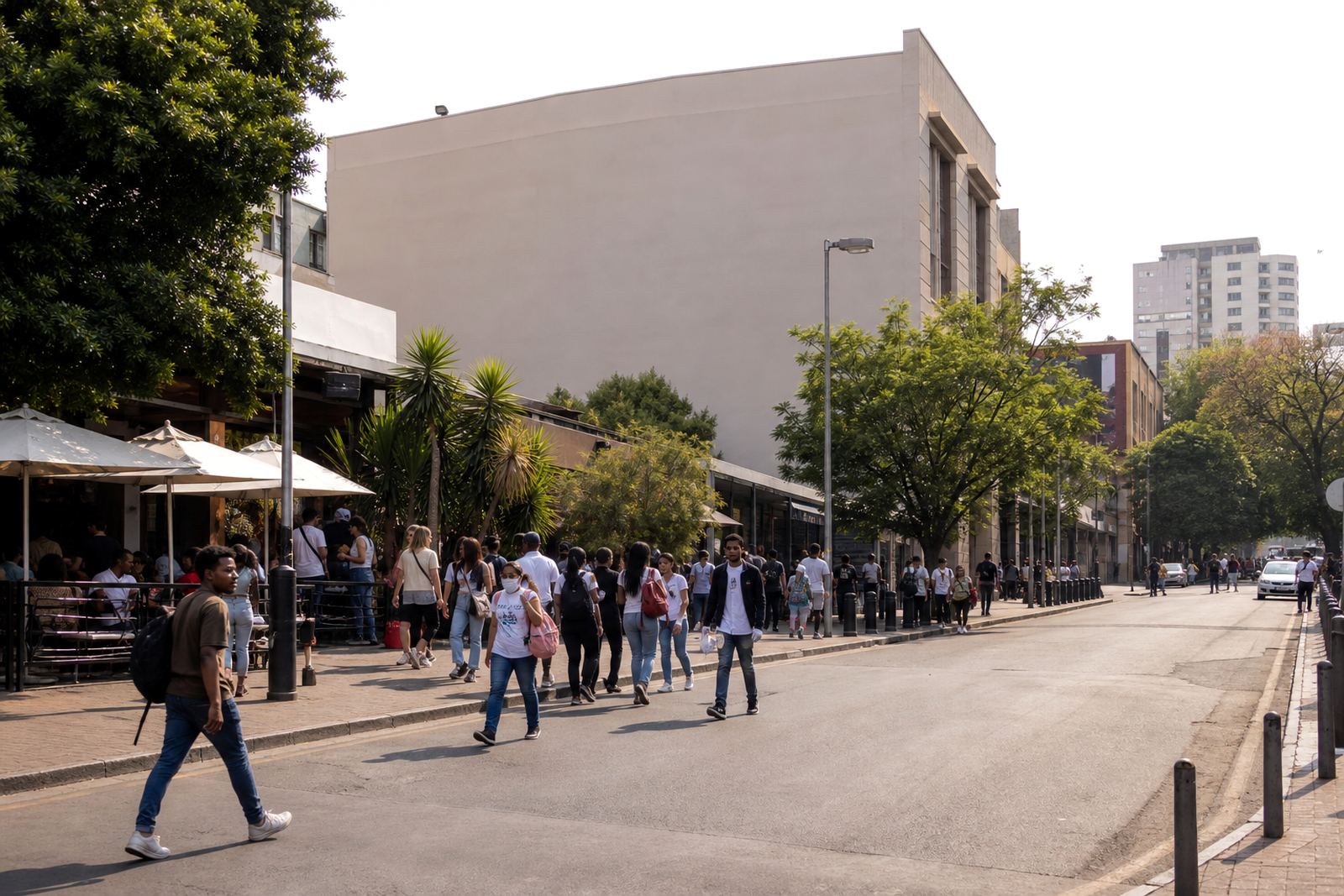
Say a retailer wants a campaign live in Braamfontein before a month-end promotion. The work should start with site selection and owner consent, then move to municipal bylaw checks if required. Once the space is confirmed, the artwork is checked against the final measurements, production is booked, and the installation date is locked in. If the site has limited access or the building needs advance notice, that should be factored in at the start.
A simple timeline helps keep things realistic: one week for matching and consent where the paperwork is straightforward, another stretch for artwork and print, then install scheduling with a small buffer before launch. That may sound cautious, but it is often the difference between a campaign that goes up on time and one that slips because a file, permit or access note was missed. Timing is not glamorous, but it is where many outdoor campaigns succeed or fail.
For teams planning several sites across Johannesburg, Pretoria, Cape Town, Durban and Bloemfontein, the safest approach is to treat every location on its own terms. The same brand message can travel well, but the timing behind each site will vary.
Keep renewals and monitoring on the calendar
Once a campaign is live, the work is not over. Monitoring helps confirm that the display is holding properly, the message is visible and the site remains suitable for the full booking period. If a campaign is meant to run longer, renewal planning should begin before the end date so the space does not lapse unexpectedly.
That is especially useful where a property owner wants continuity or where an advertiser may need to extend after a good response. Listing renewal support, availability management and campaign monitoring all help keep the next step organised. A well-timed renewal is easier than trying to recover a space after it has already been reassigned.
Good timing in outdoor advertising is really about respecting the order of things. Confirm the site, check the rules, prepare the artwork, schedule the install and keep a close eye on the run. Simple enough, but only if the dates are handled with care.