
What a bridge banner site is and why it works
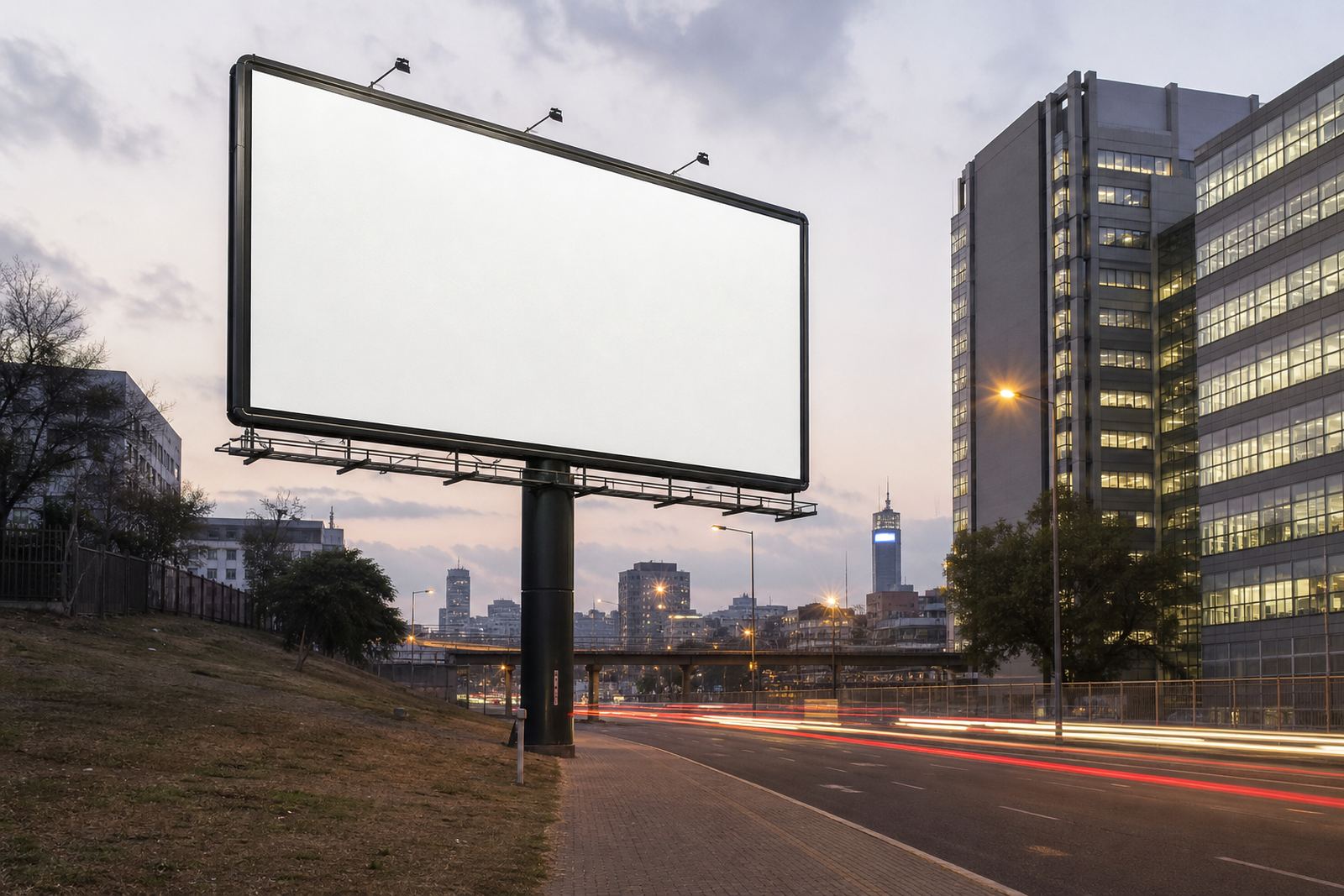
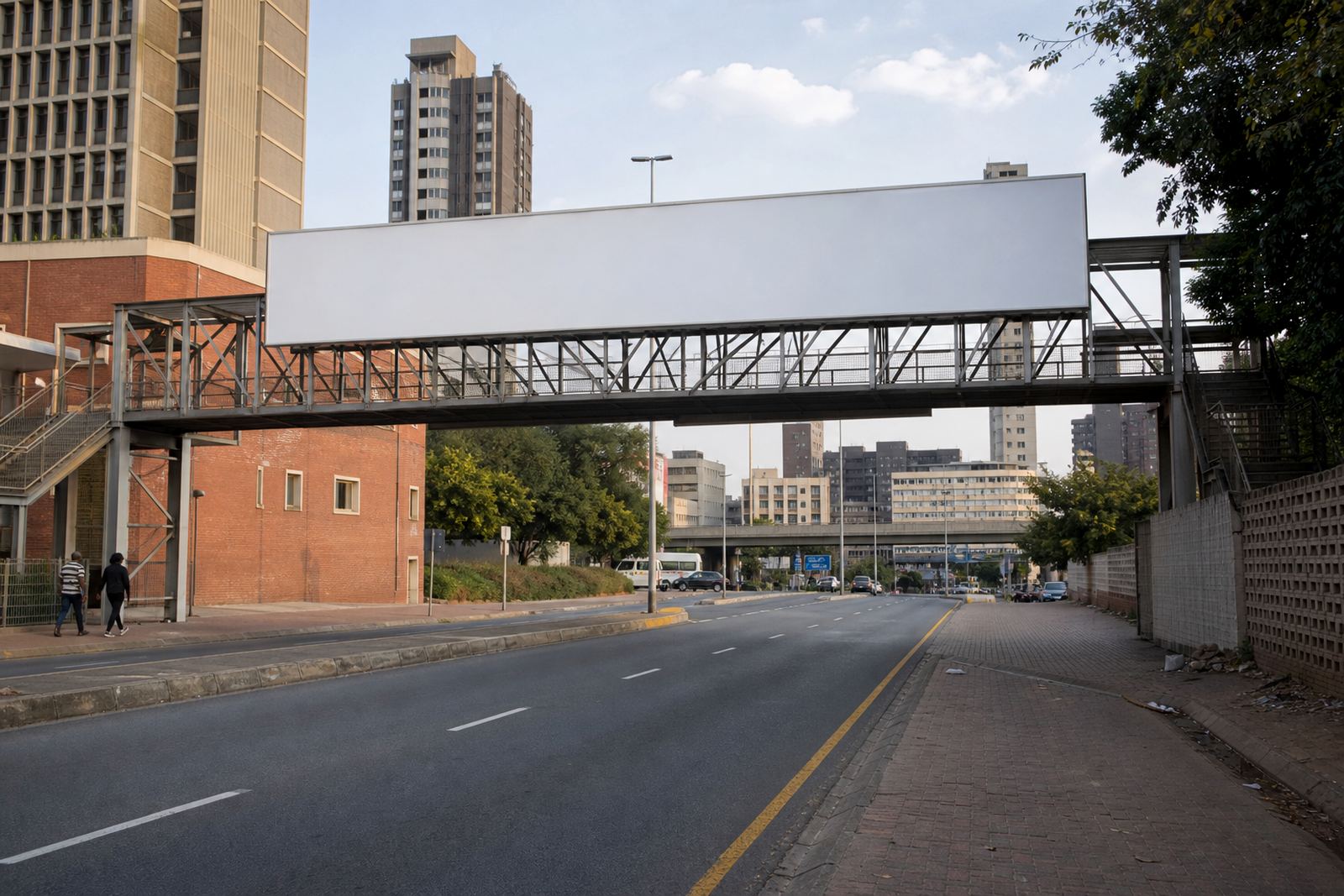
A bridge banner is outdoor advertising fixed to or across a bridge structure, usually where road users can see it clearly while moving through traffic. It is a practical format because the message sits in a narrow viewing window and does not need a long story. You get best results with short wording, a clear logo, and strong contrast that still reads in the rain or late afternoon glare.
These sites are often considered for launch periods, seasonal promotions, property marketing, and local service campaigns. In Johannesburg for example, a banner near a busy route can support awareness for a nearby branch, while in coastal towns the same type of site has to cope with wind, salt air, and tougher fixing requirements. The banner itself is only part of the job, the structure, access, and approvals matter just as much.
Where bridge banners are usually considered
Bridge banner sites are commonly used near major roads, interchanges, rail crossings, and walkways where people pass at a steady pace. Some sites work well for drivers, others for pedestrians or passengers in slower traffic. A good listing should explain exactly what the viewer can see, from which direction, and whether the banner is visible at peak or off-peak times.
- Road-facing bridges near busy intersections
- Pedestrian bridges over arterial roads
- Structures close to retail, office, or transport nodes
- Sites that allow clear sightlines without poles, trees, or overhead clutter
When we review a site, we look at access for installation, clearance around the structure, and whether the message will be blocked by road furniture or nearby buildings. In some areas a banner may look great on paper but be less useful because the angle is wrong or the span is too short for the artwork size you had in mind.
The approvals you need before anything goes up
Bridge banners are not casual placements. The property owner must give consent, and local municipal bylaw approval is needed before installation. Depending on the location, other permissions may also be required from the road authority or relevant site controller. If there is a bridge management team or private owner involved, that process needs to be handled in the right order.
This is where many campaigns lose time. A clean listing can still stall if the consent documents are incomplete or the artwork does not meet local specifications. The safest route is to confirm ownership, check who signs off, and allow enough time for the paperwork. In Braamfontein and other central Johannesburg areas, access windows and traffic control can also affect the install date, especially if the site sits on a route with strict movement limits.
- Owner consent in writing
- Municipal bylaw approval
- Artwork size and fixing method checked first
- Any access restrictions confirmed before booking
Artwork that reads fast and holds up outdoors
Bridge banners need artwork that can be understood in seconds. Keep the message short, leave enough empty space, and avoid fine detail that disappears at speed. If the bridge is seen from a distance, larger lettering and simpler shapes usually perform better. If the site is for pedestrians or slower traffic, you can use a little more detail but the core message should still be immediate.
Weather matters too. In summer heat, heavy sun can fade poor print work quickly and coastal humidity can be hard on materials and fixings. Wind load is another issue, especially on open spans in places like Durban or parts of Cape Town. A site may be available, but if the banner cannot be installed safely or maintained properly, it is not a good fit. Ask for artwork spec checks before printing so there are no expensive reworks later.
How site conditions change the value of a banner
Every bridge is different. Some have strong exposure but limited working space, while others are easy to install on but sit too close to competing visual clutter. The best sites balance visibility, safety, and practical access. A banner near Sandton can suit a different brief from one in Bloemfontein or Midrand, simply because the road pattern, surrounding buildings, and viewing distance are different.
It also helps to understand how the site will behave during load-shedding, night-time driving, and wet weather. If the route is dark after sundown, your design needs enough contrast to stand on its own. If the bridge is close to a curve or junction, drivers may only have a brief look. That means the message should carry without extra explanation.
- Viewing angle from approaching traffic
- Distance from the road and speed of passing traffic
- Nearby signs, trees, and poles that may interrupt the view
- Maintenance access after rain, wind, or vandalism
A practical example from Johannesburg
Imagine a business wanting awareness along a busy Johannesburg route connecting office areas and commuter movement. A bridge banner there can be useful if the message is short, the route is approved, and the fixing method suits the structure. The campaign may need a quick turnaround, but the consent steps still have to happen first. A neat listing with current photos, clear dimensions, and a simple description saves time for both the advertiser and the property owner.
That is where a marketplace approach helps. The advertiser can compare sites across Johannesburg, Pretoria, Cape Town, Durban, Bloemfontein and other areas, while the property owner gets a proper listing process instead of informal back and forth. For a bridge banner, that means the right people see the right details early, from artwork specs to installation timing and renewal options.
How RentThisWall supports bridge banner bookings
RentThisWall connects advertisers with billboard and wall-space opportunities across South Africa, including bridge-related sites where the permission process is properly managed. The team helps with space listing setup, site photo curation, listing copywriting, availability management, brief matching, booking coordination, consent check guidance, bylaw process support, artwork spec checks, installation scheduling, campaign monitoring and listing renewal support.
For property owners, that means a cleaner process for listing a site and keeping availability up to date. For advertisers, it means less guesswork when checking whether a bridge banner is suitable for the brief. The point is not simply to place a sign, but to make sure the site is lawful, practical, and ready for installation without surprises. If you are planning a bridge banner campaign, start with the permission side first, then the creative, then the schedule.