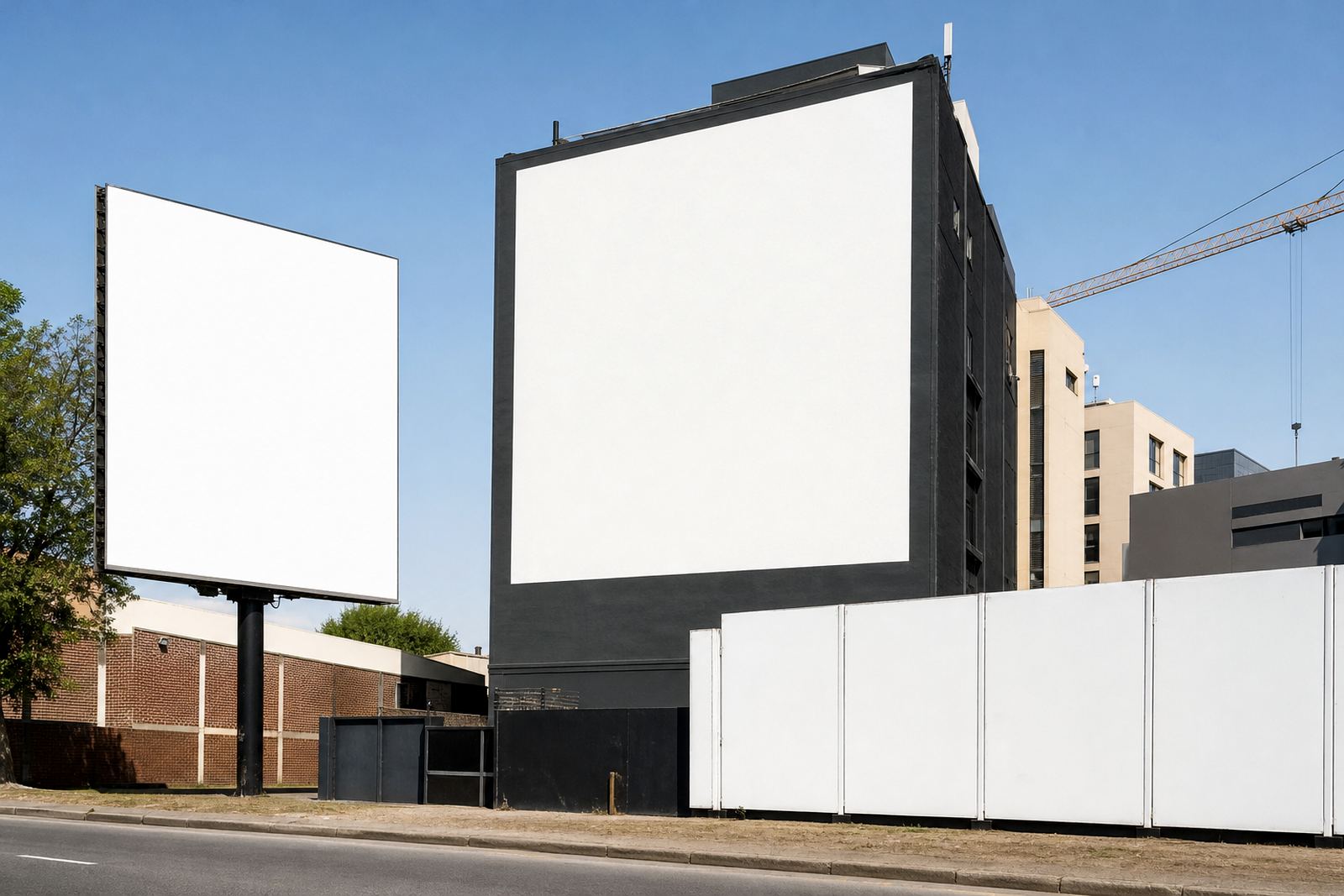
Start with a clear property conversation
When you first speak to a property owner, keep the conversation practical. Ask what space is available, who has authority to give consent, and whether the wall, fence, rooftop or freestanding structure can be used for advertising. If the owner is part of a body corporate or managing agent arrangement, confirm who must approve the placement before anything is listed.
It helps to record the basics in one place. You need the property address, the suburb, the type of surface, approximate size, visibility direction and any limits on lighting or installation. In Johannesburg, Pretoria, Cape Town, Durban and Bloemfontein, these details make the difference between a smooth booking and a delayed one.
- Ask for the exact site location and nearest landmark.
- Confirm who can sign off on use of the space.
- Check whether the wall is free of pipes, cables or other fixed items.
- Note if there are estate rules, municipal notices or shared access issues.
Gather the details advertisers need before booking
Advertisers need enough information to judge whether the space suits their campaign. Clear measurements, recent site photos and practical notes on access are more useful than vague descriptions. If the space is in Braamfontein or Sandton, for example, mention street level access, pedestrian barriers or any nearby construction that may affect installation.
Use plain language and avoid guesswork. If you are not sure about a measurement, say so and arrange a proper check. A missed detail can lead to a panel that does not fit or artwork that must be reprinted, which costs time and money. On coastal sites, also mention salt air and weather exposure because this affects materials and upkeep.
- Take clear photos in daylight from multiple angles.
- Measure height, width and available mounting points.
- Show any lighting, shade, overhangs or obstructions.
- State if the site is sheltered, exposed, or affected by wind.
Keep consent and municipal steps in order
Signage on private property still needs the property owner’s consent, and in many areas local municipal bylaw approval is also required. That is why owner communication must stay tied to compliance from the start. If the owner is unsure about the bylaw process, explain what documents are needed and who will handle the next step.
Good guidance avoids confusion. Make it clear that consent does not replace municipal approval and that installation should only be scheduled once the relevant checks are complete. In some areas, especially where there are heritage controls, estate rules or road-facing restrictions, the process can take longer than expected. It is better to plan early than rush a sign that then cannot be erected.
- Confirm written owner consent before listing or booking.
- Check whether the site needs municipal approval for the type of sign.
- Keep copies of any rules, permits or property documents provided.
- Do not promise installation dates until compliance is confirmed.
Agree on access, timing and responsibility
Owners need to know who will be on site, when they will arrive and what access is required. A short, direct schedule works best. Say whether the installation team needs early morning access, whether lifts or ladders will be used, and whether security must be briefed first. In some industrial or mixed-use areas, access windows are limited and delays can happen if this is not arranged upfront.
Also be clear about responsibility. Who opens the gate, who signs for delivery, who checks the finished work and who handles any follow-up if the site changes later. If load shedding affects lighting or access controls, mention it before the appointment so nobody arrives to locked gates or dark stairwells. A bit of prep saves a lot of back and forth.
- Confirm site access times and entry points.
- Identify the person on site for handover.
- Check for security procedures or visitor logging.
- Note if power cuts or access controls may affect the visit.
Manage listing updates without slowing the owner down
Owner communication does not stop once a listing is live. Availability changes, seasonal closures and building work can all affect a space, so regular updates matter. Keep the owner informed about enquiries, bookings and dates that are on hold. If the site is no longer suitable, update the listing quickly so advertisers do not waste time on a space that cannot be used.
This is also the stage where small checks help keep the record accurate. Reconfirm the site photo if the surrounding area has changed, check whether the wall is still in good condition, and make sure the owner still wants the space listed. A short review every so often is much easier than fixing a stale listing later on.
- Review availability before accepting a booking.
- Update photos when the site changes.
- Confirm the owner still wants the space advertised.
- Remove or pause listings when access or consent changes.
Use a simple handover checklist for every campaign
Once a booking is approved, the handover should be neat and practical. The owner should know what is being installed, where it will sit and how long the campaign is expected to run. If the site is in a busy commercial area, ask about delivery restrictions, loading space and any neighbours who need notice. The same applies if the wall is on a shared boundary or close to a residential property.
A proper handover reduces misunderstandings later. Keep a record of the agreed artwork size, installation date, site contact and any conditions the owner set. If there is a problem during the campaign, such as damage, weather wear or access issues, this record makes it easier to sort out quickly. It is simple admin, but it matters.
- Confirm the approved artwork size and placement.
- Record the site contact and installation date.
- Note any access instructions or property rules.
- Agree who to contact if anything on site changes.
Build long term owner relationships through clear updates
Owners are more likely to keep listing with you when they get straight answers and regular feedback. Share booking progress, let them know when a campaign is complete, and give them a heads up before the next renewal review. If you have noticed issues with weather exposure, fading or surface wear, mention them early so the owner can plan maintenance.
Respectful communication also helps when there is no booking immediately. A quick update that the site is still active, or that the next opening is being tracked, keeps the relationship warm. In our experience, property owners value reliability as much as interest. If you say you will follow up, do it.
- Send clear updates at each stage of the booking.
- Report any site issues as soon as they are noticed.
- Keep renewal conversations simple and on time.
- Follow through on every promise, even small ones.