
Start With The Job Your Campaign Must Do
Before you compare sites, be clear about the purpose of the campaign. Some briefs need broad visibility over a long period, while others need a short run for a sale, event, launch or location reminder. A format should fit the message, the timing and the area where people will see it every day.
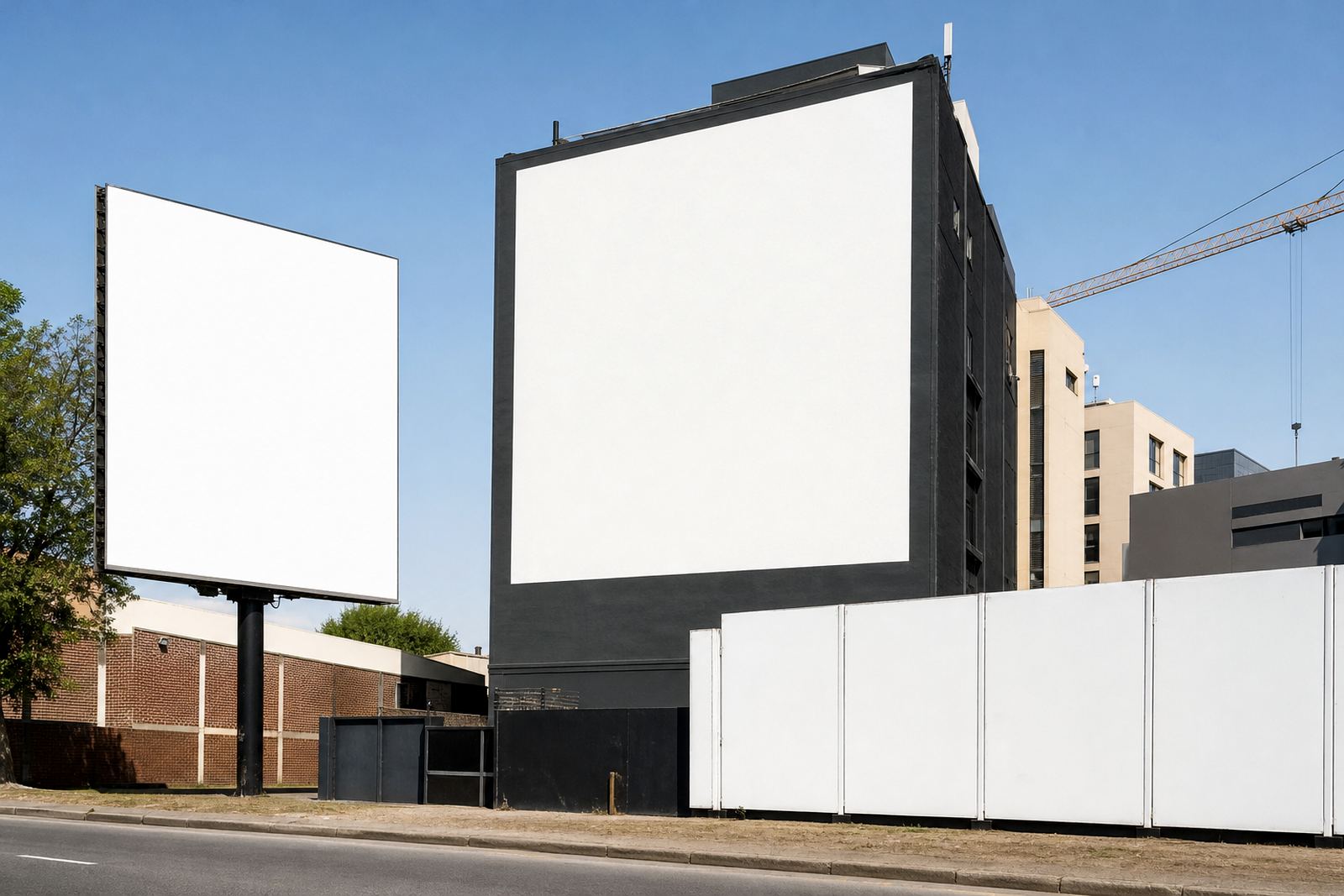
In Johannesburg, Pretoria, Cape Town, Durban or Bloemfontein, the same message can work very differently depending on road speed, viewing distance and how much time drivers or pedestrians have to take it in. A large billboard suits a simple brand message. A wall space in a busy urban area can suit a sharper, more local message. Temporary outdoor space can work well when the dates are fixed and the brief needs flexibility.
- Decide whether the goal is awareness, direction, promotion or launch support.
- Set the duration first, then match the format to that period.
- Keep the copy short enough for passing traffic and street level viewing.
- Check whether the campaign must work in one city or across several areas.
When A Billboard Is The Better Fit
Billboards are often the right choice when you need clear visibility from a distance and a message that can stay up long enough to build recall. They suit brand names, service reminders and simple calls to action. If the artwork is too detailed, too many words or too busy, the value drops quickly. A clean layout with a strong image and a few words usually does better.
Billboard sites can be useful on major routes, near interchanges and along corridors where vehicles slow down or queue. In coastal areas, weather exposure matters and the structure must be suitable for wind and moisture. In Gauteng, a site near office districts may need different messaging from one near a retail node or transport route. Also, if the campaign needs daylight and night-time visibility, the format should allow for that from the start.
- Best for simple brand-led messages and wider reach.
- Useful when the campaign needs a longer run time.
- Good for main roads, freeway edges and major urban approaches.
- Works best when the artwork is large, clear and uncluttered.
When Wall Space Makes More Sense
Wall advertising can be a strong option when the brief needs a specific urban setting or a more local connection. It is often chosen for dense city areas, building-facing streets and sites where pedestrians, taxis and nearby traffic see the message at close range. Wall space can also give you a practical way to use a site that feels part of the area rather than separate from it.
In places like Braamfontein, Sandton, Midrand, central Pretoria or parts of Cape Town and Durban, wall formats can work well where there is consistent footfall and strong sight lines. The message should still be easy to read quickly. If the site sits near load shedding sensitive areas or around mixed-use buildings, plan the install and lighting considerations carefully. We also check that the property owner has given consent and that local municipal bylaw approval is in place where required.
- Suitable for tighter urban settings and street level exposure.
- Can work well for location-based offers and local awareness.
- Needs careful viewing-angle checks before booking.
- Requires clear consent and bylaw process support where applicable.
Temporary Outdoor Options For Short Campaign Windows
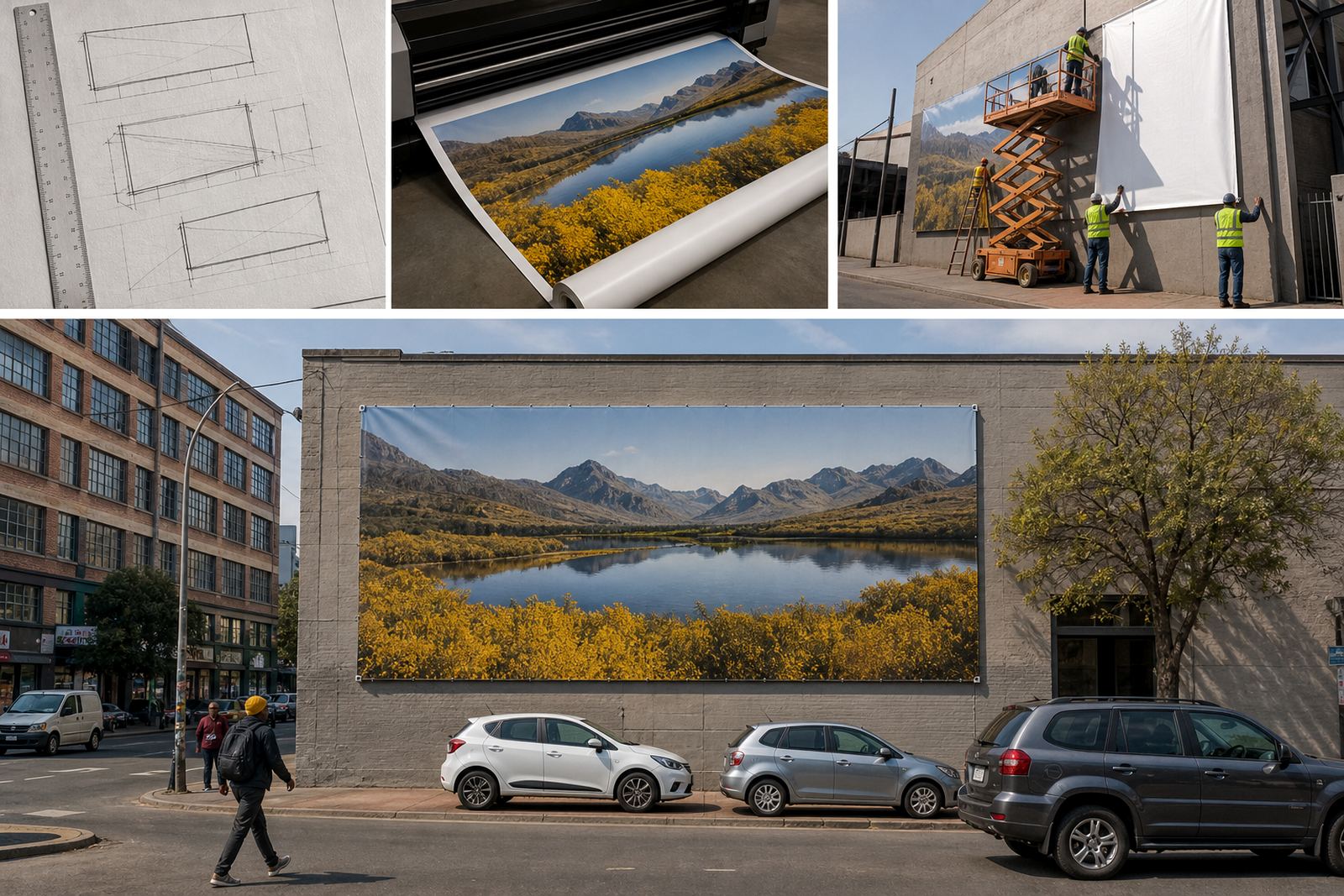
Temporary outdoor formats are useful when your timing is fixed or the campaign needs a short burst of attention. These can suit launches, seasonal promotions, event directions, property openings or limited period branding. Because the run is shorter, the artwork and schedule need to be sorted early so nothing delays the start date.
These jobs often need tighter logistics than long term formats. Artwork must match the site specs, and installation dates need to line up with property access, weather and local rules. In some areas, especially where there is coastal humidity or strong wind exposure, material choice and mounting details matter. It is better to keep the layout simple and make the point fast, becuase there is less time for repeated exposure to do the work.
- Good for launches, events and limited period offers.
- Needs confirmed dates, access and site readiness.
- Artwork should be approved against the exact site size and specs.
- Shorter runs still need the same consent and compliance checks.
A Practical Site Checklist Before You Book
Once you have a format in mind, compare the site against a simple checklist. This helps avoid booking a space that looks good on paper but is wrong for the campaign. It also helps keep the process realistic for property owners and advertisers alike.
Ask whether the site is visible from the right direction, whether there are obstructions, and whether the surrounding area supports the message. In South African cities, nearby construction, tree cover, street furniture and signage clutter can change the value of a site. It also helps to know if there are any building restrictions, access limits or timing conditions attached to the property. Our team handles listing setup, photo curation, copywriting and availability management so the details are easier to compare.
- Is the site visible from the intended approach or walking route?
- Does the format suit the size of your message?
- Are property owner consent and municipal bylaw steps confirmed?
- Can the artwork be installed and maintained within the campaign dates?
Match The Format To The Budget And Operations
The cheapest-looking option is not always the best value. A format that fits the campaign goal, the area and the timing usually saves trouble later. If the message is too small for the site, or the site is too short term for the objective, the campaign can underperform even if the location looks strong.
Think about practical matters like installation scheduling, artwork spec checks, monitoring and renewal support. A good match also depends on the property owner's cooperation and the municipal process where needed. For clients managing multiple sites across Johannesburg, Pretoria, Cape Town, Durban and Bloemfontein, brief matching and booking coordination keep the campaign moving without constant back and forth. If you are unsure, start with the format that suits the message best then narrow the site list from there.
- Choose the format first, then confirm the site details.
- Allow time for consent, artwork checks and scheduling.
- Use monitoring to check that the campaign stays in good order.
- Renew only when the site still matches the brief, not just because it is familiar.
How To Move From Brief To Booking
When you are ready to proceed, send a clear brief with your target area, preferred dates, message length and any artwork requirements. The more specific the brief, the faster the matching process can happen. If you are still comparing formats, say so and ask for guidance on which option suits the objective best.
For property owners, the same process helps keep expectations clear. Site details, photo curation, listing copy and availability updates must be accurate from the start. That makes it easier to connect the right advertiser with the right space and keep the process straightforward. Our contact page enquiry form is the best way to start the conversation and the team can guide you from there.
- Prepare your campaign area, dates and format preference.
- Share artwork specs or ask for artwork guidance first.
- Confirm consent and bylaw requirements before installation.
- Keep a simple renewal plan if the campaign may extend.