
Start With a Clear Campaign Goal
Before you compare sites, be clear on what the campaign must do. Some businesses want simple visibility near their shop or service area, while others need broader reach across Johannesburg, Pretoria, Cape Town, Durban or Bloemfontein. A first outdoor campaign works best when the goal is specific, whether that is brand awareness, promoting a launch, driving enquiries or supporting a seasonal offer.
It also helps to decide how long the message needs to stay up. Short runs suit time-sensitive promotions, while longer bookings often make more sense for brand building. If you are not sure where to start, begin with one site that matches your budget and location needs rather than spreading the spend too thin.
Think about the message too. Outdoor space gives you only a few seconds of attention, so keep the copy direct. One offer, one action, one contact route is usually better than trying to say everything at once.
Choose a Site That Fits the Business
Not every wall or billboard suits every business. A site in Braamfontein may work well for offices, student areas or inner-city visibility, while a site in Sandton or Midrand may suit commuter routes and commercial districts. The point is not just to find a busy spot, but to find a location that fits your audience and the kind of message you want to run.
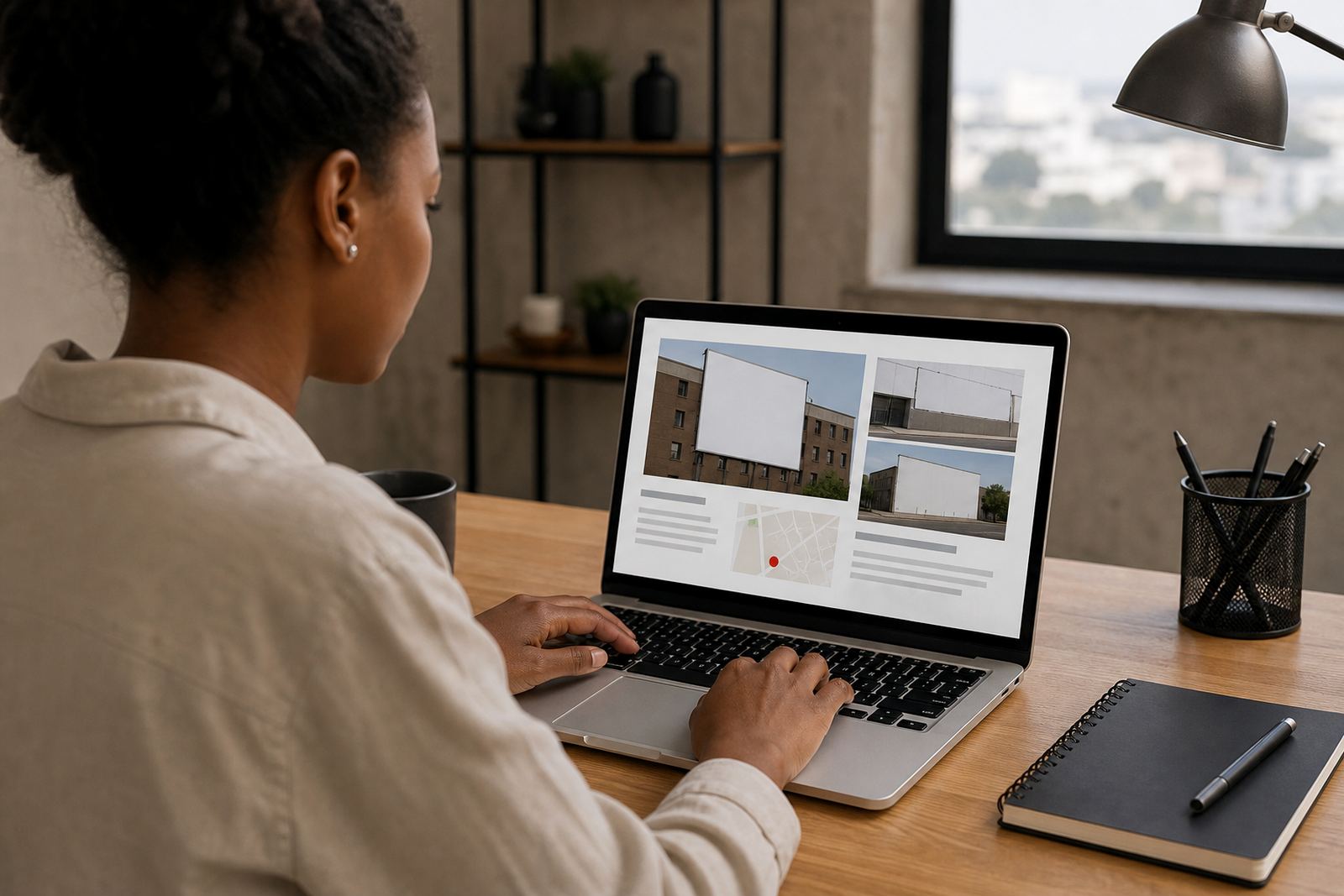
When reviewing listings, look at the direction of travel, nearby landmarks, surrounding buildings and whether the panel is easy to see from a distance. Wall-space can be useful for long dwell times at traffic lights or in areas where people pass on foot. Standard billboard formats can suit broader exposure across main roads and corridors.
- Check whether the site faces oncoming traffic or side traffic.
- Ask for recent site photos so you can judge visibility.
- Look at nearby trees, poles, signage and building edges that may block the view.
- Match the site to the area your customers already use.
Confirm Consent and Municipal Requirements Early
For any outdoor sign or advertising panel, the property owner’s consent is required. In addition, local municipal bylaw approval may be needed depending on the site, size and placement of the display. This is one of the most important steps for first-time advertisers, because a site can look perfect on paper but still be held up by paperwork.
It is better to ask these questions before you book: who owns the property, whether the owner has approved the space for advertising, and what the local bylaw process requires. If the site is on a building or wall, the structure itself may also need to be checked for suitability. Coastal areas like Durban can bring salt air and faster wear, while Johannesburg summer storms and load-shedding can affect scheduling, access and installation planning.
- Confirm owner consent in writing.
- Check whether municipal approval is required for the location.
- Allow time for any bylaw process support or follow-up documents.
- Ask about access times if the site is in a busy business area.
Prepare Artwork That Reads Fast and Clean
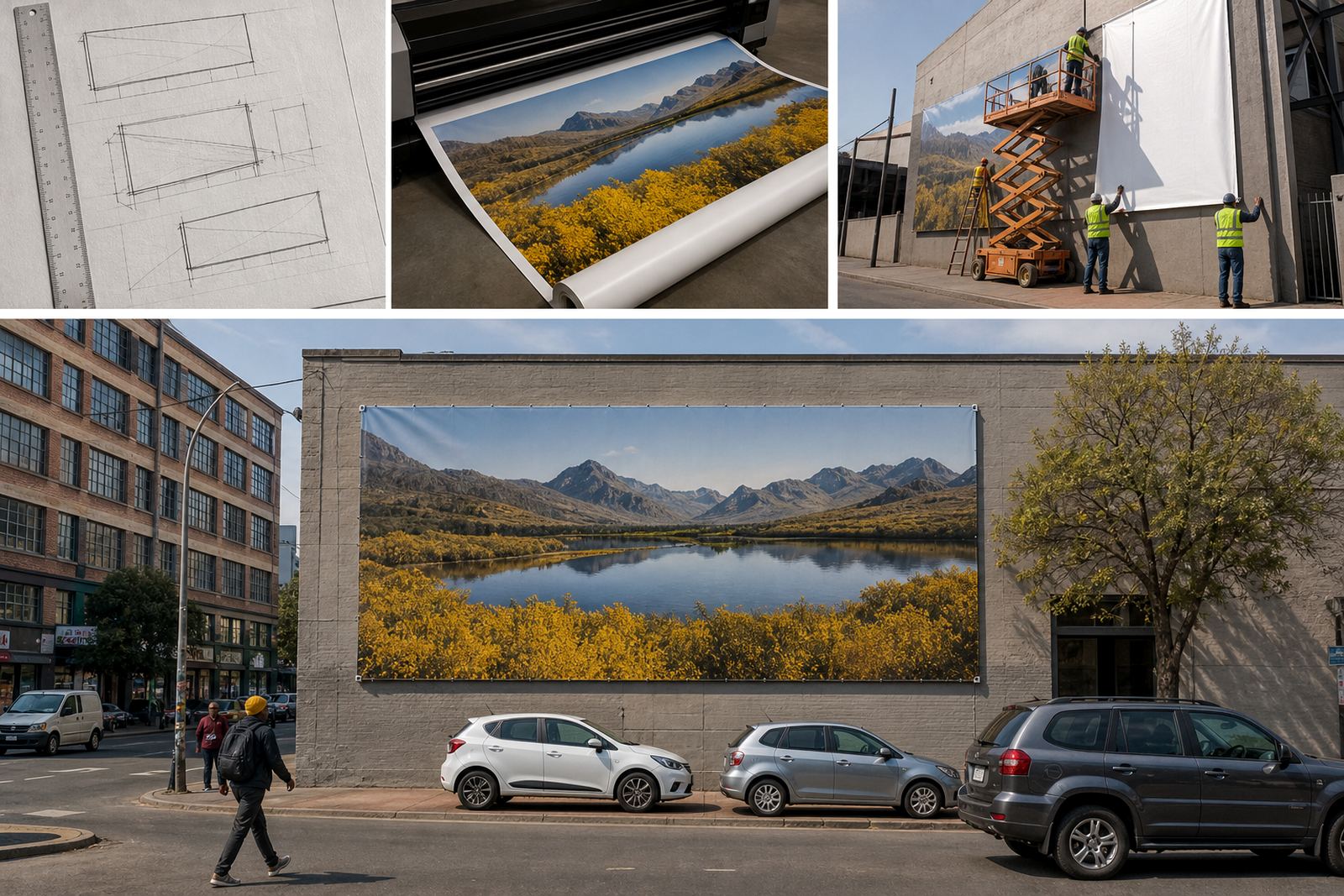
Outdoor artwork has to work hard in a short time. Keep the layout simple, with large lettering and a strong message hierarchy. If the message is too crowded, drivers and pedestrians will not take it in. A good first brief usually includes the business name, one key benefit, one offer if needed, and a clear action such as visiting a website or calling the office.
When sending artwork, make sure the file matches the listed size and format requirements. Low-resolution images can look blurred once installed, especially on larger wall-space displays. If you are using photographs, choose images that hold up in daylight and do not disappear against the background. High contrast matters, especially in bright Johannesburg sun or overcast coastal conditions.
If your campaign has more than one site, keep the branding consistent across all versions so the public recognises it quickly. Small changes for each area are fine, but the core message should stay the same.
Plan the Booking and Installation Window
Once the site is shortlisted, confirm the booking period and installation timing. Outdoor work often depends on access to the property, weather and any approval steps that still need to be completed. It is wise to build in a little extra time, particularly if the panel is on a busy street or if work must happen outside trading hours.
Good planning avoids last-minute pressure for property owners, installers and the advertiser. If the display needs lighting or special mounting, that should be noted upfront. Some areas also have stricter access rules, loading arrangements or body corporate conditions, so the site details need to be checked before anyone arrives with materials.
- Confirm the start date and end date in writing.
- Ask what access is needed for installation day.
- Check whether after-hours work is allowed.
- Allow time for weather delays, especially in windy or rainy periods.
Keep an Eye on the Campaign Once It Is Up
After installation, do a quick check that the artwork is fitted properly, clean and easy to see from the intended angle. A first campaign is a good time to learn what works, and small issues are easier to fix early than later on. If the display is on a wall or an exposed roadside site, make note of anything that could affect the print over time, such as sun, dust or coastal moisture.
Monitoring does not need to be complicated. A few site photos, a note of the installation date and regular checks on visibility are usually enough for a starter campaign. If anything changes at the property, or if there are concerns about the condition of the display, the listing should be reviewed quickly.
When the booking ends, it helps to decide whether the site should be renewed, adjusted or replaced. The best first campaign is one that leaves you with useful lessons for the next one, not just a single shot at visibility.
Simple First-Campaign Checklist
Use this list as a final check before you commit to a site. It keeps the process practical and helps you avoid missing a step that can cause delays later.
- Set one clear campaign goal.
- Choose a site that matches your market and area.
- Confirm the property owner’s consent.
- Check local municipal bylaw approval requirements.
- Review site photos and visibility angles.
- Prepare artwork to the correct size and format.
- Plan installation timing and access.
- Keep records of booking dates, approvals and changes.
If you are booking for the first time, it is normal to need a bit of back and forth. The main thing is to keep the process organised so the campaign can go live without unnecessary hold-ups.