Start With the Listed Dimensions, Not a Guess
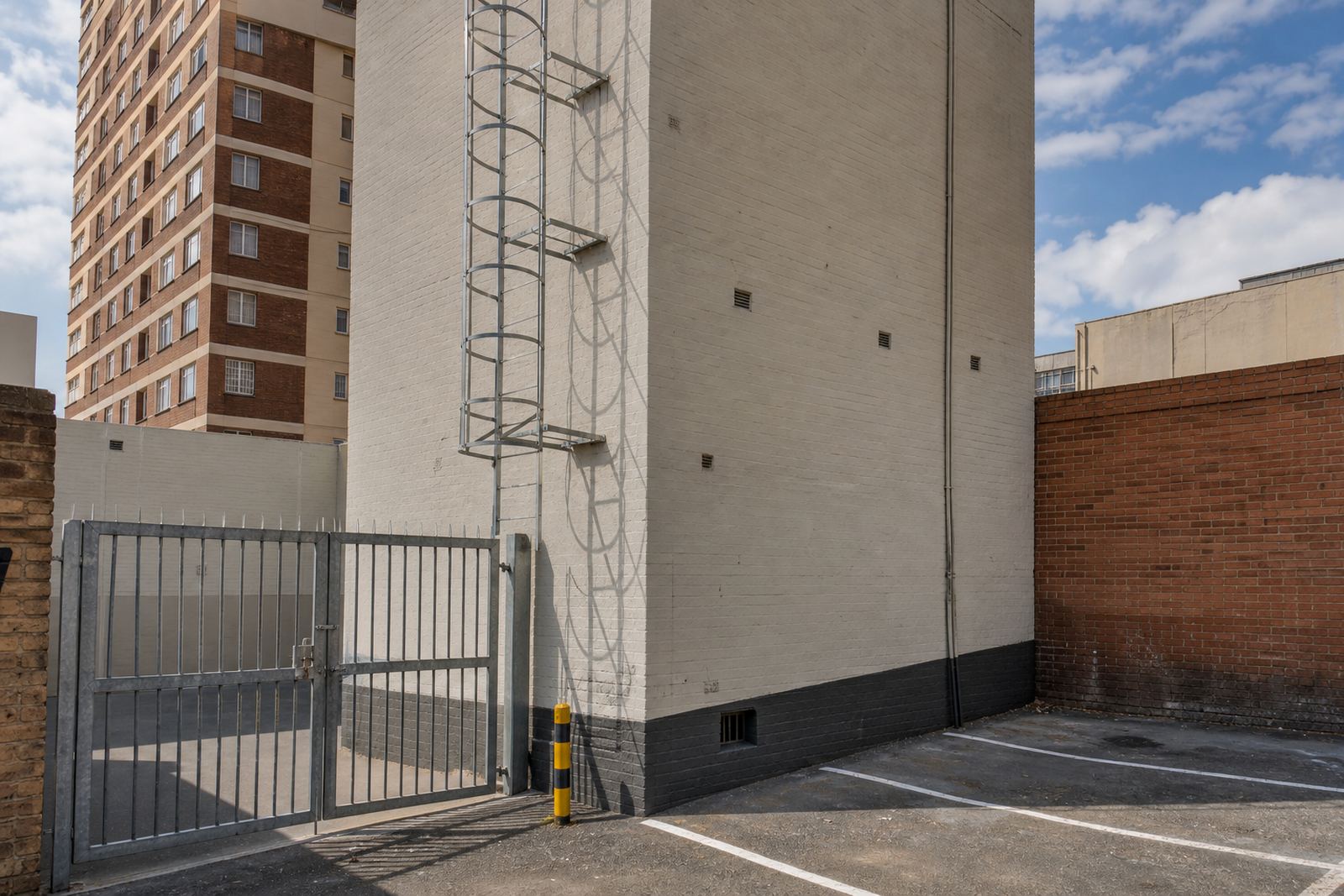
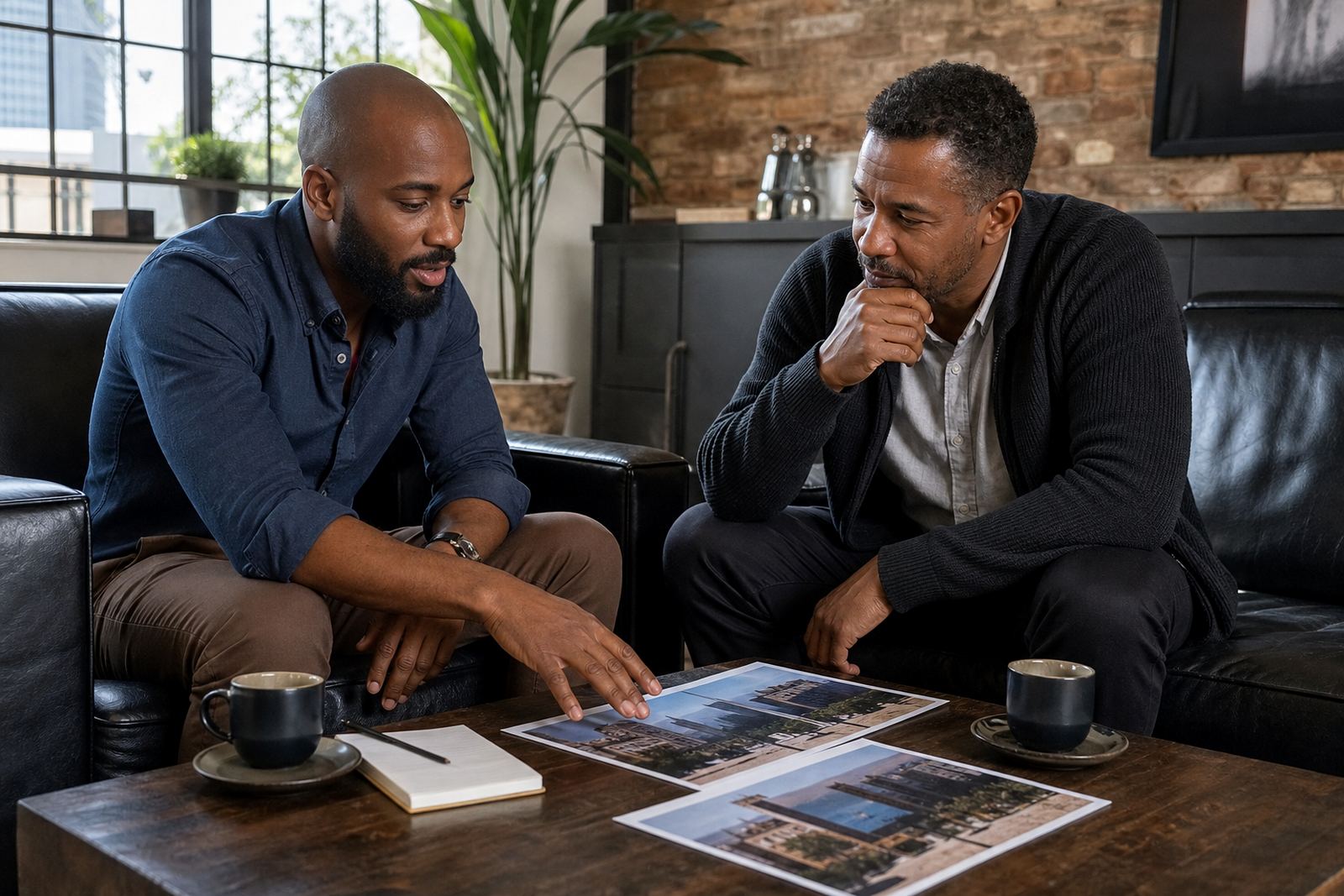
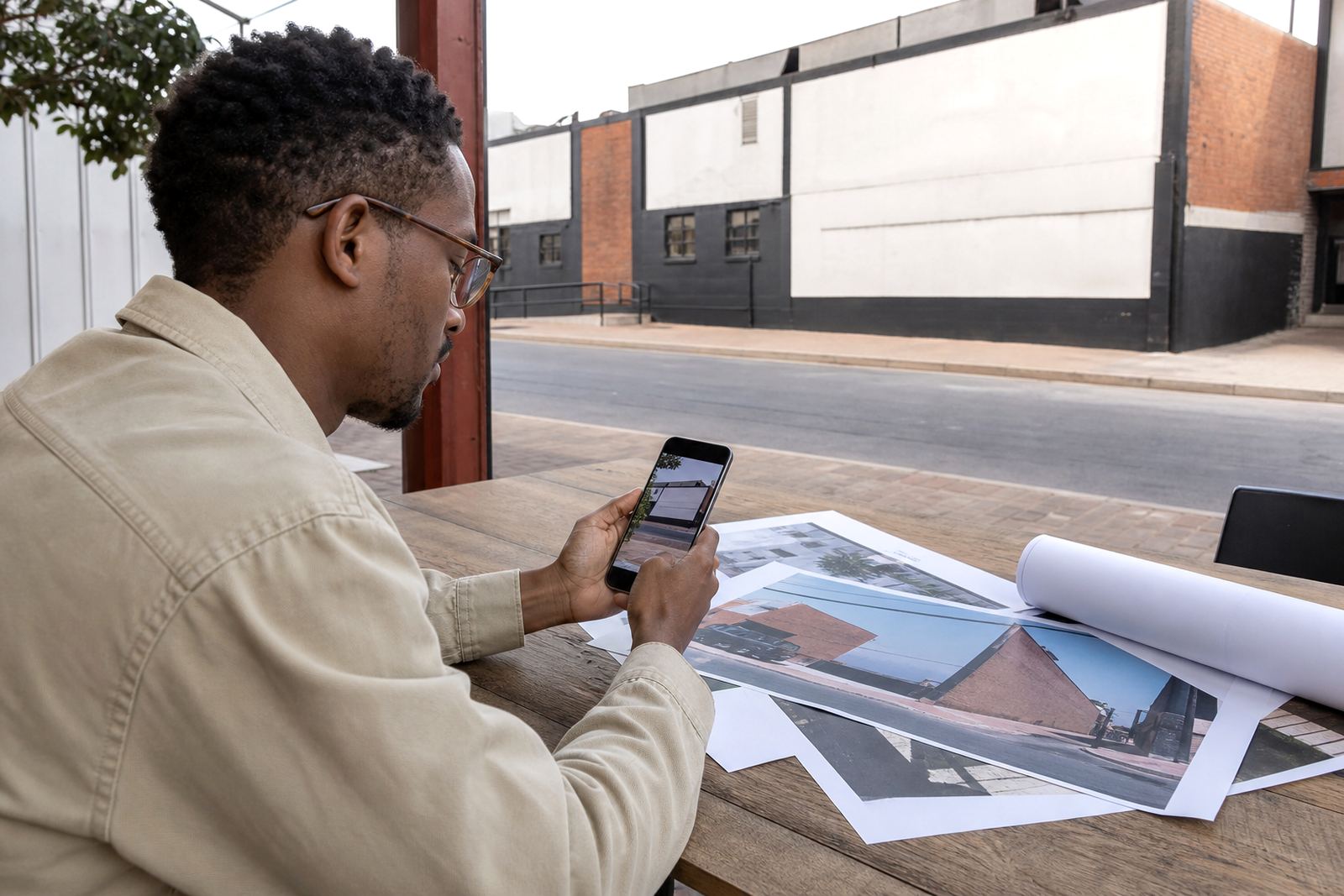
Every site should be treated as a specific space with its own measurements, mounting points and viewing angle. Use the listed width and height as your starting point, then confirm whether the usable area includes borders, frames, trim or any fixed structures that reduce the print area.
For wall advertising, size is only part of the brief. A long narrow wall on a busy street in Braamfontein may need a different composition from a square panel on a building in Durban, and the artwork must still read clearly when seen from a moving vehicle or from the pavement.
- Check the exact width and height before final artwork is prepared.
- Ask whether the visible area differs from the full structural size.
- Confirm if the site is portrait, landscape or an irregular wall section.
- Keep logos and key text away from edges, joins and fixings.
Design for the Distance People Will See It From
The right size is not only about metres, it is also about how far away the viewer will be. A wall near a robot-controlled intersection in Johannesburg needs larger letterforms than a site read mostly at close range in a shopping street. If the audience has only a few seconds, the message should be short and the main point obvious.
As a practical rule, use fewer words and bigger type when the site is farther from the eye line or when vehicles move quickly past it. If the space is in a pedestrian area, you can include more detail, but the layout still needs strong contrast and a clear hierarchy.
- Use a short headline that can be read quickly.
- Keep one main image or visual device, not several competing elements.
- Make contact details and calls to action larger than fine print.
- Test the design on a screen at a reduced size before sending it for output.
Allow for Borders, Bleed and Safe Zones
Artwork files should include bleed where needed so trimming does not leave white edges or cut through important content. If the panel has an edge wrap, frame return or overlap, leave enough margin so text and logos do not sit too close to the cut line. Small details can disappear once the material is printed and fixed in place, especially on large outdoor panels.
It helps to build a safe zone around all essential content. That means keeping the most important words, logos and contact details well inside the visible area. On some walls, the installer may need to work around surface irregularities, so a tighter layout can cause problems later.
- Confirm the bleed allowance before artwork is finalised.
- Keep all critical information inside a safe margin.
- Avoid hairline rules and very small text.
- Check that dark backgrounds do not swallow low-contrast wording.
Match the File Setup to the Final Output
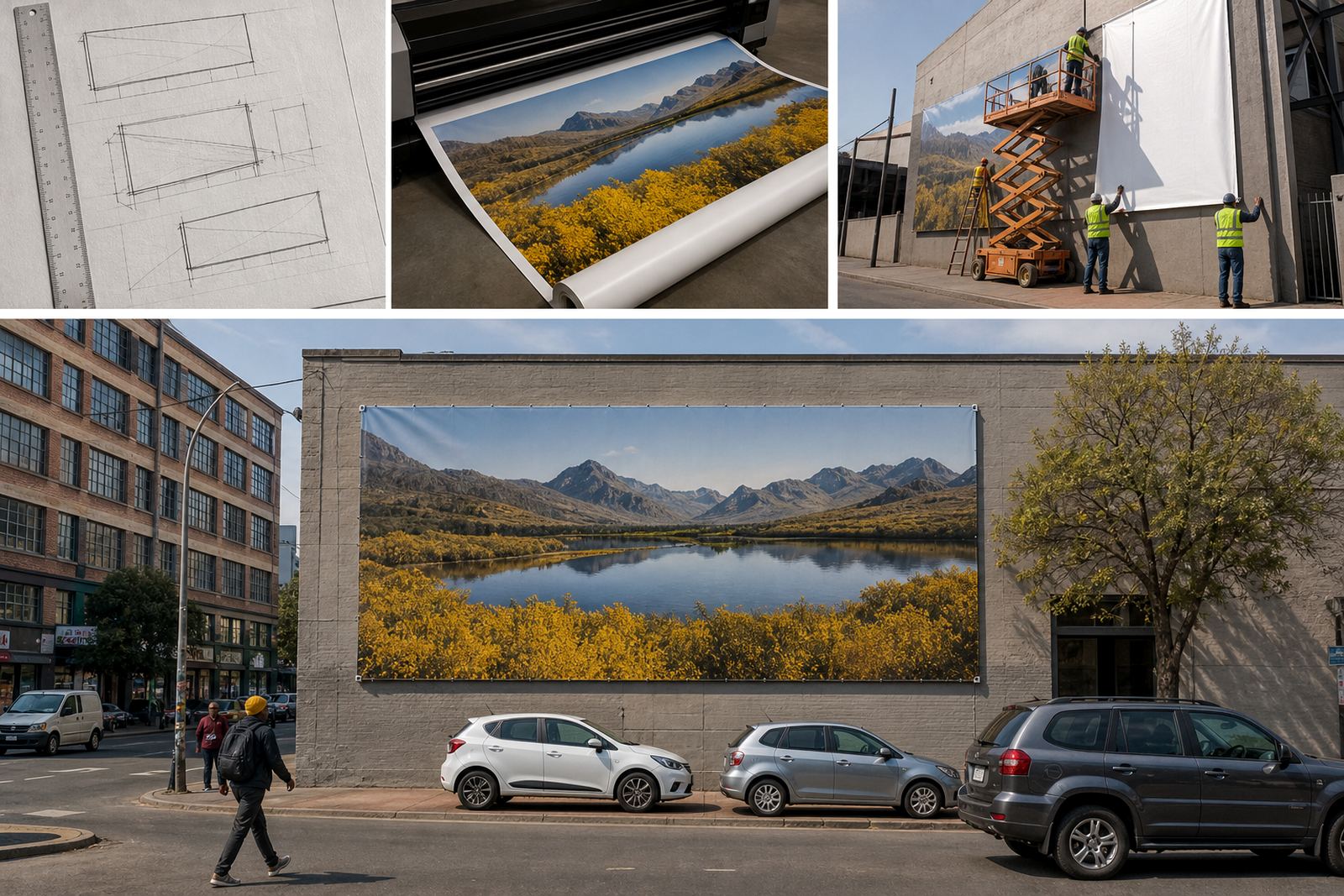
The file you submit should suit the production method being used for the site. Large format artwork often needs clean vector logos, high-resolution images and a clearly labelled layer structure so nothing gets lost during preparation. If the file is built at a reduced scale, the proportions must still be correct and all measurements should be noted clearly.
Good file setup also helps when a campaign is updated later. If the space changes in Midrand or Sandton, a tidy artwork file is easier to revise without starting over. That saves time when you need to refresh dates, copy, or a brand line that has changed.
- Use the correct layout ratio for the listed site.
- Supply logos in a clean format where possible.
- Check that images are sharp enough for outdoor viewing.
- Name file versions clearly so updates are not confused.
Check the Property and Municipal Rules Before Printing
Outdoor and wall advertising need the property owner’s consent, and local municipal bylaw approval may also be required depending on the site and location. A site can look ready for artwork yet still need consent checks or bylaw process support before anything is installed. This is especially important where the wall is visible from a public road or where the structure sits close to regulated zones.
It is worth confirming approval steps early, because a changed artwork size can affect how the sign is classified. If the surface is on a heritage building, a corner site or a high-visibility route, the conditions may be stricter than expected. Better to check first than deal with a delay later.
- Confirm the property owner has given written consent.
- Check whether municipal approval is needed for the specific site.
- Review any limits on projection, lighting or placement.
- Keep a record of approved dimensions and artwork version.
Use a Simple Pre-Print Checklist
Before a file is sent for output, run through a basic checklist so the size, layout and site context all line up. This is useful whether you are booking a wall in Bloemfontein, a roadside panel in Pretoria, or a large frontage in Cape Town where weather and salt air can affect how the finished face is read. Coastal humidity can also affect material choice and installation timing, so the brief should be clear from the start.
A clean checklist helps avoid rework, missed details and awkward last-minute changes. It also makes campaign coordination easier when several sites are running at once and each one has its own measurement notes and approval status. small mistakes at this stage can be costly, so check it properly.
- Artwork matches the listed size and orientation.
- Fonts are large enough for the viewing distance.
- Bleed and safe zones are included.
- Consent and bylaw checks are complete.
- File names, dates and version numbers are correct.
- Installation timing has been agreed with the site contact.