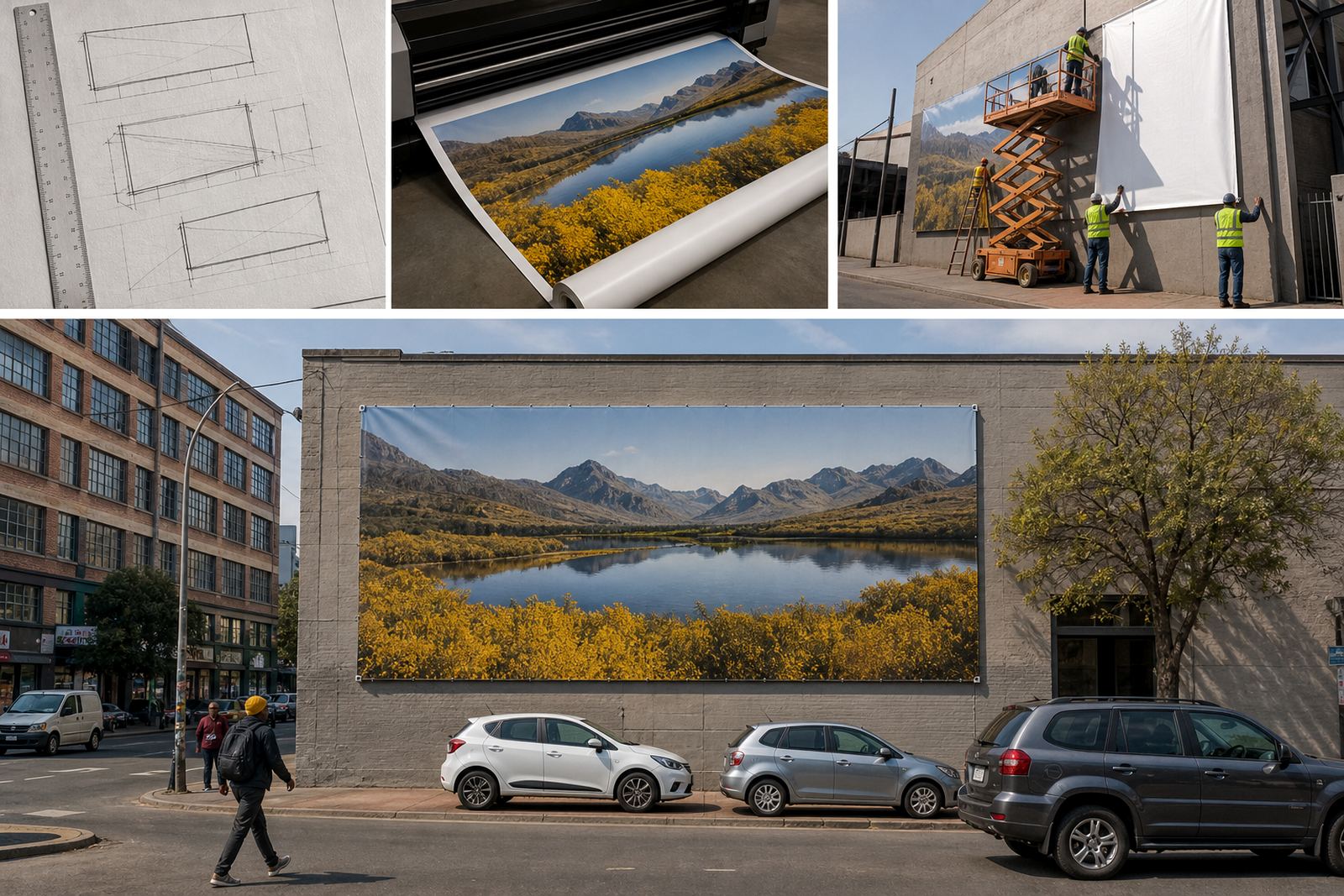
Start With The Property Owner's Permission
Any outdoor sign or wall advertisement starts with the owner of the site. If the property is privately owned, the advertiser or the campaign organiser must get written consent from the owner or the person authorised to act for them. Without that consent, the process should stop there. A verbal agreement is not enough when the structure is being used for public advertising and the artwork is going to be visible from a road, walkway or neighbouring premises.
At RentThisWall, property-owner consent is treated as the first control point. It confirms that the site can be used, who is allowed to approve changes, and what access is available for inspections, artwork checks and installation. On shared buildings in areas such as Braamfontein or Sandton, this can include body corporate approval as well as the landlord's sign-off, depending on who controls the wall or facade. It is worth confirming early because a site can look suitable, but if the owner has not agreed in writing the booking cannot proceed.
- Confirm who owns or controls the surface being advertised on
- Ask for written consent before artwork is finalised
- Check whether a tenant, body corporate or managing agent must also approve
- Keep the consent on file with the campaign record
Check Whether The Site Needs Municipal Approval
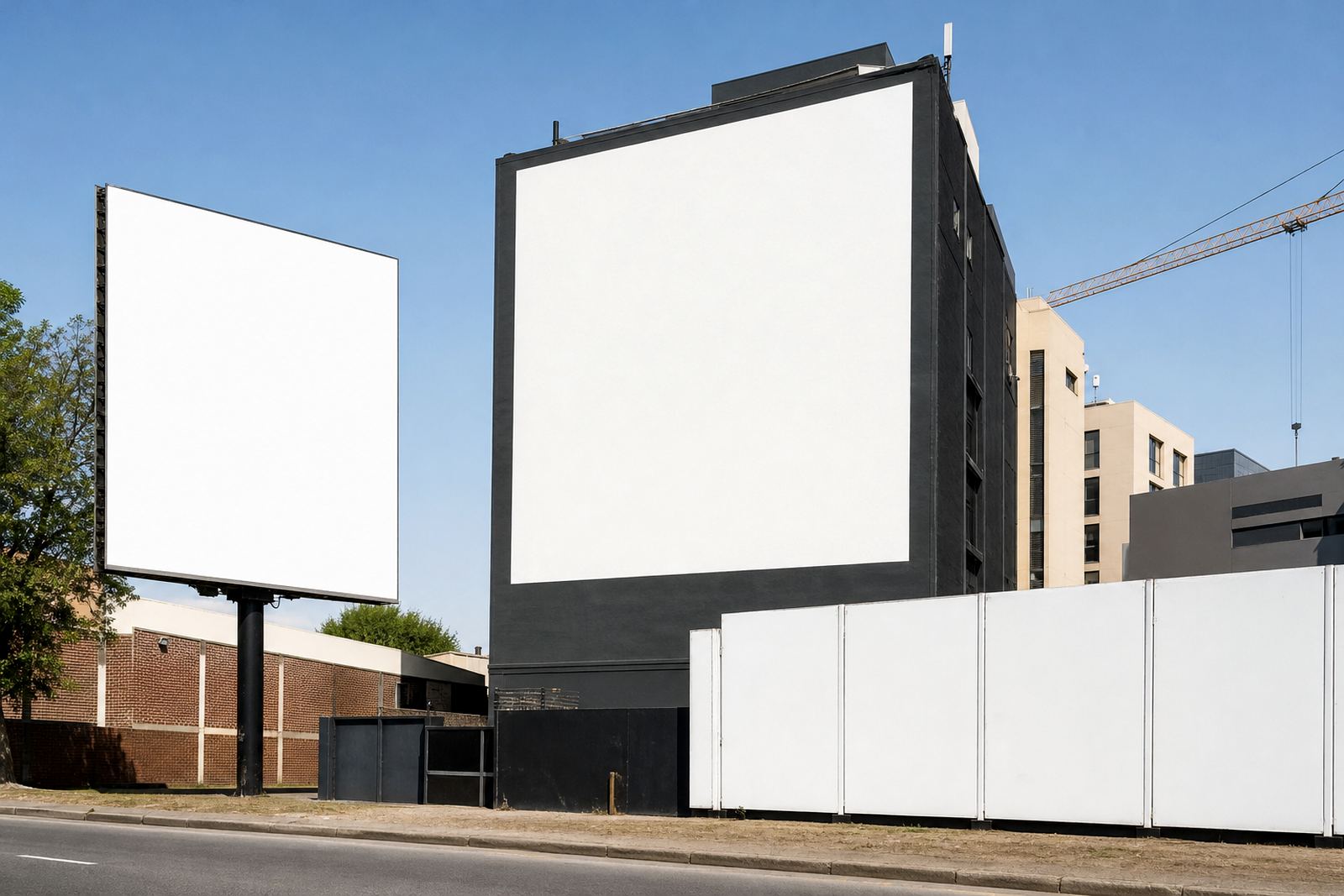
Most signage projects need local municipal bylaw approval, and the requirements can differ between Johannesburg, Pretoria, Cape Town, Durban and Bloemfontein. The location, size, height, illumination, visibility from a public road and the nature of the structure all play a part. A wall sign on a commercial building may be treated differently from a freestanding billboard or a temporary promotion. That means one site can be straightforward while another needs drawings, sign details and formal submissions.
Bylaw approval is there to make sure signage follows the local rules for public safety, streetscape impact and land use. It can also affect how close a sign may be to intersections, road reserves or sensitive areas. In some towns there are extra limits for heritage buildings, residential edges or coastal conditions where corrosion and wind exposure become a concern. If a site is in a busy part of the city, it is tempting to move quickly, but the municipal process should not be skipped because a later complaint can lead to removal orders or fines.
- Identify the municipality that governs the site
- Confirm whether the sign is wall-mounted, freestanding or temporary
- Check if drawings, measurements or a site plan are needed
- Allow time for review before booking installation dates
Prepare The Documents Before Submission
A clean application usually saves time. Before anything is sent in, gather the site details, owner consent and the artwork requirements. The more complete the pack, the fewer back-and-forth requests there will be. A good submission also helps when the sign is part of a larger campaign with more than one location, since each site may need its own set of papers and approval status.
For practical purposes, the file should show exactly where the advert will sit, what size it is and how it will be fixed. If the installation involves lighting, power access or night visibility, include that too. On older buildings in central Johannesburg or inner-city Pretoria, this is especially important because wall condition and fixing points can affect both approval and installation planning. Coastal humidity in places like Durban and Cape Town can also change the material choice and the maintenance approach, so those details should be noted upfront.
- Written property-owner consent
- Site address and clear location description
- Artwork dimensions and orientation
- Photos of the wall or billboard position
- Any engineering or mounting notes if required
Match The Artwork To The Site Rules
Even when a site is approved in principle, the artwork still has to fit the rules. Municipalities can be strict about visibility, reflectivity, wording close to traffic signals and the use of flashing elements. Some sites also have private rules from the property owner, especially on office buildings, retail centres and mixed-use properties. A proper artwork check helps avoid a last-minute change after the print has already been produced, which can cost time and money.
It is sensible to check the visual layout before production. That means looking at crop marks, bleed, lettering size and how the design will read from a distance. If the wall is uneven or has windows, vents or texture, the artwork may need adjustment. In our experience, sites that face busy routes in Braamfontein, Midrand or Sandton often need tighter approval on placement because nearby buildings and road furniture can affect sight lines. Small issues now can become bigger issues later, so this step is worth slowing down for.
- Confirm the final sign size against the approved space
- Check the wording, colours and any reflective finish
- Make sure the artwork suits the viewing angle
- Allow for wall features, joints, windows or access panels
Plan Installation Around Access And Safety
Once consent and approval are in place, installation planning can begin. Access to the site must be arranged with the owner or managing agent, and the team doing the work needs to understand the building rules, working hours and any safety requirements. For higher placements or difficult-to-reach walls, lift equipment or special access methods may be needed. In windy areas or on high facades, the installation window may also depend on weather. One wet or gusty day can delay the job, so a little flexibility helps.
It is also important to think about loading, storage and power before the team arrives. If lighting is included, the power source should be checked in advance, especially where load-shedding or site outages may affect the schedule. Access routes should be kept clear and neighbours informed if the installation could affect parking or pedestrian movement. A tidy site handover makes a real difference and it reduces the chance of complaints after the work is done, which can be a problem on tighter city streets.
- Confirm access times and site contact details
- Check lifting equipment or scaffold needs early
- Review weather and power requirements before installation day
- Keep the work area safe and clearly managed
Use A Simple Approval Checklist For Every Booking
A repeatable checklist helps keep campaigns moving, especially when several spaces are being booked at once. The same process should be used whether the advert is for a single wall in Bloemfontein or a multi-site campaign across Johannesburg, Cape Town and Durban. When the approval path is clear, everyone knows what is still missing and what can move to the next stage.
At RentThisWall, the usual flow is straightforward: confirm the space, secure owner consent, review the municipal bylaw requirements, check the artwork, then schedule installation and monitor the listing. If anything changes on the property side, such as a new manager or a building repair, the approval should be rechecked before work continues. That avoids confusion and keeps the campaign aligned with the site conditions.
- Property owner consent received
- Municipal approval path confirmed
- Artwork checked against site dimensions
- Installation date agreed
- Campaign records stored and updated
When To Ask For Help With The Process
If a site has more than one owner, if the property is in a regulated area or if the sign format is unusual, it helps to get guidance early. Consent and approval issues are often simple to fix when they are caught at the start, but they can become expensive once printing or installation has already been lined up. The same applies when a wall space changes hands or when a municipality asks for extra paperwork.
Our team assists with consent check guidance, bylaw process support, artwork spec checks, installation scheduling and listing renewal support. That gives property owners and advertisers a clearer route through the process, especially when there are several moving parts. A little care at the beginning saves a lot of scrambling later, and it keeps the booking on track.
If you are arranging outdoor or wall advertising, keep the two basics in mind: get the owner’s written consent and secure the local municipal approval. Everything else builds from there.