What a standard billboard is
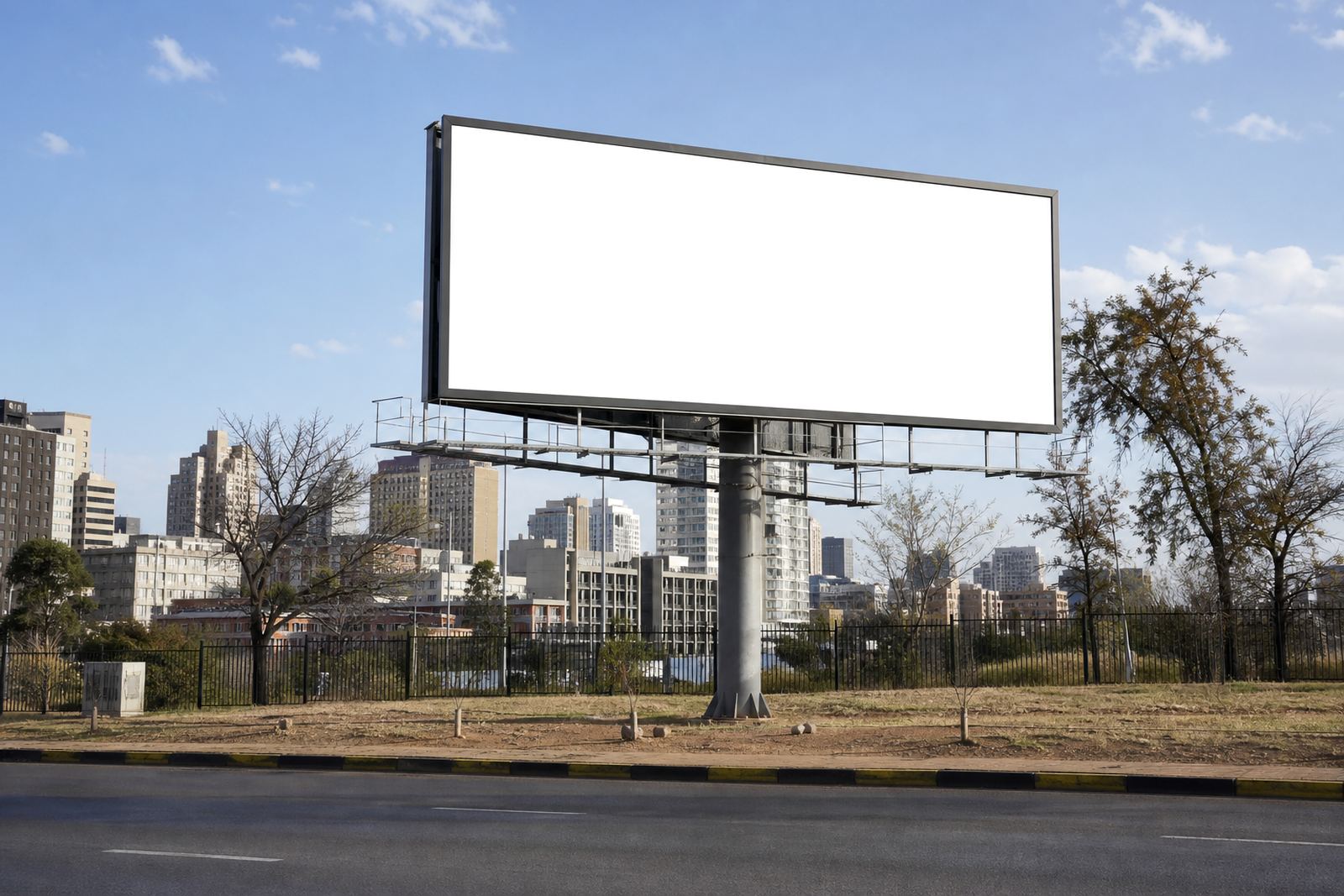
A standard billboard is a large outdoor advertising face fixed to a wall, frame or stand where it can be seen by passing motorists and pedestrians. It is the format many businesses choose when they need a simple, straight forward presence on a main road, near a junction or along a commercial corridor.
These signs are usually planned for repeated viewing over time, so the layout must be clean, legible and easy to read at a glance. In Johannesburg, Pretoria, Cape Town, Durban and Bloemfontein, a standard billboard often suits routes with steady traffic, retail access roads and areas where people move past at similar speeds each day.
Because the structure sits on someone else's property or on a building face, the property owner's consent is required. Local municipal bylaw approval is also needed where applicable, and the final placement must follow the site rules for size, setback and visibility.
Typical sizes and format options
Standard billboards are available in a few common sizes, depending on the wall or structure, the viewing distance and what the property allows. The most suitable size is not always the biggest one, since a sign that is too large for the site can create approval issues or sit awkwardly against the building line.
- Small standard face: about 3 m x 6 m for tighter urban sites and shorter viewing distances.
- Mid-size face: about 4 m x 8 m for busy suburban roads and mixed use corridors.
- Large face: about 5 m x 10 m or similar for prominent roadside positions and long approach views.
- Portrait or landscape layout, depending on the wall shape and artwork plan.
- Illuminated or non illuminated option, where the site has the required electrical supply and approvals.
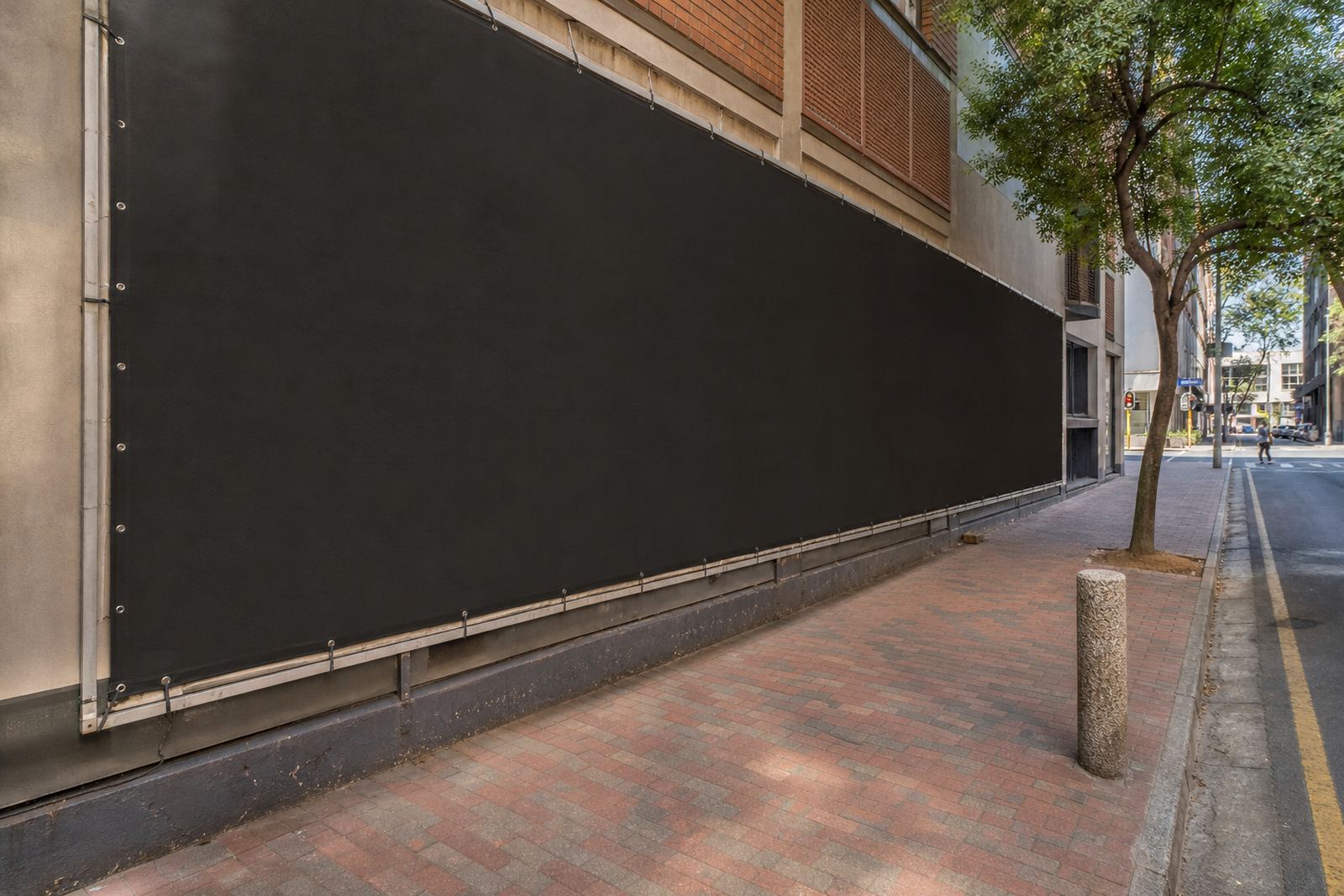
For wall-mounted advertising, the usable area can vary with windows, joints, pipes and parapets, so site measurements matter. A good listing should show the exact face dimensions, mounting position and any limits on hanging depth or fixings.
Where standard billboards work best
This product suits places where people pass regularly and have a clear line of sight, such as arterial roads, CBD edges, industrial routes, shopping precincts and commuter links. It is often used for brand awareness, store direction, seasonal promotions and long-running campaigns that need consistent exposure.
Standard billboards are also practical where a business wants a dependable format with enough space for a logo, short message and contact detail. They are commonly used near filling stations, retail centres, transport nodes and mixed use nodes where drivers have a brief but repeatable view. In coastal towns, the material and fittings should be chosen for wind and humidity, because the salt air can age cheap fittings quickly.
- Brand visibility on busy roads and junctions
- Retail and service promotion near trading areas
- Directional signage for premises or events
- Longer campaign periods where repeat viewing matters
- Sites that need a single, clear message rather than a full graphic story
Installation, power and site requirements
Installation depends on the wall type, frame design and site access. Some standard billboards need fixed steel framing, others use direct wall mounting, and some are built as freestanding structures with anchor points and footing work. Before any work starts, the installer should confirm access for ladders, mobile access equipment or a small crane if the site is tight.
If the billboard is illuminated, a power supply is required and the cable route should be checked before booking. Where power is not available, a non illuminated face may be the better option. For sites with rotating or digital elements, a dedicated electrical plan may also be needed, though many standard billboard bookings remain static.
- Owner consent for the property or wall face
- Municipal bylaw approval where required
- Structural check on the wall or frame
- Clear artwork size and bleed allowance
- Safe access for installation and later maintenance
- Power source confirmation for illuminated faces
On busy Johannesburg routes and inland sites, dust and heat can affect fittings and print tension. On the coast, corrosion resistance matters even more, so fasteners and brackets should be specified accordingly.
How to care for the billboard after booking
Standard billboards need regular checks so the face stays neat and readable. Over time, wind, rain, dust and sun can loosen fixings, fade print or mark the surface. If the sign is illuminated, the lights and wiring should also be inspected from time to time, especially after load-shedding or a power interruption.
A good maintenance schedule keeps the campaign looking cared for and helps avoid complaints from property owners or neighbouring tenants. In some areas, graffiti removal, cleaning and minor repairs may be needed sooner than expected, especially near transport corridors or industrial edges.
- Check for torn vinyl, lifted corners or loose panels
- Clean dust, bird mess and road grime from the face
- Inspect brackets, bolts and support points after strong wind
- Test lighting if the sign is illuminated
- Replace damaged artwork before the message becomes hard to read
Servicing should be planned with the site holder, so access is arranged properly and the billboard does not sit half repaired for days at a time, which can happen when contractors are booked late.
What to check before you place an order
Before a standard billboard booking is confirmed, the key details should be clear. This avoids delays, reprints and avoidable changes after the artwork has already been prepared. It also helps the advertiser match the message to the right site and period.
Check the exact face dimensions, viewing direction, lighting status and installation method. Confirm whether the site is wall mounted or freestanding, whether any windows or building features affect the layout, and whether the artwork will need special edge allowances. The consent path should also be checked so the property owner has approved the use of the space and the required municipal bylaw steps are in hand.
- Exact size and orientation of the billboard face
- Type of site: wall mounted, frame mounted or freestanding
- Lighting and power requirements
- Artwork specs, bleed and resolution needs
- Consent status and bylaw process status
- Installation timing and access arrangements
If you are booking more than one location, it helps to compare the sites side by side. A smaller board in the right place can work better than a bigger one in a weaker position, depending on the route and the message.
How RentThisWall supports standard billboard bookings
RentThisWall helps property owners list available billboard and wall space, and helps advertisers find suitable sites across South Africa. The process includes Space Listing Setup, Site Photo Curation, Listing Copywriting, Availability Management, Brief Matching, Booking Coordination and Listing Renewal Support.
For standard billboards, the team can also assist with Consent Check Guidance, Bylaw Process Support, Artwork Spec Check, Installation Scheduling and Campaign Monitoring. That matters when a site is in Braamfontein, Sandton, Midrand or another busy node where the paperwork and access planning need proper attention, not guess work.
When you are ready to enquire, use the contact page form and share the site location, preferred dates and billboard size you are looking for. The team will then help match the brief to a suitable advertising space and confirm the next steps with the property owner.
Key facts
| Product type | Standard outdoor billboard |
|---|---|
| Typical sizes | About 3 m x 6 m, 4 m x 8 m or 5 m x 10 m, subject to site |
| Format | Landscape or portrait, wall mounted or freestanding |
| Best use | Roadside visibility, brand awareness and directional advertising |
| Power needs | Not required for static faces, required for illuminated options |
| Compliance | Property owner consent and local municipal bylaw approval required |