What fence banner space is and how it works
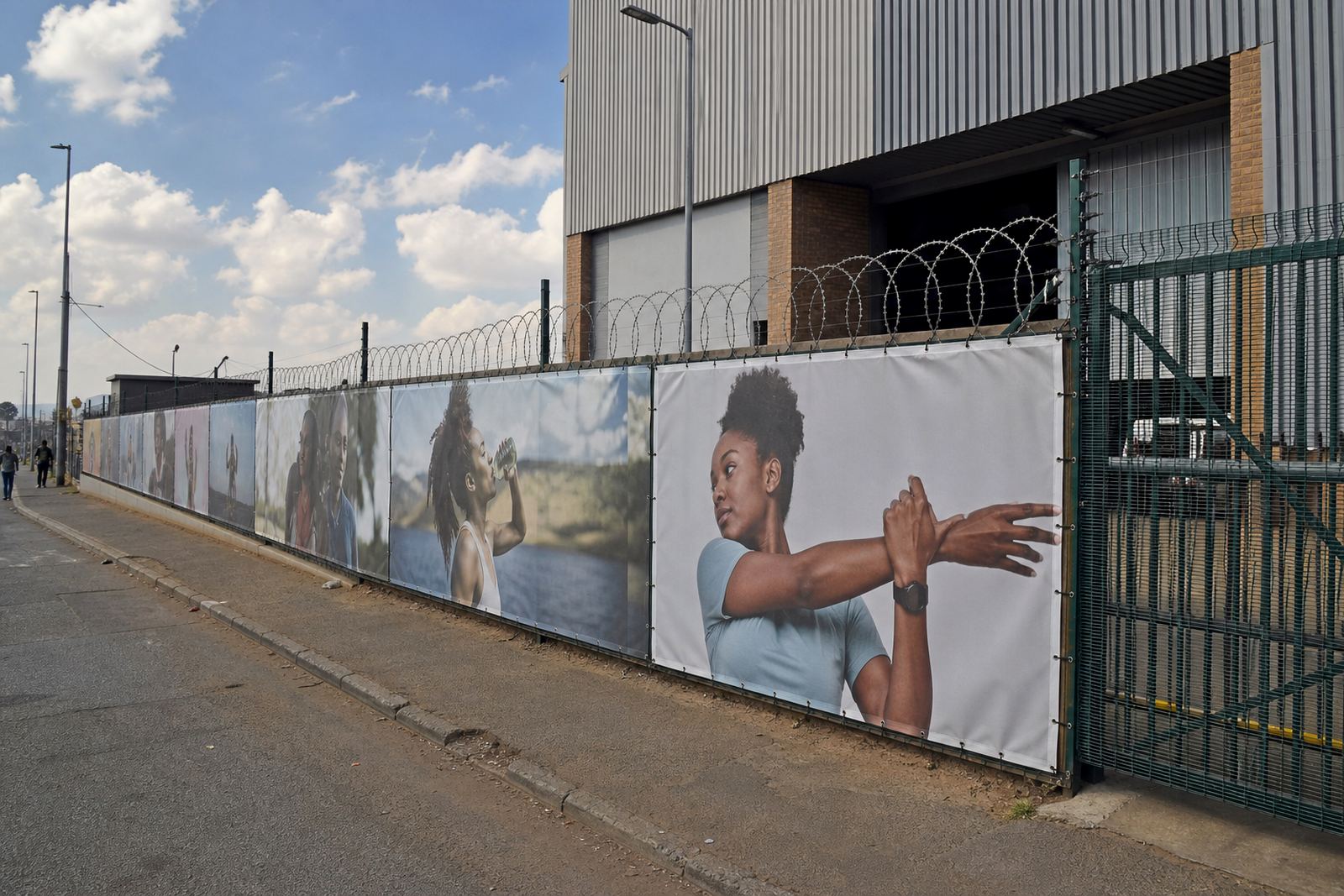
Fence banner space is a perimeter advertising format fixed to boundary fencing, hoarding or temporary site barriers. It is commonly used along roadsides, at development sites, sports grounds, retail perimeters and vacant stands where passing vehicles and pedestrians can see the message from close range. The format is simple: a printed banner, usually with eyelets or reinforced edges, is attached securely to the fence line so it stays visible and tidy.
This type of outdoor advertising works well where a wall is not available, or where the owner wants to make use of a long boundary line without blocking access. In Braamfontein, Sandton, Midrand and other built-up areas, fence banners are often chosen for sites that need regular updates, short campaigns or branding that can be replaced without major construction. For windy streets and coastal areas, the fixing method and material choice matter as much as the artwork.
Because fence banner space is tied to the property, the owner’s consent is required before any booking goes ahead, and local municipal bylaw approval may also be needed depending on the site and the sign type. That check should happen before print or installation, not after.
Common sizes, finishes and fixing options
Fence banner space is not one fixed size. It is usually measured to fit the available run of fence, and the final layout depends on posts, corners, gates and access points. We list the usable width and height so the advertiser can plan artwork properly and avoid awkward cuts around poles or braces.
- Small runs: 1.2 m to 3 m wide for tight frontage or single bay use.
- Mid-size runs: 3 m to 6 m wide for local roadside exposure and retail edge fencing.
- Long runs: 6 m and above for perimeter branding across development sites or large boundaries.
- Standard heights: 0.9 m, 1.2 m, 1.5 m and 2 m depending on fence type and viewing angle.
- Material options: mesh banner for windy areas, solid PVC for stronger colour coverage, or laminated printed substrate where longer life is needed.
- Fixing options: cable ties, rope lacing, reinforced hems, eyelets, tensioned battens or frame-mounted installation where the site allows it.
For coastal humidity in Durban, Port Elizabeth or Cape Town, a mesh or reinforced finish is often easier to maintain than a heavy solid banner. For inland sites with dust and winter wind, a tighter fixing pattern helps prevent flapping and edge wear.
Where fence banners suit best
This format suits places where movement, access and visibility all matter. It is especially practical for sites that face a busy street or where the boundary line is already part of the public view. Fence banner space can work well for long-term brand exposure or shorter campaigns tied to openings, sales, launches or site announcements.
Typical use cases include property developments, forecourt fencing, school or sports ground perimeters, warehouse yards, retail park boundaries and roadside sites near intersections. In Johannesburg and Pretoria, the format is often chosen for areas with stop-start traffic, where a large message can be read while vehicles are stationary. In Cape Town and Durban, weather exposure should be considered from the start, especially on exposed corners and open coastal roads.
- Brand presence along a site perimeter
- Directional messaging for visitors and customers
- Project or development announcements
- Event promotion and seasonal offers
- Long-run exposure on vacant land or hoarding
If the fence borders a pavement, access gate or shared driveway, the banner layout should leave enough space for people and vehicles to pass safely. That practical point is sometimes overlooked and it can create trouble at handover time.
Installation needs, power and site requirements
Fence banners usually do not need power or gas. The format is non-illuminated by default, so it is a good fit for sites where electricity is limited or where load-shedding would make powered signage less reliable. If the campaign includes lighting, timers or a display feature near the banner, those items need separate planning and approval.
The main installation requirements are a suitable fence structure, safe access for the crew and enough clear area to work along the run. The fence should be strong enough to take tension without sagging, and it helps if the surface is reasonably even. Old chain-link, shade netting, timber palisade and metal hoarding all behave differently, so the mounting method should match the actual structure. On windy sites, extra reinforcement is wise, not optional.
Where the banner is installed near a road reserve or municipal boundary, the site owner should confirm all relevant permissions before work starts. If the property is leased, consent from the property owner and the relevant manager may both be needed. Our process support covers the practical checks, but the final responsibility still sits with the site and the advertiser to make sure the display is lawful.
Care, servicing and weather wear
Fence banners need regular checking because they sit outdoors in sun, rain, dust and wind. In South African conditions, fading and edge strain are the most common issues, especially on north-facing positions and exposed corners. A banner that looked fine on day one can loosen after a few strong winds if it was not tensioned properly.
Basic care is straightforward. Keep the surface clean, inspect fixings after storms and remove debris that collects at the bottom edge. If the banner is on a construction fence, dust build-up can dull the print and make the message harder to read. On coastal sites, salt air can affect both the print and the fixings, so a routine inspection every few weeks is sensible.
- Check eyelets, ties and battens for movement
- Look for sagging, torn corners or lifted edges
- Clean with mild soap and water only
- Replace damaged sections before they flap or split further
- Confirm that access gates and fire routes remain clear
Campaigns that run over many months often need renewal support. That can mean a fresh print, adjusted copy, or a recheck of the site position if the surrounding works have changed. A banner that sits straight and clean sends a better message than one that is loose or worn.
What to check before you place an order
Before booking fence banner space, confirm the exact fence length, the usable height and whether there are posts, pipes or access points that need to be left clear. Ask for current site photos if the boundary has changed since the last visit. It is also important to know whether the space is visible from one direction only or from both sides, because that affects the artwork layout.
Check the approved message length, the logo placement and any safety wording that must stay legible from the road. If the site has municipal restrictions, the wording, size and position may need adjustment. In some cases, the owner may also require temporary access for maintenance or repairs, so the banner should not block that work.
Useful ordering details include print size, preferred finish, installation date, expected duration and whether the campaign will need renewal support later. If you are comparing sites in Johannesburg, Sandton, Midrand, Pretoria, Cape Town, Durban or Bloemfontein, ask for the same measurements on each option so you can compare properly and avoid surprises later on.
Key facts
| Format | Perimeter fence advertising banner for roadside and boundary exposure |
|---|---|
| Typical sizes | 1.2 m to 6 m+ wide, with heights from 0.9 m to 2 m |
| Material options | Solid PVC, mesh banner or reinforced printed substrate |
| Fixing methods | Eyelets, cable ties, rope lacing, battens or frame mounting |
| Power or gas needs | None for standard installations |
| Compliance | Property owner consent required, plus relevant municipal bylaw approval where applicable |