What a small billboard is and how it is used
A small billboard is a compact outdoor advertising face fitted to a wall, fence, freestanding frame or similar structure where the available space is limited but the message still needs to be seen clearly. It is often chosen for local businesses, property developments, community notices and directional campaigns around places such as Braamfontein, Sandton, Midrand, Pretoria East, Cape Town suburbs, Durban routes and Bloemfontein access roads.
This format gives you enough room for a clear headline, logo, contact detail or simple direction arrow, without trying to carry too much copy. In busy urban areas and at traffic lights, a smaller format can be easier to position where large structures would not be practical or would need more approvals. It also suits sites with narrow frontage, shared walls or tighter municipal space controls.
- Useful for local area awareness and short campaign bursts
- Well suited to directional prompts, opening announcements and site wayfinding
- Can be matched to wall space, boundary walls or smaller roadside frames
Typical sizes, finishes and placement options
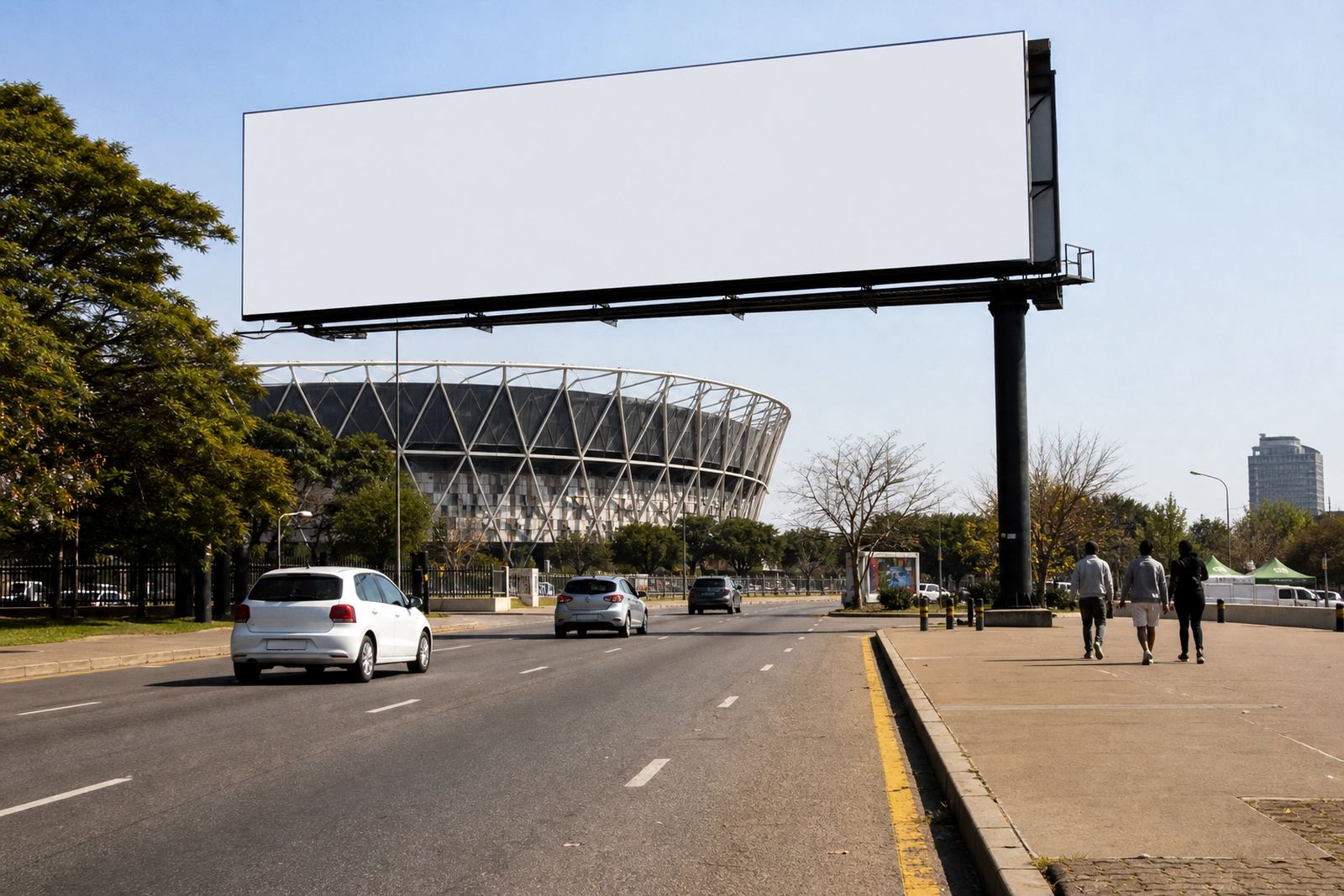
Small billboard sizes vary by property and structure, but common options are usually measured in metres rather than feet. A compact face may start around 1.2 m x 1.8 m for tighter wall placements, then move up to 3 m x 6 m where the site allows a more visible format. Some locations use custom dimensions to suit the wall line, parapet or support frame. The exact size depends on what the property can safely hold and what the local bylaw allows.
Finishes are normally chosen for outdoor use and may include printed flex, painted panels, aluminium composite sheets or direct-applied vinyl on a prepared surface. If the sign is on a wall that sees sun, rain or coastal air, the material choice matters. In Durban or other humid coastal areas, corrosion resistance and sealed edges become more important. Inland, UV exposure and dust are the main issues. If the site has night visibility needs, illumination may be added where power is available and permitted.
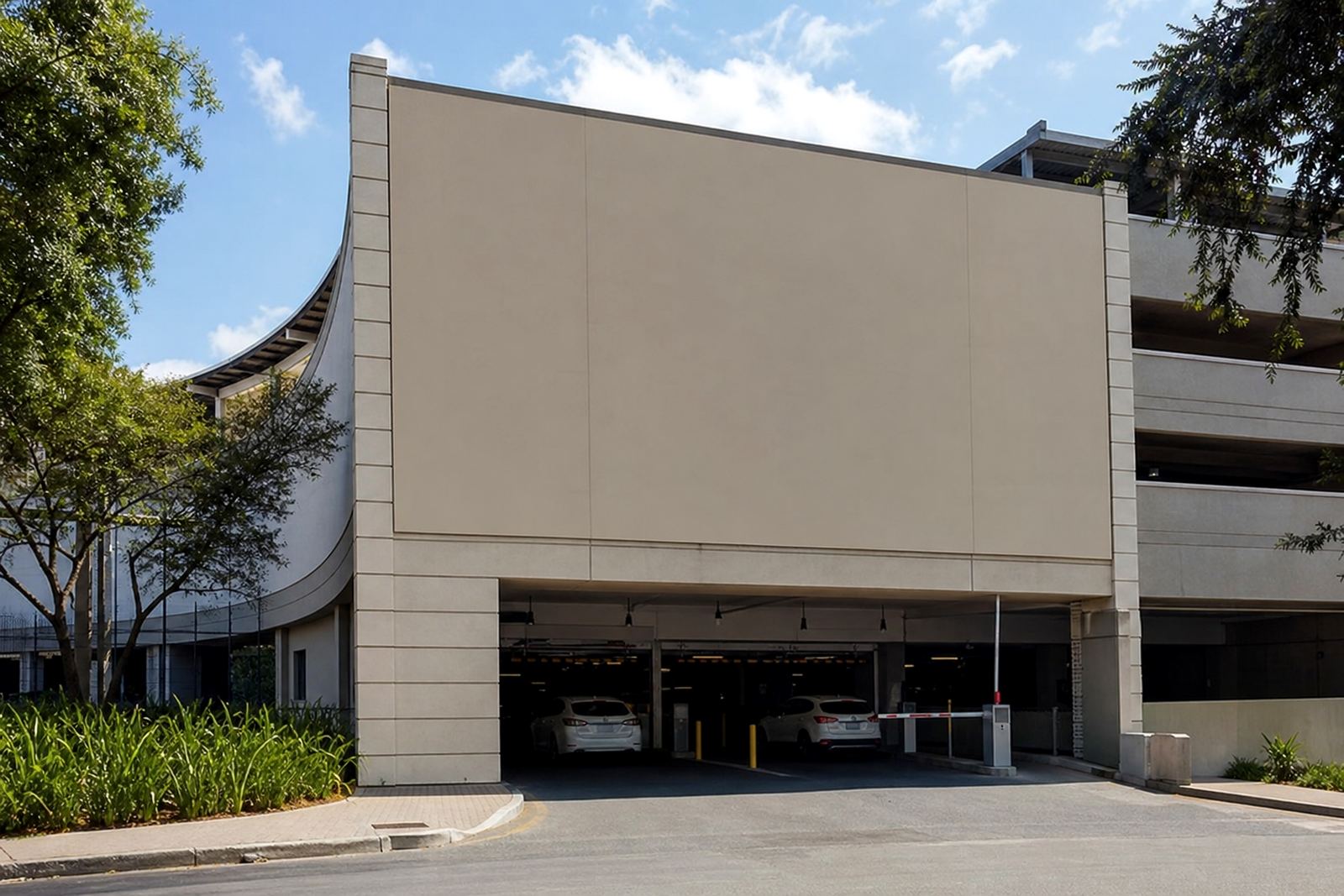
- Small wall faces for tight urban streets and building sidewalls
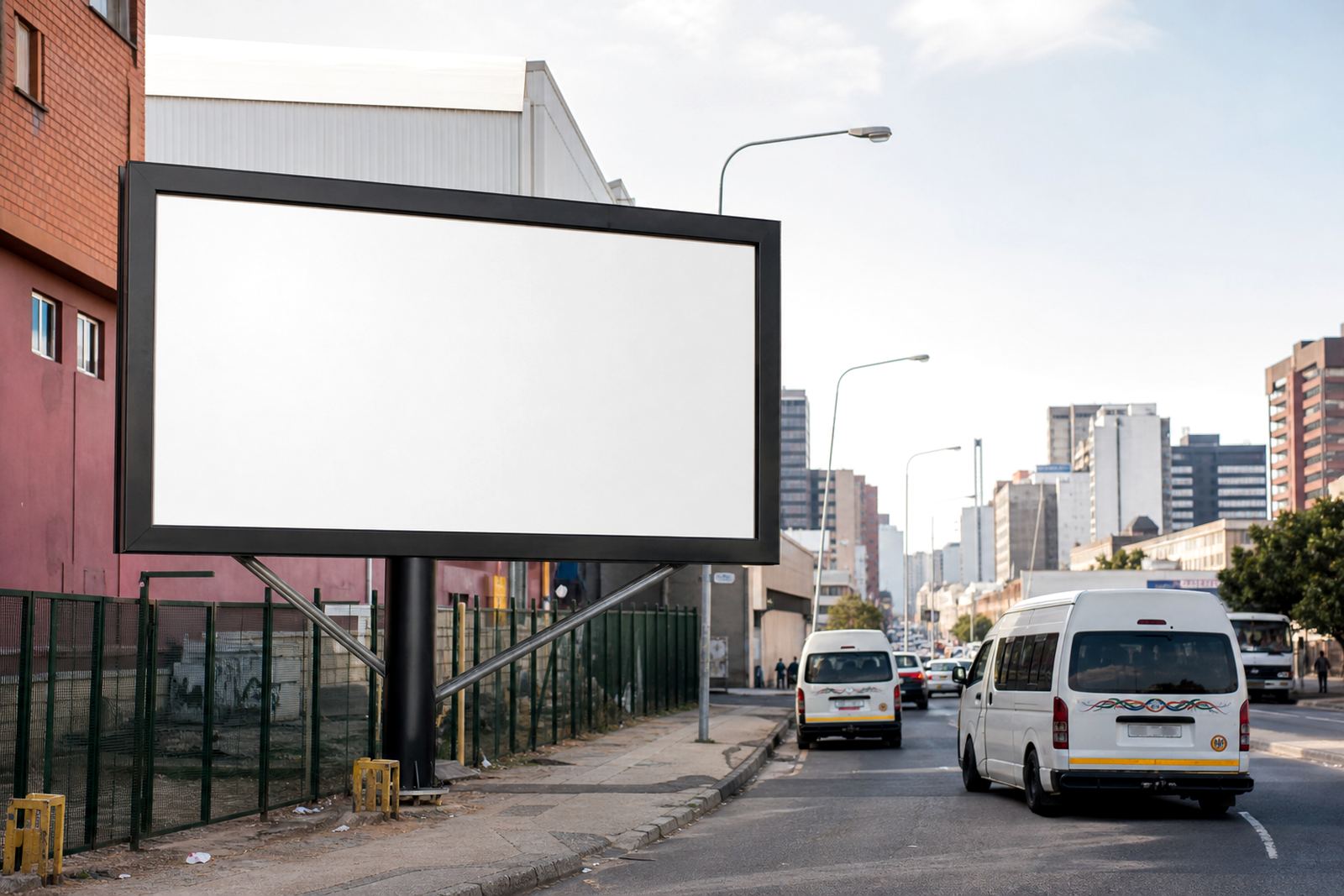
- Fence-mounted or freestanding compact frames where space is limited
- Single-sided or double-sided options, depending on site angle
Where a sign is fixed near pedestrian routes, sightlines and building access points must be checked carefully. A neat installation helps the message look intentional and avoid clashing with shopfronts, windows, drainage pipes or existing services.
Where a small billboard suits best
This product is often used where the aim is local area awareness rather than wide regional reach. It suits service businesses, estate entrances, retail clusters, industrial parks, church properties, student areas and roadside addresses that need people to recognise the location quickly. In Braamfontein or central Johannesburg, it can help with foot traffic and street-level visibility. In Midrand or Pretoria, it may work better for directional use near access roads and business parks.
It is also a practical choice when the campaign message changes often. A small billboard is easier to update for seasonal offers, event dates, new openings or temporary route guidance. If the advertiser only needs a few words and a strong visual, the format is often enough. For longer messages, larger faces are usually better, but this compact option can still carry the essentials without feeling overloaded.
- Local shops and service points that depend on nearby recognition
- Directional signs for clinics, offices, warehouses and venues
- Short-term awareness for launches, openings and community campaigns
Because the format is modest, it can fit into areas where a larger sign would be out of place or not approved. That makes it useful in neighbourhood settings, along boundary walls and on properties with careful street frontage rules.
Installation, electricity and site conditions
Installation depends on the structure, access and surface condition. A wall-mounted sign needs a sound fixing point, enough clearance for installers and a surface that can take the load. Freestanding units need proper foundations or support posts sized for the panel and local wind conditions. On exposed sites, especially along open roads or higher elevations, the structure should be checked for wind movement and vibration. If the site is near coastal areas, fasteners and framing should resist rust and moisture as best they can.
Power is only needed if the billboard is illuminated. Small billboards may use external floodlights, internal lighting or low-energy lighting systems where permitted. In areas affected by load-shedding, the owner and advertiser should agree on what happens when power is interrupted. If there is no electricity on site, the sign can still work as a non-illuminated face, but visibility at night will be reduced.
Gas is not normally required for a standard small billboard. If any special lighting or equipment is proposed, it should be discussed in advance with the property owner and installer. Access for maintenance also needs to be planned, because even a compact sign may need ladder access, cleaning or lamp replacement from time to time.
- Check whether the wall or frame is strong enough for the proposed size
- Confirm safe access for installers and future servicing
- Allow for electrical routing if illumination is part of the brief
Care, cleaning and routine servicing
A small billboard should be kept clean and checked regularly, even if the format is simple. Dust, rain marks and bird mess can reduce legibility. In Johannesburg and Pretoria, dust build-up and sun fade are common. In coastal towns, salt air can affect fixings and panel edges. A routine inspection helps spot peeling vinyl, loose brackets, faded print or water ingress before the sign starts looking tired.
Servicing may include a wipe-down, tightening of fasteners, touch-up painting, replacing damaged face material or checking the lighting if the sign is lit. If a campaign is planned for a set period, it helps to agree from the start who handles upkeep and removal. That reduces confusion when the booking ends or the message changes.
- Inspect the face after heavy rain, strong wind or vandalism
- Keep surrounding vegetation trimmed so the sign stays visible
- Replace damaged or outdated artwork promptly
Regular care is especially important where the sign sits on a wall close to the road, because grime and splashback can build up quickly. A small clean surface still makes a strong first impression, but only if it is kept in proper order.
What to check before you place an order
Before confirming a small billboard, check the site details carefully. The key point is that signage needs the property owner’s consent and approval through the relevant municipal bylaw process where required. That includes checking whether the site is zoned for the proposed use, whether the structure is allowed, and whether there are any conditions about size, height, lighting or setback from the road. If the site sits in a controlled precinct or on shared property, there may be extra rules from the landlord or managing body as well.
You should also confirm the artwork size, preferred material, installation access, campaign dates and who is responsible for maintenance. If the sign will face a road, make sure the viewing angle works from the direction of travel. If it is for a business entrance, check that it does not block numbering, entrances or security lines. For a compact format, even small errors in sizing can affect the finished look, so the spec needs to be right before production starts.
- Owner consent and local bylaw approval where needed
- Exact dimensions, orientation and fixing method
- Lighting, access, maintenance and removal responsibilities
- Artwork file setup and final proof wording
At the booking stage, a full brief makes the process smoother. It helps match the right space, check what is possible on the property and avoid delays later on. A small billboard can do its job well, but only when the site, permissions and artwork all line up properly.
Key facts
| Format | Compact outdoor billboard for wall, fence or frame mounting |
|---|---|
| Typical sizes | From about 1.2 m x 1.8 m up to around 3 m x 6 m, subject to site |
| Orientation | Single-sided or double-sided depending on viewing angle |
| Lighting | Optional, where power is available and permitted |
| Best use | Local awareness, directional messaging, openings and site guidance |
| Site requirements | Property owner consent and relevant municipal bylaw approval |