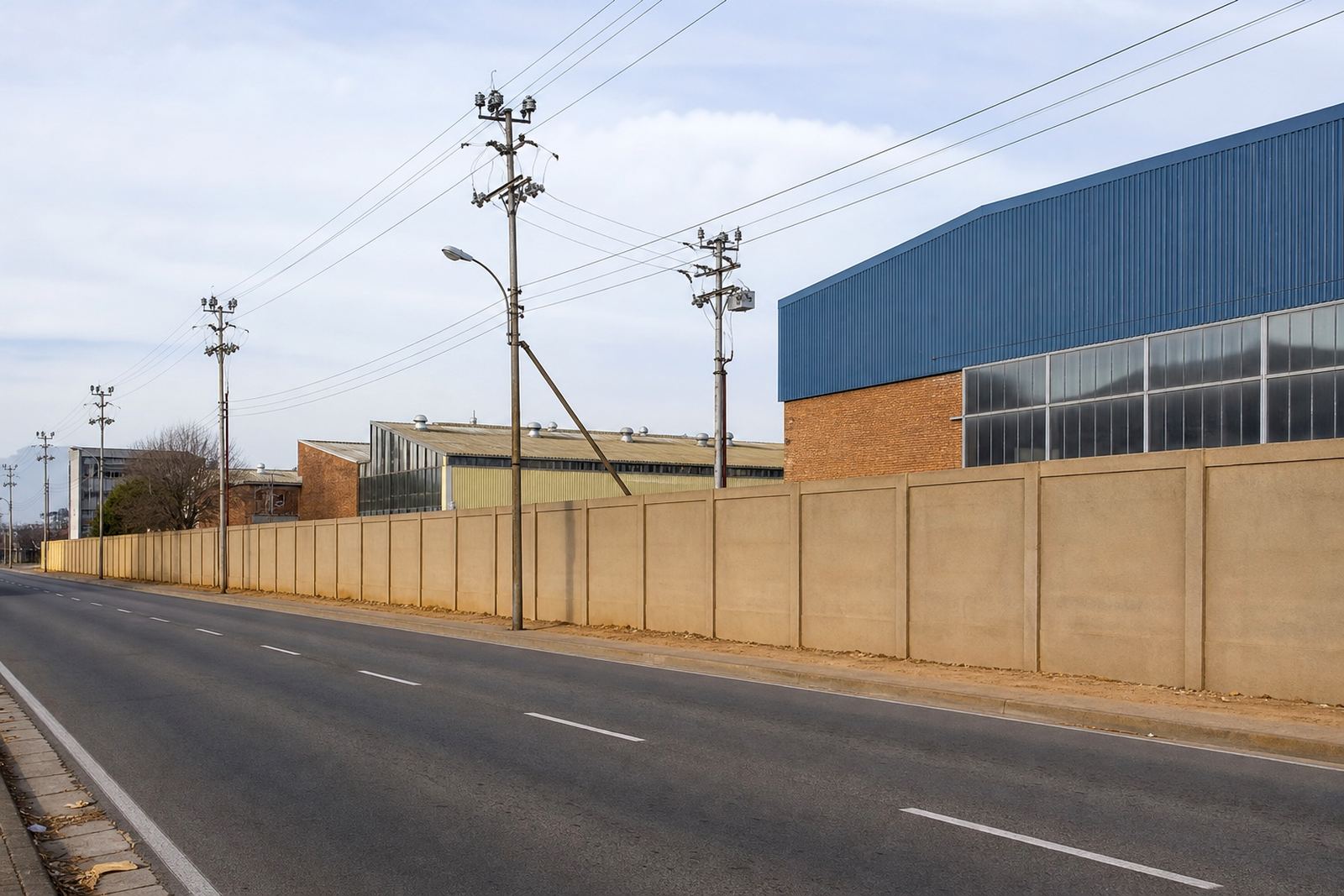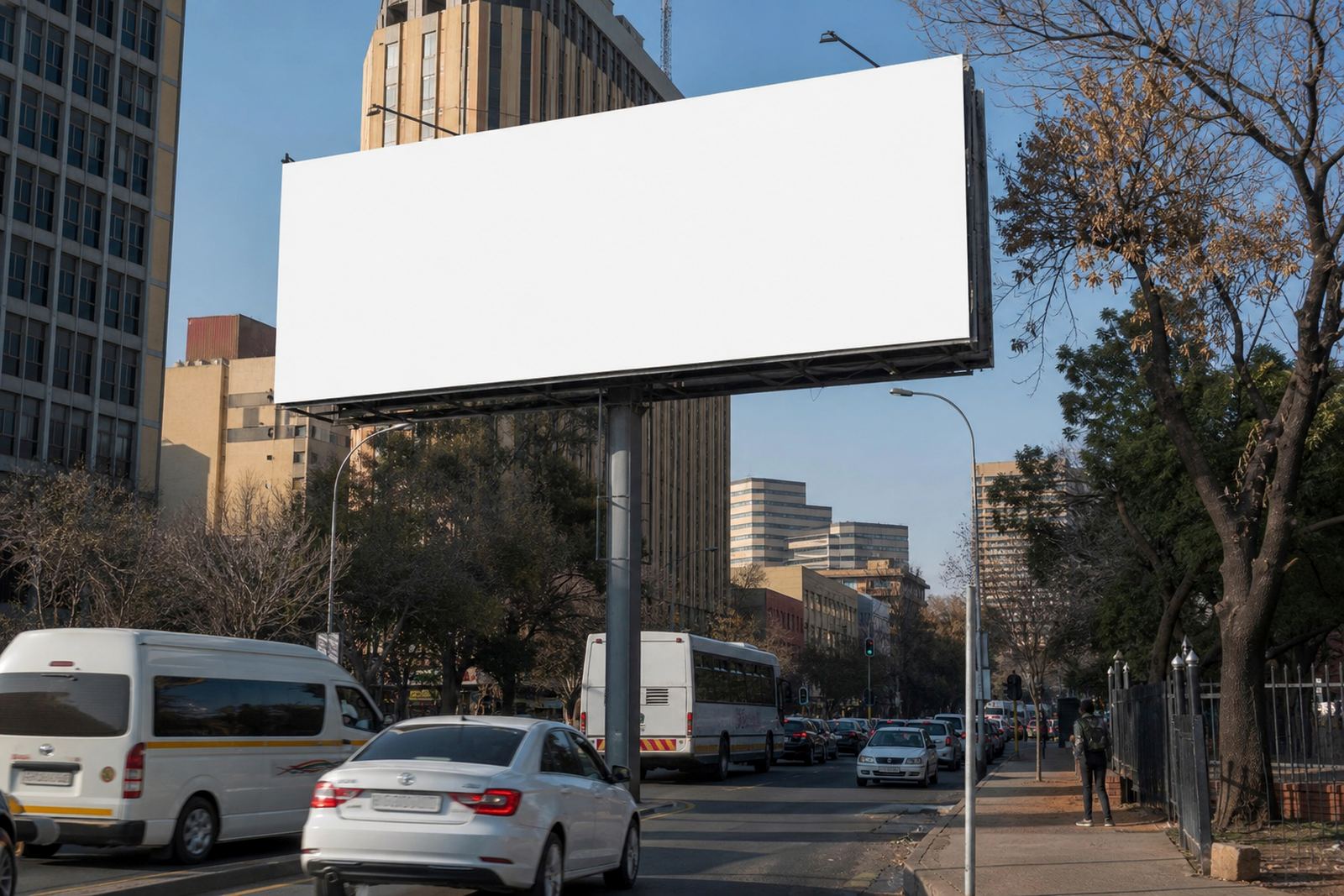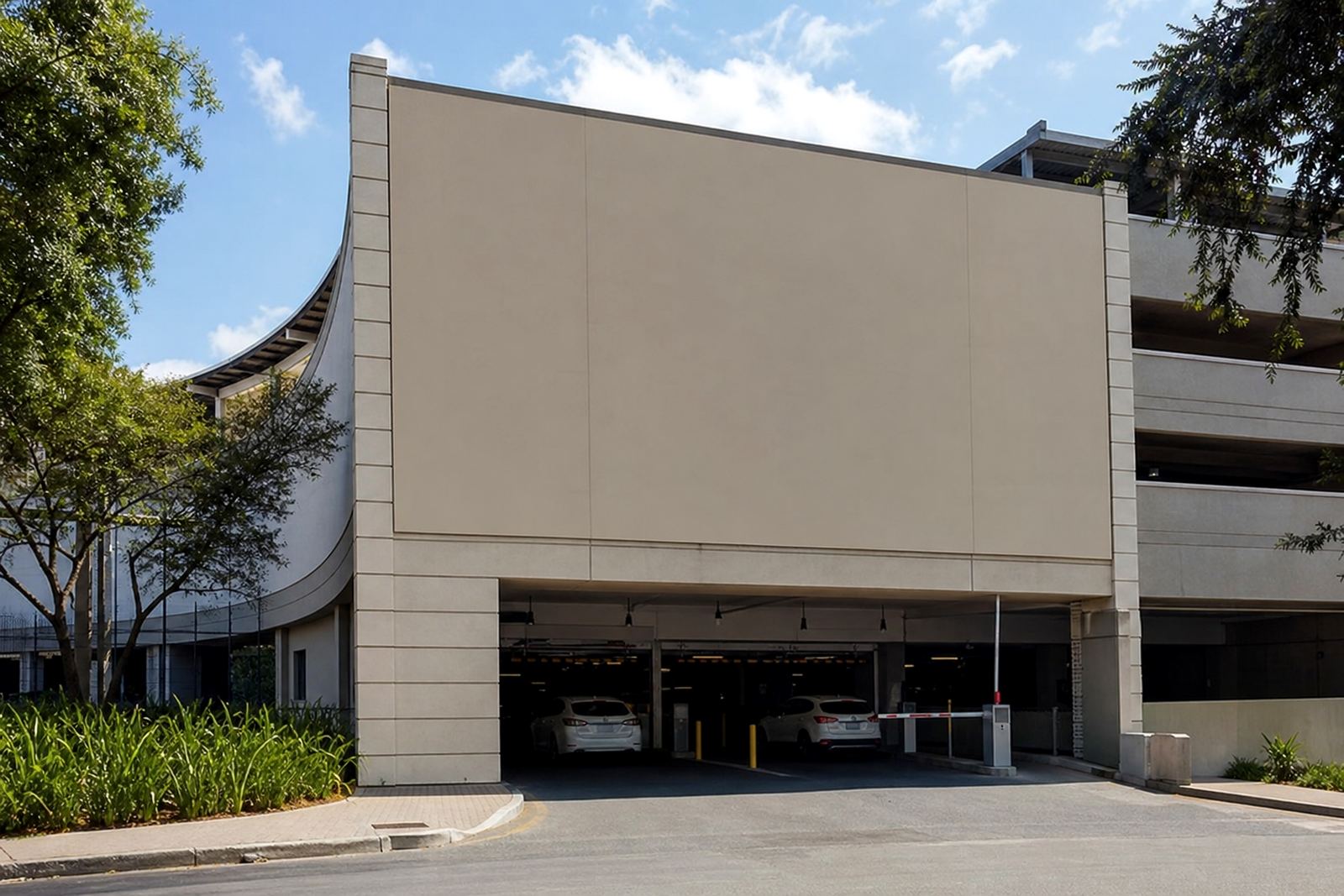
What a mall exterior wall site is and why it works
A mall exterior wall is a fixed advertising surface on the outside of a shopping centre or retail complex. It is used for large printed graphics, painted signs, illuminated panels or other approved wall-mounted media, depending on the property and the local approval conditions. These sites are usually placed where people arrive, turn, queue, or leave, which makes them useful for retail, property, food, vehicle and service campaigns.
Because the wall is part of a private property, the property owner’s consent is required before any advertising can go up. In most areas you must also follow local municipal bylaw approval requirements. That matters in Johannesburg, Pretoria, Cape Town, Durban and Bloemfontein, where outdoor signage rules can differ by ward or zoning. If the structure sits close to a boundary line, road reserve or access lane, it should be checked properly before booking.
For many advertisers, this format gives a neat, permanent-looking presence without the moving parts of digital media. It is also practical for long runs because the surface stays in place and the message can be repeated over time. Near a mall, the wall often picks up people on foot and in vehicles, especially at entrance roads and loading-side approaches.
Common sizes, formats and finishing options
Sizes vary from one property to the next, so the first step is to measure the exact wall area and note the usable height, width and fixing points. Some exterior walls suit a single large panel, while others are better divided into several sections. A plain masonry wall may take a painted finish or mounted signboard, while a smoother cladded wall may suit printed facing or framed panels. The final choice depends on wind exposure, surface condition, access and the landlord’s rules.
Typical options include unlit flat panels, raised lettering, framed boards and full-wall graphic wraps where permitted. If the wall faces a driveway or parking flow, lower-height placement may work better for close viewing. If it faces a road, the sign often needs stronger size planning and a cleaner layout so it can be read quickly.
- Single-panel wall signs for clean brand messages and short text
- Multi-panel layouts for larger campaigns or several product lines
- Painted or vinyl-applied finishes for a tidy exterior look
- Framed boards where the surface needs a removable fixing system
- Illuminated options only where power supply and approvals allow it
It is worth checking whether the site can handle a portrait or landscape format, since some mall walls have long narrow sections that suit one orientation better than the other. If the wall includes visible joints, drains or service hatch points, those must be worked around in the artwork and fabrication stage.
Where this site type suits best
This product suits advertisers that want visibility near everyday retail movement. It is often a good fit for grocery, fashion, homeware, electronics, health, financial services, auto services and nearby residential developments. A mall wall can also support time-sensitive campaigns, seasonal promotions and branch opening notices, provided the artwork is kept clear and the booking period is managed properly.
It works well where people are already in a buying mindset and moving at slower speeds. That includes mall entrances, access roads, parking deck approaches, taxi drop-off points and pedestrian links between the centre and surrounding business nodes. In Braamfontein and Sandton, for example, exterior walls near retail access points can support daily commuter and shopper movement. In Durban and Cape Town, it is also important to factor in coastal humidity and salt air, which can affect materials and fixings over time.
For national campaigns, a mall exterior wall can be repeated across several cities, but each site should still be checked on its own merits. A wall in Midrand may have different access, height and weather exposure from one in Bloemfontein or Pretoria, so the install spec should never be copied blindly.
Installation, power and gas requirements
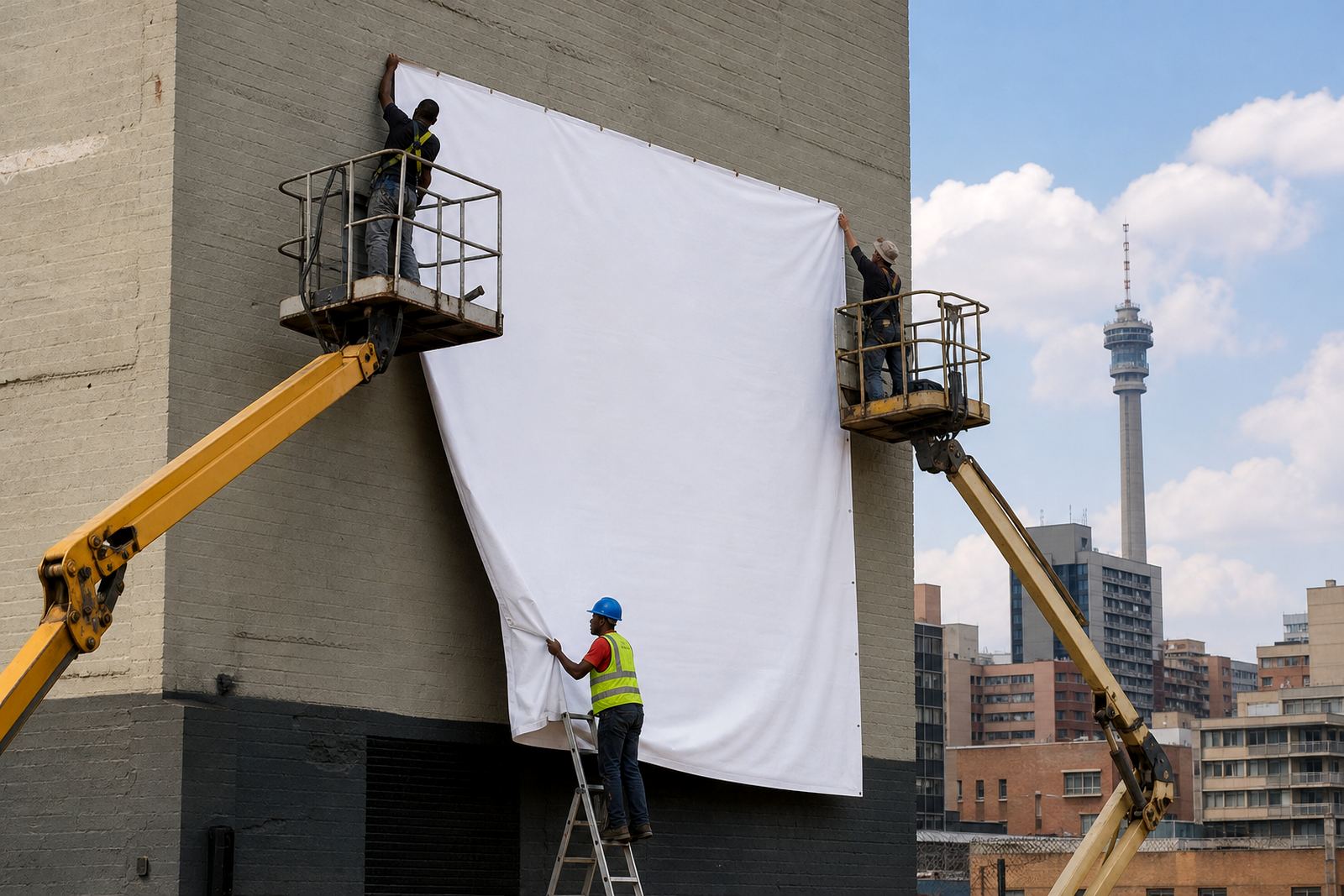
Installation depends on the sign type, wall condition and approval route. A simple fixed panel may only need drilling, frame support and secure mounting. Larger displays may need scaffolding, cherry pickers or rope access, plus after-hours work if the mall requires it. Any wall close to busy entries or traffic lanes should be installed with proper site safety controls and clear off-peak scheduling.
Power is only needed where the sign is lit or uses electrical components. If there is no lighting, there may be no power requirement at all. For illuminated options, the site must have a safe electrical point, compliant cabling and a plan for load-shedding or backup supply if the advert needs to stay lit. Gas is not normally required for this product type. If a special display uses any heat or fuel-based feature, it must be declared early and checked against the property rules and local safety requirements.
- Confirm wall substrate, fixings and load-bearing limits before production
- Check access for lifts, scaffolding or rope access if the wall is high
- Allow for weather delays, especially in windy or rainy conditions
- Agree the installation window with the property owner and site manager
- Plan for power isolation and safe working procedures where lighting is involved
Where the wall is near loading areas or service roads, installers may need to work around deliveries and waste collection times. That helps avoid disruption and keeps the site tidy while the job is underway. A clear install plan saves a lot of back and forth later.
Care, servicing and the practical upkeep of the wall
Outdoor wall media needs periodic checking so it stays presentable and secure. Dust, bird droppings, rain marks and sun fade can affect the look, while loose edges or damaged fixings can become a safety issue. In coastal cities the salt in the air can shorten the life of metal parts, so brackets and frames should be inspected regularly. In inland areas, heat and strong sun can still cause vinyl shrinkage or colour shift over time.
Maintenance usually includes cleaning, tightening fixings, checking lights where fitted and replacing any damaged print or panels. If the site is on a busy mall frontage, it may also need more frequent inspections after storms or high winds. The property owner should be kept informed if access is required for servicing, especially where the wall sits above a public walk-way or near tenant entrances. A quick once-over each month can prevent small issues from becoming expensive repairs.
Where a campaign is long-term, it helps to agree who is responsible for cleaning and who handles fault reports. That includes who checks the condition after load-shedding, heavy rain or vandal damage. A wall can look fine from a distance but still need attention at fixing points, so the site should be viewed from close range as well.
What to check before you place an order
Before booking a mall exterior wall, confirm the exact wall location, size, viewing direction and the type of finish allowed. Ask who owns the property, who manages the site, and whether written consent is in place. You should also check municipal bylaw approval requirements early, because a wall that looks suitable on paper may still be restricted by signage rules, zoning or road frontage controls.
It also helps to confirm the artwork dimensions, installation access and any lighting or power needs before production starts. Some walls need a clean face with no protruding elements, while others can accept a frame or raised build. If the wall has existing fixtures, vents, drainage or uneven plaster, that must be allowed for in the final spec. A site that looks simple can still have tricky points once the measurements are taken.
- Exact wall dimensions and usable display area
- Property owner consent and any site management conditions
- Municipal bylaw approval requirements and submission timing
- Viewing distance, approach road and orientation
- Need for lighting, power access or after-hours install work
- Access method for fitting, cleaning and later servicing
It is also smart to ask how long the booking runs and whether renewal support is available if the campaign continues. If the wall is part of a shopping destination with changing tenant activity, availability can shift, so the booking should be checked against the planned launch date, not just the enquiry date.
Key facts
| Site type | Exterior wall advertising site on a mall or retail property |
|---|---|
| Typical use | Printed, framed, painted or approved illuminated wall advertising |
| Size range | Depends on the wall; measured by usable width and height on site |
| Power need | Only for lit or electrical formats; unlit formats need no power |
| Gas need | Not normally required |
| Approvals | Property owner consent plus local municipal bylaw approval where required |