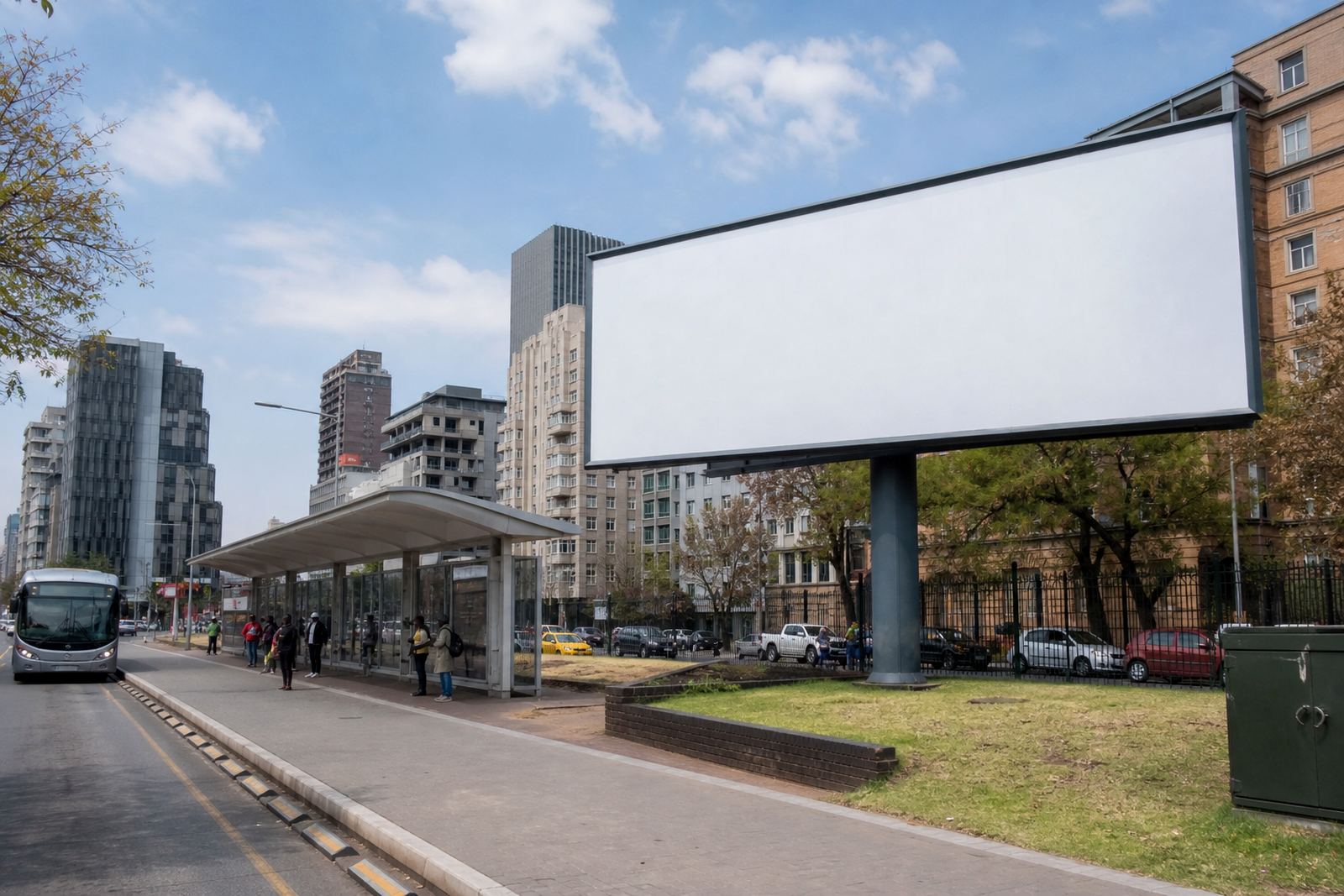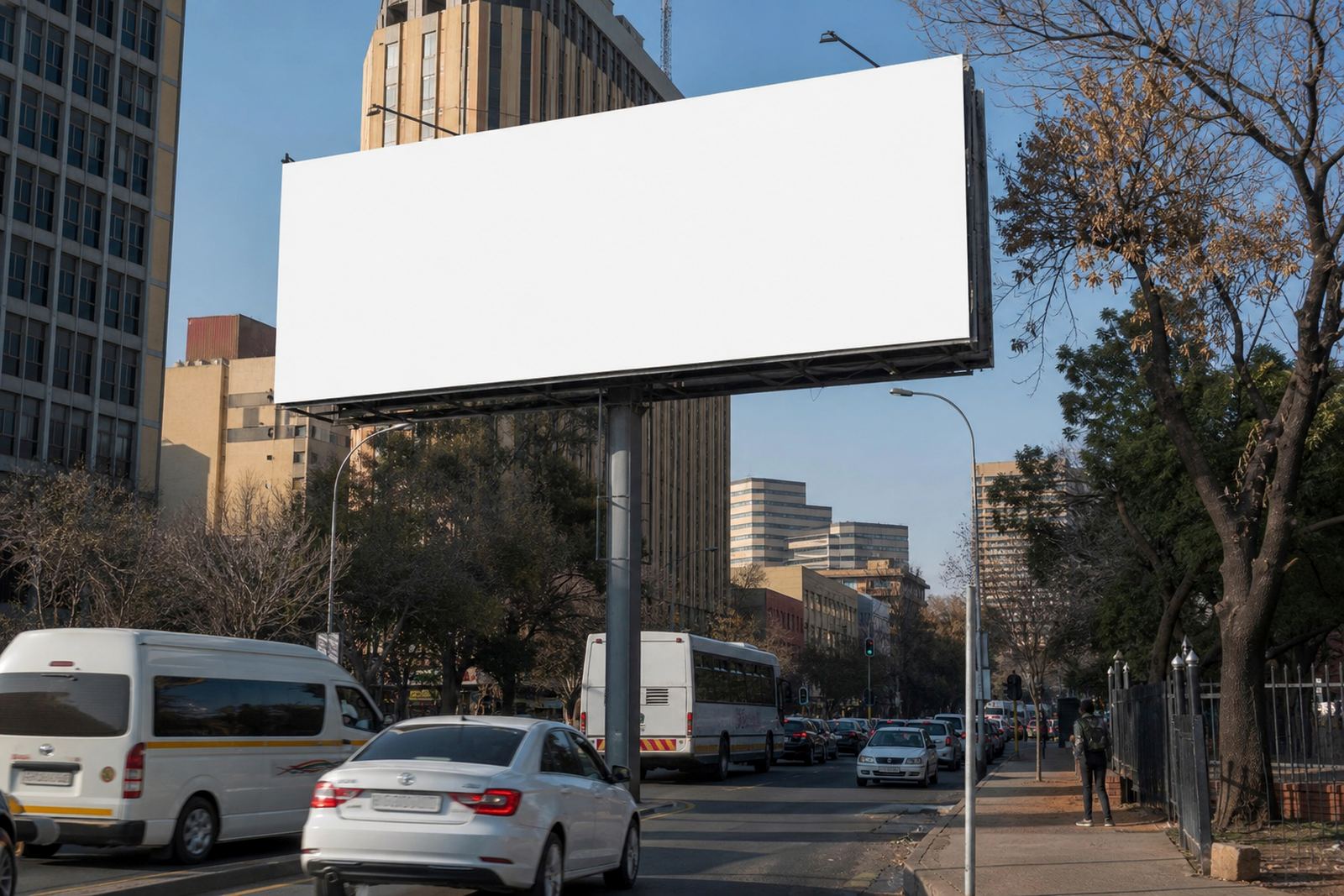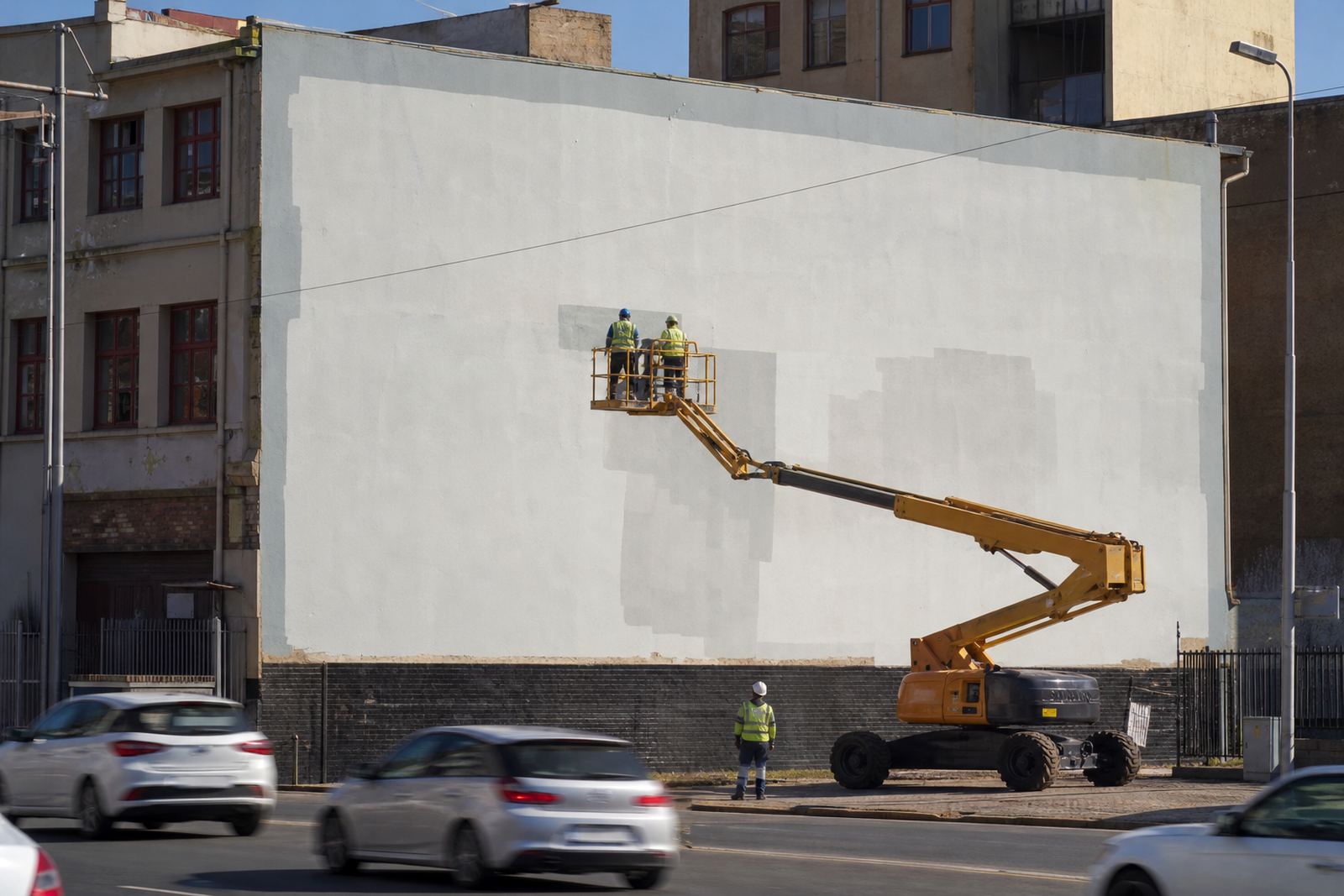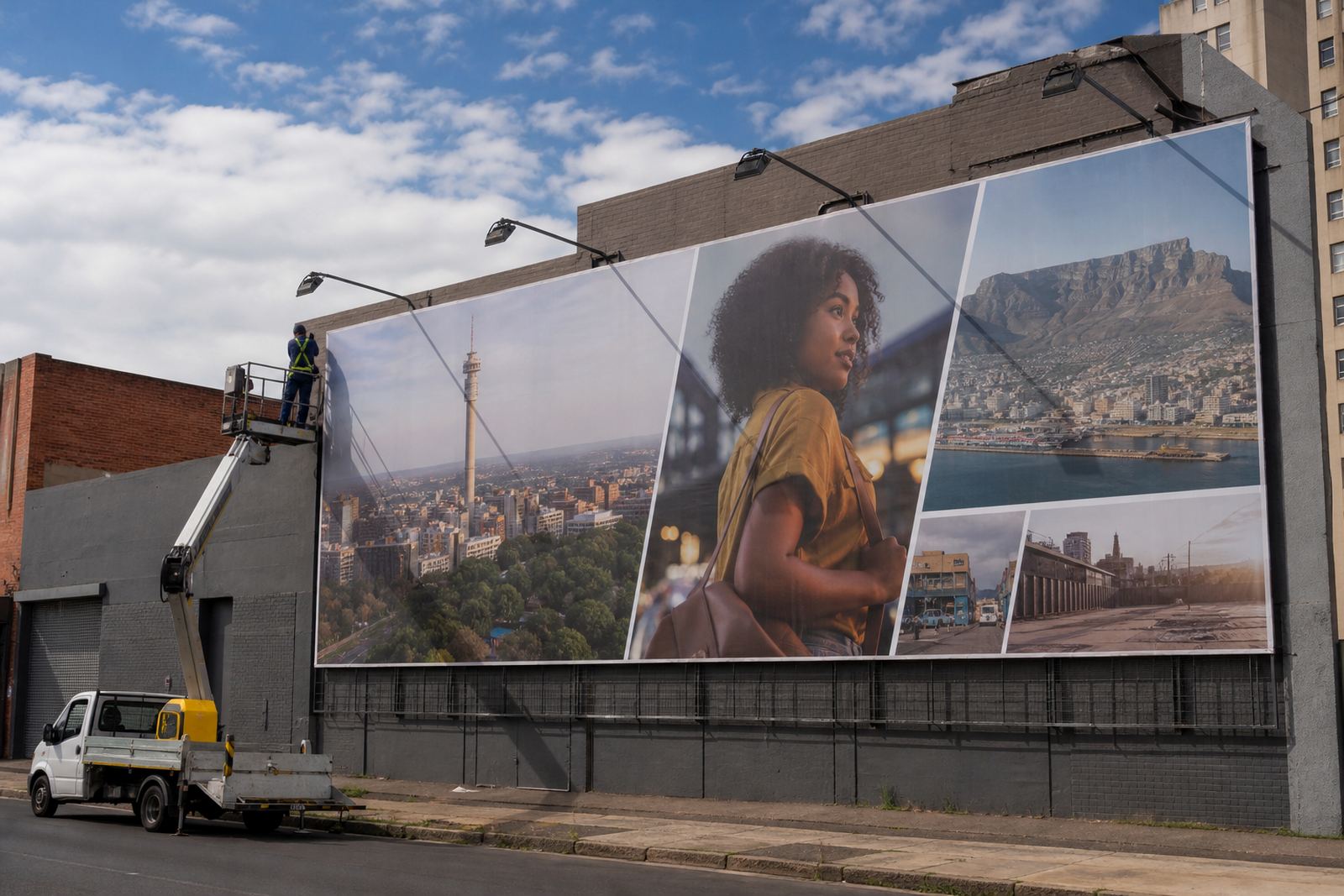
What a front-lit wall surface is
A front-lit wall is an outdoor advertising surface mounted on or attached to a building wall, with lighting aimed across the face of the display so the artwork or message remains readable in the early morning and after dark. It is often used where you want a clean, fixed sign position that can be seen from passing traffic, pedestrians or nearby properties. The face can be finished as a printed flex sheet, rigid panel or other approved sign format, depending on the wall, the fixing method and the local site conditions.
In Johannesburg and other busy city areas, wall space is often chosen where a building already has a strong street-facing side and enough clear space for safe installation. The lighting helps with evening presence, but the wall itself still needs proper structure, safe access and written consent from the property owner before anything is installed. Municipal approval requirements can also vary by area, so the sign should be checked against the relevant bylaw before booking is confirmed.
Common sizes, finishes and mounting options
Wall advertising does not come in one standard size. The final dimensions depend on the available wall face, the neighbouring windows or doors, and the space needed for frames, fixings and maintenance access. Smaller formats can suit tight streets and side walls, while larger faces are better for main roads, retail districts and building elevations with a long line of sight.
- Small format wall face for compact street-facing sites and local area exposure
- Medium format for retail, commuter routes and mixed-use buildings
- Large format for prominent façades with enough clear elevation and safe mounting access
- Flexible printed skin or rigid panel finish, subject to the site and approval path
- Front lighting by externally mounted fittings, where the wall and electrical supply allow it
Finishes should be matched to the location. Coastal humidity in places like Durban can demand better corrosion resistance, while dust, sun and regular load-shedding in inland cities can affect both lighting and maintenance planning. A good listing should show the exact face size, mounting style and whether the lighting is included or still to be arranged.
Where front-lit walls suit best
This product works well where a building already has a good roadside position and the advertiser needs regular day and evening visibility. It is often a practical fit for business districts, transport corridors, shopping streets, warehouse edges and busy mixed-use nodes. In Braamfontein, Sandton, Pretoria CBD, Cape Town city routes, Durban urban streets and Bloemfontein commercial areas, wall advertising can be useful when the site has enough clear sightlines and the building owner is willing to support the installation.
Front-lit walls are especially useful when the message needs to stay visible after sunset but a full illuminated box or digital screen is not suitable. They can also work well where the building has strict architectural limits, because the sign can be sized to fit the wall without overpowering the façade. That said, not every wall is a candidate. Windows, fire escapes, air-conditioning units, pipes and service access points can all affect what is possible.
- Building façades with a direct view from passing roads
- Retail and office blocks with evening activity nearby
- Transport-adjacent areas where people move past after dark
- Walls with enough clear surface for safe fixing and servicing
Installation, power and site access
Before any wall advert is booked, the property owner must give written consent and the local municipal bylaw process must be checked. After that, the site team can confirm whether the wall can take the sign load, how the frame or panel will be fixed, and what access is needed for installation. In some cases a cherry picker, scaffold or rope access crew may be needed. The right method depends on height, road access and whether the building has secure ground space.
Front lighting needs a reliable power source, so the electrical point should be checked early. If the site is affected by load-shedding, the lighting plan should account for that from the start. Some locations can work with backup power arrangements, but that must be agreed and permitted for the site. Cables, timers, weatherproof fittings and safe isolation points all matter, especially where there is heavy rain, coastal air or regular dust build-up. A good listing should clearly state if power is already available or if the advertiser will need to arrange additional works.
- Written owner consent before any booking or installation is confirmed
- Municipal bylaw checks for size, placement and lighting
- Safe access plan for installers and maintenance teams
- Power source confirmation for front lighting and any backup requirement
- Weather exposure review for wind, rain and coastal air
Care, cleaning and servicing over time
Wall signage needs regular care to stay legible and safe. The face should be inspected for lifting edges, fading, tears, water ingress and dirt marks, while the lighting should be checked for failed lamps, loose fittings or uneven brightness. On busy streets, dust and vehicle grime can build up faster than expected, so routine cleaning matters. At coastal sites, corrosion can affect brackets and electrical fittings if they are not properly sealed and maintained.
Servicing is also important after storms or strong wind. If a panel starts to flap or a light fitting shifts, it should be fixed promptly to avoid damage to the wall or a safety issue on the pavement below. Listings should make it clear who handles ongoing maintenance, who is allowed on site and how access is arranged after hours. In practice, this keeps the display looking presentable and reduces downtime.
What to check before you place the order
Before confirming a front-lit wall booking, check the exact wall measurements, the viewing direction, and whether any nearby structures block the sightline. It is also worth confirming if the site has approved lighting, whether the electrical supply is ready, and if the sign face requires a special finish for weather exposure. Ask for recent site photos so you can see the actual condition of the wall and the surrounding building details, not just a rough sketch.
You should also confirm the booking term, renewal process and who manages artwork changes. If the site sits in a municipality with stricter rules, allow time for the consent and bylaw steps before production or installation is booked. And if the property is in an area with heavy wind or load-shedding, make sure the lighting and fixing method are suitable from the start, not adjusted after problems begin. A clear listing should answer these points in one place and save a lot of back-and-forth.
- Wall size, usable face area and clear line of sight
- Owner consent status and bylaw approval path
- Lighting supply, backup option and access for servicing
- Artwork size, finish and installation timeline
- Renewal terms and who handles updates or removals
Key facts
| Product type | Outdoor wall advertising face with front lighting |
|---|---|
| Typical use | Day and evening brand visibility on building façades |
| Size range | Site-specific, from small local faces to large building walls |
| Lighting requirement | External front lighting with verified power supply |
| Approval requirement | Property owner consent and municipal bylaw approval |
| Service areas | Johannesburg, Pretoria, Cape Town, Durban and Bloemfontein |