What scaffold banner space is and when it works best
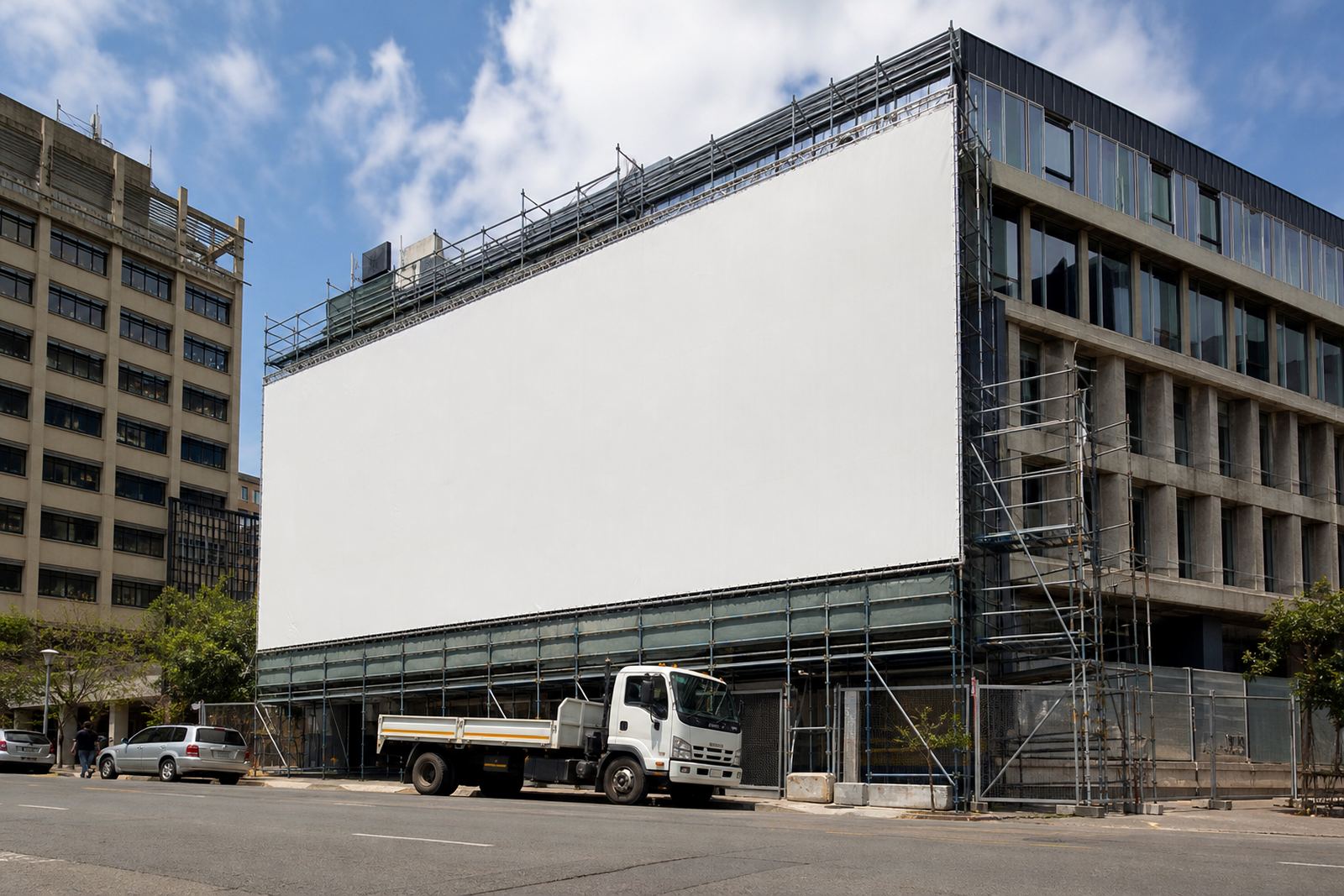
Scaffold banner space is used on sites where scaffold is already standing for repairs, painting, waterproofing, restoration or new construction. The banner is fitted to the scaffold frame so the branding or message faces the street, pedestrian route, or parking area while work carries on behind it. It is a practical option in busy parts of Johannesburg, Pretoria, Cape Town, Durban and Bloemfontein where a building frontage may be covered for several weeks or longer.
Because the banner sits on a temporary structure, it is best for campaigns that need presence without a long permanent fixture. It can work for property promotion, tenant announcements, service advertising or local awareness around a site. The important part is that the display does not block access, create a safety risk or interfere with the contractor’s work. On active sites, everyone involved must be clear on who is responsible for approval, upkeep and removal. That includes the property owner, the site manager and the advertiser, no guess work.
- Used on scaffold around facades, corners and street-facing walls
- Suitable for short or medium term campaigns during active works
- Needs a safe fixing method that matches the scaffold layout
- Should not obstruct windows, exits, safety signs or access points
Available sizes, panel layouts and material choices
Scaffold banner space is usually measured to suit the scaffold bays on site rather than a one-size-fits-all board. Common options include single panels, stacked panels and long wraps along the length of a facade. The exact size depends on the width of the elevation, the height of the scaffold lift and where braces, ties and safety gaps sit. For some sites a single large banner is neatest, while others need several smaller panels to work around scaffold members and corner returns.
Material choice matters in South African weather. On coastal sites in Cape Town and Durban, salty air and wind can be hard on lighter materials, so a stronger mesh or coated banner is often the better choice. In hotter inland areas, direct sun can fade weak print quickly, especially on north-facing walls. A breathable mesh is also useful where wind loads are a concern. Solid banner material gives stronger colour density but may need more careful fixing, depending on the scaffold and the site rules.
- Single panel, multiple panel, or full facade wrap options
- Mesh for windy or exposed sites
- Solid banner for sharper colour and dense artwork
- Can be tailored around scaffold joints, lifts and openings
Where scaffold banners suit street-facing sites
This format suits places where a building is already part of the streetscape and the scaffold creates a clean display line. It is often used on retail streets, mixed-use blocks, office frontages, residential towers, industrial units and heritage buildings under restoration. In Braamfontein, Sandton, Midrand and central Johannesburg, scaffold banner space can work well where passers-by are already looking at the facade because of the active works. It can also support site privacy if the owner wants to hide an untidy work area from view.
For advertisers, the format works best where the message can be read at a glance. Clear type, bold contrast and not too many words usually perform better than packed copy. If the banner is going on a long facade, the creative should be planned to suit viewing angles from the road and pavements. A tall narrow panel is not the same as a wide horizontal run, and a design that looks fine on a computer may not read well once fixed to scaffold at height.
- Building renovations and repainting jobs
- New developments and mixed-use projects
- Shopfront upgrades and office block refurbishments
- Sites where frontage is visible from road or pedestrian movement
Installation, fixing and site safety basics
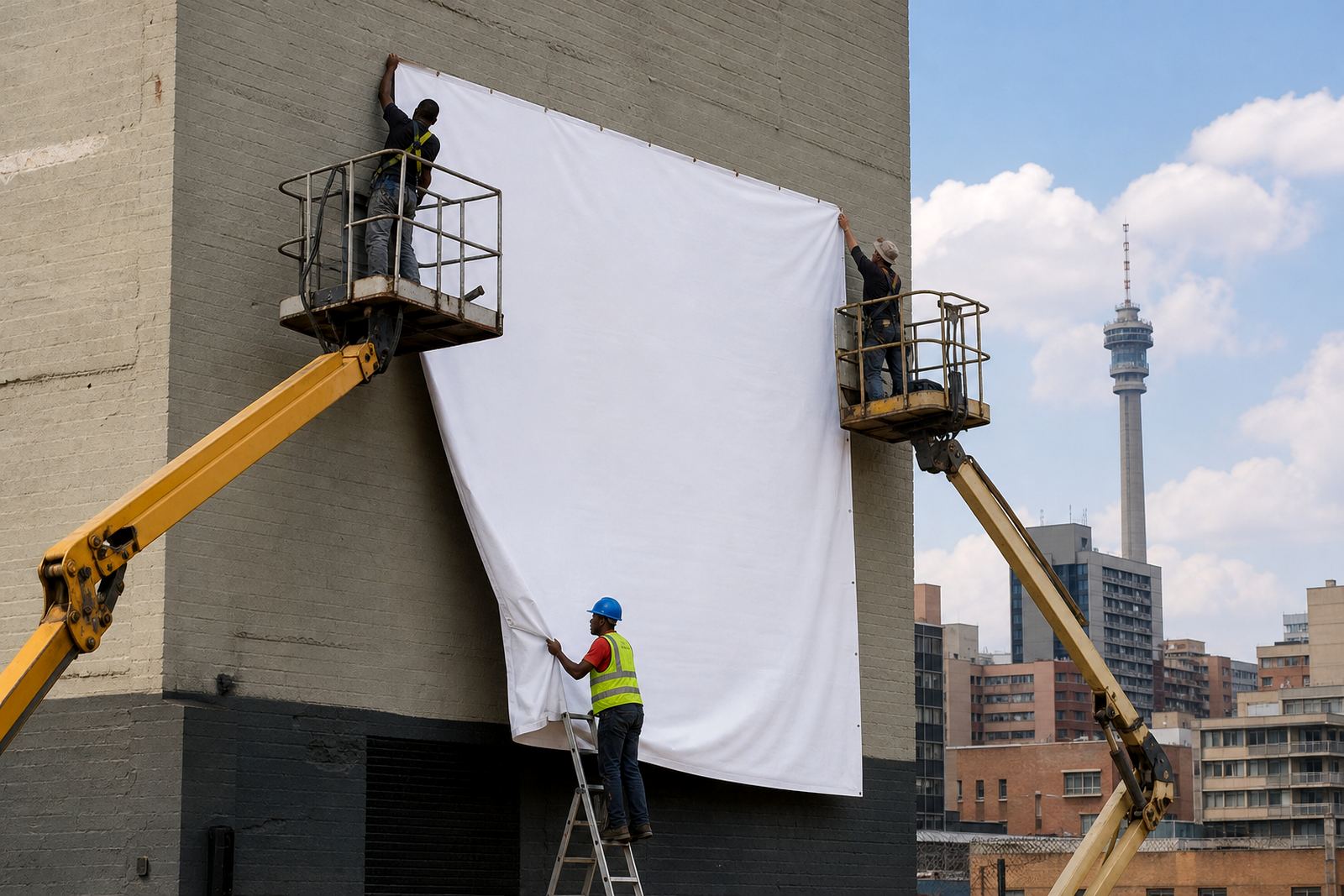
Installation should be planned with the scaffold contractor and the site supervisor. Fixings must suit the frame and the banner size, and they need to allow for movement in wind without tearing the material or loosening the structure. On a proper job, the banner is tensioned evenly, edges are secured and the artwork sits straight. If the scaffold changes during the build, the banner may need to be adjusted or re-fixed. That is normal on active sites, but it should be done by people who understand scaffold safety.
Scaffold banner space does not usually need power or gas. It is a passive display format, so there are no electrical requirements for the banner itself. If the site already has lighting or power tools in use, those are separate project needs and must be handled by the contractor. The banner should never interfere with temporary power leads, access ladders, hoists or waste chutes. Good planning keeps the frontage tidy and avoids rework later on.
- No power or gas required for the banner itself
- Fixings must suit the scaffold design and wind exposure
- Access points, fire routes and ladders must stay clear
- Any installation changes should be coordinated on site
Care, servicing and weather wear
Once installed, scaffold banner space should be checked regularly, especially after strong wind, heavy rain or dust build-up. On a coastal site, salt and moisture can mark the surface over time, while inland dust can settle quickly on the print. If the banner is looking loose or starting to flap, it should be tightened before the edges fray. A small issue left too long can become a bigger repair, and that means more downtime for the display. It is one of those jobs where early attention saves money and hassle.
Cleaning should be gentle. Harsh chemicals can damage print and stitching, and high-pressure washing is not always suitable. A soft cloth or light wash is usually enough for normal grime. If the artwork has been up through load-shedding periods and dusty conditions, it may need extra care around the seams and fixing points. Servicing also includes checking that the banner still matches the approved brief and has not been shifted by site changes or scaffold alterations.
- Inspect after wind, rain and dust exposure
- Keep fixings tight and edges secure
- Use gentle cleaning methods only
- Review the banner if scaffold lines change
What to check before you place an order
Before ordering scaffold banner space, confirm the exact site address, the visible frontage, the scaffold dimensions and the intended display period. You should also check who has authority to approve the display and whether the property owner has given consent. Local municipal bylaw approval may also be needed, depending on the area and the type of display. Without that paper trail, a site can be delayed or the banner may have to come down. That is not something to leave for later.
It also helps to check artwork requirements early. Ask for the panel size, bleed allowance, safe area and fixing method before design starts. If the site is near a busy road, make sure the wording is simple enough to read from a moving vehicle. If the site is in a windier or wetter area, confirm whether mesh is preferred over solid material. The more detailed the brief, the smoother the booking and installation process will be.
- Site address, frontage and scaffold dimensions
- Property owner consent and municipal bylaw approval status
- Artwork size, safe area and fixing method
- Expected display period and site access times
Key facts
| Format | Temporary advertising banner attached to scaffold structures |
|---|---|
| Typical use | Street-facing building works, renovations and active construction sites |
| Material options | Mesh banner or solid coated banner |
| Power and gas | Not required for the banner itself |
| Approval notes | Property owner consent and local municipal bylaw approval may be needed |
| Service support | Brief matching, consent check guidance, artwork spec check and installation scheduling |