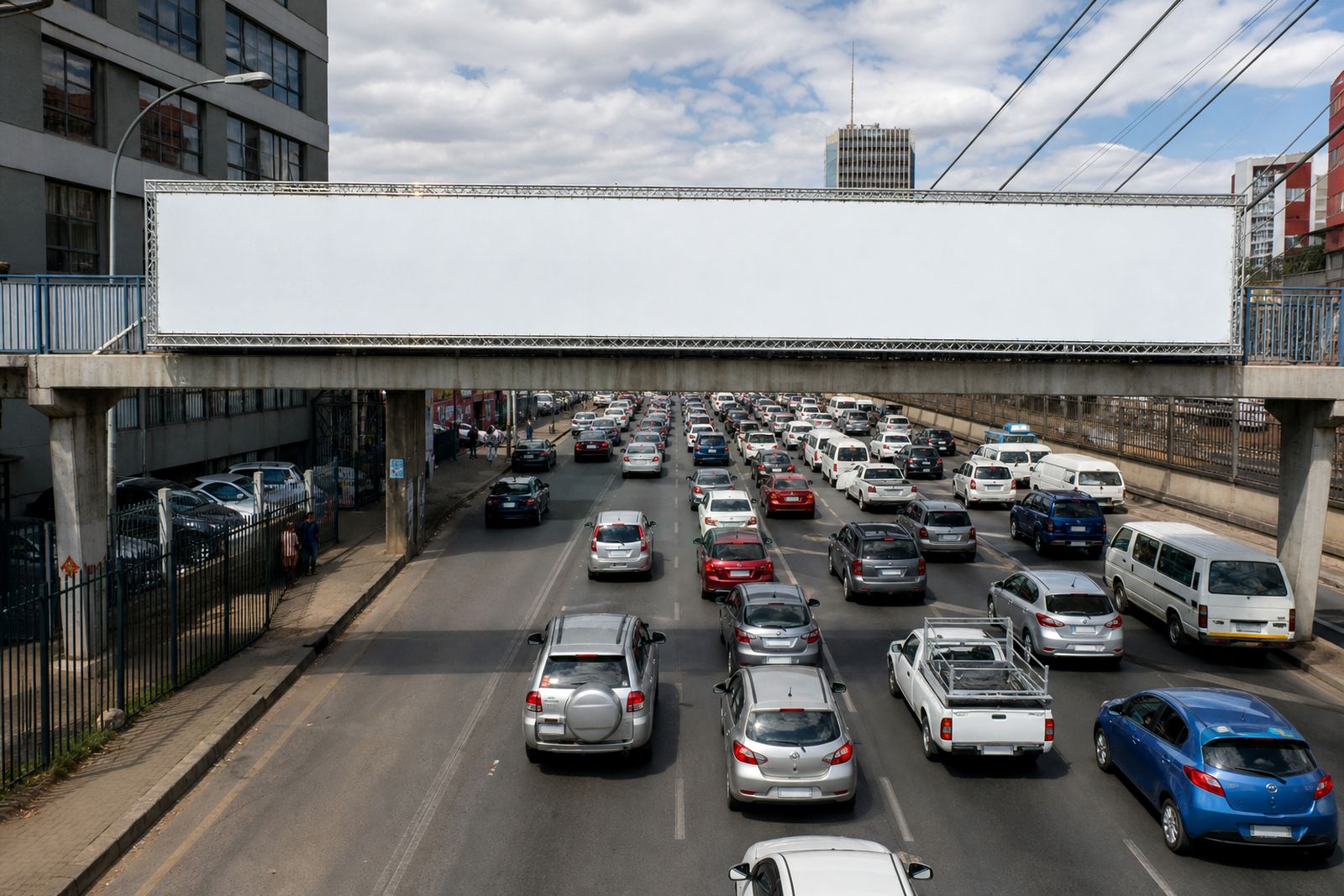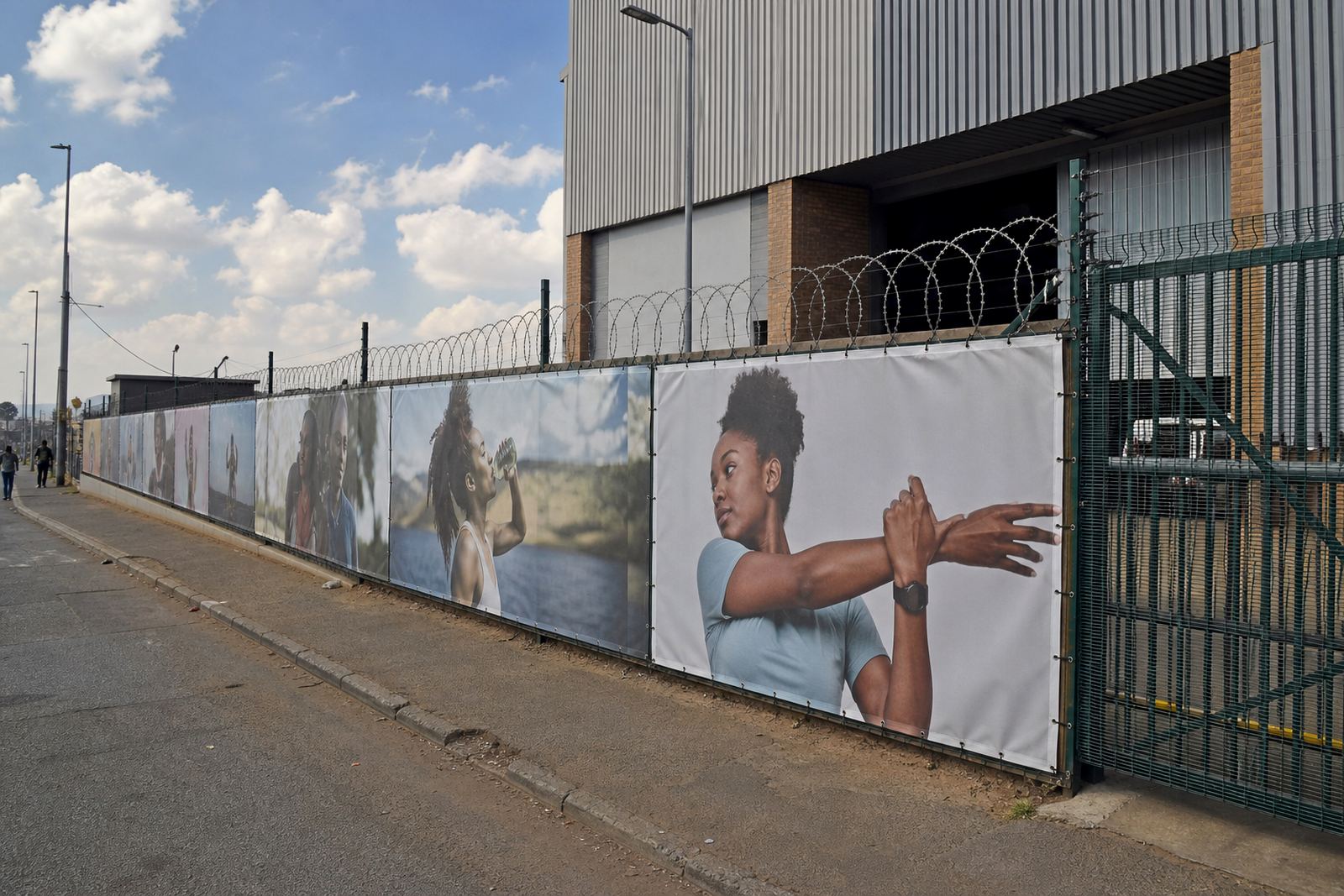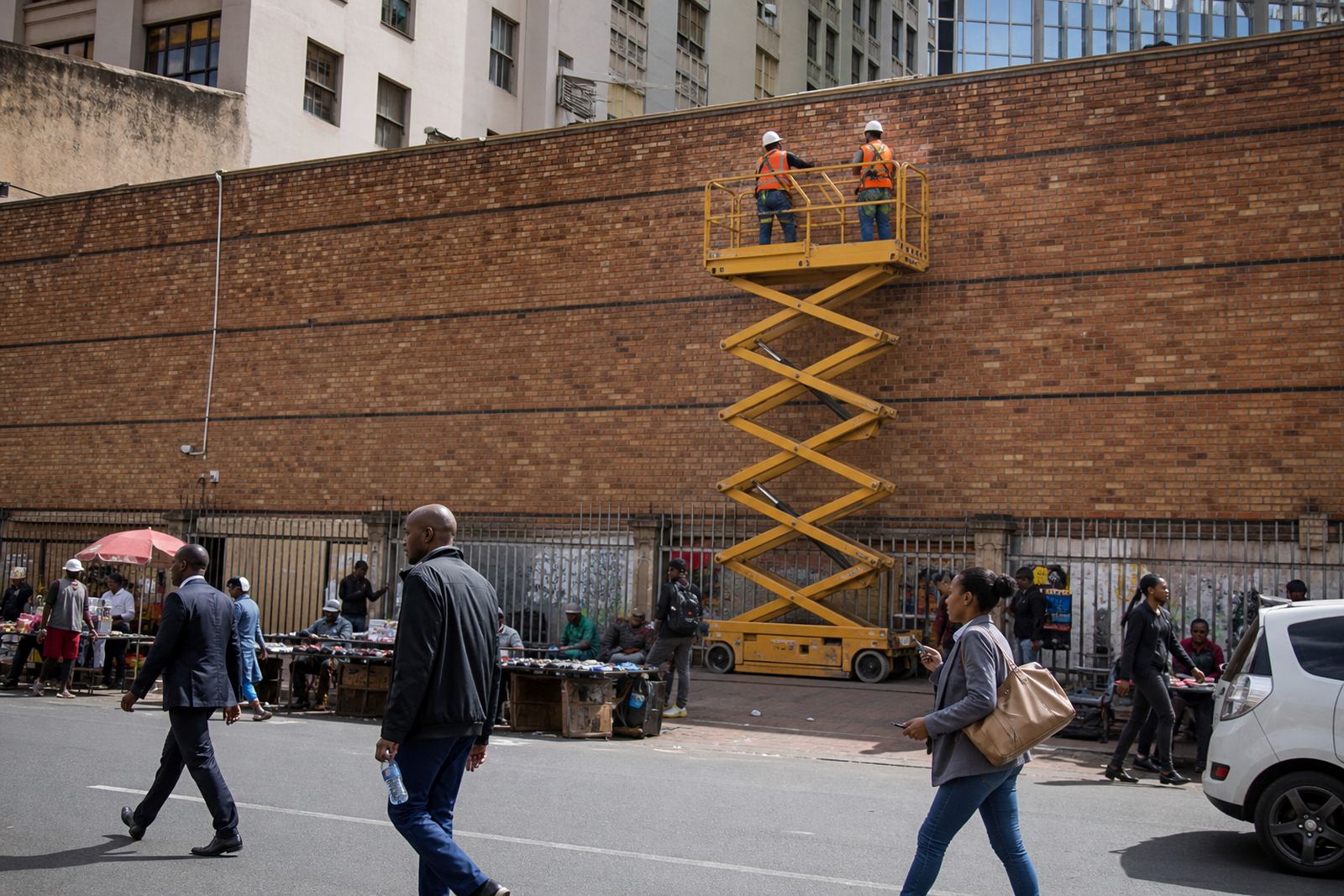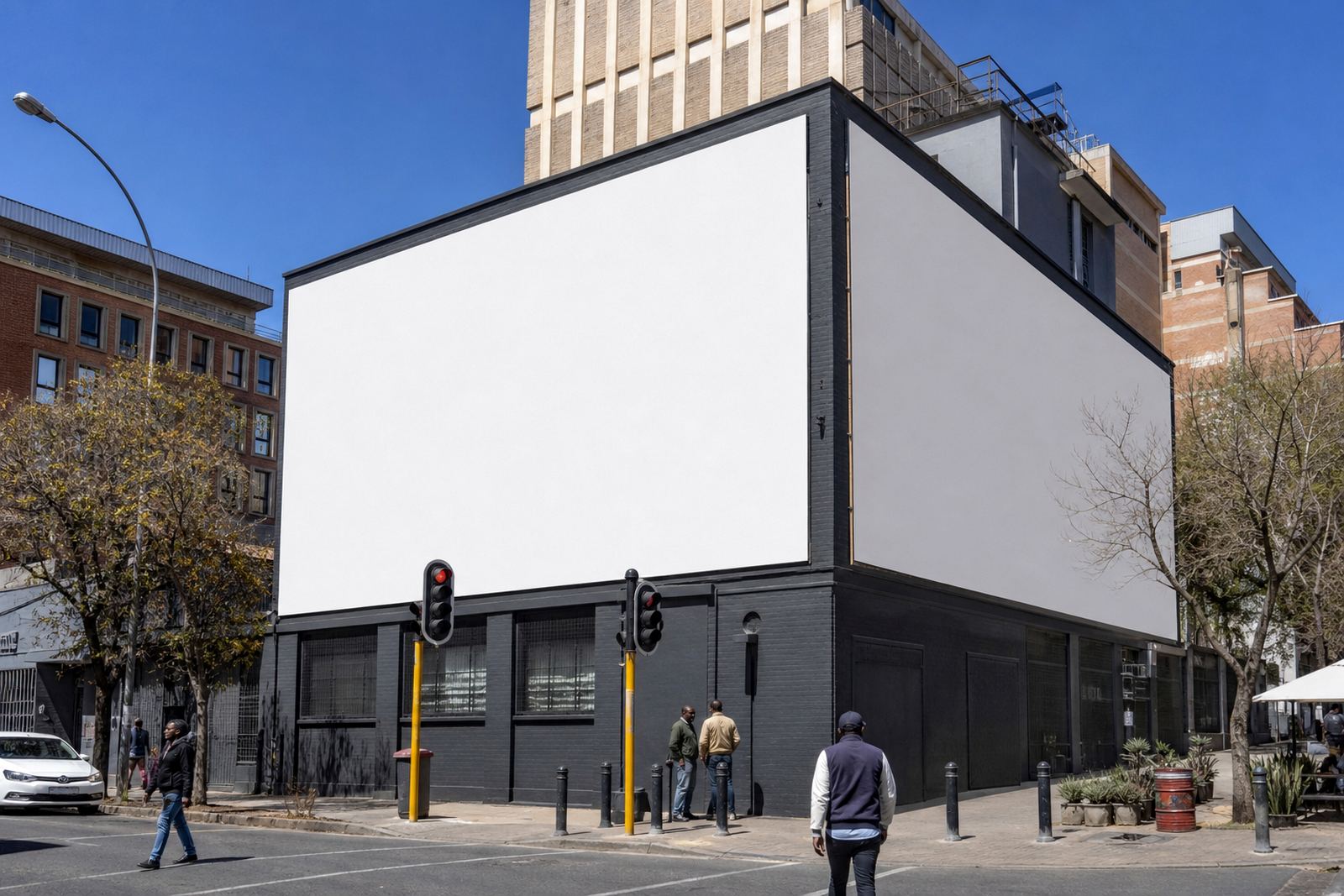
What a Corner Building Wall Site Is
A corner building wall is a wall surface positioned on the edge of a property where two streets meet, or where a building turns from one frontage to another. That shape gives your poster, banner or painted panel visibility from more than one angle, so the message can catch attention from drivers, pedestrians and people waiting at nearby crossings. In places like Braamfontein, Sandton, Pretoria CBD, Cape Town city routes, Durban inner city and Bloemfontein arterial roads, these sites are often chosen for their street presence rather than for sheer size alone.
These sites are usually best for clear branding, short copy and bold artwork. A corner wall may be flush mounted to the building or fixed on a framed structure attached to the wall, depending on the property and the available surface. The exact shape matters because some corners have a narrow sightline, while others open up to a wider intersection. That is why site measurements and photos are part of the listing, not just the address.
Typical Sizes, Formats and Site Specs
Corner wall sites are not one standard size. Some are compact panels for a tight urban frontage, while others run across a full corner elevation. You will see both single-surface and wraparound options, depending on the building shape and the available exposure. Common formats include printed vinyl, painted wall branding, tensioned banner systems and rigid panel displays, provided the surface can take the fixing method.
When comparing listings, check the usable wall height, the wall width on each side of the corner and whether there are windows, drains, pipes or service boxes that need to be worked around. In coastal areas such as Durban or Cape Town, the material choice matters because salt air can affect fixings and printed finishes if they are not specified correctly. In Johannesburg and Pretoria, dust and winter dryness can affect cleaning frequency, while in summer rainfall areas you want good drainage and no pooling at the base of the wall.
- Visible face area: varies by building, often split across two wall planes
- Common fitment: printed vinyl, painted mural, panel board or banner frame
- Viewing angle: one street or two approaches, depending on the corner
- Access: may need street-side rigging, lift access or rope access planning
- Finish: matte preferred where headlights or sunlight may reflect
Where This Format Works Best
This product suits advertisers who want a clear, fixed presence in a built-up area without relying on digital screens or moving parts. Corner building walls work well for retail openings, property launches, nearby service businesses, route-based promotions and brand awareness campaigns that need repeated street exposure. They also suit locations near taxi ranks, commuter routes, inner-city walkways, school roads and mixed-use precincts where traffic comes from several directions.
If your campaign needs local recognition, a corner wall can do that quietly and consistently. It is often a better fit than a freestanding board where the building itself is already part of the streetscape. For property owners, these sites can help use wall space that would otherwise be blank, weathered or underused. For advertisers, the key is matching the artwork to the site shape. A message that reads well from one angle may need a different layout if the wall turns sharply at the corner.
- Good for short, direct copy and strong branding
- Works for long or short rental periods, subject to listing terms
- Can suit high street retail, office districts and transport routes
- Useful where the building corner naturally frames the message
Installation, Power and Site Access
Most corner wall advertising does not need power or gas because it is a static format. That said, some sites may have lighting nearby, and if you want evening visibility you will need to check whether the building has suitable power points or an approved lighting solution. Any electrical work should be planned by a qualified person and must fit the property rules. In some areas, especially where load shedding is a regular concern, it is worth checking whether lighting can stay functional during outages or if the campaign will rely on daylight only.
Installation depends on the wall material, height and access. Brick, plaster, concrete and cladding each need different fixings. A corner wall may also require traffic management if installers have to work from the pavement or roadside. On older buildings, the owner may ask for a surface condition check before anything is fixed. If the wall is exposed to wind or rain, the installation method should allow for movement and water run-off. That helps reduce lifting, staining and premature wear.
- Confirm whether the site needs a lift, scaffold or rope access
- Check if street permits or temporary barriers are needed for installation
- Ask whether lighting is included, or if the site is strictly non-illuminated
- Make sure fixings suit the wall material and local weather exposure
Care, Servicing and Ongoing Checks
A corner wall site needs regular checking because the edges of the display often take the most weather. Wind can lift corners, dust can dull the print, and coastal humidity can affect adhesives and metal parts if they are not maintained. In rainy months, it is worth checking that water is not tracking behind the display or running into any joins. If the building is close to a busy road, grime build-up can be faster than on a back street site.
Servicing usually includes visual inspections, cleaning, tightening fixings, replacing damaged panels and reviewing artwork condition before the next campaign cycle. If the wall is painted, touch-ups may be needed sooner in sunny or high-exposure spots. If the listing includes lighting, cables and fittings should be checked after outages or storms. A simple service routine helps the site stay neat and keeps the message easy to read from both approaches to the corner.
What to Check Before You Book
Before you confirm a corner building wall, check the ownership, consent and bylaw side carefully. The property owner's consent is required, and local municipal bylaw approval may also be needed depending on the site, the size of the display and how it is fixed. This is especially important in central Johannesburg, Pretoria and other busy municipal areas where outdoor signage rules can differ from one street to the next.
You should also confirm the exact wall measurements, the viewing angles, whether windows or shutters interfere with the face, and whether the surface is in good condition. Ask how long the listing is available for, who handles installation scheduling, and whether the artwork spec must be approved before production. If the site is part of a larger building, make sure the landlord, body corporate or managing agent has signed off where needed. It is always easier to sort these details before print than after the scaffold arrives.
- Owner consent confirmed in writing
- Municipal bylaw approval status checked for the specific site
- Wall measurements, corners and sightlines verified
- Access times, installation method and safety requirements agreed
- Artwork specs checked for size, bleed and resolution
Key facts
| Product type | Corner-facing building wall advertising site |
|---|---|
| Visibility | Multi-angle street visibility from two approaches |
| Typical formats | Vinyl, painted wall, banner frame or panel display |
| Power or gas | Usually not required; lighting may need power if included |
| Access needs | May require street-side installation planning, lift or rope access |
| Compliance | Property owner consent and local municipal bylaw approval required |