What a painted wall site is and why it works
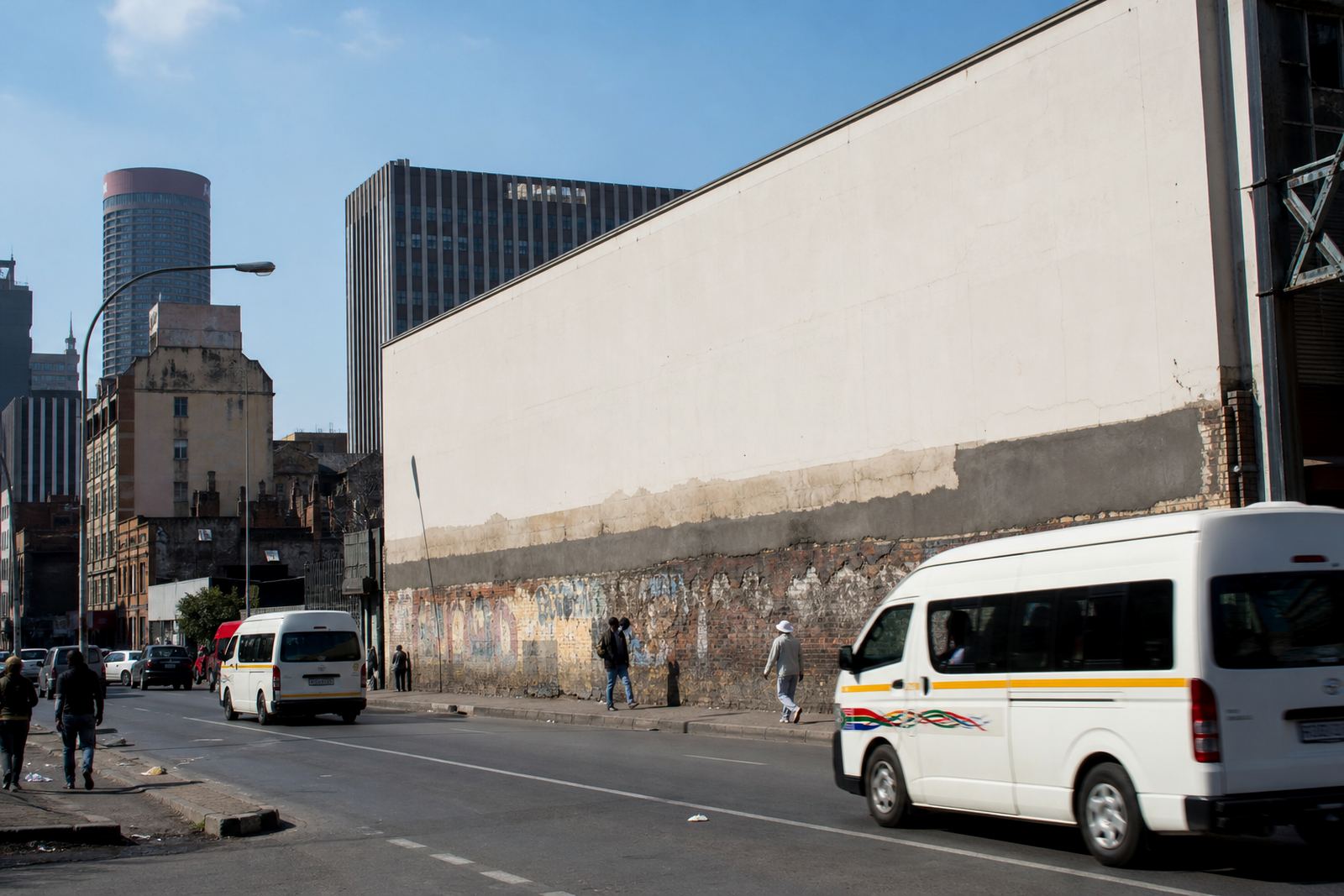
A painted wall site is a wall or building side used for outdoor advertising where the artwork is applied directly to the surface or to a prepared panel fixed against it. It suits long-view locations along roads, near intersections, on taxi routes and on buildings that face steady pedestrian or vehicle movement. The format is simple, direct and easy to read from a distance, which is why it remains a practical choice for local campaigns and regional brand work.
These sites are often chosen when a business wants a fixed message that stays in place for a set campaign period, rather than changing graphics week by week. Because the wall becomes part of the message, the surface condition, height, angle and surrounding clutter matter just as much as the wording. A well placed wall site can work hard in Braamfontein, Sandton, Midrand, Pretoria CBD and other busy city nodes, especially where there is open sightline and less visual noise.
Common wall sizes, finishes and format options
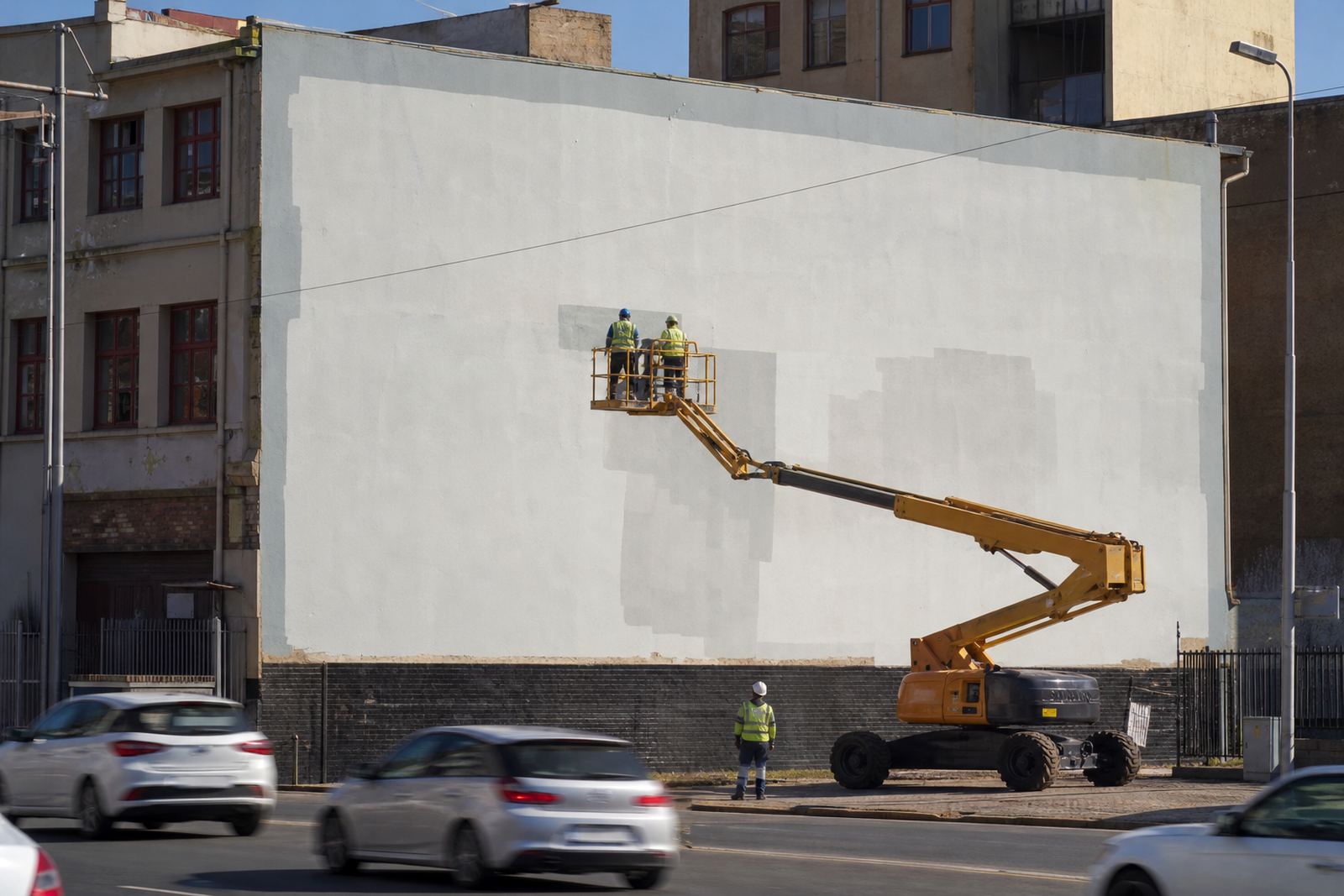
Painted wall sites are not one size fits all. Some are small frontage walls for local trade, while others cover large building sides used for broader exposure. The best fit depends on viewing distance, wall condition, mounting access and the message size needed for clear reading. Where the wall is uneven or weathered, a preparation coat or panel system may be used first so the finish is neat and the text remains legible.
Typical options include direct painted artwork, applied vinyl over a prepared wall, and panel based wall advertising for smoother results. On exposed sites, especially near the coast or on high sun walls in Durban and Cape Town, the finish should be chosen for UV exposure, moisture and surface movement. In Johannesburg and Pretoria, dust and weather swing can affect how often the wall needs cleaning or touch ups.
- Small local wall faces for shopfront or street level visibility
- Medium building side walls for passing traffic and longer reading time
- Large gable or flank walls for landmark style exposure
- Painted finish for a traditional look and direct on surface application
- Panel or vinyl finish where a cleaner graphic result is needed
Where this format suits best
This product suits sites where the wall is highly visible and the message can be read without distraction. It is often used beside arterial roads, on warehouse walls, near stations, in retail precincts and on corners where vehicles slow down. In places like Braamfontein and central Johannesburg, wall advertising can work well on routes with frequent stop and go movement, while in Bloemfontein and Pretoria it can suit broader streets with clearer sight lines.
It also suits landlords and property owners looking to use underused wall space in a controlled way. For advertisers, it is a practical fit when the brief calls for fixed branding, directional messaging or a campaign that needs steady exposure over a longer period. If a site faces strong coastal humidity, heavy dust, or direct afternoon sun, that should be checked before the booking is confirmed so the right material and maintenance plan are chosen.
- Building sides facing busy roads or intersections
- Boundary walls with clear pedestrian or vehicle view
- Retail and commercial properties with open frontage
- Industrial areas where large blank walls are available
- City routes where the message needs repeated viewing over time
Installation, access and power or gas needs
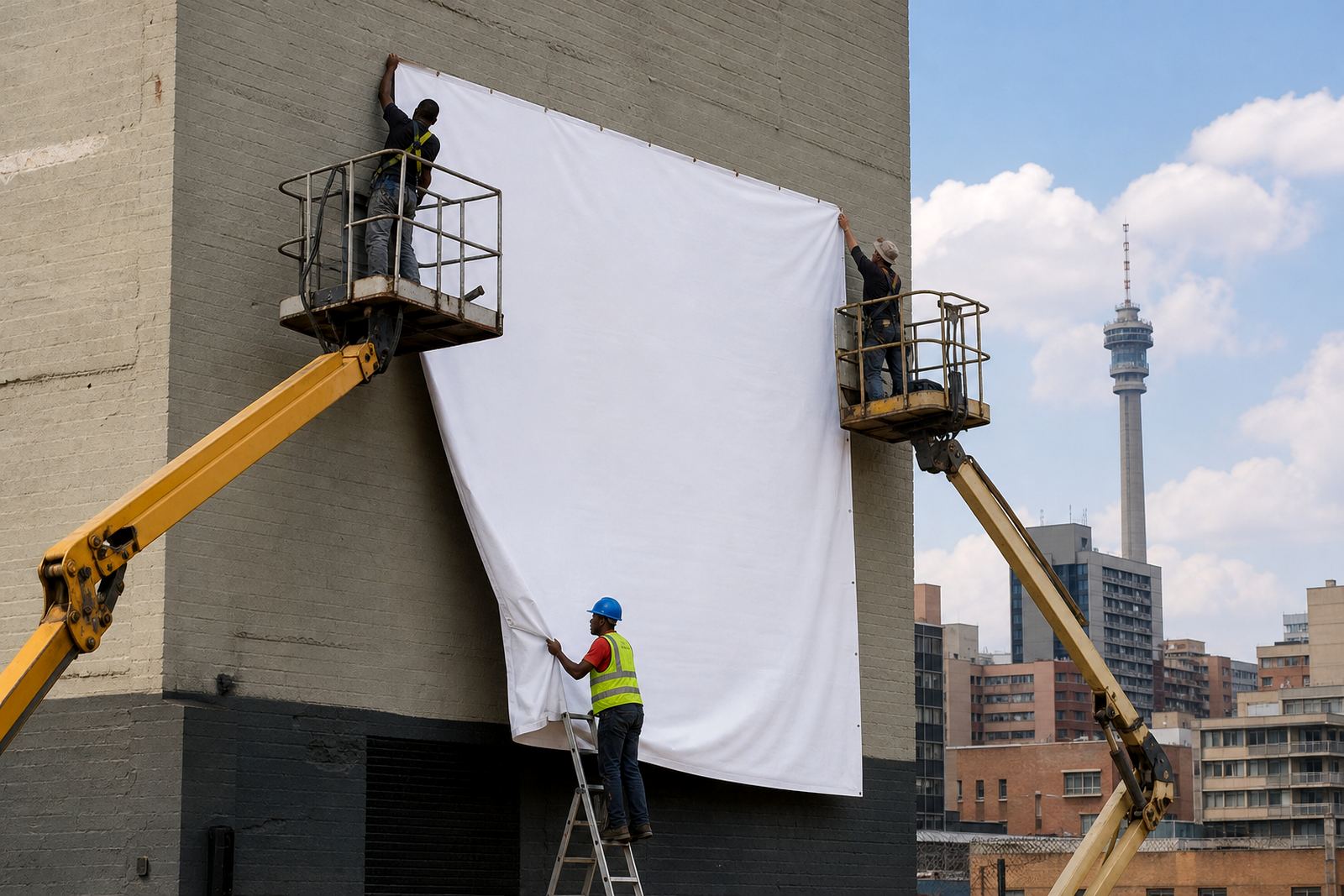
Most painted wall sites are installed with access equipment suited to the wall height, surface and surrounding space. Depending on the site, this may mean ladders, scaffolding, boom access or a rope access team for harder to reach facades. The condition of the wall must be checked first, because loose plaster, damp patches, cracking or flaking paint can affect the finish and the safety of the install.
Painted wall advertising does not usually need power or gas, unless the campaign includes lighting, a special frame system or other site equipment. If the wall is used after dark and the advertiser wants visibility at night, lighting options should be discussed before production starts. Local rules, the property owner's consent and municipal bylaw approval must be in place before any work begins, and that applies whether the site is in Sandton, Midrand, Durban or a smaller township edge location.
- Confirm surface condition and any repairs needed before booking
- Check access for workers, equipment and delivery vehicles
- Allow time for consent, bylaw review and installation scheduling
- Plan for weather delays, especially in rainy months or coastal wind
Care, servicing and campaign monitoring
A painted wall site needs routine care to keep it readable and presentable. Dust, pollution, bird marks, salt air and sun fade can all change how the message looks over time. For this reason, servicing should be planned from the start, not only after the wall begins to age. A practical care plan may include surface cleaning, minor touch ups, edge fixing and checking that no new obstruction has appeared in front of the wall.
Where the site runs for several months, campaign monitoring helps to catch damage early. The team can check for peeling corners, staining, weather wear or changes on the property that affect visibility. On some walls, especially in areas with coastal humidity or strong summer heat, it is worth setting a review date during the campaign rather than waiting till the end. It keeps the site tidy and avoids surprises, which is better for both owner and advertiser.
- Regular visual checks for fading, cracking or peeling
- Cleaning as needed to remove dust, grime and bird marks
- Minor repairs to keep the wall looking neat and usable
- Monitoring for new obstructions like signage, branches or parked vehicles
What to check before you place an order
Before ordering a painted wall site, confirm the exact wall location, viewing angle and whether the message is meant for close range or longer distance viewing. Ask for recent site photos, dimensions and notes on surface condition. You should also check how the wall sits against nearby buildings, trees, poles, overhead lines and other visual clutter that might reduce impact. The wrong angle can make even a good design hard to read.
It is also important to confirm who owns the property, who controls the wall, and whether written consent is available. The advertiser should understand the booking period, any access restrictions, whether night lighting is possible, and who handles maintenance during the run. Artwork should be checked against the wall size, with safe margin space and enough contrast for outdoor use. A good order always starts with clear measurements and a proper consent process, no shortcuts.
- Exact wall measurements and usable display area
- Owner consent and municipal bylaw approval status
- Viewing distance and visibility from the main approach
- Access for installation and any safety requirements
- Need for lighting, touch ups or ongoing servicing
- Artwork file size and layout against the final wall spec
Key facts
| Format | Traditional wall advertising on a building side or boundary wall |
|---|---|
| Use case | Long-view outdoor visibility for fixed campaigns |
| Size range | Small frontage walls to large full-wall displays |
| Surface options | Painted finish, prepared panel, or vinyl application |
| Power / gas | Usually not required, except for lighting or special equipment |
| Compliance | Property owner consent and local municipal bylaw approval required |