
What a mesh building wrap is used for
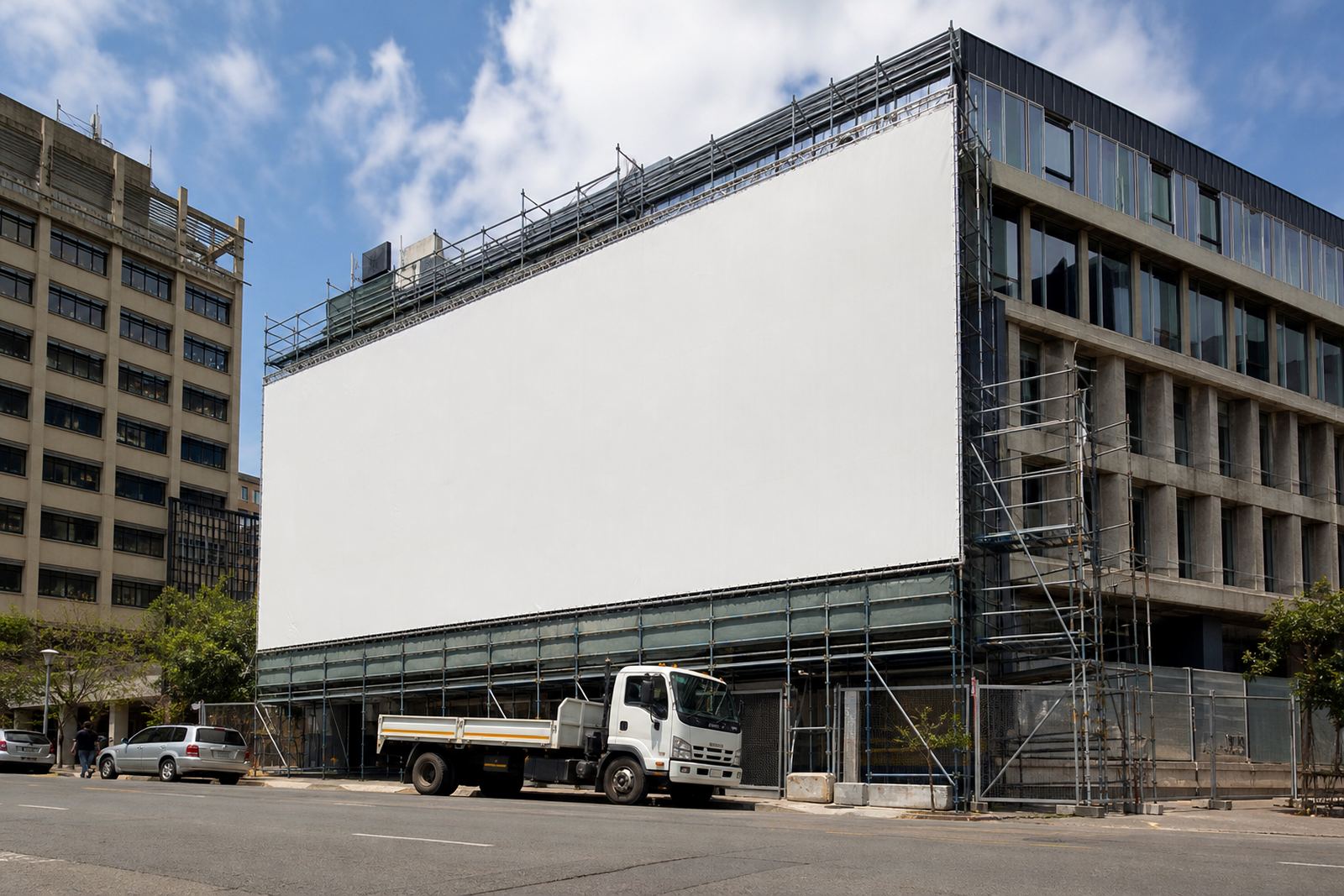
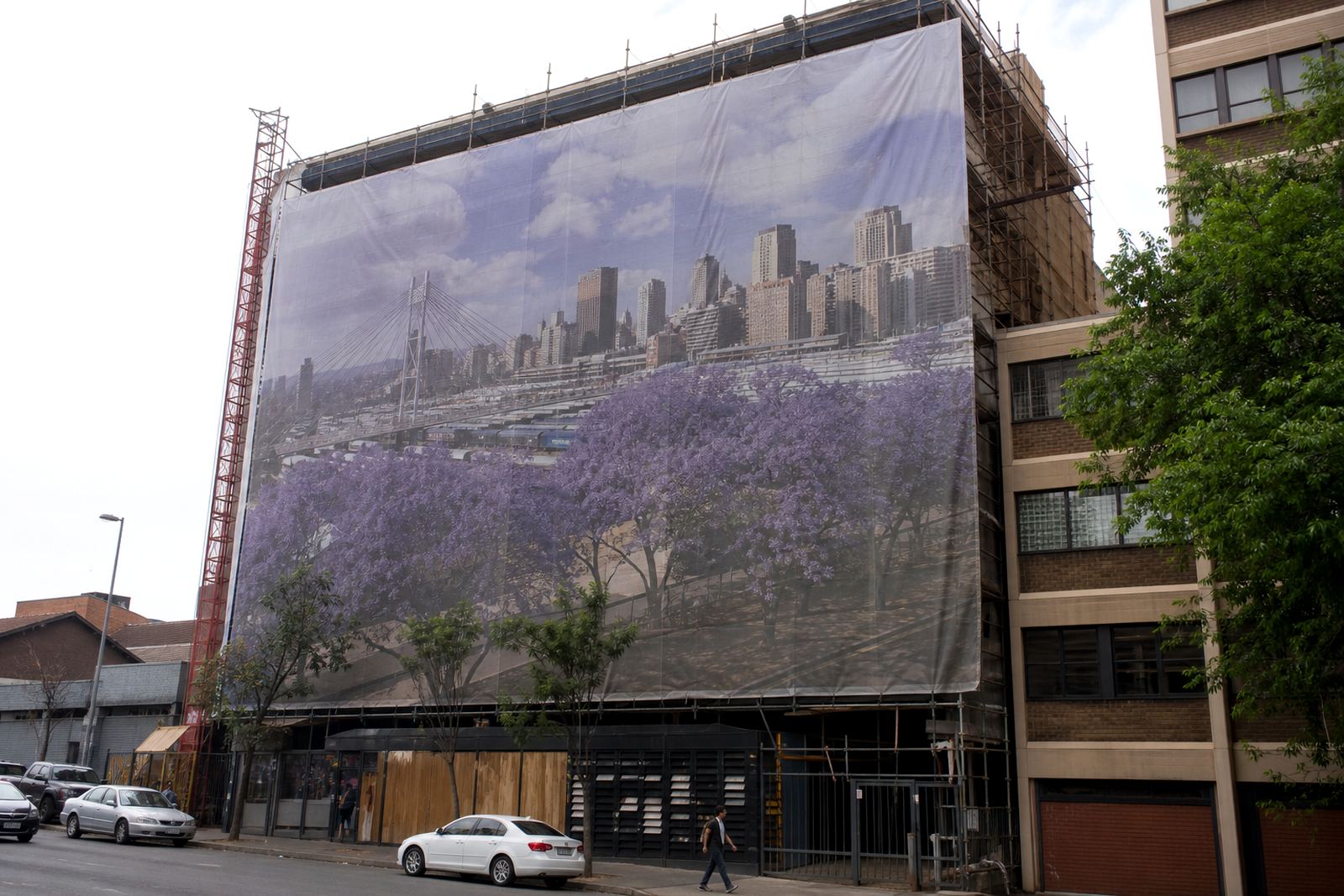
A mesh building wrap is a printed outdoor advertising surface fixed across part or all of a building façade. The material has small perforations, so it can reduce wind pressure while still carrying clear artwork, messaging and branding at scale. It is commonly used on redevelopment sites, temporary site screening, and buildings that need to keep a presence while work is going on behind the cover.
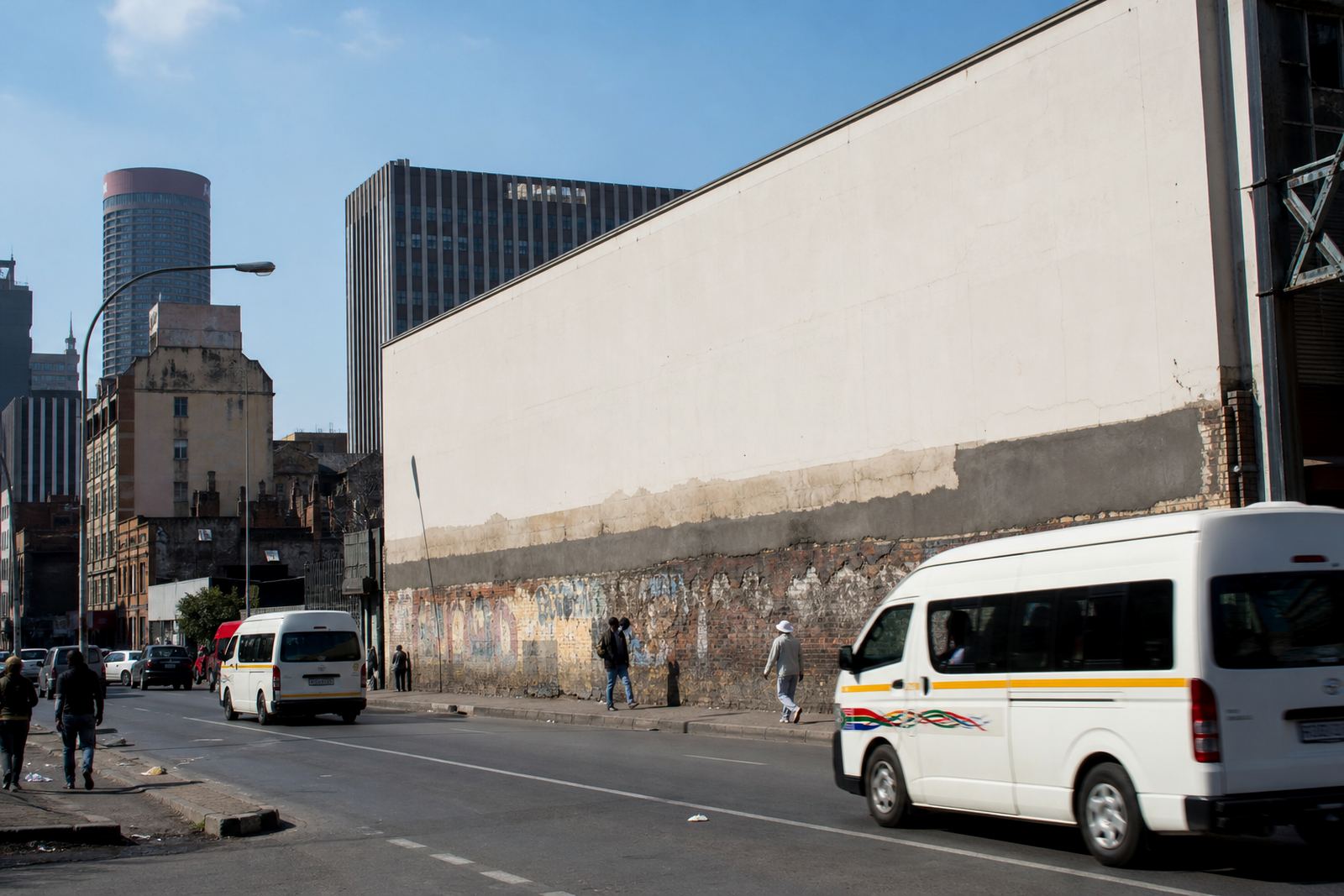
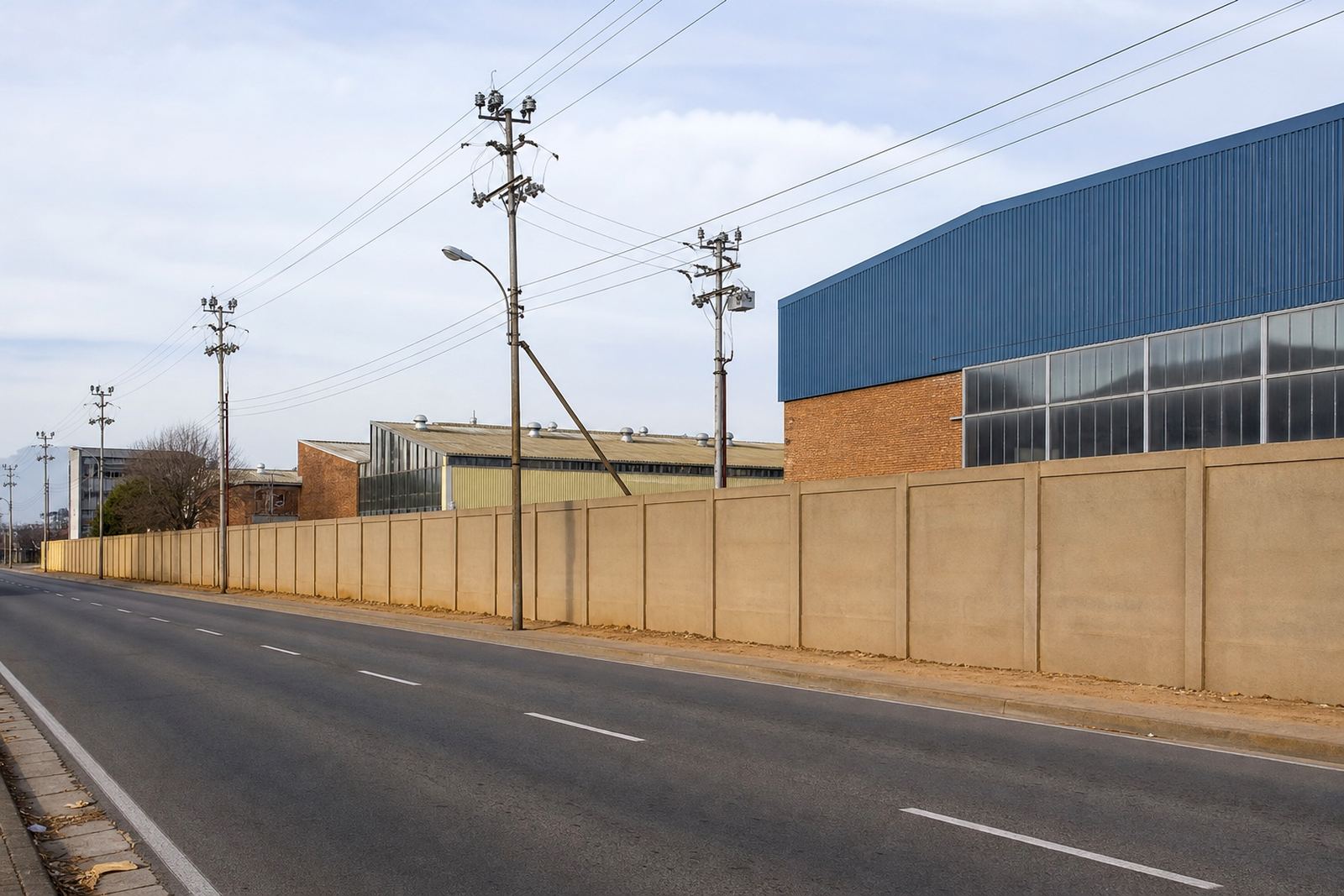
For advertisers, this format works best when the wall or façade has a large uninterrupted face and the property owner is willing to release the space for a set period. It is also useful where a painted wall would not be practical, or where the surface must remain breathable because of weather exposure and structural conditions.
We match this format to buildings in Johannesburg, Pretoria, Cape Town, Durban and Bloemfontein, including inner-city sites and busy suburban routes. It is often selected where the site can be viewed from traffic, neighbouring offices or pedestrian movement, but the main requirement is always the same: the right wall, the right permissions, and a clean installation plan.
Sizes, panel formats and print options
Mesh wraps are usually specified to suit the exact façade rather than a standard one-size roll. The final size depends on the wall width, height, window positions, parapets, access points and any structural breaks. A wrap may cover a full elevation or only a defined section, depending on the visibility you want and the building layout.
Print production can be done in one large panel or in multiple joined panels for easier handling. On most sites the artwork is planned with seam positions, fixing points and viewing distance in mind, because small text can disappear from far away. If the site has irregular edges, corners or openings, the layout needs to be measured carefully before printing starts.
- Full façade coverage for large walls and redevelopment sites
- Sectional wraps for selected areas above hoarding, windows or service access
- Custom panel widths for easier lifting and attachment on site
- Matte print finishes that help reduce glare in strong sun
- Perforated mesh construction for airflow in exposed areas
For coastal sites in Durban or Cape Town, the fixing plan must also account for humidity, salt air and faster wear on hardware. In those areas, the wrong anchor or weak edge detailing can shorten the life of the installation and lead to sagging after heavy wind.
Where this format suits best
This product suits buildings that need a large visual surface without fully sealing the façade. It is often chosen for commercial blocks, mixed-use developments, apartment refurbishments, retail redevelopments and vacant properties that need to stay present while works continue. Because the material breathes, it is better suited to exposed façades than a solid vinyl cover in many cases.
It is a practical option where the building already has scaffolding, a frame line, or another safe fixing structure. Sites in Braamfontein, Sandton, Midrand and central Johannesburg often suit this format when the viewing angle is strong and the wall face is broad enough to carry the artwork properly. It can also work along municipal roads, provided the consent and bylaw process is handled before any installation date is booked.
- Buildings under renovation or repainting
- New developments with temporary screening needs
- Corner properties with strong side elevation visibility
- Sites with wind exposure where breathable material is preferred
- Longer campaigns that need a neat, fixed frontage
Not every wall is suitable. Crumbling plaster, loose cladding, damp patches and uneven masonry can all affect the finish and the safety of the fixings. A proper site check before ordering saves a lot of trouble later, especially where access is limited or lift equipment must be brought in.
Installation, access and power needs
Mesh building wraps are installed by trained signage or access teams using the correct lifting and attachment method for the site. Depending on height and reach, that may involve scaffolding, rope access, cherry pickers or a fixed frame. The team must work to the building conditions and not just the artwork size, because a wrap is only as safe as the fixing system behind it.
Some installations are straightforward and only need manual fixing tools, while others require access equipment and timed road or pavement control. If lighting is being added to support the campaign at night, the site will need a safe power point and a proper electrical connection. Solar or battery-backed lighting may also be used where mains power is limited or load-shedding is a concern.
Gas is not normally required for a mesh building wrap. What does matter is access planning, site protection, and confirmation that the structure can carry the load and allow safe work. If the façade is in a busy area, installation hours may need to be set around traffic, tenant movement or building operations.
Care, cleaning and campaign servicing
A mesh wrap should be checked regularly once it is up, especially after heavy wind, rain or strong sun. Over time, dirt, dust and pollution can dull the artwork, particularly on inner-city sites. In Johannesburg and Pretoria, airborne dust can build up faster than many clients expect, while coastal air can leave deposits and speed up wear on fittings.
Routine care normally includes visual checks for slack edges, lifting corners, torn eyelets and fading. If the site is near trees, birds or building plant, those areas need closer attention. A well-fitted wrap should stay taut and even, but if the building moves, or if access ladders are used near the surface, the edge detail can need re-tensioning.
- Inspect after storms or strong wind events
- Keep drainage points clear so water does not sit behind the material
- Use approved cleaning methods only, because harsh chemicals can damage print
- Check hardware for rust, especially near the coast
- Keep a record of wear, repairs and renewal dates
Our team can help with listing renewal support and campaign monitoring so the space stays current and the booking stays aligned with the site conditions. If the wrap is being used during a longer redevelopment, that follow-up matters just as much as the first installation.
What to check before you order
Before placing an order, confirm the exact wall measurements, the visible area, and whether any windows, ledges, aircon units or services interrupt the face. You should also confirm who owns or controls the property, because the property owner’s consent is required before any signage goes ahead. In addition, local municipal bylaw approval must be factored in before installation is scheduled.
It also helps to check the artwork size against the viewing distance and the message length. Fine detail, very small text and busy layouts can be hard to read on a large wall. If the site is tall or exposed, ask about the fixing method, expected lifespan and whether the structure needs extra preparation before print work starts.
- Exact site dimensions and usable wall area
- Property owner consent in writing
- Municipal bylaw and approval requirements
- Access method for installation and maintenance
- Any power needed for lighting or night visibility
- Surface condition, moisture issues and wind exposure
If you are unsure about any of those points, our marketplace team can help with brief matching, consent check guidance, artwork spec checks and booking coordination. That keeps the process practical and avoids surprises once the site is booked.
How RentThisWall supports mesh wrap bookings
RentThisWall links advertisers with property owners across South Africa for wall and billboard space rentals. For mesh building wraps, that means we help with listing setup, photo curation, copywriting, availability management and the booking process from first enquiry through to scheduling. We work from Braamfontein, Johannesburg and handle sites in Johannesburg, Pretoria, Cape Town, Durban and Bloemfontein, as well as surrounding business areas.
Our team can also support the practical side of the booking: confirming consent steps, checking artwork specs, coordinating installation timing and keeping the listing current while the site is active. That is especially useful for buildings with changing access or long project timelines, where the wrap needs to stay aligned with the site conditions and any municipal process that applies.
For advertisers, the value is simple: a large wall face, a clear booking path, and a format that suits exposed façades without closing in the building. For property owners, it gives a way to make use of a visible surface while keeping the process organised and properly signed off.
Key facts
| Product type | Large-format mesh façade wrap for building advertising |
|---|---|
| Material | Perforated printed mesh designed to allow air flow |
| Typical use | Temporary or longer-term wall and façade advertising |
| Size range | Custom measured to suit the exact wall or elevation |
| Installation method | Fixed with suitable anchors, frames, scaffolding or access equipment |
| Compliance note | Property owner consent and local municipal bylaw approval are required |