
What a highway unipole is and why it is used
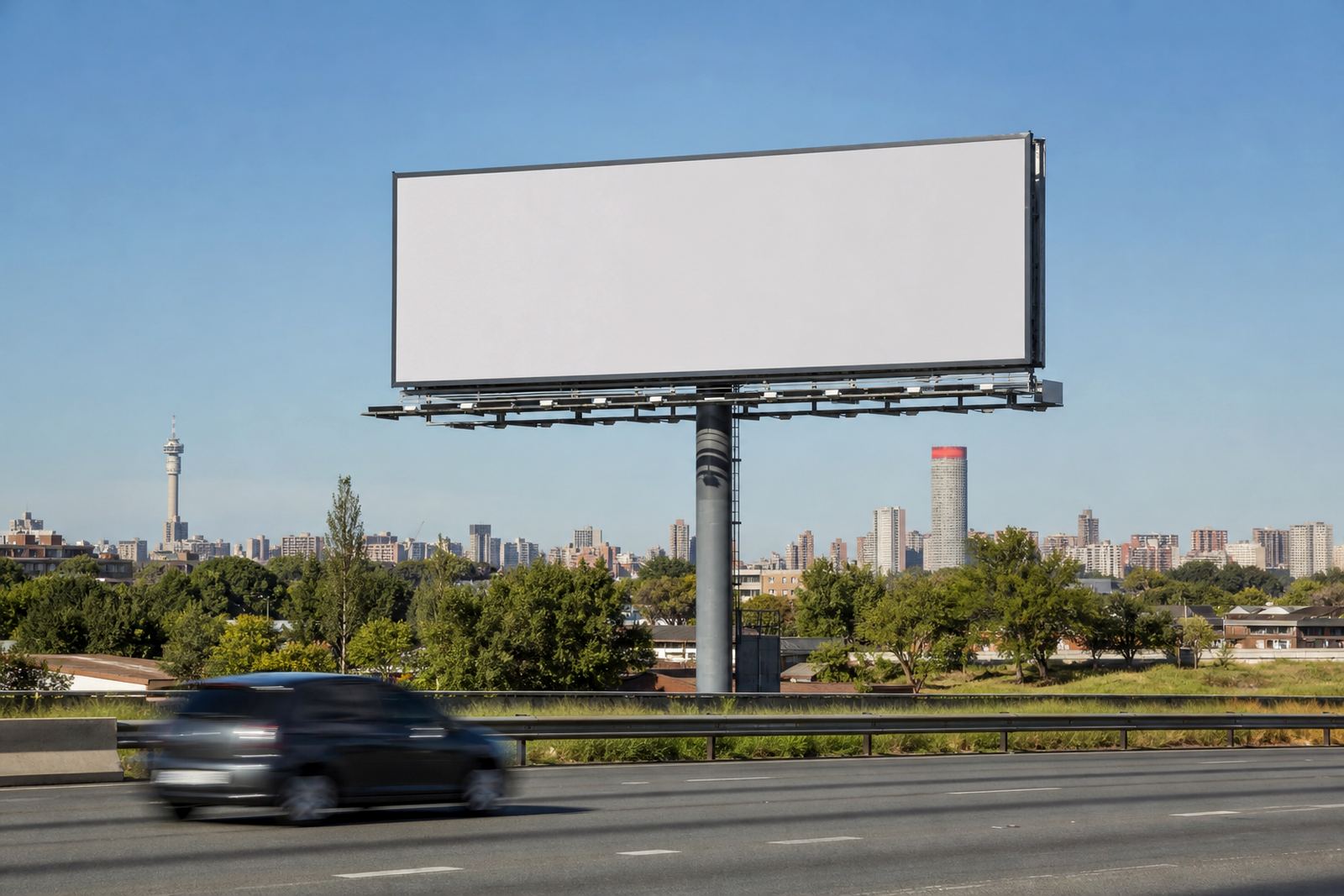
A highway unipole is a freestanding sign structure built on one main pole, with the display panel raised high enough to be seen from moving traffic and from a distance. It is commonly used where the aim is to hold attention on busy route approaches, intersections and long sight lines. The format works well for straightforward campaign messages, directional branding and promotions that need clear reading time.
In South African conditions, the structure needs to handle wind, heat, summer storms and in some coastal areas, salt in the air. A well planned unipole also has to suit the surrounding road reserve, the site access points and any local sight-line rules. Because this format is so visible, the placement must be handled carefully and the property owner must consent to the installation, with municipal bylaw approval where required.
Typical sizes, panel formats and mounting options
Highway unipoles are usually made in a range of face sizes, with the panel mounted high on a steel mast. The exact size depends on the road setback, viewing distance and what the local authority will allow. Common formats are landscape panels, though some sites can support taller portrait layouts or double-face arrangements if the structure and angle allow it.
- Small and medium faces for local route approaches and urban edges
- Large faces for high-speed highways and long sight-line positions
- Single-face panels for one direction of travel
- Double-face panels where both travel directions need exposure
- Internally lit or externally lit options where power is available and approved
- Static panels for long-running brand presence or short campaign changes
Clearance height, pole diameter, foundation size and panel dimensions are all site-specific. On a busy road the sign may need to sit higher to clear nearby trees, walls or roadside structures, while in tighter urban areas a lower profile may be the only option that fits the bylaw conditions.
Where this format suits best
This format suits properties near major roads, freeway feeders, logistics corridors, retail access roads and industrial routes where the sign can be read from a distance without distraction. It is often considered for locations near the M1, N1, N3 and other high-movement roads, as well as key urban corridors in Braamfontein, Sandton, Midrand, Pretoria, Cape Town, Durban and Bloemfontein. The structure works best where the viewing angle is open and the message can be read cleanly by passing motorists.
It is not only for national advertisers. Local businesses use unipoles for destination branding, service reminders and area awareness when they need a strong roadside presence. A careful site match matters because a tall structure can look effective on paper but still fail if trees, power lines, bridge lines or adjacent buildings block the view. That is why brief matching and site photo review are part of a proper booking process.
Installation, power and site access needs
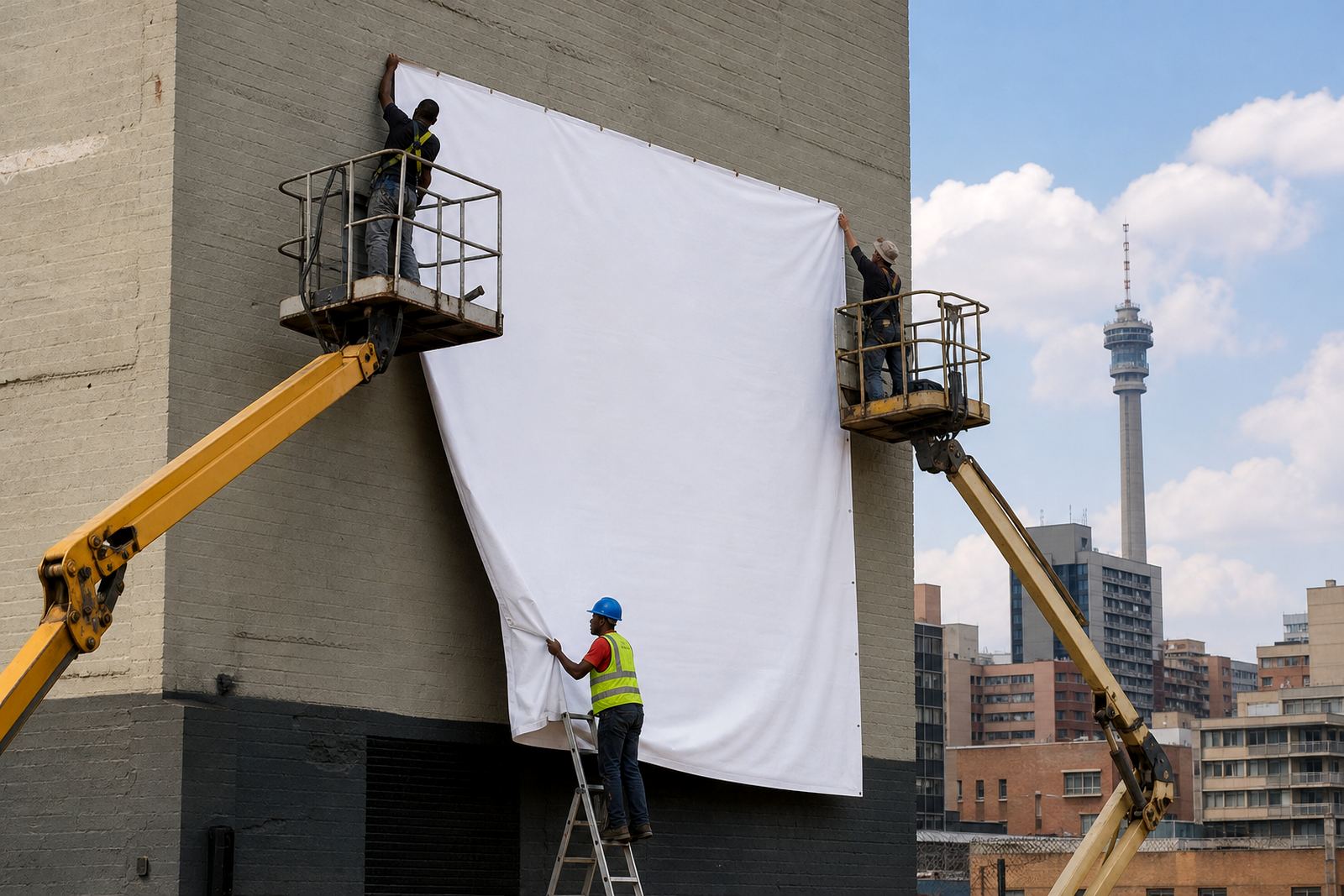
Installing a highway unipole requires proper civil works, lift access and enough room for the contractor to work safely. The foundation must be engineered for the height of the pole, the size of the face and the wind load expected for that area. The site also needs vehicle access for plant equipment, materials and any lifting gear used during erection.
If the face is lit, you will need a reliable power source and a clear route for cabling. Some sites can be wired to local mains supply, while others may need a separate electrical arrangement approved by the property owner and the municipality. Where load-shedding affects the site, lighting plans should be checked early so the campaign does not rely on power that may not stay on. In coastal areas, fittings and enclosures should be chosen for moisture and corrosion resistance, and all equipment should be positioned for safe maintenance access.
- Confirm pole position, face direction and setback from the road
- Check access for trucks, cranes or other lifting equipment
- Allow for foundation design and ground conditions
- Plan for electrical supply, metres and isolation points if lit
- Check that the site can support maintenance visits without interrupting traffic or operations
Care, servicing and campaign monitoring
Once installed, a highway unipole should be checked on a routine basis. The sign face, fixings, welds, access points and lighting components should all be inspected, especially after strong wind, heavy rain or lightning storms. If the structure is on a coastal route, corrosion checks are important and should not be left too long between visits. Dirt, dust and bird matter can also affect the finish and legibility, so the face may need cleaning from time to time.
For rented advertising, campaign monitoring matters just as much as physical servicing. The artwork should be checked for correct placement, visible damage and any issue that affects reading from the road. If the panel is renewed or changed, the listing should be updated so availability stays accurate. A clean and current listing saves time for both property owners and advertisers, especially when the site is in demand.
- Inspect bolts, brackets and the main support structure regularly
- Check lighting operation after outages or electrical interruptions
- Wash the face when dust, soot or coastal salt build-up appears
- Record any damage, fading or obstructions quickly
- Confirm renewal dates and booking periods before the current term ends
What to check before you order or book
Before you commit to a highway unipole, confirm the size, the exact position, the direction of travel and whether the site has the necessary property owner consent. You also need to check the municipal bylaw path for the area, because signage can fall under local restrictions on height, spacing, brightness, proximity to intersections and road reserves. This is especially important in busy urban nodes and along roads with strict visual controls.
Ask for clear site photos, dimensions, mounting details and any notes on visibility from both directions if the face is intended to serve two flows of traffic. It also helps to know whether the structure already exists, whether it needs refurbishment, and whether power is present for illumination. If there is any part of the order that depends on approvals or access arrangements, that should be resolved before artwork is finalised. Careful checking up front avoids delays later and keeps the booking practical for everyone involved.
- Confirm the face size and viewing direction
- Ask whether the structure is single-face or double-face
- Check if lighting is included and how it will be powered
- Review site access for installation and ongoing servicing
- Make sure consent, bylaw approval and timing are aligned
How RentThisWall supports highway unipole listings
RentThisWall helps property owners and advertisers connect through one clear marketplace for billboard and wall-space rentals across South Africa. For highway unipoles, that means helping with space listing setup, site photo curation, listing copywriting, availability management, brief matching, booking coordination, consent check guidance, bylaw process support, artwork spec checks, installation scheduling, campaign monitoring and listing renewal support.
Our Braamfontein team works with sites in Johannesburg, Pretoria, Cape Town, Durban and Bloemfontein, as well as surrounding areas such as Sandton and Midrand. With careful listing details and practical support from enquiry to booking, the process stays clear for both sides. Thabiso Mokoena leads the business, with support from a team that handles operations, owner relations, advertiser support, logistics, compliance and listings day to day.
Key facts
| Structure type | Single-pole freestanding billboard |
|---|---|
| Common use | Major route and highway visibility |
| Face options | Single-face or double-face |
| Size range | Site-specific, based on road position and bylaw limits |
| Power need | Only if lighting is used, subject to site supply and approval |
| Approval requirement | Property owner consent and local municipal bylaw approval required |