What a high-rise wall format is
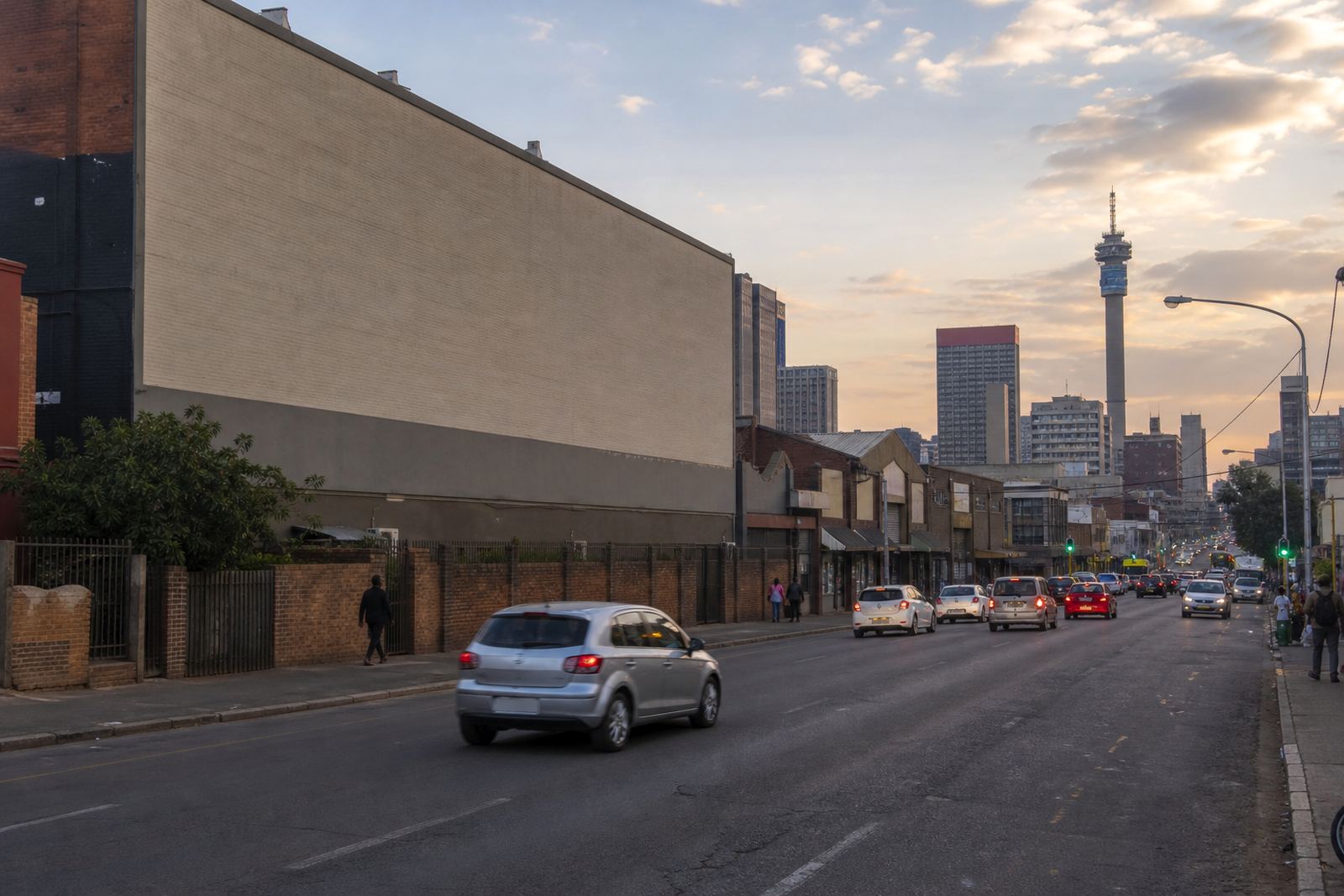
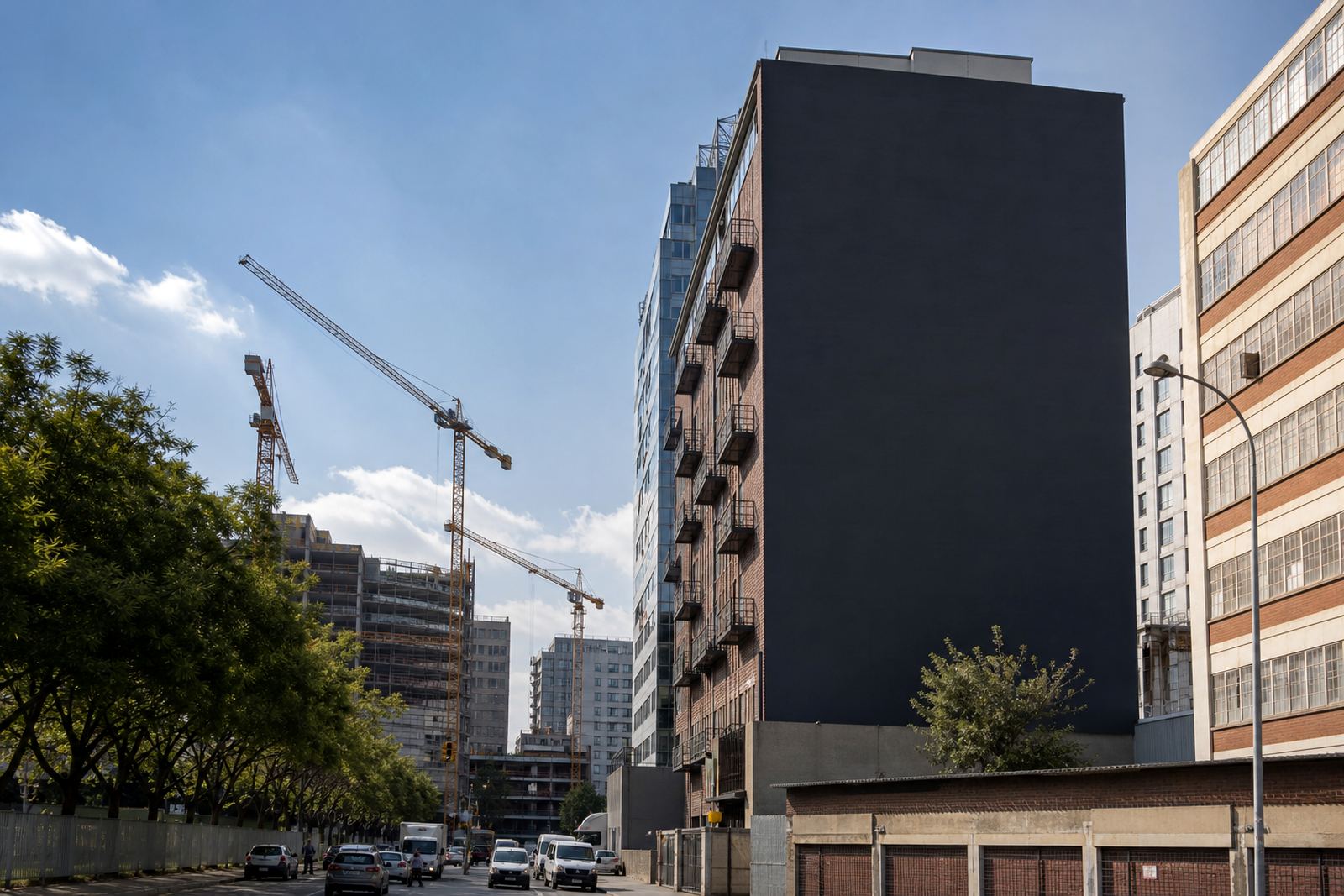
A high-rise wall is a large external wall face on a taller building that is suited to long-view advertising. It is often used on commercial blocks, residential towers with exposed side walls, parking structures and mixed-use buildings where the wall sits above ground level and can be seen across a busy urban area. The format is normally chosen for strong brand presence, clear lettering and simple artwork that reads quickly from a distance.
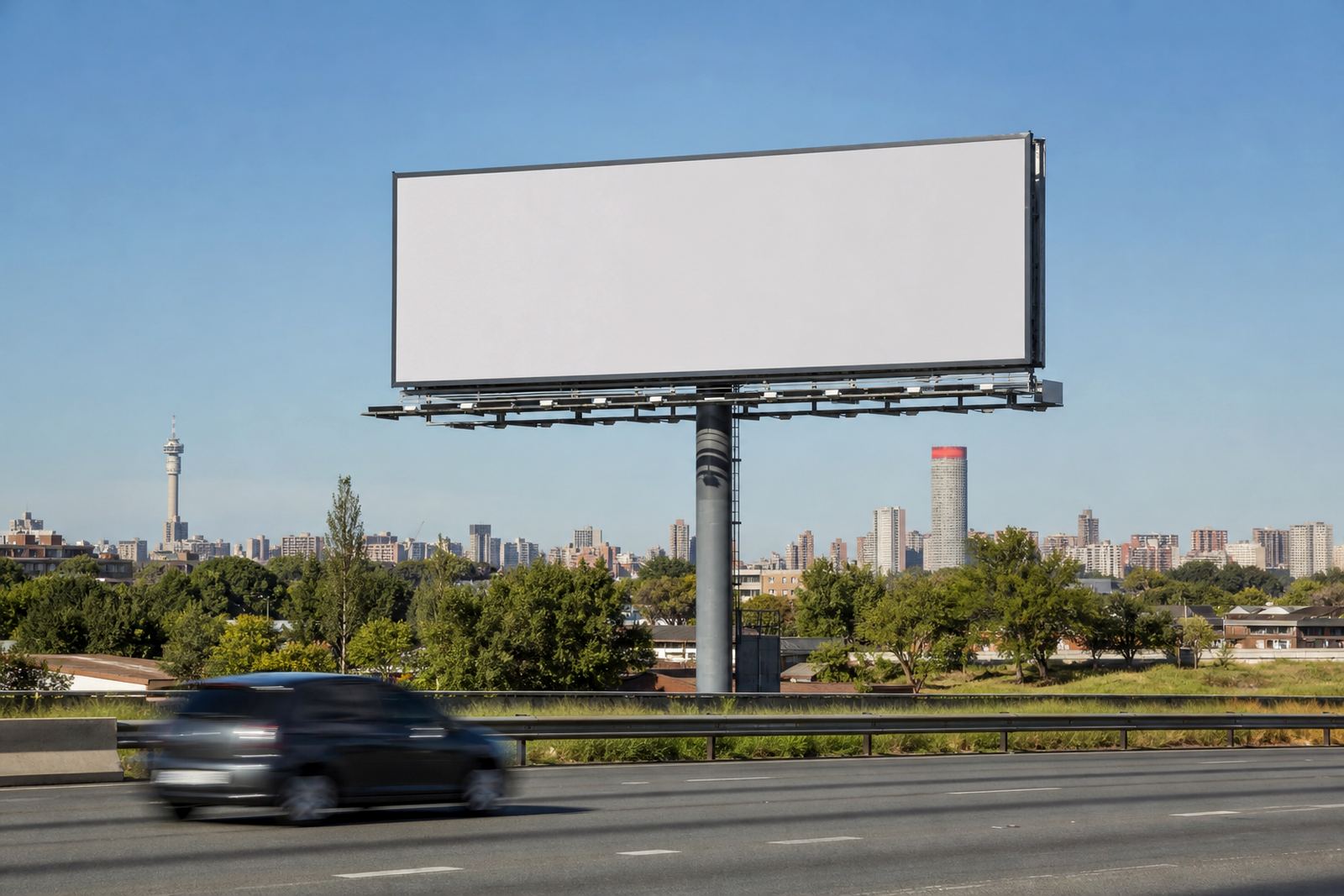
These sites are not the same as roadside boards. The structure, access, fixing method and viewing angle all matter, as does the condition of the wall itself. In Braamfontein, Sandton, Pretoria CBD, Cape Town city side streets, Durban precincts and Bloemfontein central routes, high-rise wall space can suit brands that need visibility without taking up pavement space or blocking shopfronts.
Before a booking is confirmed, the property owner must give consent and the local municipality must approve the sign or banner where required by bylaw. That step is not optional, even if the wall looks ready to use. A proper site review will also check whether the wall is painted, bare brick, rendered, or partly glazed, because each finish affects how the artwork is fixed and maintained.
Common sizes and layout options
High-rise wall sites vary a great deal, so there is no single standard size. The usable area may be a narrow vertical strip, a wide rectangular face, or a panelled section divided by windows, joints or service lines. A listing should state the exact width and height in metres, together with any part of the wall that is blocked off or not approved for use. If the site has an awkward shape, measured drawings help avoid problems later on.
Many advertisers prefer simple formats that can be read from moving traffic or from a distance. Large single-panel artwork, repeated vertical banners, or a cut-to-size printed skin are all common. Where the wall is very high, the lower portion may be easier to maintain than the upper section, so the usable zone should be described clearly. On windy sites, a perforated or tensioned material may be better than a solid sheet, depending on the structure and the exposure of the building.
Lighting can also change the choice of layout. Some walls rely on daylight only, while others have external fittings or reflected light from nearby buildings. If a listing includes illumination, the notes should say whether the light is supplied by the building or by a separate fitting and who is responsible for servicing. In coastal areas such as Durban, corrosion resistance matters, and fixings should be checked more often due to humidity and salt in the air.
- Measure width and height in metres, not estimates
- Note windows, pipes, vents, cables and other obstructions
- State whether the usable area is portrait, landscape or irregular
- Confirm whether the wall is for printed media, vinyl or fabric
Where this format works best
This product suits business districts, transport corridors, inner-city mixed-use areas and dense neighbourhoods with tall buildings. It can work well where pedestrians, office workers and motorists pass the same wall every day, especially if the face is close to a signalised intersection or a route with slower traffic. In Johannesburg and Pretoria, it is often used near active commercial streets. In Cape Town and Durban, sea air and weather exposure need extra attention during the planning stage.
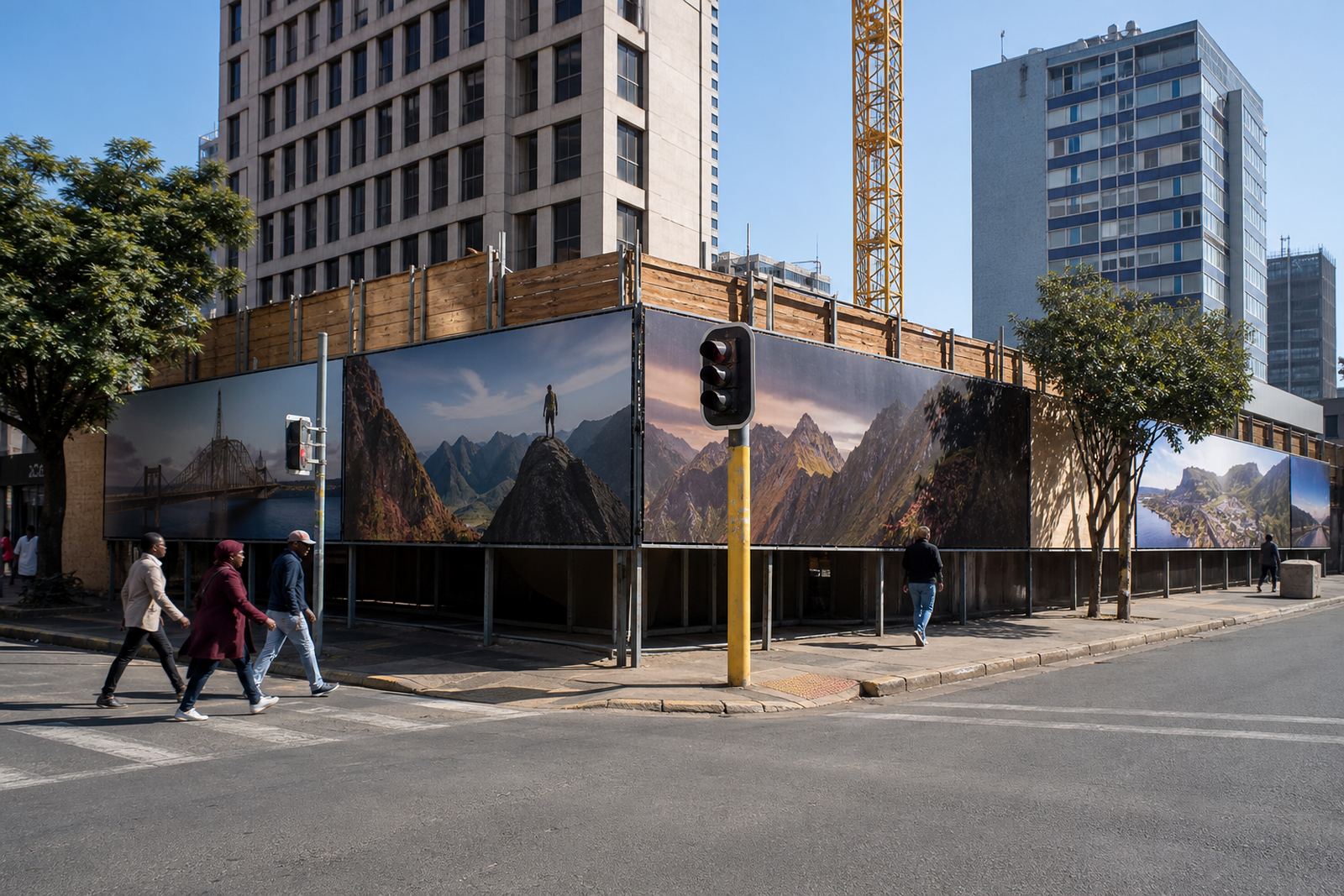
It also suits campaigns that need a clean, uncluttered surface instead of a busy cluster of small signs. Retail launches, property promotions, event notices, short-term brand awareness and service advertising can all fit a wall format, provided the message is kept clear and not overfilled with text. High-rise walls are less useful if the surrounding buildings block the view from key approach angles or if the artwork can only be seen from one narrow position.
For advertisers working in South Africa, local conditions matter. Load-shedding can affect lighted elements and inspection timing, while municipal rules may affect installation windows, scaffolding access and night work. A good site plan should account for building access, neighbour sensitivity and any restrictions on placing equipment over public pavements.
Installation, access and service needs
High-rise wall advertising is usually installed by trained teams working with safe access equipment. Depending on the building, that may involve rope access, scaffold, a lift platform or another approved method. The site should be checked for anchor points, wall condition, nearby cables and anything that could affect the fit. If drilling or surface fixing is needed, the owner must agree to it in advance and the bylaw process should be in order before work begins.
Power is not always needed for a wall format, but it may be required if the site includes lighting, timers or a small control unit. If there is no power available, the listing should say so clearly. Gas is not normally needed for this product. Where the campaign includes illuminated elements, the installation team should confirm the supply point, cable route and who will switch the lights on or off. Any electrical work should be properly handled, not patched together on site.
Weather and maintenance planning are part of the service too. In windy weather a loose edge can become a problem. In coastal locations, fixings and brackets should be checked for wear. In dusty inland areas like parts of Johannesburg and Bloemfontein, the surface may need cleaning before a renewal. A campaign that runs for several months should include service visits, photo checks and a clear process for repair if a section lifts or fades.
- Confirm access method before booking
- Check whether the site needs power for lighting
- Ask who handles cleaning, repairs and inspections
- Allow time for weather delays and municipal conditions
What to check before you book
Ordering a high-rise wall listing should begin with the site details. Ask for exact measurements, recent photographs, building address and the direction the wall faces. It also helps to know whether the wall is currently vacant, whether another campaign has just come down, and whether the owner has already signed off on advertising use. A wall that looks available may still need repairs or consent work before it can be booked.
Next, check the approvals path. The property owner’s consent is required, and the local municipality may need sign-off under the relevant bylaw. That process can affect timing, artwork changes and installation dates. If the wall is in a heritage area or near a sensitive precinct, there may be extra rules. It is better to sort this early than to discover later that the artwork has to be revised, which wastes time and adds cost.
Finally, confirm what is included in the booking. Some listings only cover the surface rental, while others include photo curation, copywriting, scheduling support and monitoring. If the advert needs a precise colour match, special print material or a short turnaround, say so at the start. The more exact the brief, the easier it is to match the wall to the campaign and avoid delays, especially when transport, weather or building access is tight.
How RentThisWall supports wall bookings
RentThisWall runs an online marketplace that connects property owners with advertisers looking for billboard and wall space across South Africa. The team handles space listing setup, site photo curation, listing copywriting, availability management, brief matching, booking coordination, consent check guidance, bylaw process support, artwork spec checks, installation scheduling, campaign monitoring and listing renewal support. That helps keep the process practical from first enquiry through to the end of the campaign.
Based in Braamfontein, Johannesburg, the team works across Johannesburg, Pretoria, Cape Town, Durban and Bloemfontein, with support for nearby areas such as Sandton and Midrand. Thabiso Mokoena leads the business, with support from Anele Dlamini, Ruan van Wyk, Lerato Molefe, Musa Khumalo, Bianca Naidoo and Pieter Smit. If you need a high-rise wall for a short run or a longer placement, the enquiry form on the contact page is the place to start.
For property owners, the main value is simple: a clearer listing, better site information and less back-and-forth about access or compliance. For advertisers, it means a cleaner way to compare wall options, check what is possible and move through the booking process without missing important details. That is especially useful in cities where building access, weather and municipal conditions can all affect timing.
Key facts
| Format | High-rise external wall advertising surface |
|---|---|
| Typical use | Static branding, short-term campaigns, launch messages |
| Size range | Site-specific, often measured in metres and split by usable zones |
| Power need | Not usually required unless lighting or controls are included |
| Gas need | Not required |
| Approval | Property owner consent and municipal bylaw approval required |