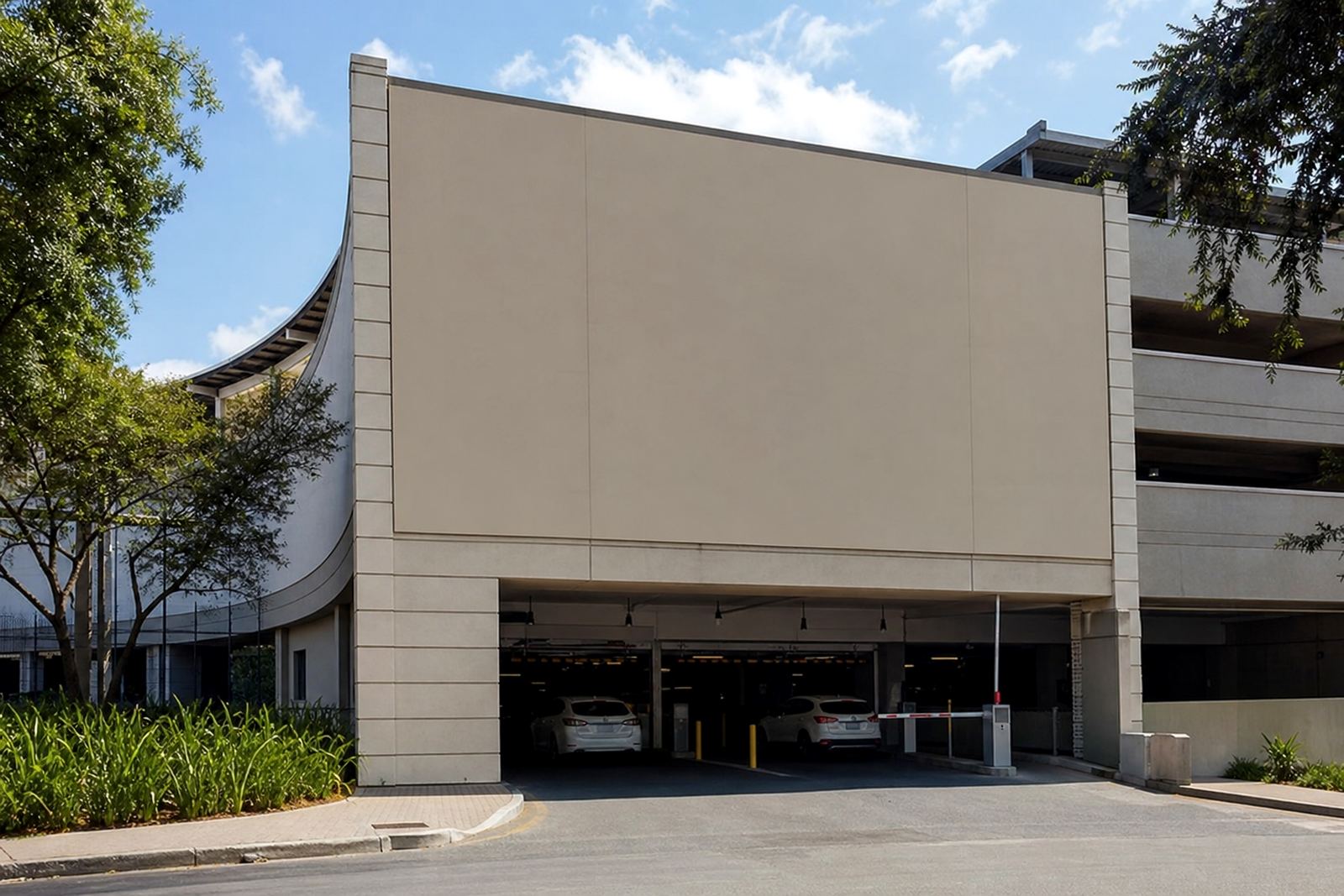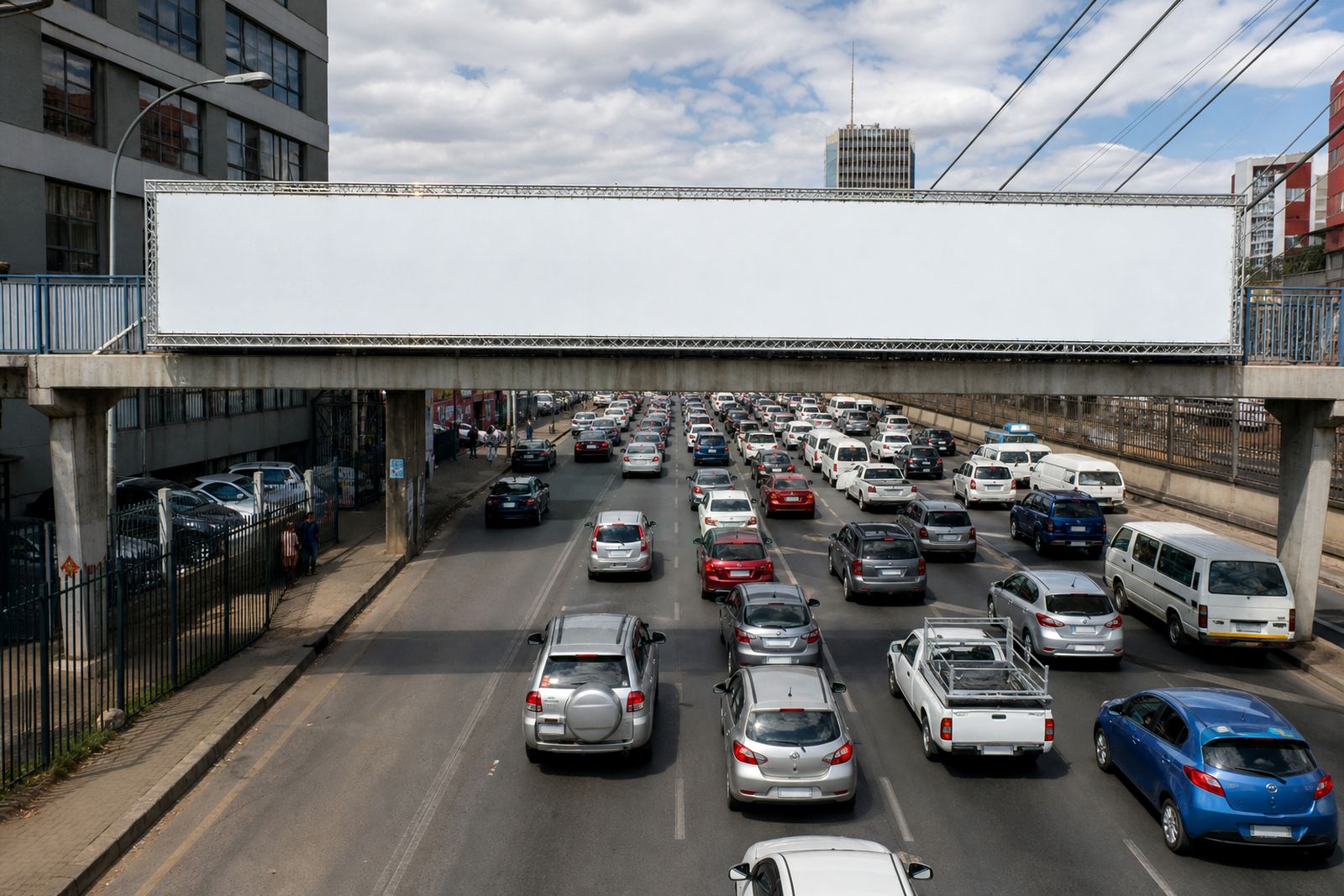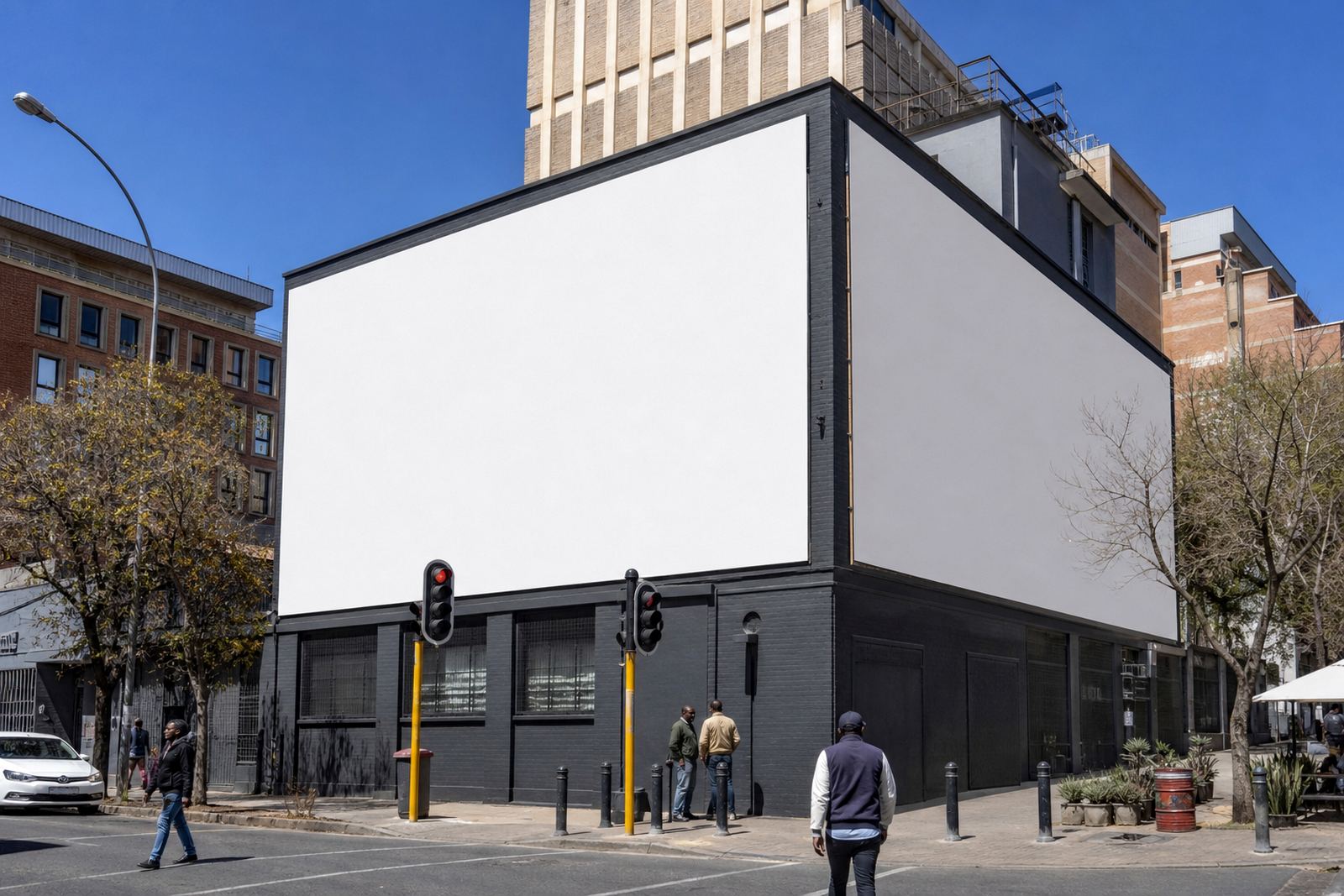

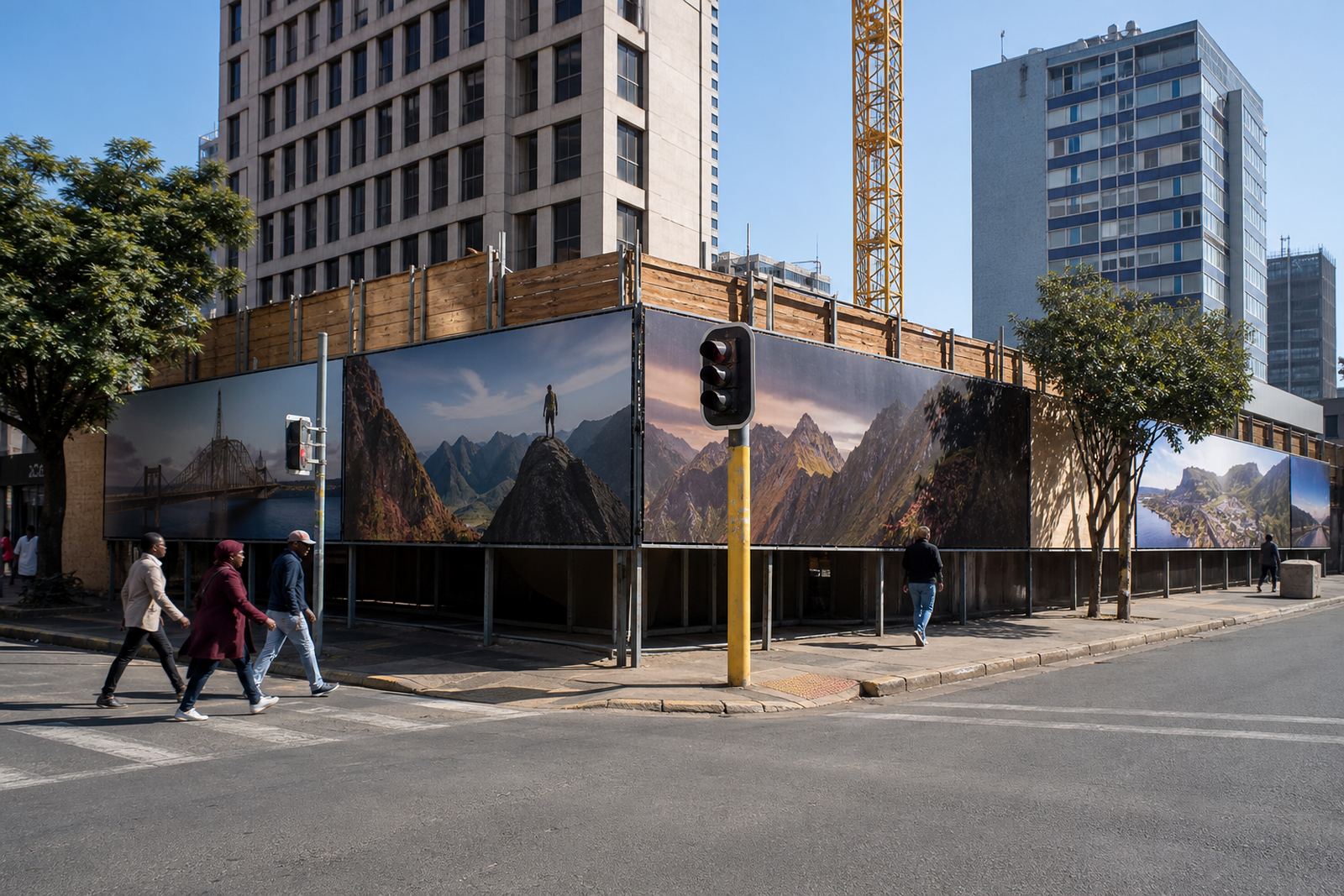
What construction hoarding is used for
Construction hoarding is a temporary barrier built around an active development site to hide unfinished works, guide site access and create a clean surface for advertising. It is commonly used on mixed-use developments, retail upgrades, road-adjacent sites and urban infill projects where a neat perimeter matters as much as the message on it.
For advertisers, hoarding is useful because it stays in place for the duration of the works and sits close to pedestrians, motorists and nearby tenants. For property owners and developers, it helps keep the site presentable while giving the frontage a purpose. The key point is that the property owner must give consent, and the final installation must comply with the relevant municipal bylaw approval process before any artwork goes up.
Typical sizes, panel build and finish options
Hoarding is usually made up of modular panels so the run can follow the site boundary, corners and gate openings. Common panel heights range from about 2 m to 3 m, with longer runs made up of repeated sections. The exact dimensions depend on the site layout, street frontage and how much of the boundary is available for display.
- Panel height: often 2 m, 2.4 m or 3 m
- Panel width: commonly modular sections for easy alignment
- Finish: printed vinyl, painted board, composite sheeting or a mix
- Access points: gates, hoist openings and controlled entry gaps
- Mounting: freestanding supports, posts or anchored frames depending on site conditions
In Johannesburg and Pretoria, we often see hoarding along tighter pavements where the surface must stay neat and walkable. In Cape Town and Durban, coastal humidity can affect materials, so the finish and fixings need to be selected with corrosion and moisture in mind. It is worth checking whether the site faces strong winds too, as that can affect both the structure and the artwork panels.
Where hoarding suits best
This format suits sites that will remain active for weeks or months and have enough boundary length to carry a useful message. It works well around developments near taxi routes, commuter corridors, shopping streets, business nodes and public walkways. Sites in Braamfontein, Sandton, Midrand, central Pretoria, Durban CBD areas and parts of Cape Town often use hoarding where the frontage needs to look tidy through the building period.
Hoarding is also a practical choice where the site needs to screen dust, debris and internal activity from the public. For property owners, it can reduce the bare scaffold look and turn a working site into a more presentable edge. It is not a fit for every site though. Narrow pavements, unstable ground, access restrictions or heritage controls may limit what can be installed.
- Good for long-duration projects with steady site activity
- Useful where there is strong street visibility along the boundary
- Suitable for developments needing a clean screen and advertising surface
- Works well where pedestrian safety and site control are important
Installation, power and site requirements
Installation starts with a site check, measurements and a review of access points, ground conditions and any services that run under or near the boundary. The hoarding contractor will normally confirm whether the perimeter can take freestanding panels, anchored frames or a more custom structure. If the artwork includes lighting, then power needs must be planned early, including cable routes, isolation and safe use during load-shedding.
Some hoarding sites use illumination for night visibility or trading hours, while others stay non-lit. If lighting is required, a secure electrical point and compliant cabling are needed. Gas is not normally used for hoarding itself, though some site operations nearby may have generators or fuel systems that must be kept clear of the structure. On any live site, safety clearances, fire access and contractor movement should be checked before installation. It is also wise to confirm the method for lifting panels into place, especially where tower access or restricted parking makes delivery harder than expected.
Care, servicing and keeping the site presentable
Hoarding needs regular checking because it sits outdoors for the full project period. Wind, dust, site traffic and the movement of materials can all affect the panels. Printed faces should be inspected for peeling, fading, tearing or water damage, especially after heavy rain. In the coastal areas around Durban and Cape Town, fittings may need closer attention because salty air can mark metal parts faster than inland sites.
Servicing usually includes panel cleaning, tightening fixings, touching up paint and replacing damaged sections. If the site changes layout or access points, the hoarding line may need to be adjusted so it still matches the work area. For long campaigns, renewal support helps keep the listing current and the artwork spec on track, which is useful when the site runs longer than first planned. A small delay in maintenance can make the whole frontage look untidy, so regular checks are worth it.
What to check before you place an order
Before booking construction hoarding, check the site ownership, the consent process and the exact frontage available. You will also need to know whether the advertiser can use the full perimeter or only a portion of it. Clear artwork specs matter too, because boards, vinyl panels and printed sections all need the right resolution, bleed and fixing method.
- Confirm the property owner’s written consent
- Check municipal bylaw approval requirements for the site area
- Measure the available frontage and note corners, gates and services
- Ask whether lighting, power or no lighting is preferred
- Confirm the installation window and any site access restrictions
- Match the artwork size to the actual panel dimensions, not a guess
It also helps to agree on who is responsible for cleaning, repairs and removal at the end of the term. If the site is in a busy part of Johannesburg or near a major route in Bloemfontein, delivery timing can matter quite a bit. A clear brief makes the booking smoother and avoids back-and-forth later on.
How RentThisWall helps with hoarding bookings
RentThisWall works as a marketplace that connects property owners and advertisers looking for billboard and wall space across South Africa, including Johannesburg, Pretoria, Cape Town, Durban and Bloemfontein. For construction hoarding, the listing process can include space setup, site photo curation, listing copywriting, availability management, brief matching, booking coordination, consent check guidance, bylaw process support, artwork spec check, installation scheduling, campaign monitoring and listing renewal support.
Our Braamfontein base supports enquiries from Johannesburg, Sandton, Midrand and beyond, with practical help from a team that handles marketplace operations, property owner relations, advertiser support, logistics, content and municipal compliance. If your project site needs a clean perimeter and you want to put that frontage to use, construction hoarding can be a sensible choice. Just make sure the property owner is on board and the local municipal rules are sorted first.
Key facts
| Product type | Temporary construction hoarding for project-period advertising |
|---|---|
| Typical height | About 2 m to 3 m, depending on site and boundary conditions |
| Typical build | Modular panels with framed or freestanding support systems |
| Finish options | Printed vinyl, painted board, composite sheeting or mixed finish |
| Power need | Optional, only if lighting or other electrical features are specified |
| Key compliance | Property owner consent and local municipal bylaw approval required |