What a bus route billboard is and how it works
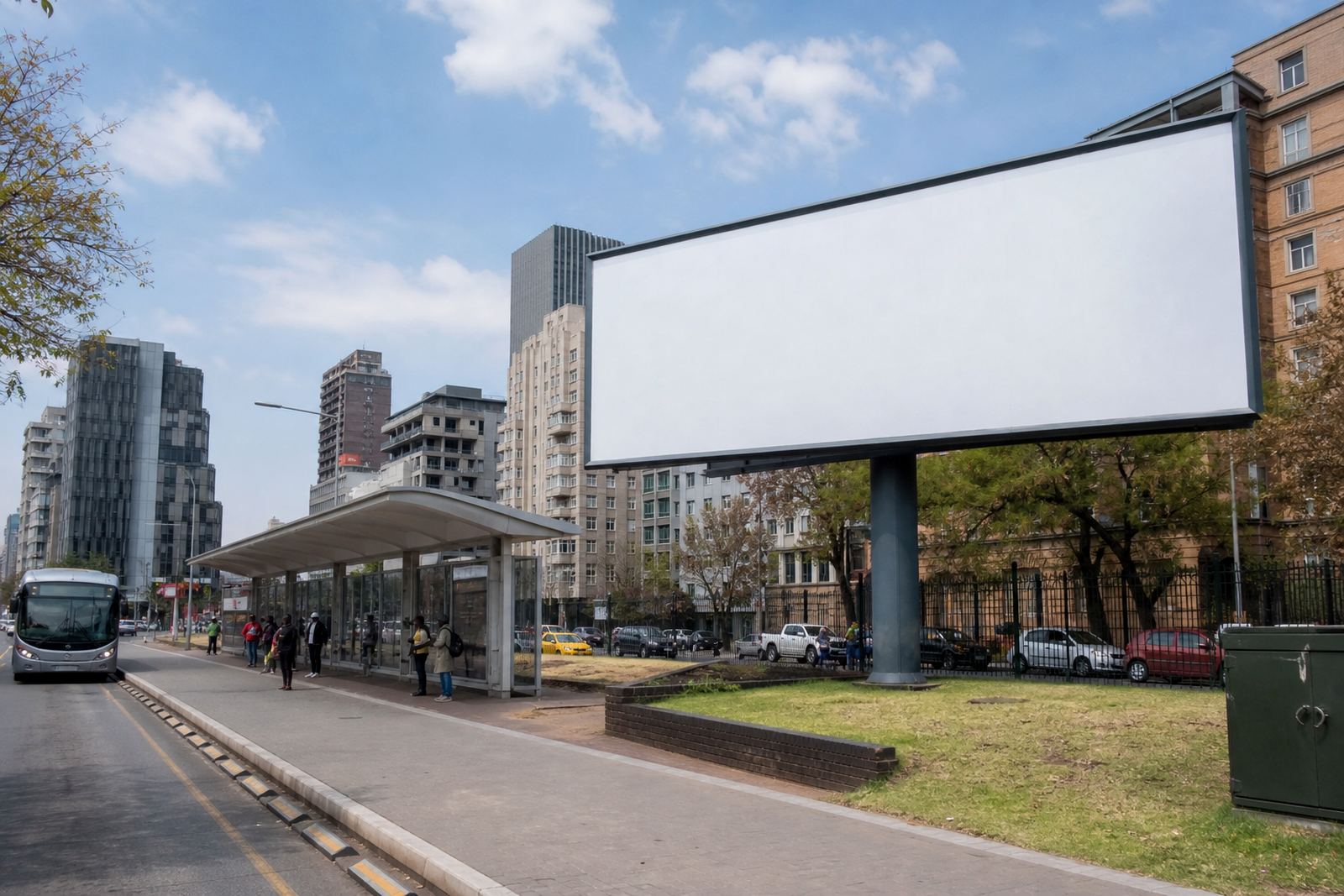
A bus route billboard is an outdoor advertising format positioned along roads used by buses, minibuses and other public transport traffic. It is usually placed on a wall, fence line, parapet, freestanding frame or another visible surface close to the route, so your message can be seen repeatedly as people travel to work, school and home. In busy urban areas like Braamfontein, Sandton, Midrand and central Johannesburg, these sites can suit brands that want steady roadside visibility without relying on one single corner or shopping centre entrance.
These displays are generally booked for set periods and arranged through the property owner or lawful controlling party. That means the site must have the owner’s consent, and the display still needs to follow local municipal bylaw approval where required. In practice, it is best to confirm the exact location, the viewing direction, the wall or structure type and any restrictions before artwork is prepared. A strong route-facing sign should be legible at moving speed, with short copy, clear contrast and a layout that stays readable in daylight and after dark if the site includes lighting.
- Best for short, direct messages
- Works well on commuter routes and main arterials
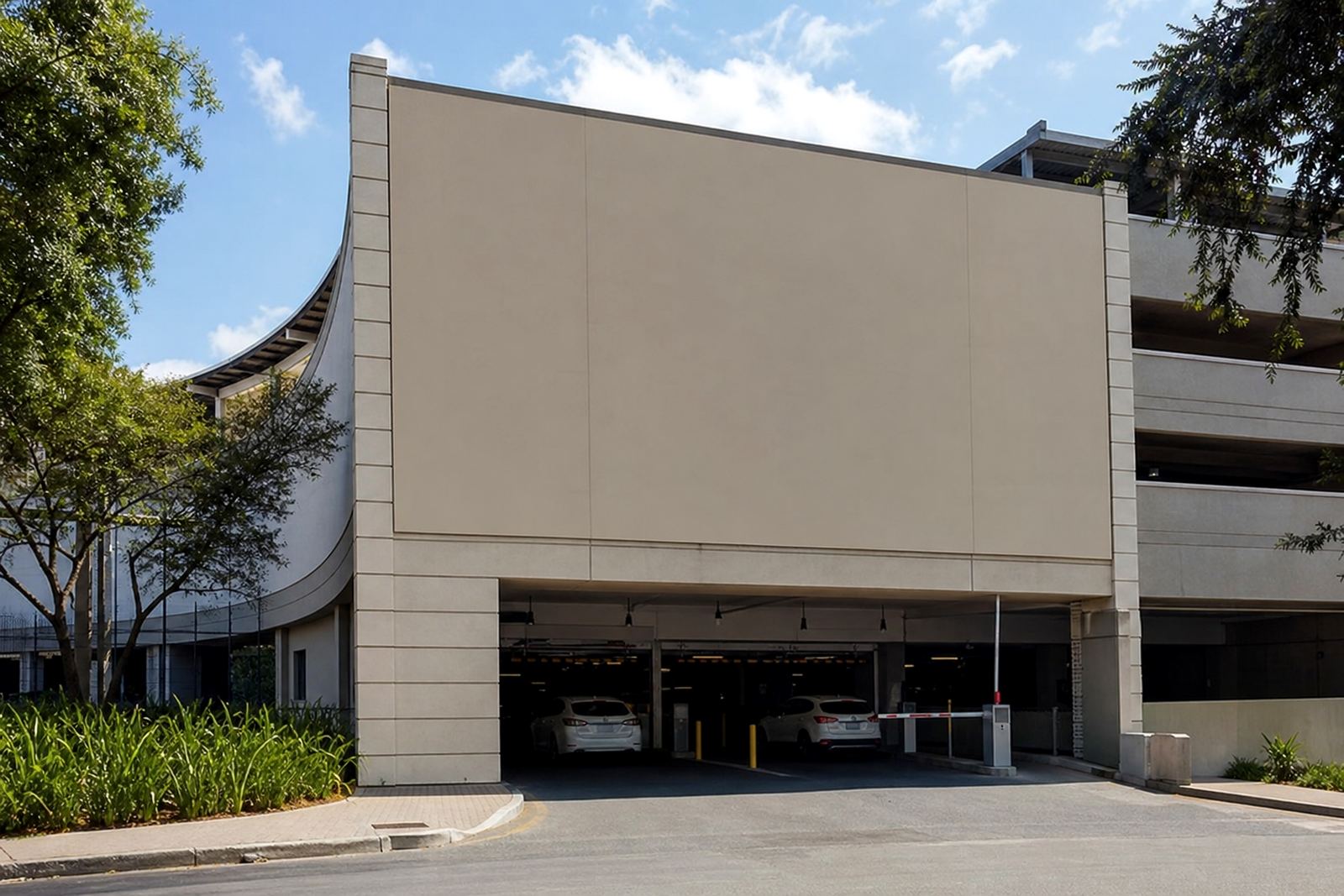
- Can be used on walls, fence lines or framed structures
- Requires property owner consent and municipal bylaw approval where applicable
Common sizes and format options
Bus route billboard sizes vary from compact wall panels to large-format displays that dominate a street-facing elevation. The right option depends on the surface available, the distance from the road and whether the site is viewed by pedestrians, minibus taxis, buses or private vehicles. Some sites are better suited to a long horizontal panel, while others need a portrait layout to fit the wall shape. Where there is an existing frame, the advertiser should check the exact insert size, fixing points and whether the structure allows vinyl, board or rigid panel application.
Typical route-side formats include:
- Small wall panel: around 3 m x 2 m
- Medium roadside board: around 6 m x 3 m
- Large format wall display: around 12 m x 3 m
- Custom fitted panel: made to suit the wall opening or frame
Some locations allow reflective elements or simple illumination, while others are limited to non-illuminated artwork only. In coastal places like Durban or Cape Town, materials should be chosen for humidity, wind and salt exposure. In Gauteng, strong sun and dust can affect print finish and fixings, so material choice matters. If the site is exposed to load-shedding conditions and the display depends on lighting, the advertiser should confirm whether the power supply is reliable or whether a backup option is needed. It is often a simple matter, but worth checking before the artwork goes to print.
Where this format suits best
This format suits campaigns that need repeated exposure along routes people use every day. It can work for retail, property, motor trade, professional services, events, education, health services, transport-related offers and local promotions that benefit from strong road presence. A bus route billboard is especially useful where a driver or passenger has time to notice the message on the same stretch of road more than once. That kind of repetition helps with recall, even when the artwork is kept simple.
In Johannesburg and Pretoria, route billboards often suit arterial roads linking business districts, residential suburbs and transport interchanges. In Cape Town, Durban and Bloemfontein, they can be placed where traffic slows near intersections, bridges, ramps, stations or corridor roads. The point is not only the number of vehicles passing by, but the quality of the viewing angle and the dwell time at the site. A wall that sits square to the road will usually perform better than one that is hidden behind trees, poles or heavy roadside clutter.
- Good for repeated commuter exposure
- Useful near taxi routes, station approaches and arterial roads
- Suitable for short-term promotions or longer booking cycles
- Works best where the sign face is clear and unobstructed
Installation, power and site requirements
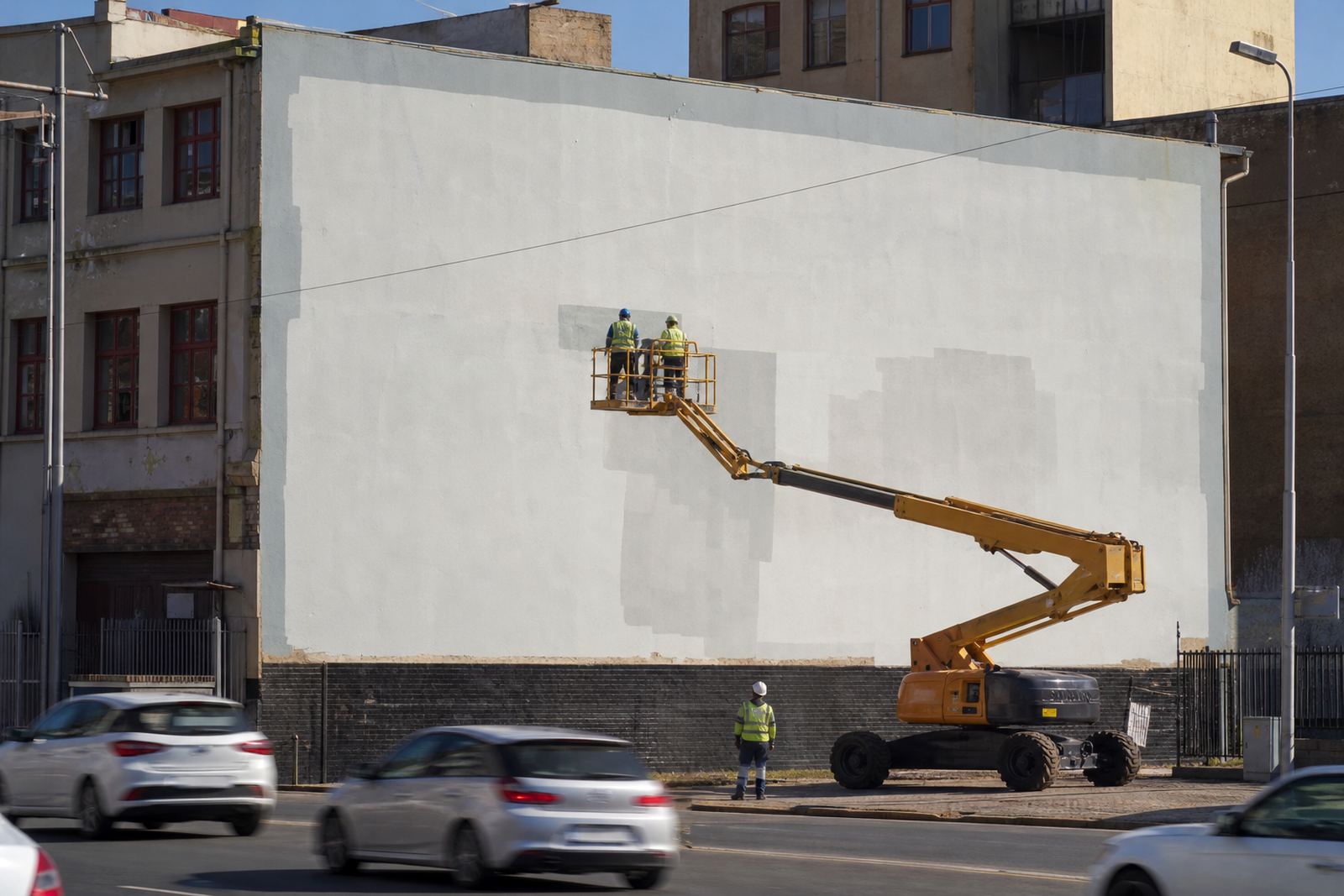
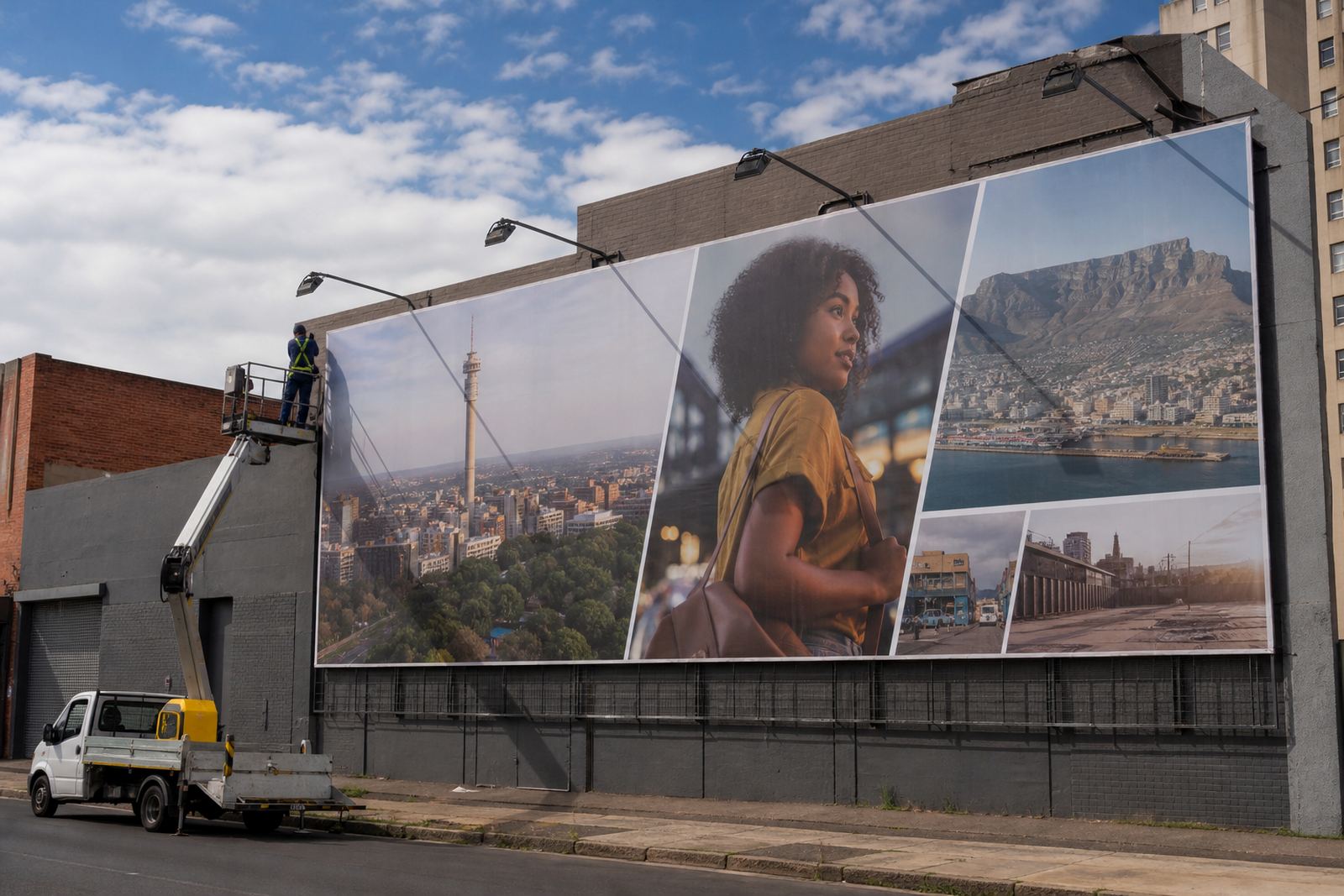
Installation depends on the structure and the surface. Some bus route billboards are fixed directly onto a wall or boundary surface, while others use a steel frame with proper anchors and weatherproof fastenings. The installer needs to check wall condition, wind load, access for lifting equipment and whether any work will affect the building fabric. If a site is above pavement, close to a road reserve or attached to a public-facing structure, the municipality may require additional checks before the sign goes up. That is why consent and bylaw approval should be settled early, not once printing has started.
Power is only needed if the display is lit or includes timed illumination. A non-illuminated route billboard does not need electrical supply, which can make it easier to manage in areas where load-shedding or intermittent power is a concern. If lighting is part of the brief, the site should be checked for cable routes, safe isolation, weather protection and the condition of fittings. In coastal or high-rainfall areas, sealed housings are important to reduce corrosion and water ingress. Gas is not normally needed for this product, unless the site has a separate feature that uses it, which should be confirmed case by case.
- Confirm wall strength and fixing method before installation
- Check if lighting is required and whether power is available
- Allow for access, scaffolding or lift equipment where needed
- Do not proceed without owner consent and required municipal approval
Care, cleaning and servicing during the booking
Outdoor signage needs routine care if it is to stay readable. Dust, bird droppings, road grime and weather exposure can all affect the finish, especially on busy corridors and in industrial edges around Johannesburg, Midrand and Durban. A good maintenance plan usually includes inspection of fixings, cleaning of the sign face, checking for fading, and making sure no new obstruction has been added by nearby work, growth or parked vehicles. On a wall that faces strong sun, the artwork can age faster than expected, so it is wise to check the finish during the booking rather than waiting until the end.
For illuminated sites, servicing should include a check of fittings, wiring and any timer or control unit. If the display uses interchangeable panels or vinyl wraps, repairs should be done promptly to avoid the whole face looking untidy. After heavy rain or strong wind, a quick inspection helps catch edge lifting or damaged sections before they become a larger issue. This is especially helpful for longer campaigns where the site needs to keep a clean, cared-for appearance through the full term. A little attention goes a long way, and prevents avoidable complaints.
What to check before you book a route-facing site
Before ordering a bus route billboard, check the exact viewing direction, the distance from the road, the legal approval status and the artwork size. Ask whether the site is a wall, a frame or another surface, and whether any neighbour or landlord consent is needed as well. If the site is near a school, transport node or busy junction, it is worth confirming whether there are height limits, safety rules or setback requirements under the local bylaw. The better the site notes, the smoother the booking process usually is.
Good ordering questions include whether the display is illuminated, what material is allowed, how long the booking runs and who handles installation scheduling. You should also check whether the artwork needs to be supplied at a specific size, with bleed, crop marks or safe zones. If the campaign is in a windy or coastal area, ask about the recommended substrate and fixing method. And if the property is part of a shared building, confirm who signs off the space before any printing or site work starts. That avoids delays and keeps everyone on the same page.
- Exact size and orientation of the sign face
- Owner consent and municipal bylaw approval status
- Lighting, power needs and access for installation
- Artwork requirements, including bleed and safe area
- Maintenance responsibility during the booking period
Key facts
| Format | Route-facing billboard on wall or frame near public transport corridors |
|---|---|
| Typical sizes | 3 m x 2 m, 6 m x 3 m, 12 m x 3 m or custom fit |
| Material options | Vinyl, rigid panel or other approved outdoor substrate |
| Lighting | Non-illuminated or illuminated, subject to site approval |
| Power needs | Only if lighting or timed illumination is included |
| Approval | Property owner consent plus local municipal bylaw approval where required |