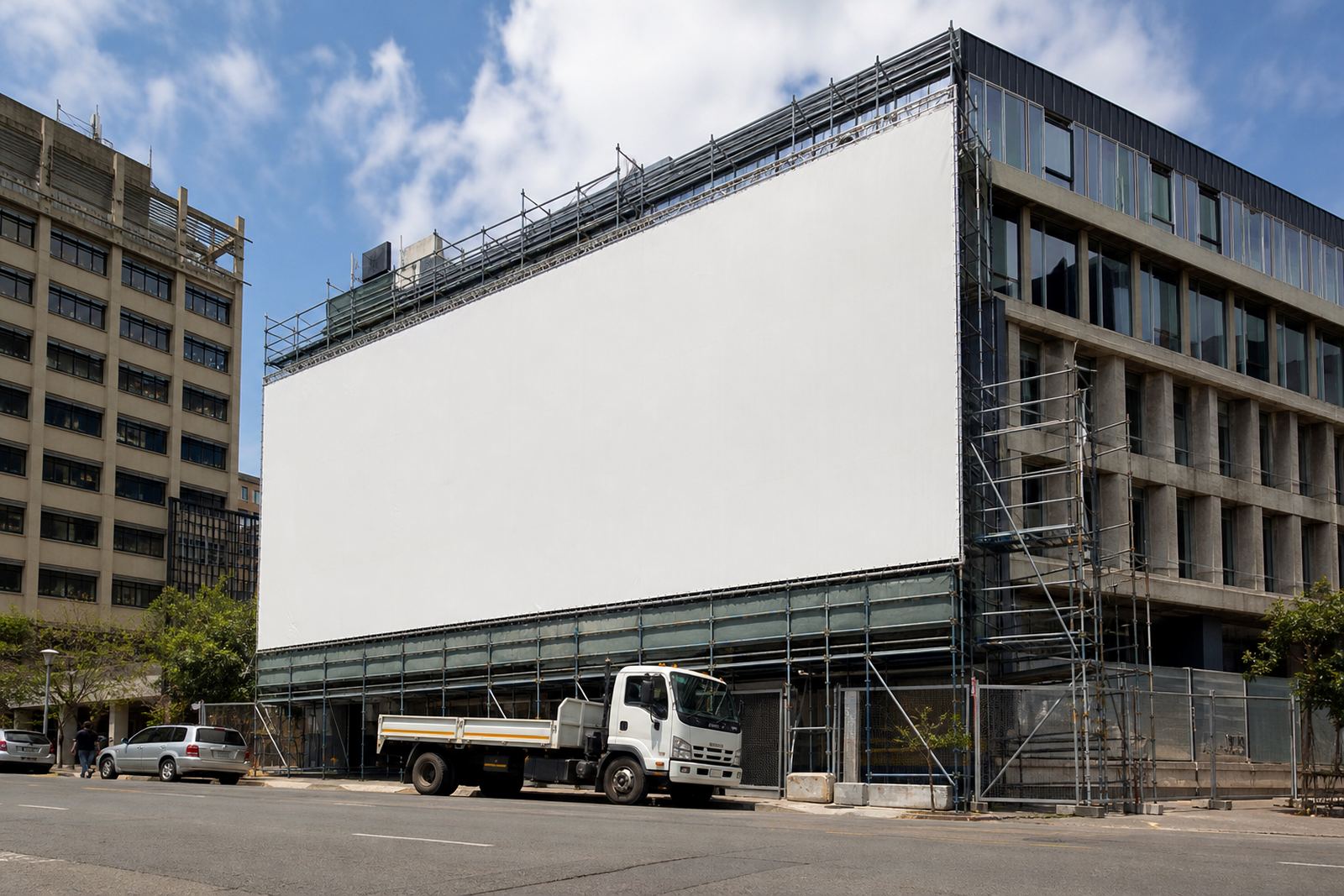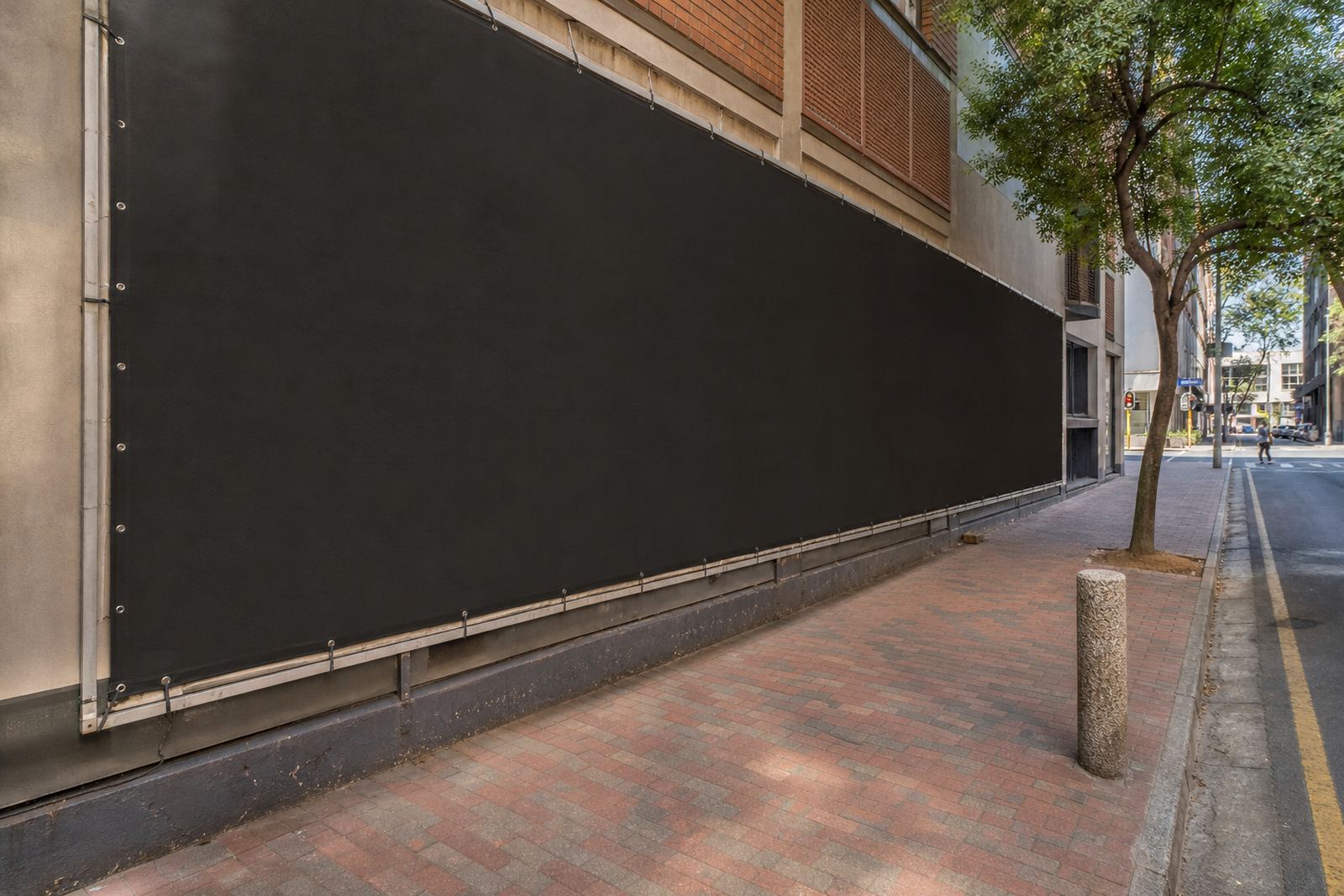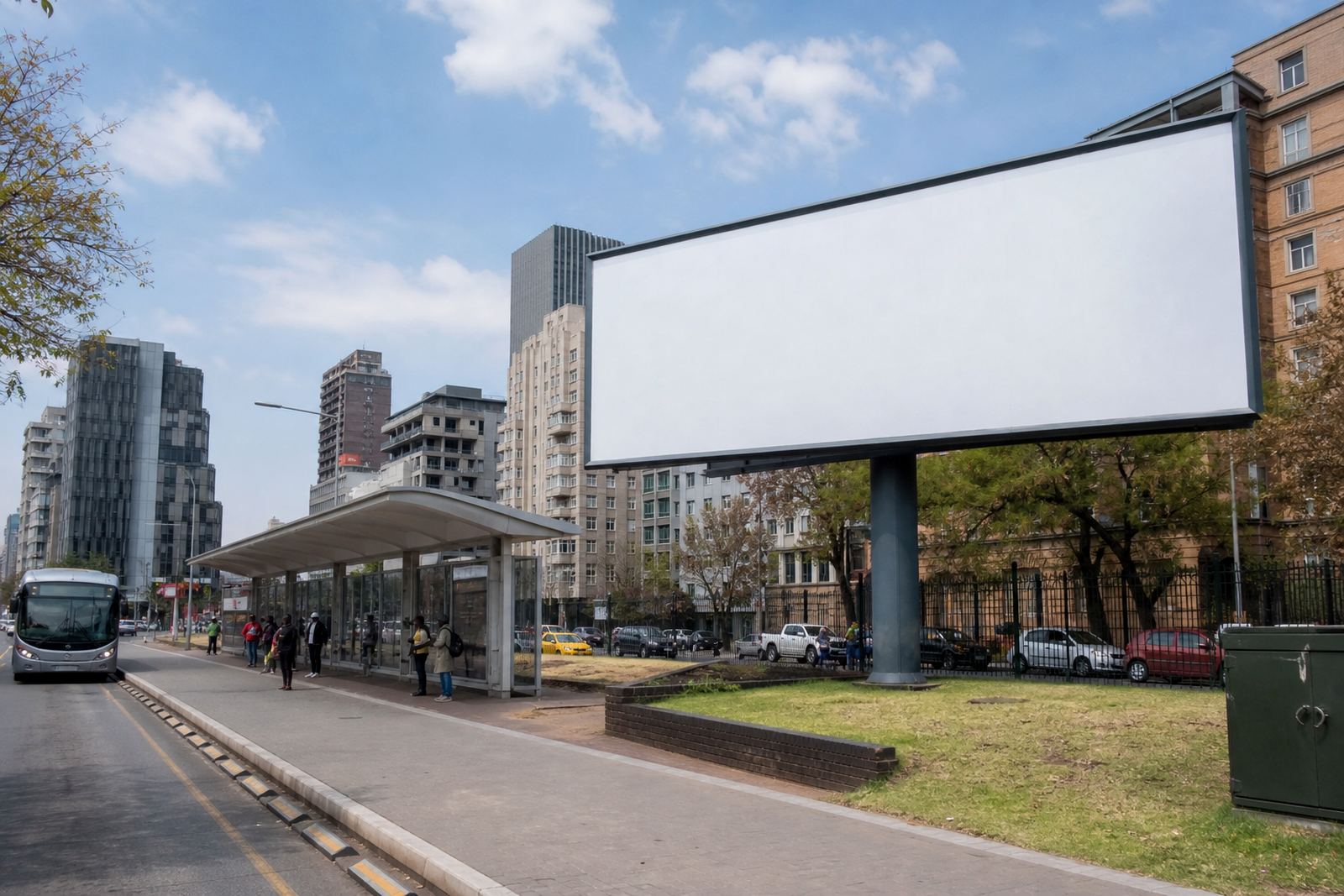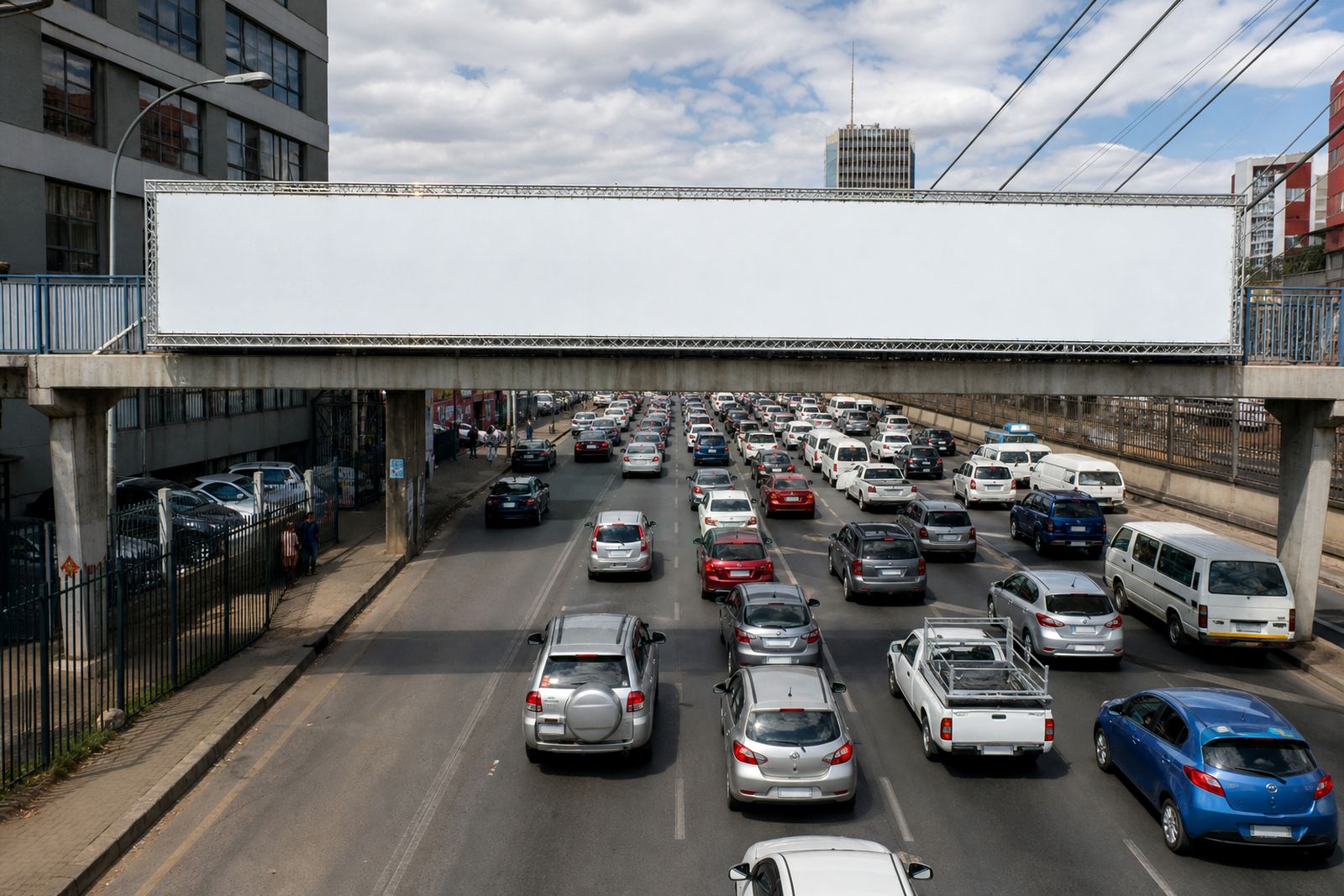
What a bridge banner site is and how it works
A bridge banner site is an overhead advertising position fixed to or spanning part of a bridge structure. It is used for outdoor promotion where a banner can be seen from the road, from turning lanes or from nearby intersections depending on the site layout. These locations are usually chosen for direct visibility and a clean line of sight, with the banner acting as a simple message board rather than a long read.
For this type of site, the structure, fixing points and available span matter as much as the artwork. Some bridge sites allow a single banner face, while others support paired faces or a wrap style layout. The exact setup depends on the bridge design, local road conditions and the property owner's consent. Local municipal bylaw approval is also needed before any display is installed.
Typical banner sizes and layout options
Bridge banner sites are not one-size-fits-all, so each booking should be matched to the measured opening and the structure on site. Common options include shorter bridge spans, full width banner runs and narrower formats for places where road furniture or safety clearances limit the usable area. In some cases the site is better suited to a single high-impact message than a long block of text.
- Single-face banner for one direction of travel
- Double-face banner where both approaches can be addressed
- Short span format for tighter bridge openings
- Full span format for wider overhead exposure
- Special cut-to-fit sizes where fixed points and clearances require it
Artwork should be prepared to the confirmed measurements, with enough bleed and safe area for finishing and edge reinforcement. Small wording and fine detail can be lost at speed, so bold lettering and simple graphics work best.
Where a bridge banner site suits best
This product suits roads where drivers slow near an intersection, a toll route, an access road or a busy urban corridor. It is often used in Johannesburg, Pretoria, Cape Town, Durban and Bloemfontein where a bridge can carry a message over a key movement route. It can also work near business districts, transport links, industrial access roads and township connectors where a clean overhead banner is visible to repeated daily movement.
Bridge banner sites are useful for launches, local promotions, seasonal messages and place-based campaigns. They also suit advertisers who want a practical outdoor format without building a large ground structure. In windy areas or coastal humidity, the site selection and finishing details matter because the banner must hold its shape and stay legible over time.
- Short term awareness campaigns
- Directional or area-based messages
- Retail and service promotions
- Public event notices
- Brand presence near key routes
Installation, power needs and site safety
Bridge banner sites are usually installed by a team that works to the site’s access conditions, fixing method and municipal requirements. Depending on the structure, installation may involve high-access work, lifting equipment or road-side traffic controls. The property owner's consent must be in place, and municipal bylaw approval is required before any fitting starts. Where road reserves or bridge structures are involved, the process should be checked carefully before production begins.
Most bridge banner sites do not need power or gas because they are static printed displays. If a site includes lighting, then power needs must be confirmed in advance, together with cabling routes, weatherproofing and load-shedding arrangements. For outdoor placements in places like Durban or Cape Town, fixing points and materials should be checked for corrosion resistance. A loose fitting can become an issue quickly in strong wind, so the hardware needs proper inspection. That part is non negotiable.
- Confirm bridge ownership and consent before booking
- Check access for installation vehicles and crew
- Allow for municipal approval lead time
- Confirm whether any lighting will need power
- Plan safe working hours and traffic control where needed
Care, servicing and weather checks
Once installed, a bridge banner site should be checked regularly for tension, edge wear, fading and movement at the fixings. Rain, dust and sun can all affect the print finish, and coastal air can shorten the life of fittings if the metalwork is not treated properly. In windy corridors, a banner may need more frequent inspection than a sheltered site, especially after storms or a sudden change in weather.
Servicing usually includes cleaning where safe, tightening the hardware and replacing any worn rope, cable or fastener. If the artwork is reused for a renewed booking, it should be checked for colour shift, frayed hems and tear points before it goes back up. A good campaign stays readable, neat and properly tensioned through the full display period.
What to check before you place an order
Before ordering a bridge banner site, it helps to confirm the exact bridge location, the viewing direction and the available span. You should also check the final artwork size, the preferred display dates, the need for lighting and whether any local access restrictions apply. If the site sits near a busy junction, the installation schedule may need to fit around traffic flow and municipal conditions.
It is also worth checking whether the message will be read from a moving vehicle or from a slower approach, because that changes the amount of copy that should appear on the banner. Keep contact details, long paragraphs and small type off the layout. One clear offer or message usually works best for this format. If the bridge site has any structural limitations, those should be known before printing so the final banner can be made to suit. A measured start saves trouble later.
- Bridge name and exact position
- Direction of travel and main viewing angle
- Measured banner size and finish details
- Consent from the property owner
- Local municipal bylaw approval status
- Need for lighting, power or access support
Key facts
| Product type | Overhead banner site on a bridge structure |
|---|---|
| Common use | Outdoor advertising with fast roadside visibility |
| Size range | Site-specific, measured to the bridge opening and clearance |
| Installation needs | High-access fitting, fixings, and where required traffic control |
| Power or gas | Usually none, unless lighting is specified |
| Compliance | Property owner consent and local municipal bylaw approval required |