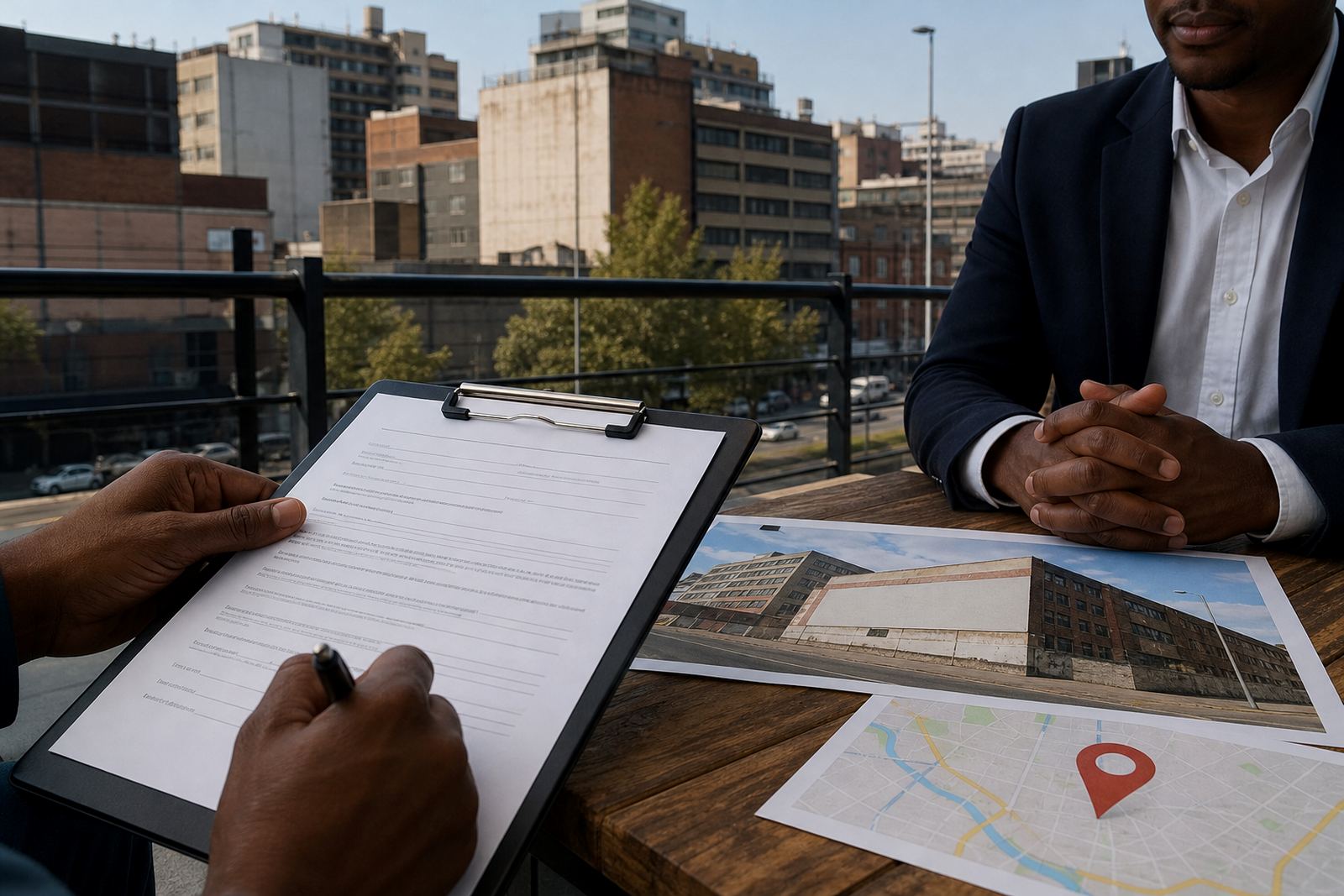
Why bylaw approval matters before a sign goes up
Outdoor advertising sits in plain sight, which is exactly why municipalities treat it carefully. A sign that seems simple to install can still fall under local advertising rules, zoning conditions, heritage controls, road reserve restrictions, or building-related requirements. If those checks are missed, a campaign can be delayed, altered, or removed after installation.
For property owners, bylaw approval is not just paperwork. It protects them from disputes about unlawful advertising, unsafe fittings, or complaints from neighbours and residents. For advertisers, it helps avoid wasted production costs and last-minute changes to artwork or mounting positions. In practice, the safest route is to treat every site as needing two separate approvals: the owner's consent and the municipal process.
That matters across Johannesburg, Pretoria, Cape Town, Durban and Bloemfontein because each city can have its own application forms, definitions and timing. What passes in one area may need more detail in another. A wall panel in Braamfontein can be treated differently from a similar setup in Sandton, even if the display size looks close.
The first check: does the property owner approve the use of the wall or space
No advertiser should assume a wall or building face is available just because it is visible from the street. The owner or lawful managing agent must agree to the use of the space, the duration, the artwork, and the installation method. Where a building is jointly owned or managed, the consent chain can take a bit longer than expected.
This is also where site details matter. Is the wall privately owned, part of a sectional title scheme, subject to a lease, or controlled by a landlord? Is the display going onto a freestanding structure, a parapet, or a painted wall on a commercial building? Those details influence who may give consent and what documents will be needed.
- Confirm who owns the wall or structure before any booking is finalised.
- Check whether the building manager, body corporate, or landlord must sign off as well.
- Keep the agreed display area, period and access arrangements in writing.
- Ask whether drilling, brackets, lighting or rooftop access is allowed.
In coastal areas such as Durban, surface condition and fixing method need extra care because of humidity and salt in the air. In older buildings around Bloemfontein or Johannesburg CBD, the wall finish or access route may be more of a practical issue than the artwork itself.
What municipal bylaw approval usually looks at
Municipal bylaw approval is about whether the sign fits the local rules for its position, size, structure and impact. Councils often look at visibility from public roads, safety, structural stability, illumination, heritage areas, and whether the display distracts from road users. Some sites may also trigger additional review if they are close to intersections, schools, transport routes or protected buildings.
The submission may need drawings, site photos, dimensions, a method statement, proof of consent, and in some cases structural information. Even when a sign is temporary, the municipality may still want to know how long it will remain in place and how it will be mounted. That is why a clean file saves time.
- Keep the exact dimensions clear, including height, width and projection from the wall.
- Show where the sign sits on the property and how it will be seen from the street.
- Check if lighting is allowed, and if so whether it must be switched off at certain times.
- Allow for extra time if the site is near heritage fabric, transport corridors or council-controlled road edges.
For advertisers used to quick turnaround, the bylaw step can feel slow. But it is better to build the approval window into the booking than to rush a print job or installation crew and then discover the sign needs a change. A small error in the drawing or property description can hold the process up, and then everyone has to wait.
Common issues that hold up outdoor advertising approvals
Most delays come from incomplete information rather than a hard refusal. The site may be suitable, but the paperwork is not. Missing consent, the wrong property description, a vague artwork layout, or unclear fixing details can all cause a setback. Another common issue is assuming the same rules apply to every part of a city.
For example, a wall-space campaign in Braamfontein may be checked differently from a similar format in Sandton because the surrounding environment and local controls differ. Pretoria and Cape Town may also ask for different detail depending on the site position, while Durban can raise practical concerns around wind exposure and corrosion resistance. None of that means the campaign cannot proceed, but it does mean the file needs to be accurate from the start.
Some of the most frequent problem points are easy to avoid:
- Starting print production before the approval path is confirmed.
- Submitting artwork that does not match the approved size or orientation.
- Leaving out the owner’s written consent or management authority details.
- Overlooking access, installation safety or removal arrangements after the campaign ends.
Where a display is on a main road edge or a building with shared access, one missing signature can hold up everything. It is not unusual for a campaign to be otherwise ready, then wait because the consent trail is not clear.
A Johannesburg example from Braamfontein to Sandton
Take a practical Johannesburg case. An advertiser wants a wall display on a commercial building in Braamfontein, with the same campaign later moving to a different site in Sandton. The layout may stay the same, but the approval path should still be checked separately for each location. The Braamfontein property owner may agree quickly, while the municipal response, site conditions or building management requirements could take more time.
If the wall faces a busy street, the municipality may want more detail on the display position and structural support. If the building is older, the owner may require extra care to protect the surface. If the installation is near a road boundary, the sign may need to be reviewed against local setback and visibility rules. The important lesson is simple: one approved site does not automatically mean the next one is ready too.
In practical terms, the advertiser should plan for coordination between the owner, the installer, and the municipal process. That means no print deadline should be fixed too tightly until the approval stage is properly under way. A short delay at the start can save a much bigger delay later.
A simple approval workflow that keeps campaigns moving
The cleanest outdoor advertising workflow starts with a full site check, then moves into consent, municipal guidance, artwork review and installation scheduling. When each step is handled in order, the campaign is easier to manage and the risk of rework drops. It also helps the property owner understand exactly what is being proposed and for how long.
A practical workflow usually includes:
- Confirming the site, owner and display period.
- Checking whether local bylaw approval is needed for that exact position.
- Preparing the artwork to the correct size and format.
- Reviewing access, fixing method and installation timing.
- Keeping a record of consent, approval notes and removal plans.
For advertisers working across multiple cities, the best approach is to keep every site file separate and complete. That makes it easier to renew a listing, update the brief, or move to another wall-space option without losing the approval trail. It also means less stress when weather, load-shedding or contractor timing affects the install window.
Outdoor advertising works best when the legal side is handled with the same care as the creative side. If the wall is right but the approval path is wrong, the campaign can stall. If both are sorted properly, the rest is far easier.