When a public notice needs to be seen in the right place
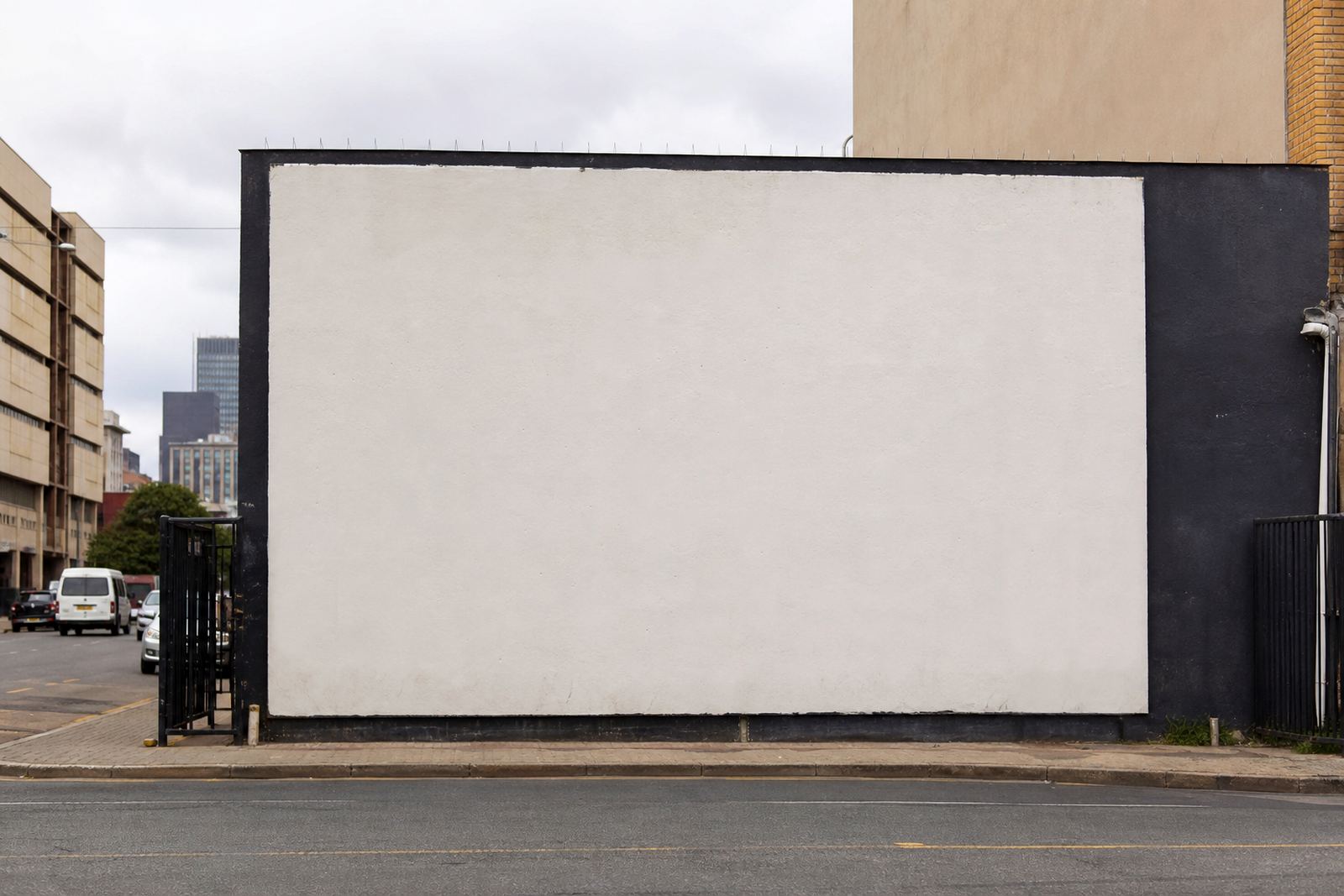
Public notices are often used for community announcements, property notices, event information, service updates and general public information that needs a clear street-facing position. In Braamfontein, Sandton, Midrand and other busy parts of Gauteng, the strongest placements are usually on boundary walls, building façades and freestanding structures where the message can be read from a moving vehicle or from a nearby pavement.
This kind of placement is useful when the message must stay simple. A public notice should not try to do too much at once. Keep the wording direct, the date details easy to find, and the contact point obvious. If the notice is too wordy people skim past it, and that defeats the point.
- Use short headlines and one clear call to action
- Keep dates, reference numbers and address details easy to spot
- Choose a site where the notice can stay visible in sun, dust and rain
Typical notice formats for wall and billboard placements
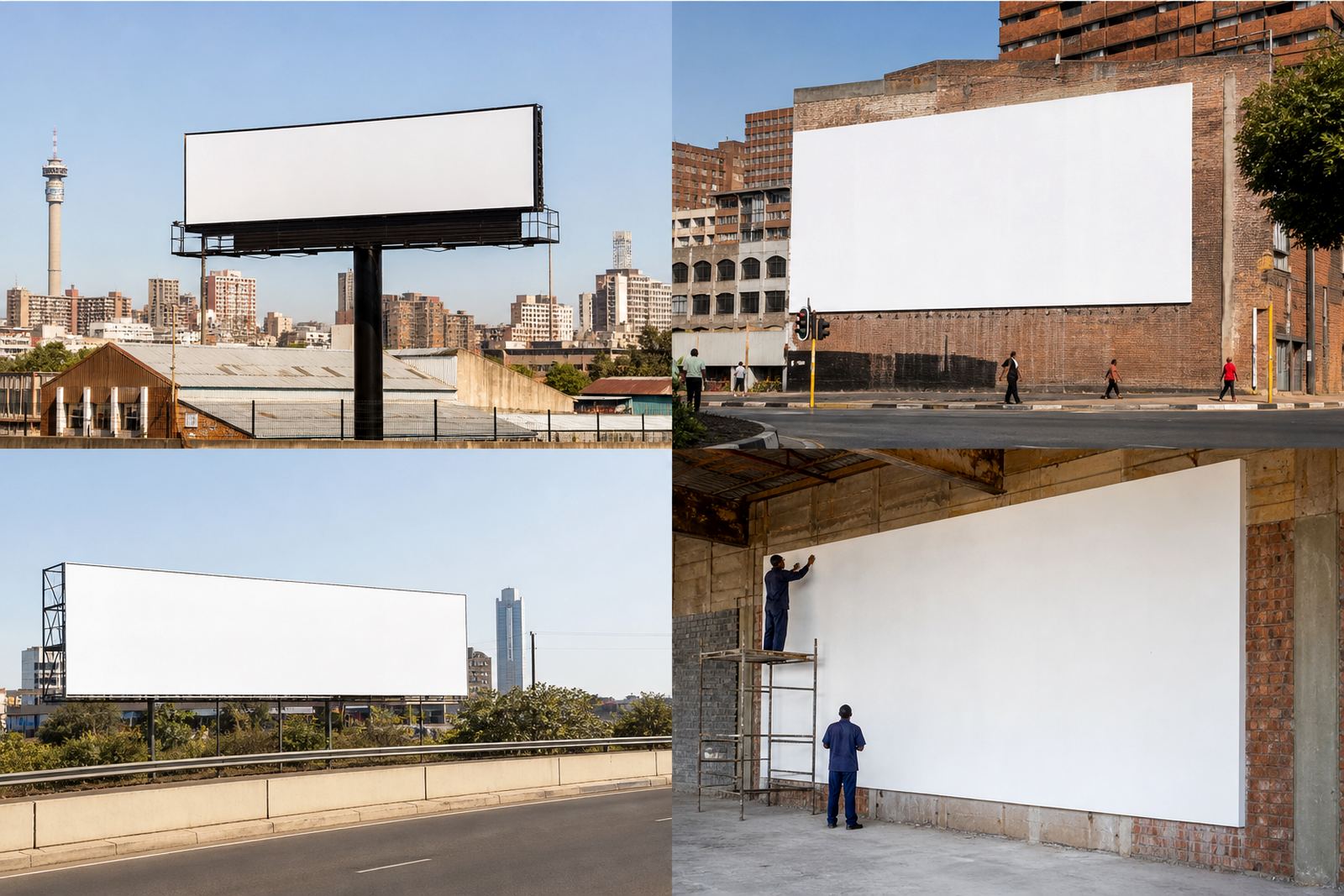
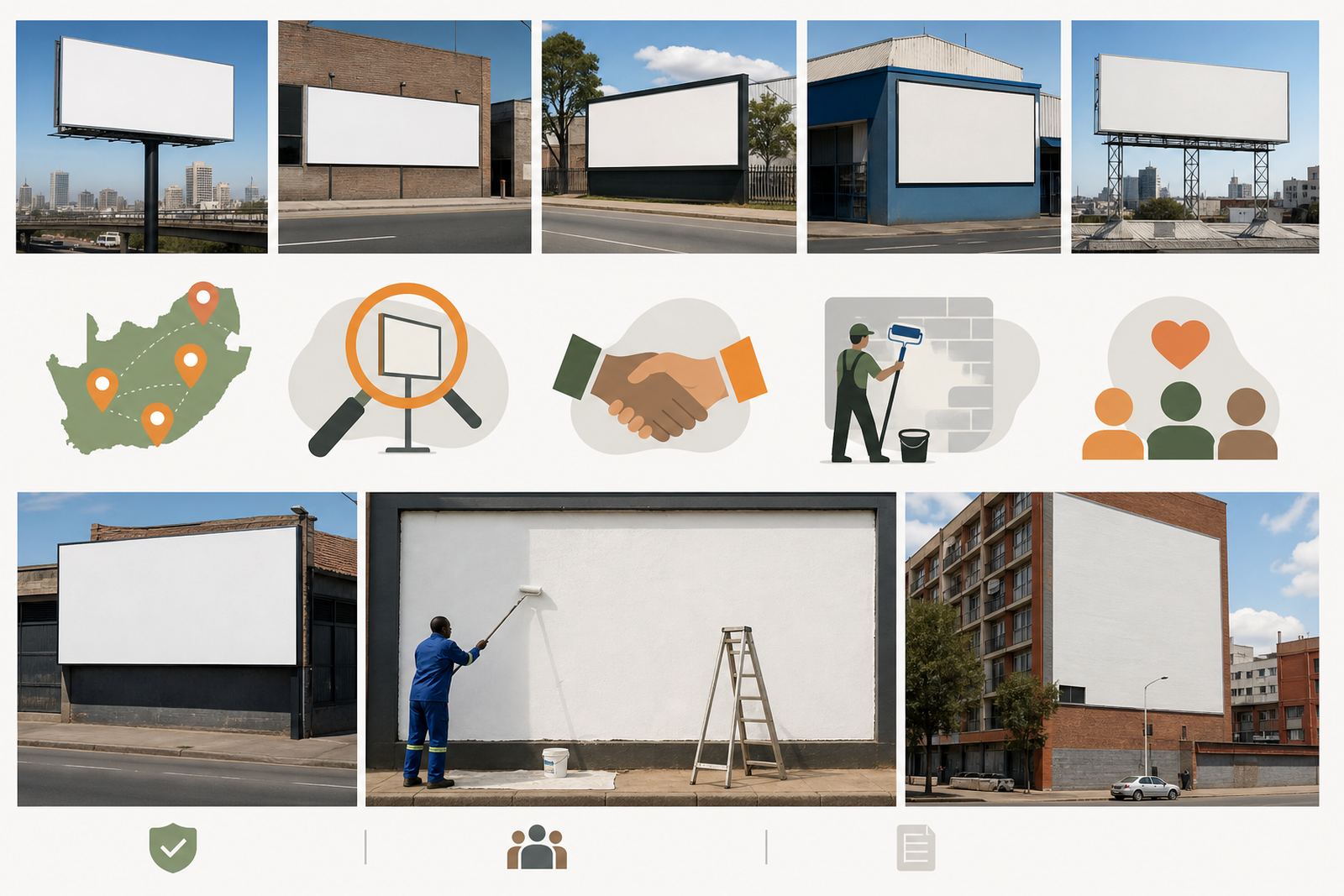
For public notices, the usual setup is a printed vinyl panel, poster-facing board, or mounted notice board on a wall or boundary line. In some areas, a larger billboard style format is better where the message has to be seen from further away. In coastal places like Cape Town and Durban, durable material matters because humidity and salt air can affect both the print and the fixings if they are not prepared properly.
We also look at practical matters like how the notice will be fixed, whether the surface is even enough for neat installation, and whether there is enough clearance for maintenance. Load-shedding can affect install timing too, especially where lighting or cutting tools are needed on site, so it helps to plan with a little extra time.
- Wall-mounted notice boards for local, repeat information
- Large-format billboard panels for broader public visibility
- Vinyl prints or rigid panels depending on the surface and duration
A clean layout matters more than fancy graphics. If the notice is for an estate, community project or property matter, plain blocks of text with a strong heading usually work better than busy artwork.
Planning the layout so people read it in seconds
The best public notice layouts are built for quick reading. That means the most important line should sit at eye level or just above it, with enough space around it so the text does not compete with background images or busy colours. If the notice is going onto a wall beside traffic, keep line length short and avoid small print that disappears at a glance.
It also helps to place the key details in a simple order: what the notice is, where it applies, when it starts, and where to get more information. If the sign is near a taxi route, shopping node or main road, people may only have a few seconds to read it. A strong layout should still make sense even if someone sees only half of it.
- Lead with the purpose, not a long introduction
- Use one font style and high contrast colours
- Leave enough spacing so dates and references stand out
- Keep the message readable in morning glare and late afternoon shade
Consent, bylaws and the checks that should happen first
Any public notice on private property needs the property owner’s consent first, and the local municipal bylaw approval process may also apply depending on the size, position and type of display. That step is not optional. A notice can be in the right location and still face removal if the consent or bylaw side is not handled properly.
Our team helps with consent check guidance, bylaw process support and artwork spec checks before a booking is confirmed. Pieter Smit handles municipal compliance coordination, while the other team members work on listings, brief matching, booking coordination and installation scheduling. That way the notice is matched to a site that is practical, allowed and ready for use.
Common issues include assuming a wall is available because it looks unused, using artwork that is too small for the site, or booking a space without confirming who controls the property. A proper check saves time and avoids last minute changes, especially in denser areas like Braamfontein and Pretoria CBD where access can be tight.
Budget ranges for public notices in Rand
Public notice budgets can vary a lot depending on the format, size, duration and location. A small wall notice on a local property will usually cost less than a larger billboard-style placement in a high-demand corridor. The print method, mounting requirements and approval work can all affect the total amount.
As a general planning guide, smaller local notice placements may start from a few thousand Rand, while larger or longer-term formats can move into higher budgets as the site, print and logistics requirements increase. It is wise to allow room for artwork adjustments, site preparation and possible reprints if the wording changes after approval. That is one of those expenses people forget and then scramble at the last minute.
- Small local notice placements: lower budget, usually simpler print and fixings
- Mid-sized wall or roadside placements: moderate budget with more planning involved
- Large-format billboard or long-duration notice runs: higher budget due to space and install requirements
The most useful thing is to match the budget to the purpose. If the public notice is time-sensitive, a site with easier access and quicker turnaround can be more valuable than a bigger space that takes longer to prepare.
Mistakes that make public notices less effective
One of the most common mistakes is overcrowding the sign. A public notice is not a brochure. If there is too much text, too many logos or too many small details, the message gets lost. Another common issue is choosing a site that looks good online but is awkward on the ground, with poor sightlines, blocked access or a surface that is difficult to install on.
Other problems come from poor timing. A notice that is put up too late, or taken down too early, may miss the very audience it was meant for. In Johannesburg, Pretoria and Durban especially, weather and traffic conditions can affect install windows so it helps to schedule carefully and keep a small buffer.
- Do not rely on small print for essential details
- Do not assume a visible wall is automatically available
- Do not skip consent or bylaw checks
- Do not change wording after approval without checking the artwork again
For public notice work, clarity and timing matter more than decoration. A simple notice that is correctly placed can do its job well, while a clever design that is hard to read often misses the point.