
Match the advert to the property, not just the suburb
Property marketing works best when the advert sits near the actual site you want people to notice. That could mean a wall panel on a busy approach road, a roadside board near the entrance, or a large-format wall space facing passing traffic in Braamfontein, Sandton or Midrand. The point is simple: people should see the name, location and contact path before they start comparing options elsewhere.
This use case suits new residential schemes, office parks, student accommodation, retail units and industrial premises that need steady visibility during launch periods or while units are still available. It also helps when a site has frontage but not enough footfall, because outdoor media can carry the message farther than a gate sign alone.
Typical space types used for property launches and listings
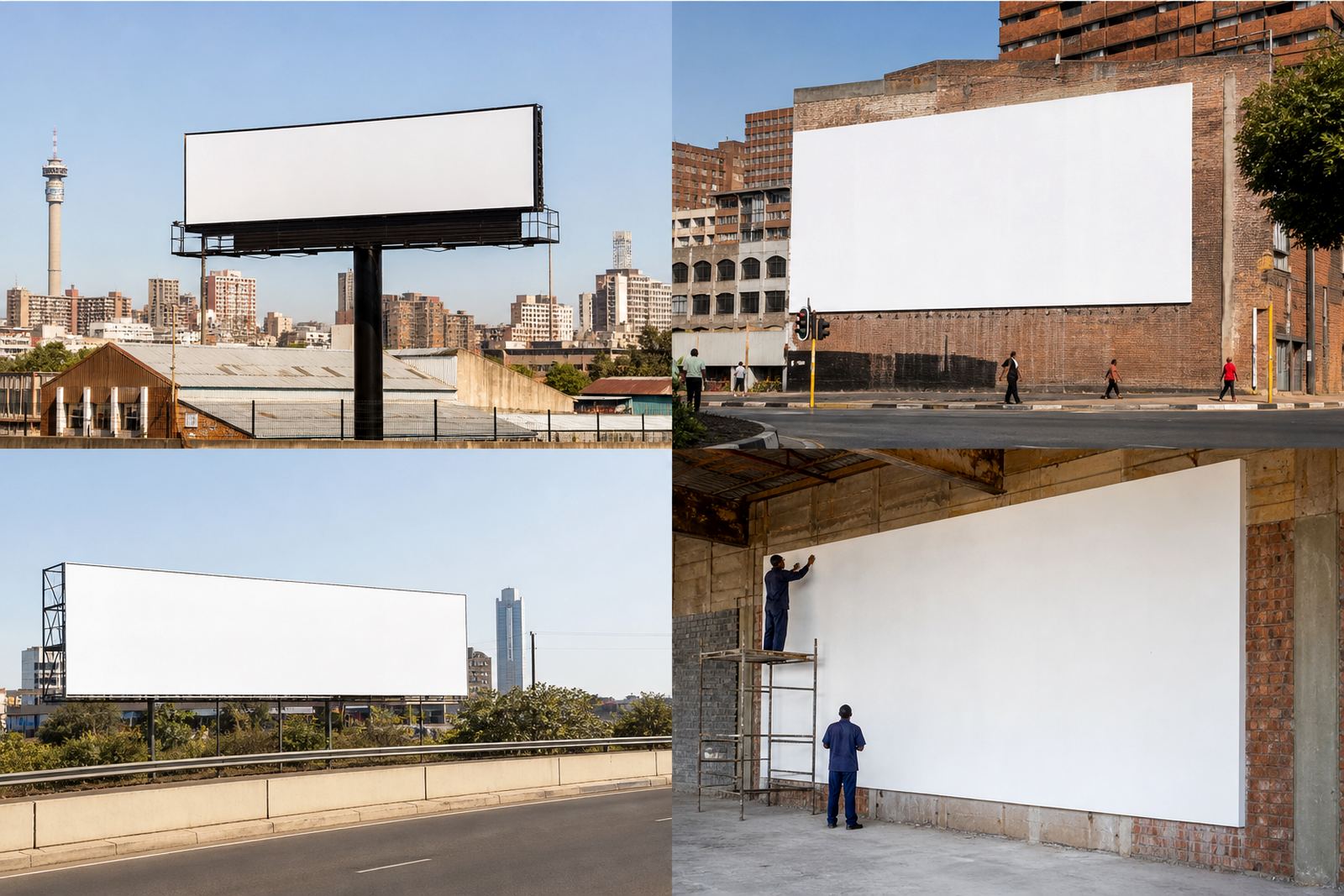
The right media set usually depends on the frontage, the road speed and how long the message needs to stay up. For property marketing, common choices include wall wraps, rigid boards, post-mounted boards, boundary wall panels and larger roadside placements where viewing distance allows for more detail. In some cases a sequence of smaller signs works better than one oversized panel, especially on roads with turning movements and limited stopping time.
- Wall space facing main roads or intersections
- Roadside boards close to access points
- Boundary wall panels for available retail or office premises
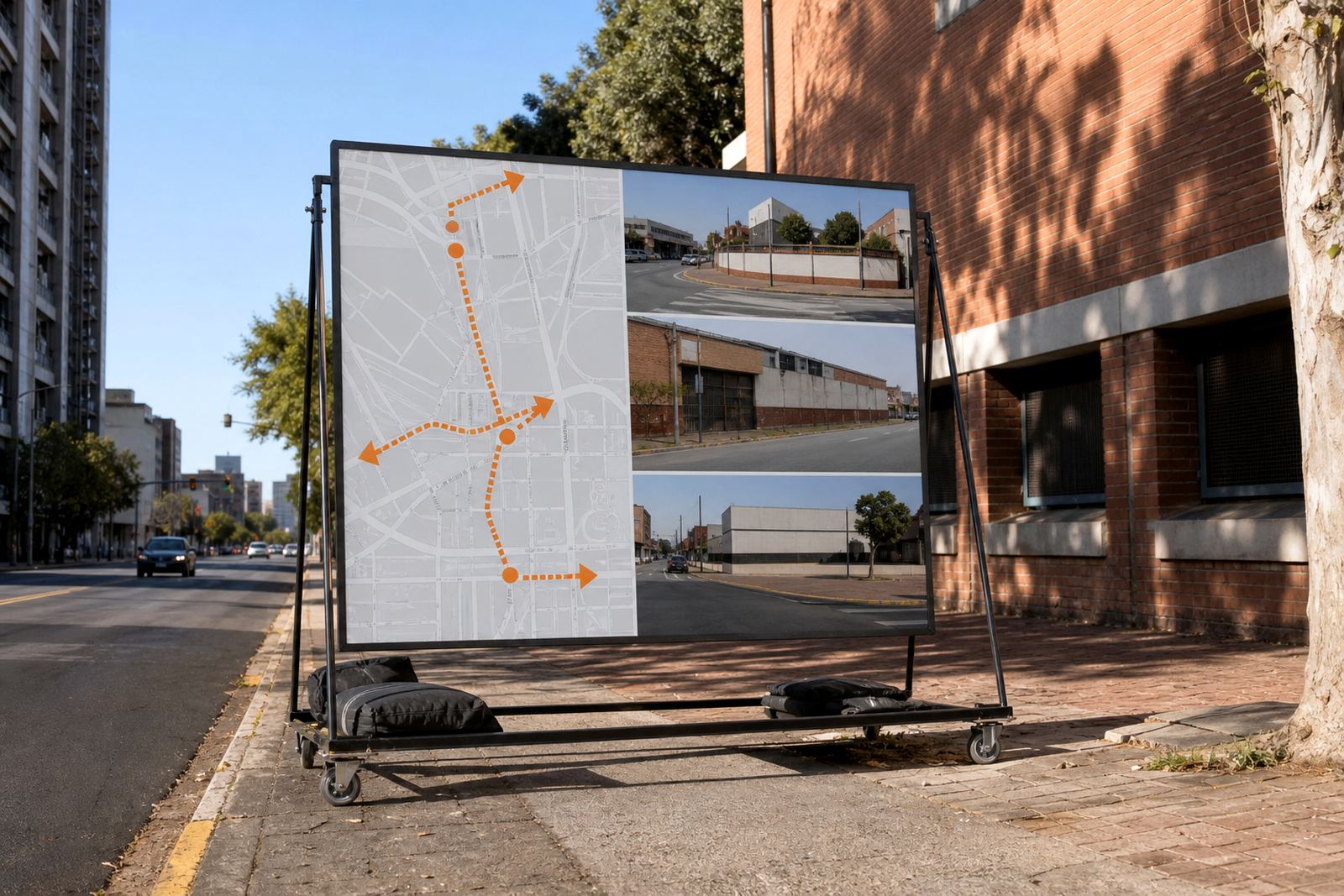
- Directional signs leading to the site entrance
- Short-term campaign boards for launch periods or vacancy fill-in
In coastal areas such as Durban and Cape Town, materials and fixing methods need to handle humidity and wind. In inland areas like Pretoria and Bloemfontein, heat and dust can affect print finish and mounting if the panel is left too long without checking.
How to plan a cleaner property message
Keep the message direct. Use the property name, the type of space, the key benefit and a clear next step. If the unit is still being fitted out, say so. If the site is ready for occupation, say that too. A cluttered board with too many contact details or too much wording will be hard to read from a moving vehicle and it may lose the very people you want.
We normally advise starting with a simple layout check before artwork is sent for production. That means confirming the viewing angle, panel size, mounting height, colour contrast and whether the message should be read in seconds or over a longer approach. If the property sits behind trees, guard rails or parked vehicles, the layout should be adjusted so the main point stays visible.
- Use one headline only, then support it with a short line about availability
- Show the suburb or node clearly, especially for Johannesburg and Pretoria listings
- Leave enough blank space so the sign does not feel crowded
- Match the panel size to the road speed and viewing distance
- Plan for night visibility if the area is active after dark
Consent, bylaws and site control come first
Property marketing signs need the property owner’s consent and local municipal bylaw approval before installation. That applies whether the space is on a wall, a boundary fence or a roadside structure. If the sign is being used to promote a development or available premises, the approval path should be checked early because some sites need changes to size, position or construction method before they are allowed to go up.
Consent checks matter even more where a site is shared, leased or managed by someone other than the owner. We also advise confirming who is responsible for access, maintenance and removal once the campaign ends. If the structure is exposed to load-shedding related darkness, plan ahead for visibility in low light and make sure the installation does not rely on any temporary power setup unless it is permitted and safe.
Budget ranges for property advertising in Rand
Budgets for property marketing vary by space type, area and how complex the site is to install. A small, short-run board on a quieter street will sit in a different range to a large roadside wall placement in a prime Johannesburg or Cape Town node. Production, mounting and removal also affect the total, so it is better to budget for the full campaign not only the print.
As a practical guide, many property campaigns start with a modest spend for a single sign or a small cluster of signs, then move upward if the site needs broader coverage. A basic setup may start from around R3 500 to R12 000 depending on size and finish, while larger or more involved installations can run from R15 000 to R60 000 or more when multiple panels, specialist fixing or repeat renewals are involved. These are working ranges only, not fixed rates.
Where a development needs ongoing vacancy promotion, it can be cheaper to keep one strong placement active than to keep swapping smaller signs. That is often true in Sandton, Midrand and other areas where a clear message can do more than a cluttered series of notices.
Common mistakes that slow a property campaign
Most problems with property marketing are avoidable. The biggest one is choosing a space that looks good on paper but cannot be seen well enough from the road. Another common issue is underestimating the time needed for consent checks and bylaw approval, which can push the install past the start of a launch or viewing period.
It also helps to avoid overloading the sign with unit numbers, long descriptions and several phone numbers. Keep the message brief and accurate, then use supporting material elsewhere if needed. If the site is exposed to weather, dust or salt air, check the fixing points and printed finish regularly because faded or loose signage can make the property look neglected.
- Do not install before consent and municipal approval are in place
- Do not assume every wall can carry the same size board
- Do not use tiny text for important details like the suburb or property type
- Do not leave a vacant site sign up after the campaign has ended
- Do not ignore maintenance, especially on coastal or windy sites
How the marketplace helps owners and advertisers meet
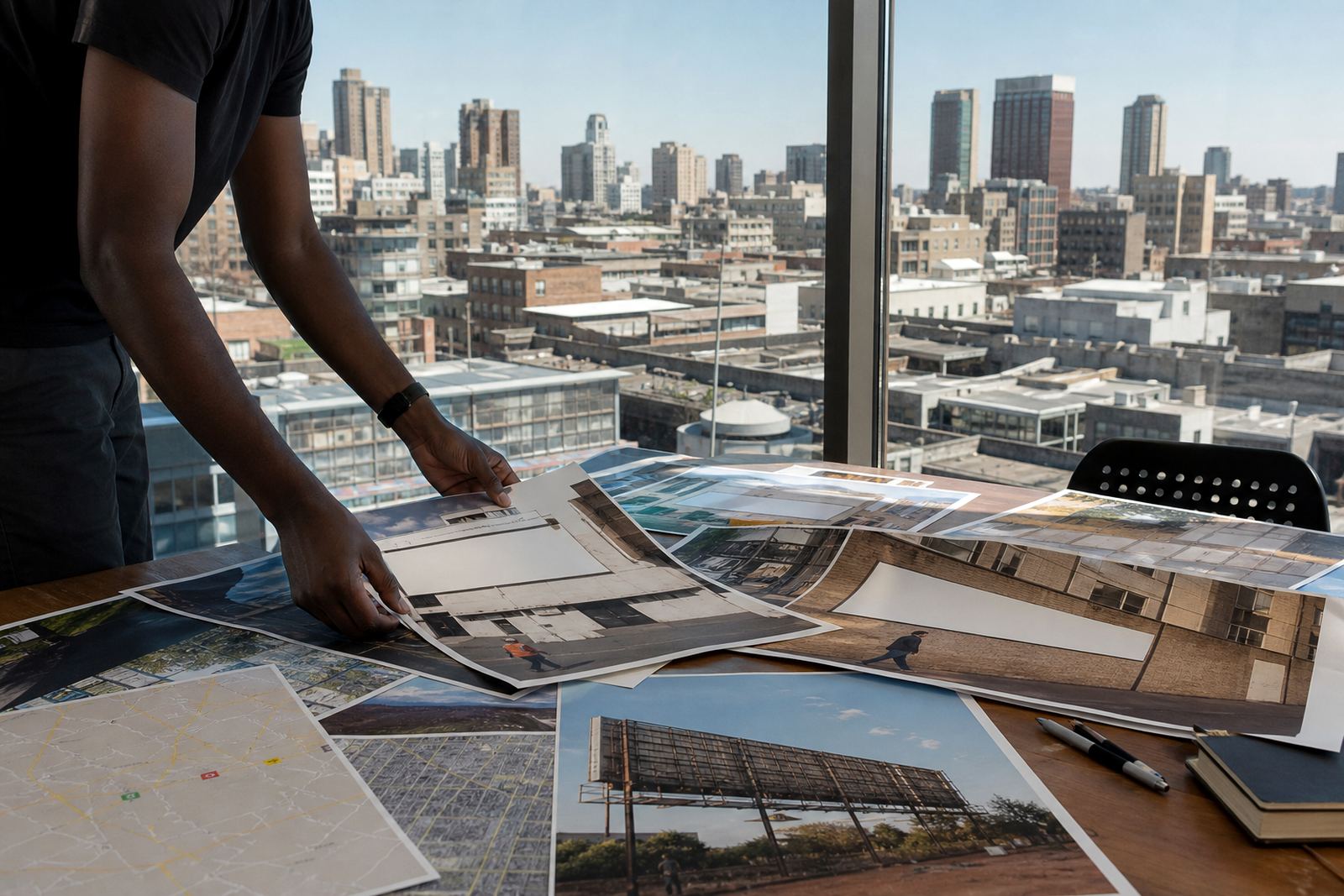
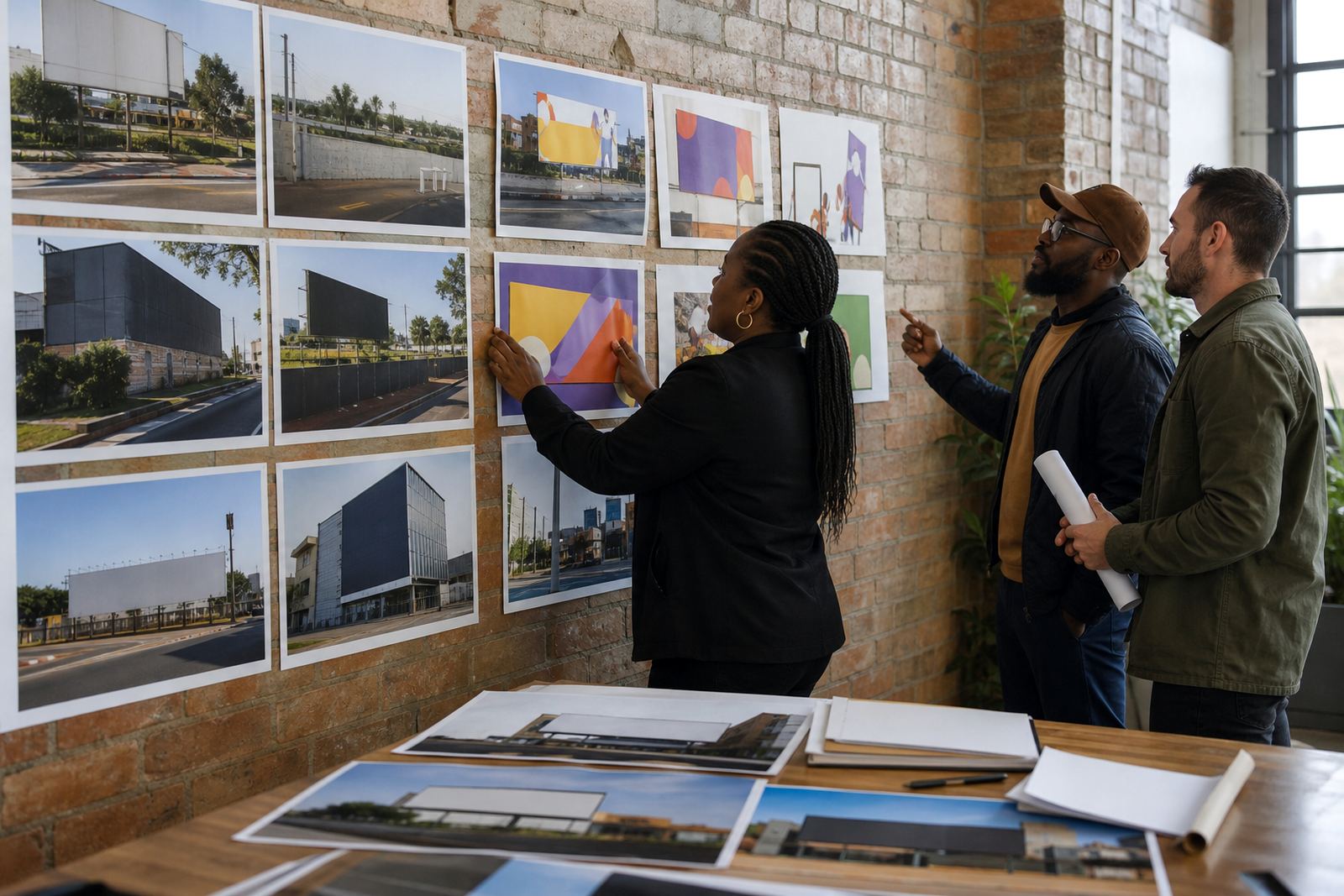
RentThisWall runs an online marketplace that connects property owners with advertisers looking for wall and billboard space across South Africa. For property marketing, that means you can search for space in Johannesburg, Braamfontein, Pretoria, Cape Town, Durban and Bloemfontein, then match the site to the kind of development or premises you need to promote. The team handles listing setup, site photo curation, copywriting, availability management, brief matching, booking coordination and renewal support.
Our Braamfontein base works with owners and advertisers in Johannesburg, Pretoria, Cape Town, Durban, Bloemfontein, Sandton and Midrand. The process is practical: confirm the site, check the consent path, review the artwork spec, then plan the installation and monitoring. For property marketing, that keeps the campaign clear, lawful and tied to the real location being promoted.