When Community Messaging Needs Local Visibility
Community outreach is usually not about broad brand noise, it is about getting a useful message into the right neighbourhood at the right time. That might be a health notice, a public event, a school drive, a local service notice, or a campaign that needs residents to take action nearby. Outdoor and wall advertising suits this work because people see it in the course of daily travel, near taxi routes, shopping nodes, or on routes into residential areas.
For this kind of use, the message needs to feel practical and direct. Short copy works better than long explanations, and the placement should support the message rather than fight it. In Braamfontein, Sandton, Midrand and other busy Johannesburg areas, wall space and billboard sites can help neighbourhood notices land with clarity when the artwork is clean and the call to action is easy to follow.
Typical Space Choices For Outreach Campaigns
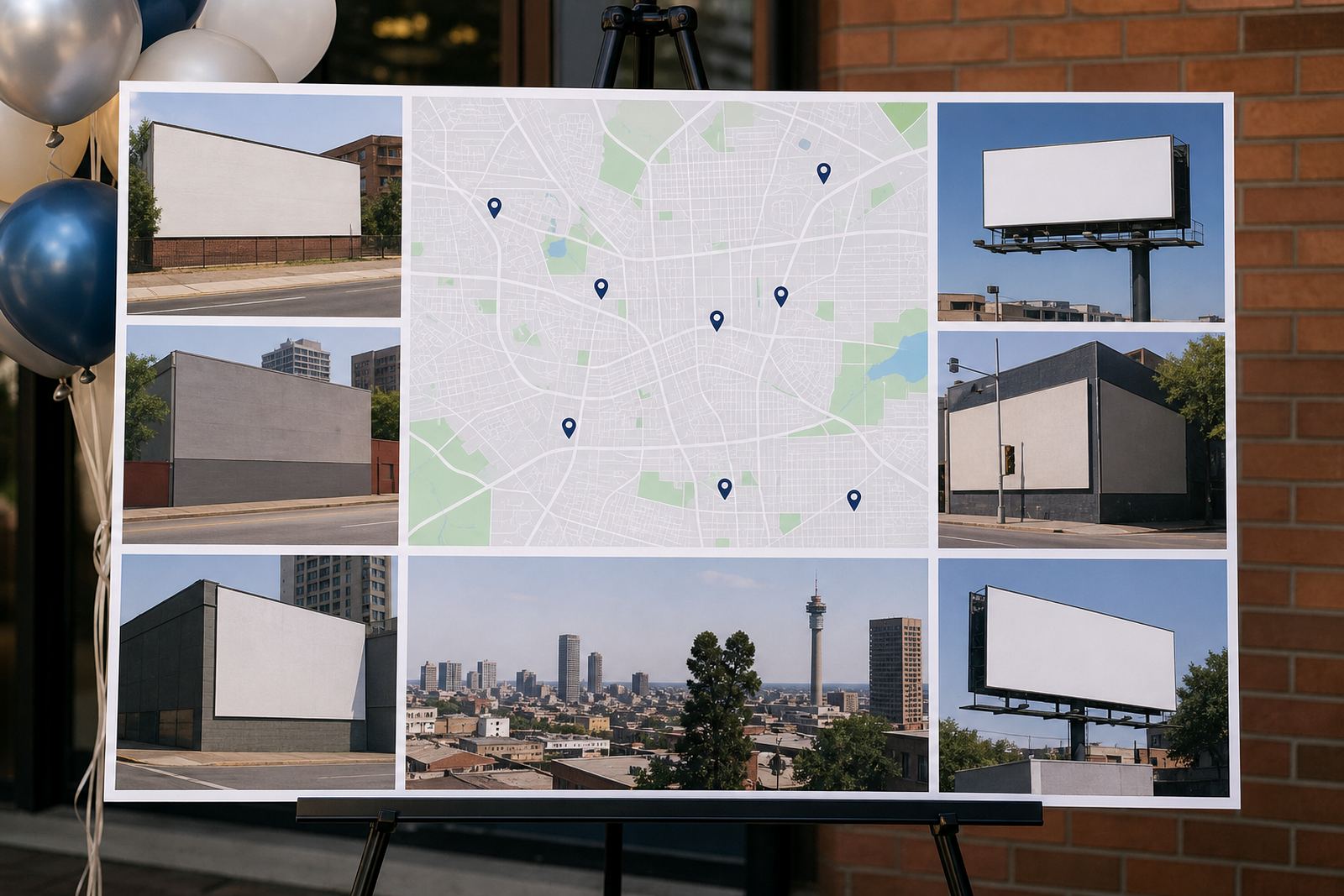
Community campaigns can use a mix of large and medium-format outdoor spaces depending on the area and the message. A full billboard can work for a broad public notice, while a wall wrap or smaller street-facing panel can suit a more local campaign tied to one suburb or corridor. In some cases, a campaign may only need one well-placed surface near a clinic, transport hub, school zone or retail strip.
- Billboard faces for wider neighbourhood visibility
- Wall-space panels on buildings with strong street exposure
- Building wraps for longer campaign runs
- Directional boards for event routes or venue approaches
- Short-term placements near community facilities
The exact format depends on the property, the viewing distance and the time available for installation. Coastal areas like Cape Town and Durban also need proper material choices because wind and humidity can affect how a poster or printed skin holds up over time.
Planning The Layout So People Read It Fast
Outdoor community outreach only works when the layout is simple enough to read in a few seconds. The strongest versions usually lead with one message, one action and one visual focus. If the campaign is about an event, the date and location need to be obvious. If it is about a public service, the contact point or next step must be clear without crowding the design.
Keep the copy lean and use enough contrast for daylight viewing and early evening visibility. For areas with frequent load-shedding, it is wise to plan for daytime readability first and not rely on lighting that may not always be available. Where the site sits under trees, along a fast-moving road, or behind parked vehicles, the viewing angle needs to be checked before artwork is signed off.
- Use one headline, not three competing messages
- Leave breathing room around dates, venues and calls to action
- Choose large lettering for moving traffic and pedestrian paths
- Match the image to the local message, not a generic stock look
- Check whether the site is best viewed head-on or from the side
Consent, Bylaws And Site Readiness Matter
Every sign or outdoor advert needs the property owner's consent and the relevant municipal bylaw approval before it goes up. That applies whether the site is in Johannesburg, Pretoria, Cape Town, Durban or Bloemfontein. Skipping those steps can lead to delays, removals or a campaign that cannot proceed as planned.
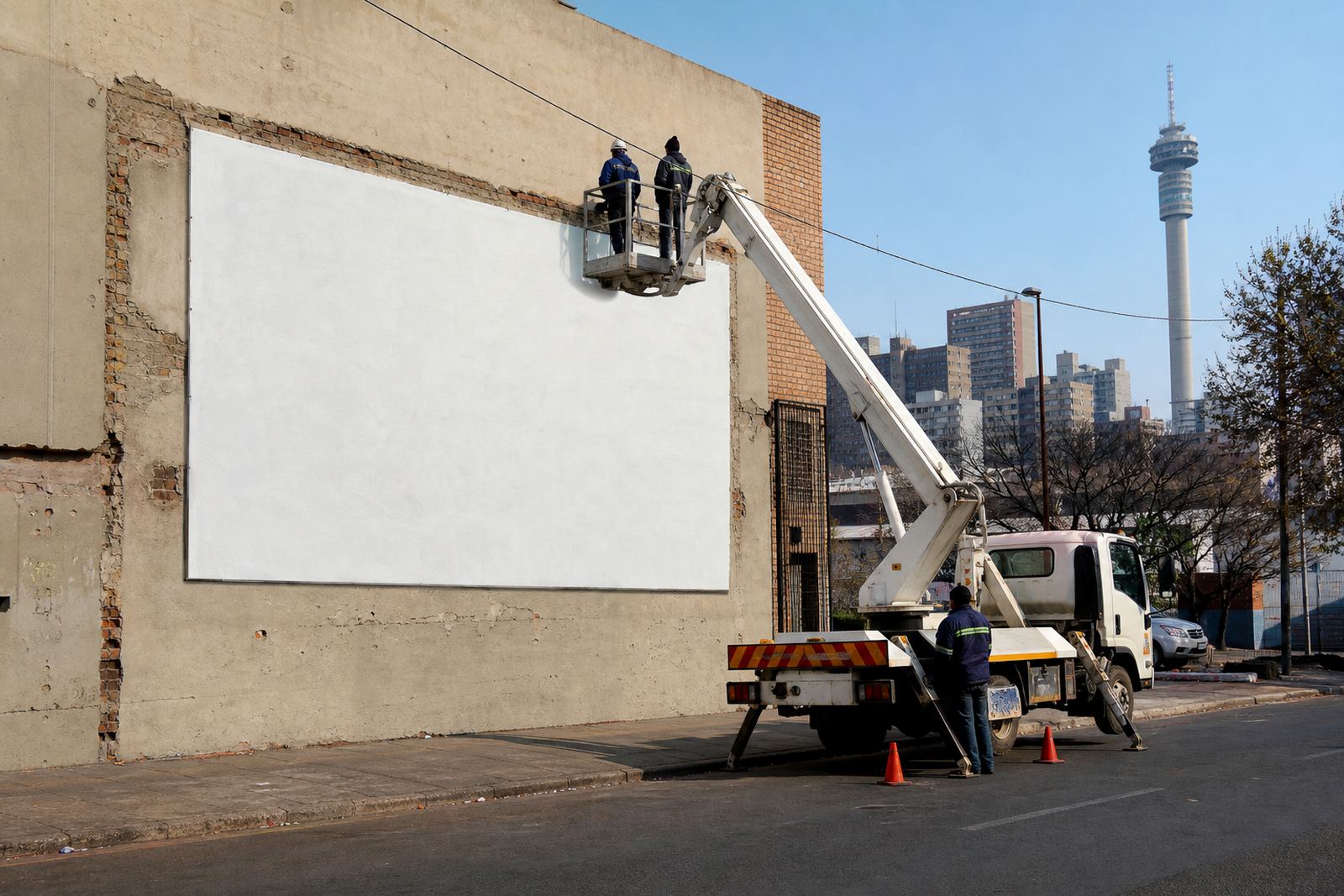
Good outreach planning includes checking who controls the surface, whether the building owner has approved the use, and what the local rules say about size, placement, illumination and duration. Some locations also need extra care around building access, neighbouring tenants, or heritage-sensitive streets. Our team supports consent check guidance, bylaw process support, artwork spec checks and installation scheduling so the campaign is ready before the print or fitment stage starts.
Common Mistakes That Slow Down Local Campaigns
Most outreach delays come from simple avoidable issues. The design may be too busy, the artwork may be supplied in the wrong size, or the campaign may be booked before the site approval is clear. Another common problem is choosing a surface that looks good in photos but is awkward to install on, especially where the building has uneven brick, narrow walkways or limited lift access.
It also helps to be realistic about the message length. A neighbourhood audience does not need every detail on the wall, only the part that matters most. If the goal is awareness, too much text becomes noise. If the goal is participation, the route to respond should be obvious. In busy nodes like Braamfontein and Sandton, clarity matters because people pass the same site quickly and may only get one short look.
- Booking before consent is confirmed
- Using artwork that is not sized for the actual surface
- Overloading the layout with too much detail
- Ignoring weather exposure, especially at coastal sites
- Leaving installation dates too tight for municipal processes
Budget Ranges For Community Outreach In Rand
Budget depends on the size of the surface, the area, the campaign length and how much support is needed on the listing and logistics side. A small local placement may fit a modest budget, while a multi-site outreach drive across several cities will need a larger allocation for setup, production and coordination. As a practical guide, many community outreach campaigns start from around R15 000 to R40 000 for a focused short run, while broader multi-area activity can move into the R45 000 to R120 000 range or higher depending on the site mix.
Those figures are only a working range and each placement needs its own quotation. Costs can change if the campaign needs special access, repeated installations, weather-resistant finishes or extended booking periods. The best approach is to match the spend to the message, the neighbourhood and the time window, not just to the size of the wall.
How RentThisWall Supports Outreach Campaigns
RentThisWall runs an online marketplace that connects property owners with advertisers looking for billboard and wall-space opportunities across South Africa. For community outreach work, that means you can search for suitable surfaces in Johannesburg, Pretoria, Cape Town, Durban and Bloemfontein, then move through the booking steps with clearer site information and practical support.
The team includes Thabiso Mokoena as Managing Director, with support from Anele Dlamini, Ruan van Wyk, Lerato Molefe, Musa Khumalo, Bianca Naidoo and Pieter Smit. From Braamfontein, Johannesburg, the team handles space listing setup, site photo curation, listing copywriting, availability management, brief matching, booking coordination and listing renewal support. For clients, the enquiry form on the contact page is the main route for reaching us, and it keeps the process simple when a campaign needs to move quickly.