
What a Double-Sided Board Is
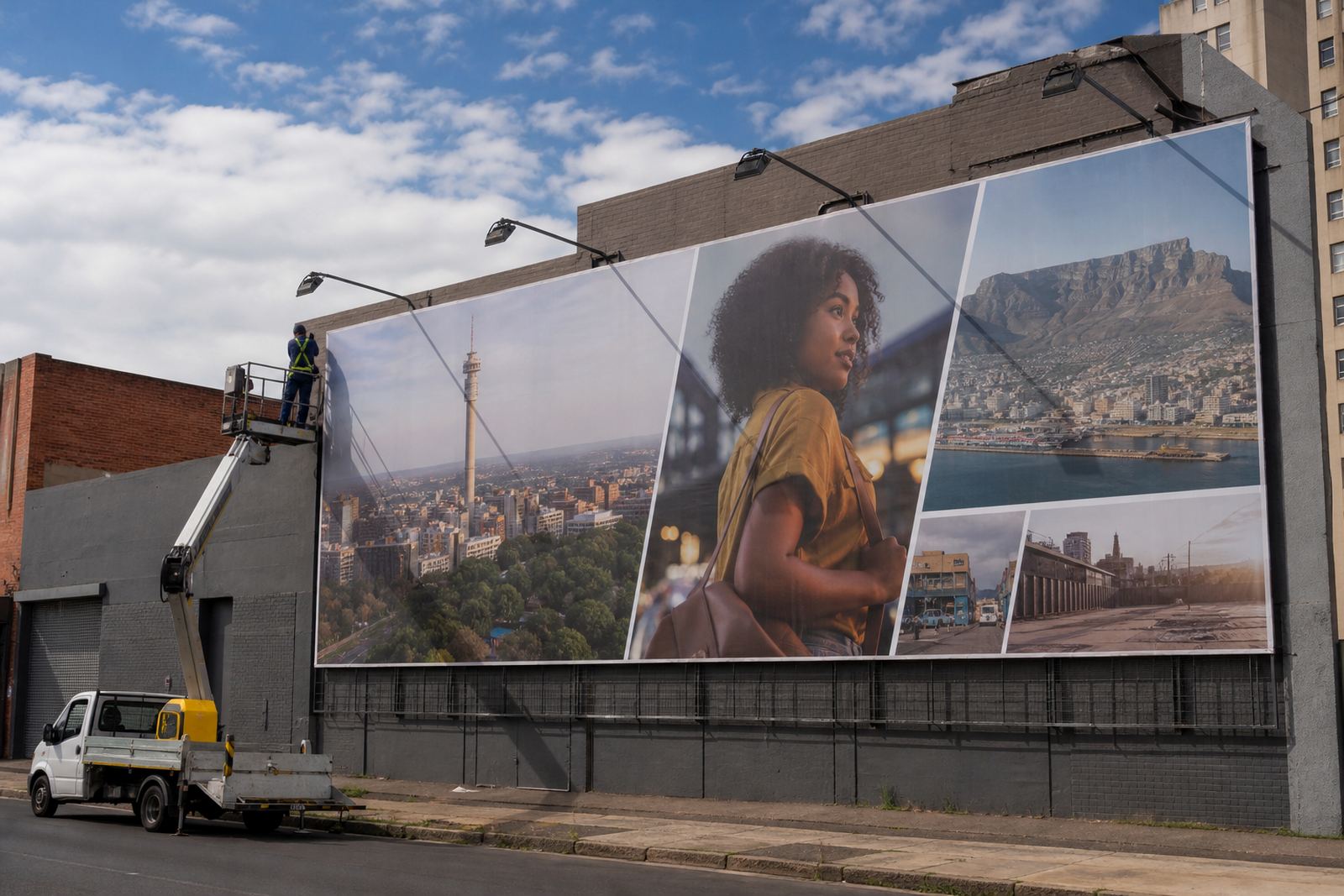
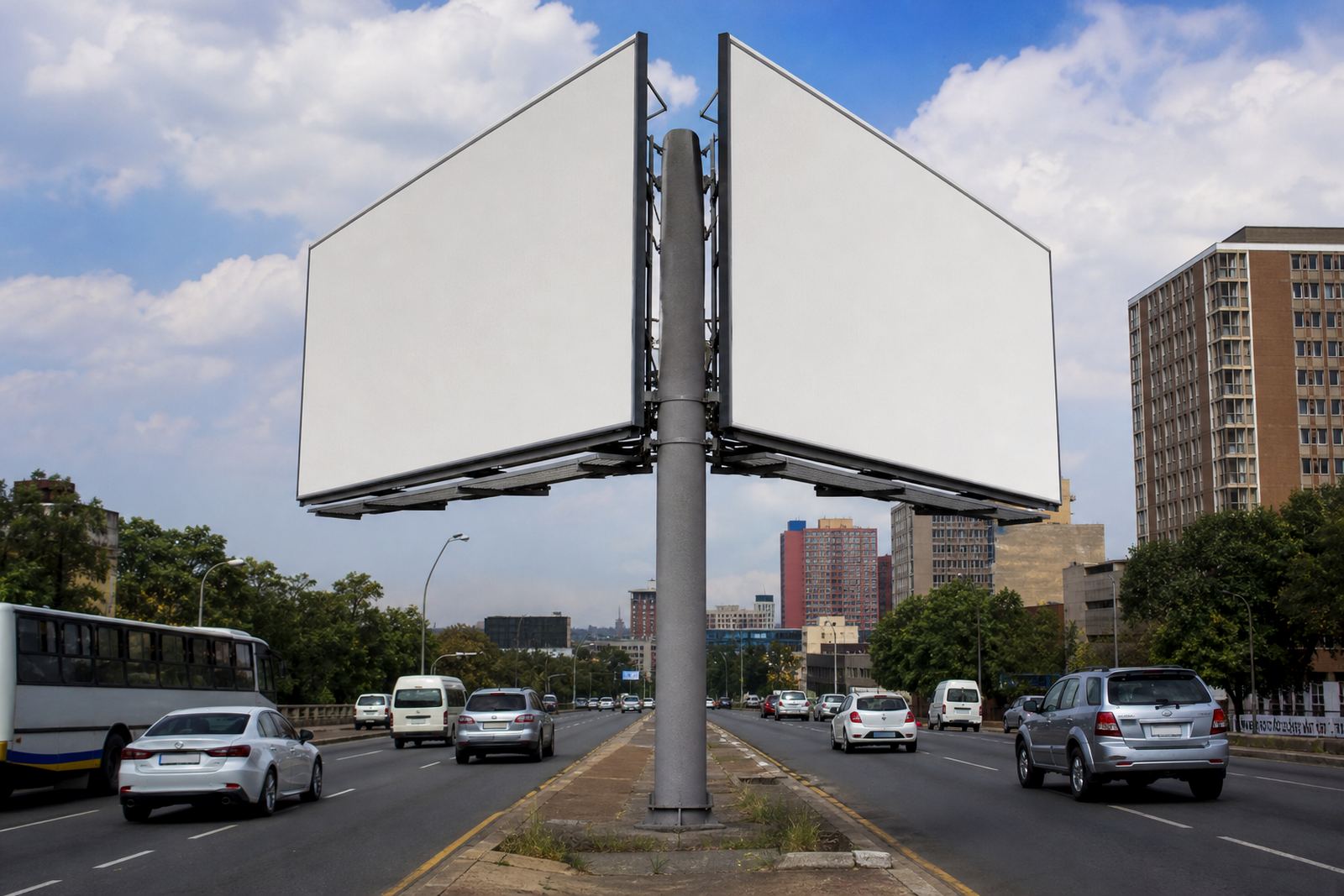
A double-sided board is an outdoor advertising structure that carries the same or related message on both faces, so vehicles, pedestrians or passing commuters can see it from either direction. It is commonly used along arterial roads, near intersections, on boundary walls, forecourts and other sites where movement flows in two directions. The format is practical for locations where a single face would only catch half the passing view.
These boards are usually fixed to a freestanding frame, a wall mount or a support structure built for outdoor exposure. The display area can be printed material, a panel-based sign or a rigid board face depending on the site and the way the landlord wants the space used. In coastal areas such as Durban and parts of Cape Town, the structure and finish should cope with salt air and moisture; inland sites in Johannesburg, Pretoria, Sandton and Midrand often need protection from dust, heat and long sun exposure.
Common Sizes and Format Options
Double-sided boards are not one fixed size. The right option depends on the wall, verge, yard space or roadside position available. A listing should show the usable face dimensions, the mounting style and whether the board is shared, exclusive or part of a larger arrangement. If you are planning a campaign in Braamfontein or central Johannesburg, the available space may be tighter than on a freestanding site in a lower-density area.
- Small format boards for tighter urban sites, often used on walls and building edges
- Medium boards for roadside exposure where the structure must stay clear of access ways
- Large-format faces for main-route visibility and longer viewing distance
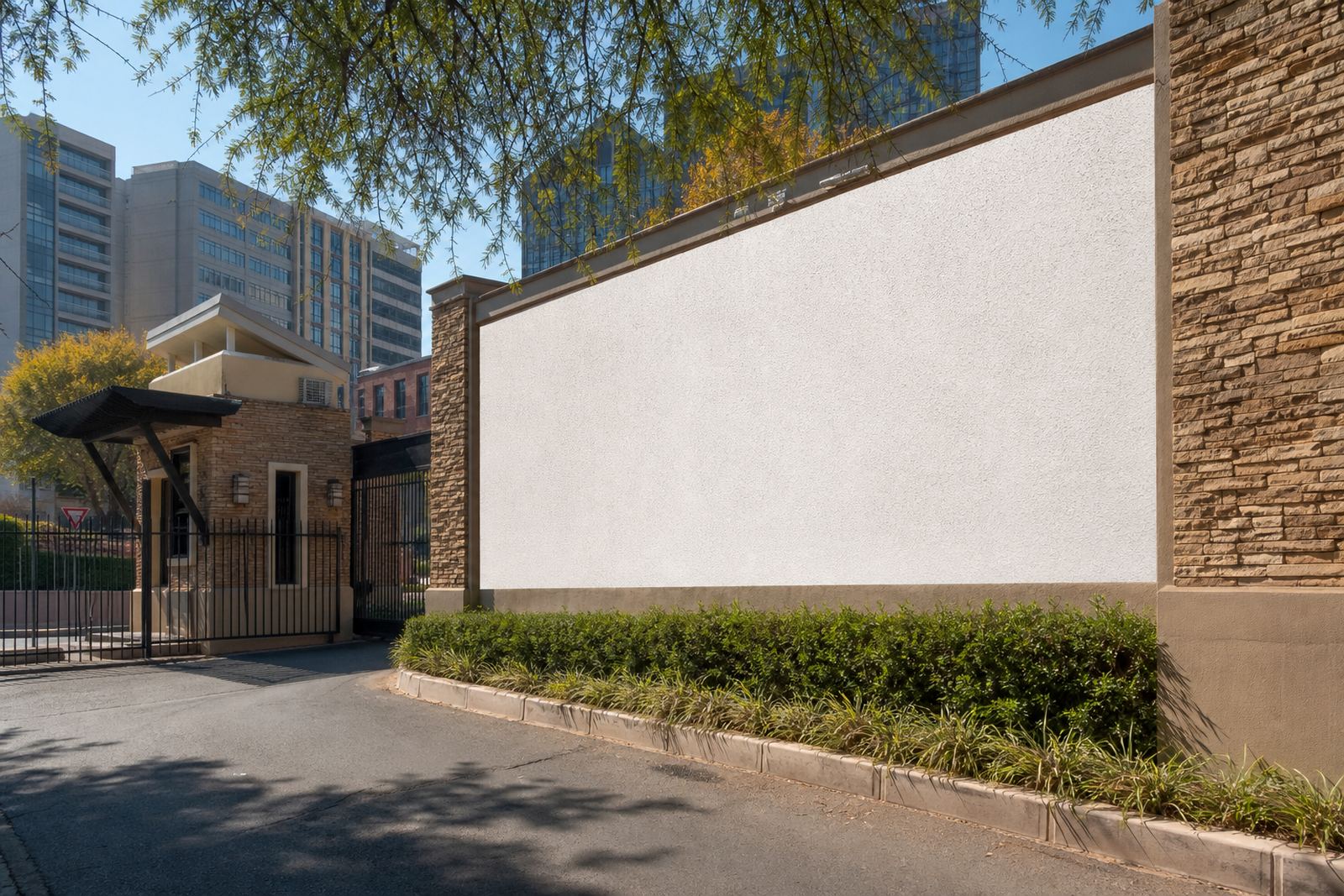
- Wall-mounted double faces where both sides can be seen from different directions
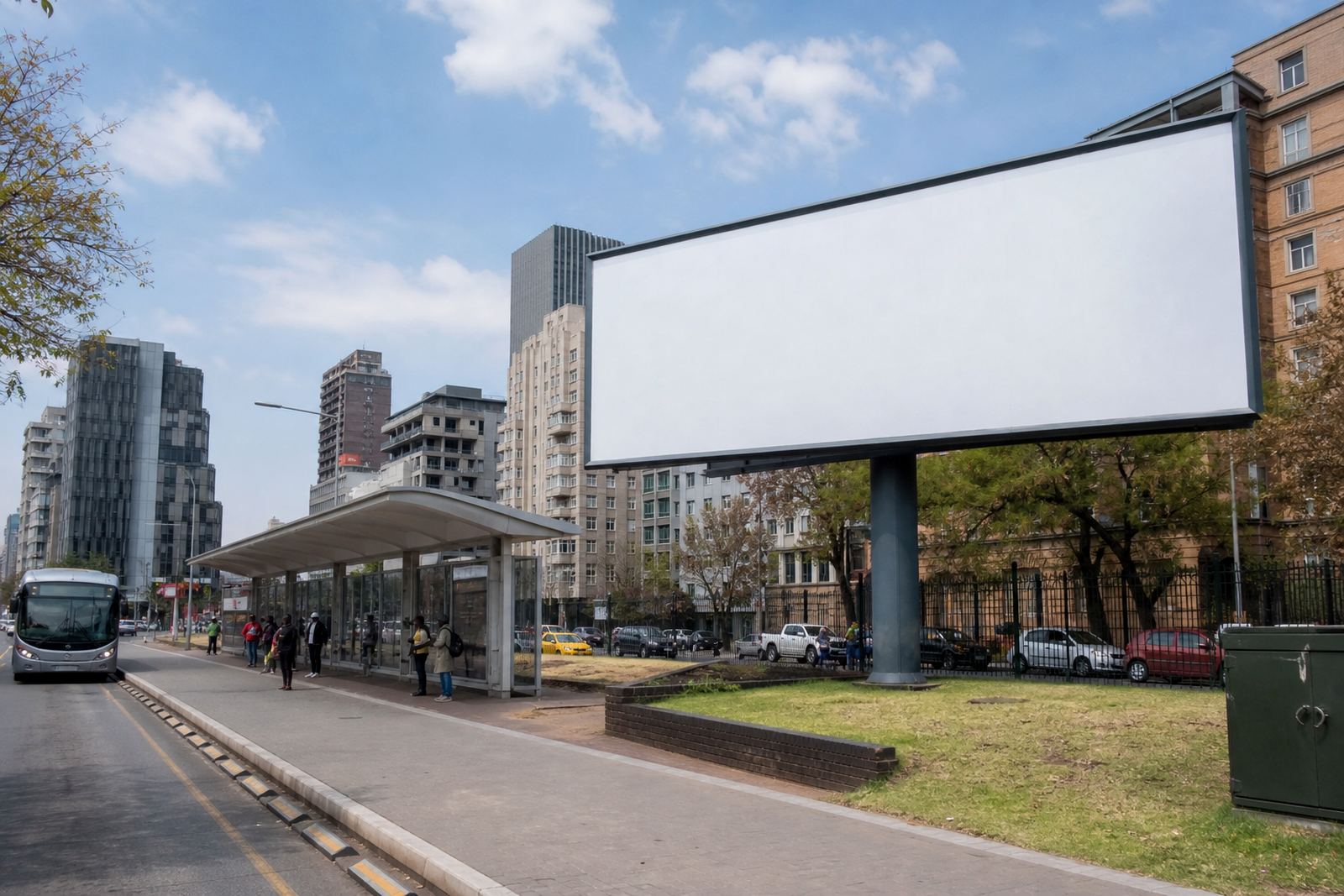
- Freestanding double-sided boards with a frame, posts and separate viewing faces
When checking a listing, look for the exact width and height of each face, the clearance from ground level, whether the board is landscape or portrait, and whether there is room for an inspection ladder or maintenance access. A small measurement miss can affect print fit and fixing points, so the spec sheet should be read line by line.
Where This Format Works Best
This format suits sites where traffic moves both ways, turns at junctions, or slows near signals and entrances. It also works well where a wall runs parallel to a road but is visible from opposing travel lanes. In practice, the best placements are often near business districts, taxi routes, commuter corridors, retail edges and mixed-use streets where people pass repeatedly during the week.
Double-sided boards are often used by advertisers who want steady visibility without having to commit to several separate faces. They can suit retailers, property launches, service businesses, events, recruitment messages and local campaigns that need a clear presence in a specific area. If the board is at street level, the content should be legible from moving vehicles and not rely on fine detail that disappears at speed. In a busy area, the message has to work quickly, even if somebody only gets a few seconds to glance over.
- Roads with two-way traffic and a central line of sight
- Intersections where drivers slow down and look both ways
- Boundary walls facing opposite carriageways
- Forecourts, service roads and entrance approaches
- Urban corridors where repeated exposure matters more than one long view
Installation, Power and Site Requirements
Installation depends on the type of support, the wall condition and the site access. Some boards need steel posts, concrete footings and engineered fixing. Others can be mounted to a masonry wall, but the wall must be sound enough to take the load and wind pressure. If the site is near a highway, on private property, or in a place with setback rules, the landlord and local authority conditions must be checked before any work starts.
Double-sided boards usually do not need power unless they include illumination, timing equipment or another electrical feature. If lighting is part of the setup, ask how the power is supplied, where the metre or connection point sits, and who is responsible for ongoing electricity use. In load-shedding areas, backup planning may be needed for illuminated work. Gas is not normally required for this product type, unless a separate feature at the site depends on it and that should be confirmed in writing.
- Property owner consent is required before installation
- Local municipal bylaw approval may be needed, depending on the site
- Access for installers, lifts or scaffolding should be checked in advance
- Wind load, wall strength and fixing method must suit the structure
- Any lighting, cabling or timer equipment should be clearly specified
Care, Servicing and Campaign Monitoring
Outdoor boards need regular attention because dust, rain, sun and vibration can wear down the face and fixings. In Johannesburg and Pretoria, dust build-up and strong sun can dull printed panels over time. On the coast, moisture and salt can affect metal parts and fasteners, so the structure should be inspected more often. If a board is close to trees or an active road, the surface may also need cleaning after storms or heavy wind.
Servicing should cover the face material, brackets, bolts, frame alignment and any lighting used on the site. If the message is being displayed for several months, ask about routine checks and whether damaged parts can be replaced without taking the whole board down. Campaign monitoring is also important, especially when the board is part of a time-based booking. A quick site visit can confirm that the face is still visible, there are no obstructions and the print remains secure. We sometimes see a loose edge go unnoticed until the next visit, so regular checks matter.
What to Check Before You Book
Before you confirm a double-sided board, make sure the listing tells you exactly what is being rented and what is included. The wrong assumption can cause delays, extra print costs or access problems on installation day. A clear brief should cover the board itself, the ownership of the space, the viewing direction and the compliance steps needed for that site.
- Exact face size and whether both sides are available for your campaign
- Location, direction of view and nearby obstructions
- Who provides the print, frame, mounting parts and labour
- Whether the property owner has given consent for the use of the space
- Whether municipal bylaw approval or site-specific permission is required
- Installation date, access times and any restrictions on working hours
- Lighting, power needs and any backup requirement for night viewing
- Renewal dates, removal rules and responsibility for servicing
It also helps to confirm the artwork spec before anything is sent to print. Check the bleed, safe area, file format and finishing method so the board fits cleanly and reads well from both directions. If the campaign is meant to run across several cities such as Bloemfontein, Durban and Cape Town, ask for each site to be checked separately because one board can have different requirements from the next.
How RentThisWall Helps With Double-Sided Board Rentals
RentThisWall lists double-sided board opportunities across South Africa and helps match advertisers with suitable property owners and site conditions. The process covers listing setup, site photo curation, copywriting, availability management, brief matching, booking coordination, consent check guidance, bylaw process support, artwork spec checks, installation scheduling, campaign monitoring and renewal support.
If you are looking in Braamfontein, Sandton, Midrand, Pretoria, Cape Town, Durban or Bloemfontein, the team can help narrow the options to the boards that suit your campaign length, visibility needs and practical setup. The aim is to keep the booking process clear and grounded in the site details, so the board you choose is the one that can actually be installed, serviced and used properly.
Key facts
| Product type | Double-sided outdoor board for two-way visibility |
|---|---|
| Typical use | Roadside, wall-mounted or freestanding advertising space |
| Face options | Single print on both sides or separate artwork per face, subject to site rules |
| Size range | Small, medium and large-format boards depending on the location |
| Power requirement | Usually none unless lighting or electrical features are included |
| Compliance | Property owner consent required; municipal bylaw approval may also be needed |