Why consent comes first
Every wall sign, billboard or painted advertisement starts with permission. If the owner of the property has not agreed in writing, the advert should not go up, even if the site looks ideal or the space is available on paper. Consent protects the owner, the advertiser and the campaign itself.
In Braamfontein, Sandton, Midrand, Pretoria, Cape Town, Durban and Bloemfontein, the same basic rule applies. A space may be suitable for advertising, but it still needs the proper sign off from the person or company that controls the property. In many cases, local municipal bylaw approval is also needed before installation can happen.
- Always confirm who owns or controls the wall or structure.
- Get written consent before any design, printing or installation is booked.
- Check whether the local municipality requires a separate approval process.
What property owner consent should cover
Good consent is not just a quick yes. It should clearly state what is being displayed, where it will sit, how long it will remain in place and who is responsible for installation and removal. That makes it easier to manage expectations and keeps everyone aligned from the start.
For outdoor advertising, the details matter. A landlord may be happy with one format but not another. A building owner may approve a wall banner but not a fixed frame. On shared sites, the right to use the space may also depend on lease terms, body corporate rules or other agreements. It is worth checking these before going too far down the line.
- Confirm the exact location and size of the sign space.
- Record the campaign dates and any renewal terms.
- Note who is handling installation, removal and site access.
- Keep a copy of the signed approval for your records.
How municipal bylaw approval fits in
Property owner consent does not replace municipal approval. In many areas, outdoor signage must also comply with local bylaws, zoning rules and advertising controls. The requirements can differ from one municipality to the next, so a site in Johannesburg may not follow the same steps as one in Durban or Cape Town.
That is why bylaw process support is part of proper campaign planning. Some signs need drawings, site details or proof of consent before an application can move ahead. Others may have restrictions on size, placement, lighting or how close the sign can be to intersections and road reserves. If a sign is already up without approval, the municipality can ask for changes or removal.
For advertisers, the safest approach is simple: check consent, check bylaws, then book the space. It saves time and avoids last-minute disruptions.
A practical consent checklist for advertisers
When you are ready to secure a wall or billboard space, use a clear process. This is especially helpful when the campaign must run across several towns or when the site is part of a larger portfolio with more than one owner or manager. A steady process keeps the paperwork in order and makes follow-up easier.
- Identify the property owner or authorised decision-maker.
- Confirm that the advertiser is allowed to use the space for the intended message.
- Request written consent and any site-specific conditions.
- Check whether bylaw approval is needed before installation.
- Review artwork specs against the site dimensions and structure.
- Arrange installation only after consent and approvals are in place.
Where needed, ask for clarification early. A small question about access times, fixing methods or wind load can prevent a bigger issue later. It is always better to sort the details before printing than to discover a problem on the day of install.
How we help property owners and advertisers stay aligned
Our support process is built to keep both sides informed. Property owners need to know what is being installed on their building or boundary, and advertisers need clear steps before they commit to a site. We help match the brief, check the available space and guide the consent process from the first enquiry through to booking.
For property owners, this means the listing details, photo set and use terms are handled carefully. For advertisers, it means the booking is not treated as final until the right permission has been confirmed. This kind of guidance is especially useful where there are multiple stakeholders, or where site access depends on building management, tenant approval or a body corporate. It can be a bit time consuming, but it saves bother later.
- Clear guidance on what approval is needed for each site.
- Support with consent checks before a booking is confirmed.
- Coordination between the advertiser, owner and logistics team.
Before installation day
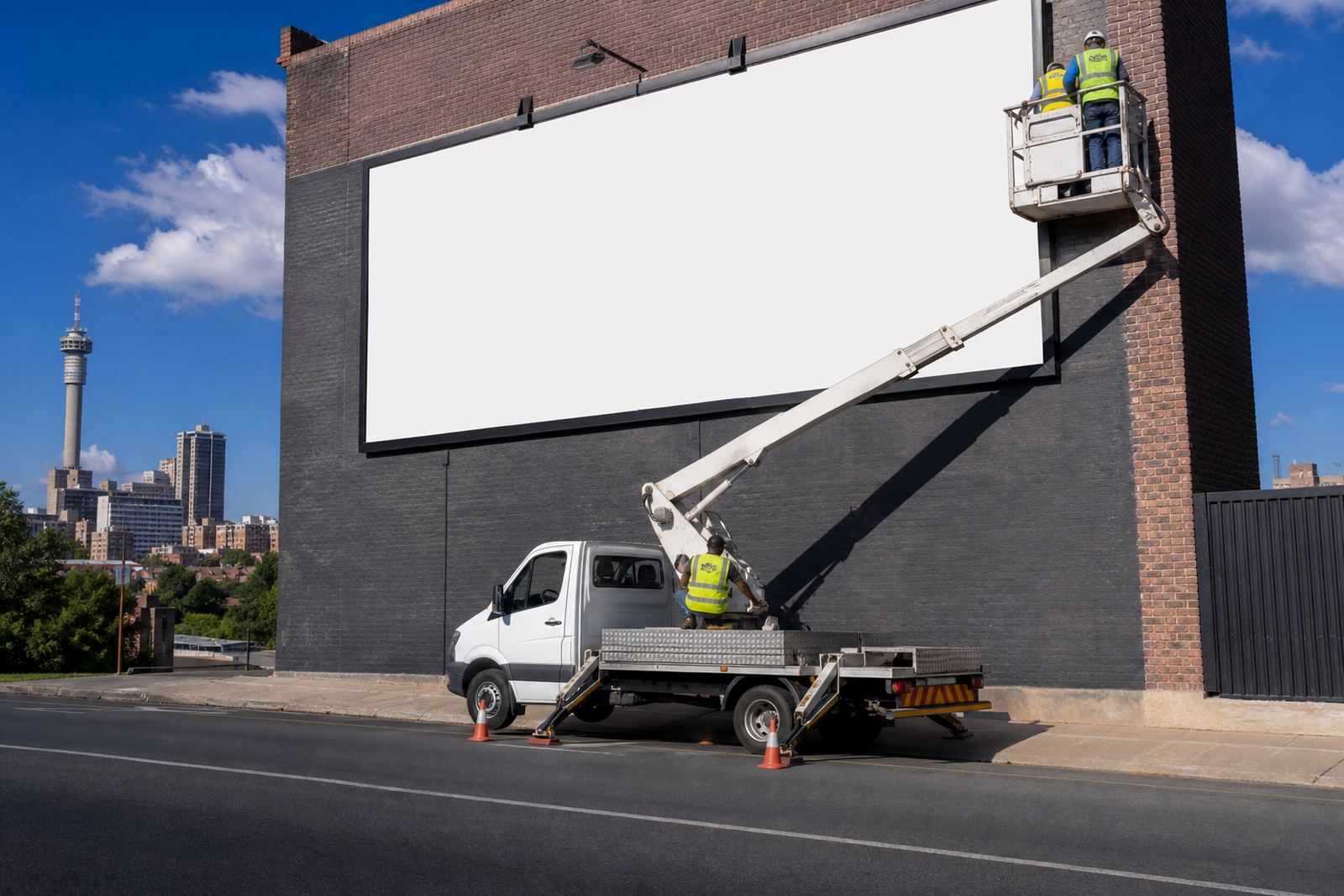
Once consent and approvals are in place, the final step is to make sure the site is ready for installation. That means confirming access, checking the wall or structure, and making sure the artwork matches the agreed measurements. On coastal sites, moisture and salt air can affect certain finishes, while load-shedding may affect timed lighting or digital components if they form part of the setup.
It also helps to confirm who will be on site, what equipment is required and whether there are any municipal or building rules that still need to be followed. A proper handover avoids confusion and keeps the install running smoothly.
Before the team arrives, ask yourself three things: is the consent signed, is the bylaw approval sorted, and is the site access confirmed. If the answer is yes to all three, the campaign is in a strong position to go ahead.