When directional advertising makes sense
Wayfinding is useful when people already want to reach you but need help finding the last part of the trip. It suits retail centres, auto yards, medical rooms, event venues, churches, factories, schools, warehouses and offices tucked behind other buildings. In Braamfontein, Johannesburg, that can mean guiding people from a taxi route, a side street or a parking entrance to the correct door instead of leaving them to guess.
This kind of campaign works best when the message is short and practical. A passer-by should know where to turn, how far ahead the site is and which entrance to use. If the route is awkward, if the building sits off the main road or if the venue has more than one access point, direction signs can reduce missed appointments and late arrivals. They also help after dark when load-shedding, rain or poor street lighting makes a site harder to spot.
Wayfinding is not only for large sites. A small business in Sandton, Midrand or Bloemfontein can use a few carefully placed panels to cut down on confusion and keep traffic moving the right way. The aim is simple: guide people without cluttering the route or overloading them with text.
Typical outdoor formats used for route guidance
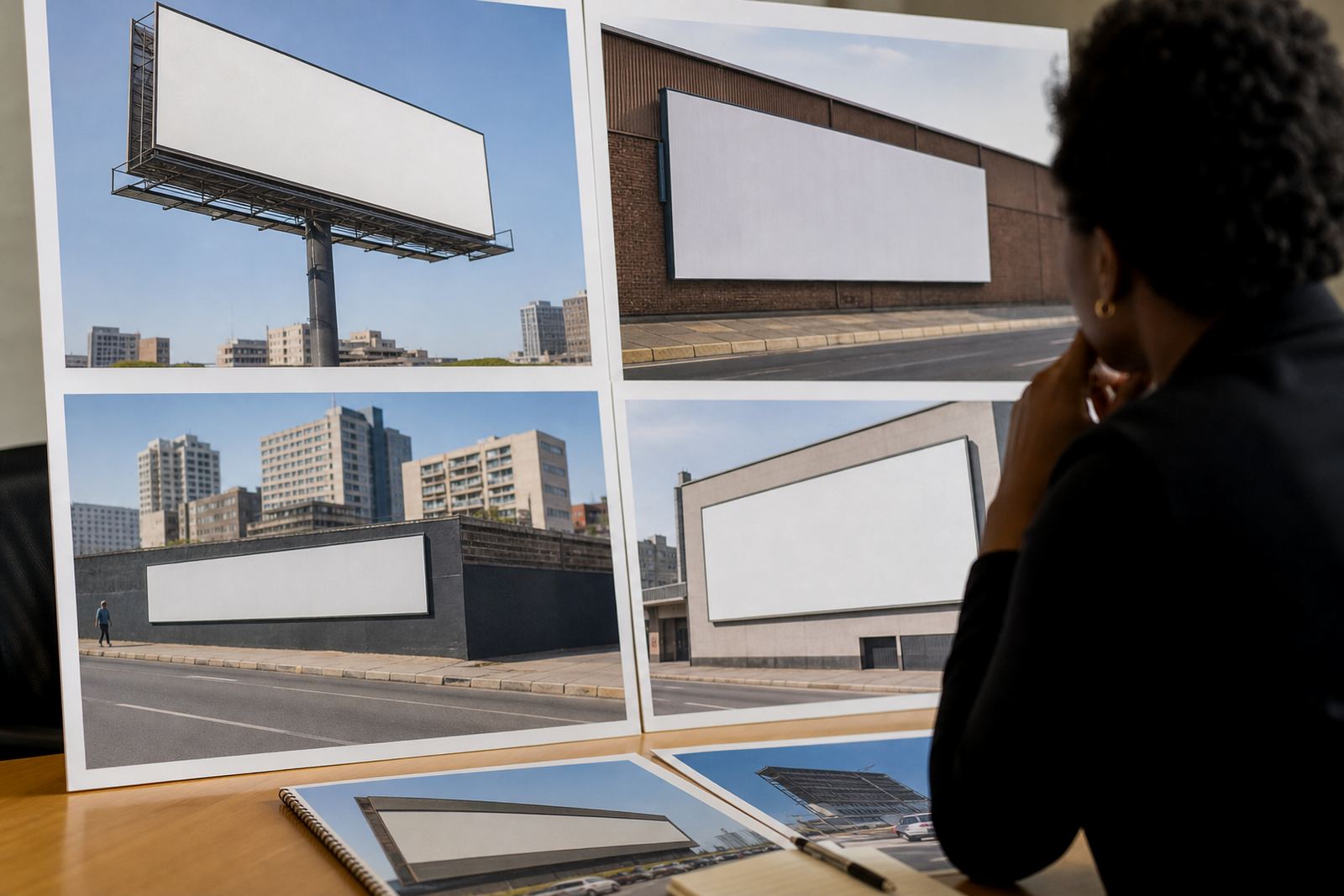
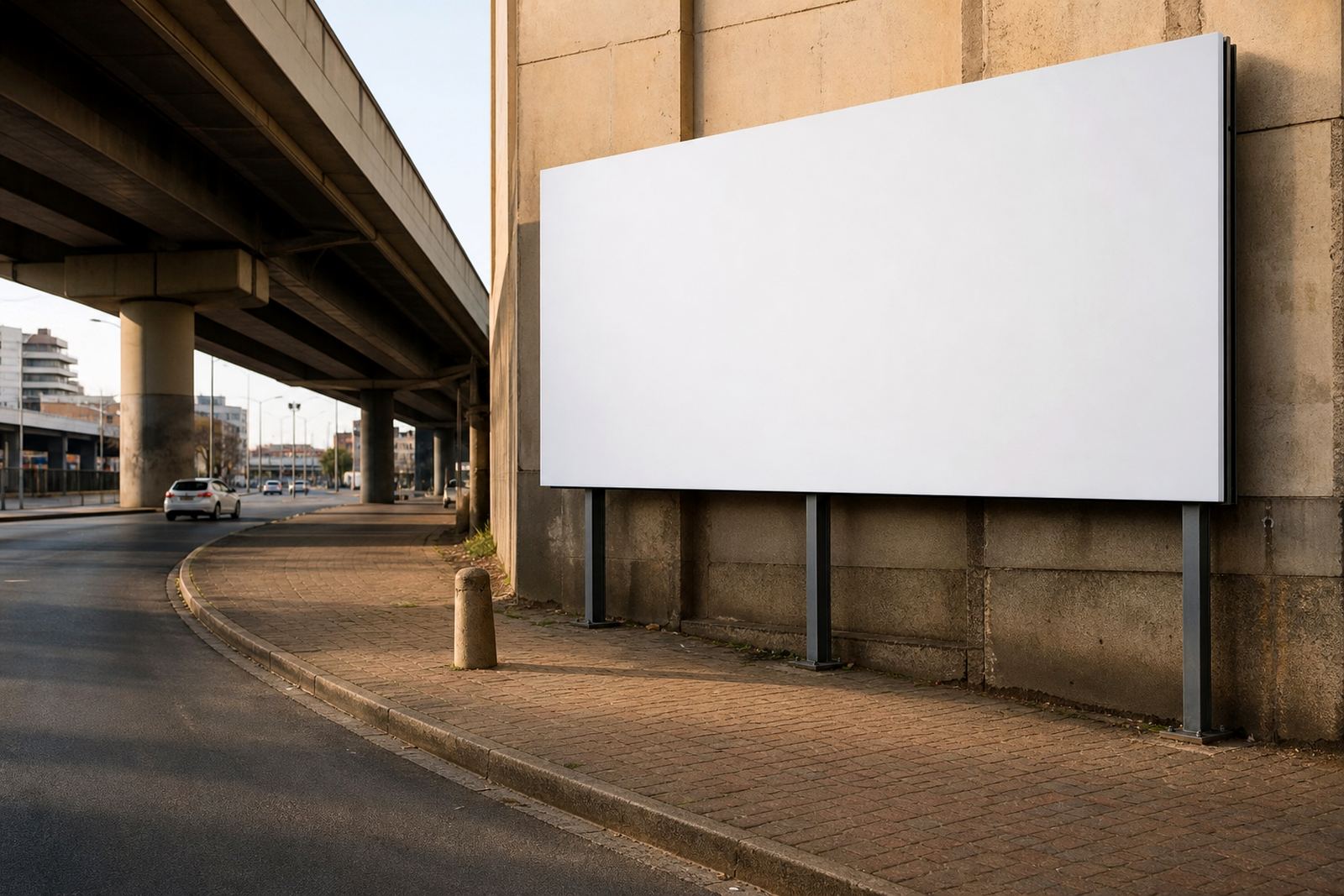
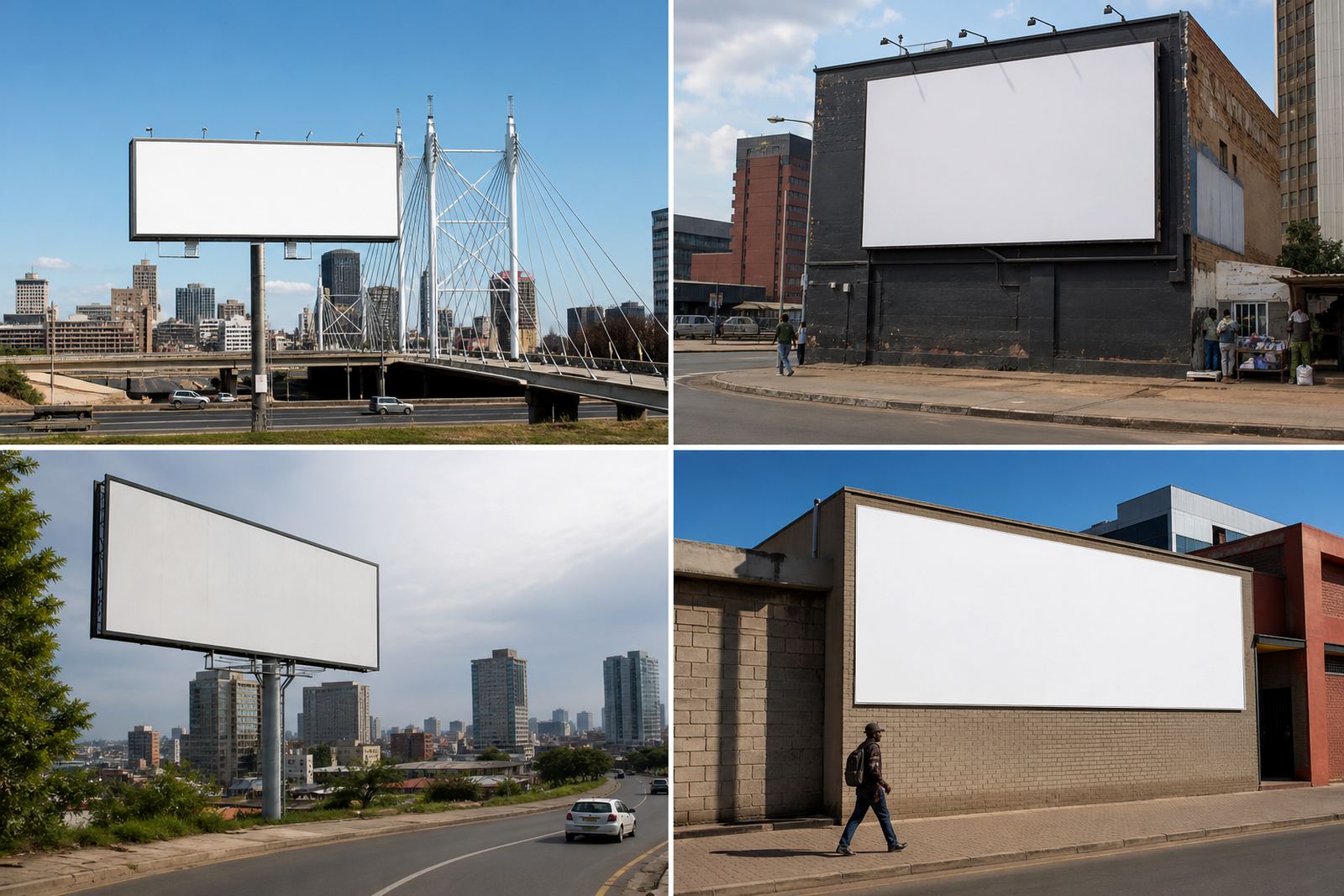
The right format depends on where the person first sees the message and how much time they have to read it. For wayfinding, the usual set includes wall-mounted panels, street-facing boards, directional blades, corner placements and large-format painted or printed wall space. Near the site, smaller repeat signs can point to parking, reception, loading bays or entrances.
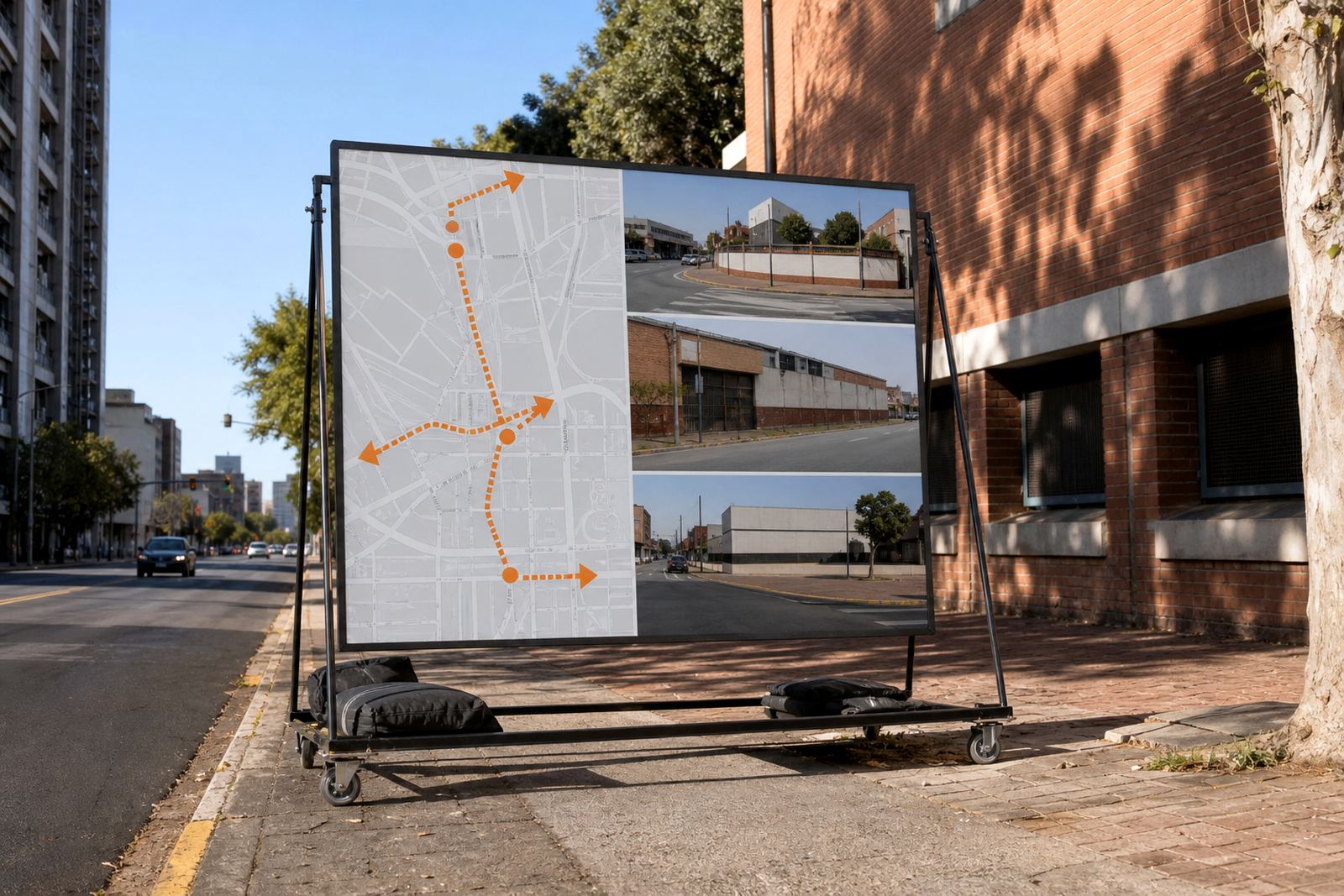
For a route that starts a few streets away, advertisers often use a simple sequence: first notice, turn instruction, then arrival marker. That sequence may use different sizes so the message stays readable as people move closer. In Durban or Cape Town, coastal humidity can affect some materials and fixings, so the finish and mounting method need to suit the conditions. In Pretoria and Johannesburg, dust and strong sun can also fade poor-quality print quickly.
- Main road panel to catch attention early
- Corner or turn sign to confirm the direction
- Near-site wall panel to mark the final approach
- Entrance sign to show where visitors should enter
- Parking or loading bay sign for the last few metres
Not every route needs all five. Some sites only need two well-placed messages, while others need a small set spread across several blocks. The best plan keeps each board useful, not repetitive.
Planning the route before booking space
Before any booking, map the route from the first point of recognition to the final entrance. Walk it or drive it yourself if possible. Note where drivers slow down, where pedestrians cross, where a sign would be blocked by trees, poles or other boards and where a turn needs confirming. This is especially important in busy areas like Braamfontein and Sandton where a few seconds of confusion can mean someone misses the correct turn.
Then decide what each panel must say. Keep the wording short and use plain instructions such as turn left, next right, entrance ahead or parking here. If the route is longer, repeat the same style of direction so people do not have to re-read different wording at each point. The layout should also leave room for the property owner’s consent details and any municipal requirements that apply to the site.
- Measure the viewing distance before choosing size
- Check whether the message must be seen by drivers, walkers or both
- Confirm if the wall or board faces morning sun, late afternoon sun or shade
- Allow space for safe mounting and maintenance access
- Match the wording to the actual route, not the shortest route you wish people took
Good planning reduces wasted spend because you avoid placing a directional message where nobody can read it in time. It also helps with booking coordination, because the right site on the right side of the road matters just as much as the wording itself.
Common mistakes that weaken wayfinding
The most common problem is too much copy. If a person is driving, walking or carrying shopping bags, they do not have time for a long explanation. Another mistake is giving directions that sound fine on paper but do not match the street layout. If the turn is hard to see, if the entrance is hidden behind another property or if there are two similar gates, the sign must address that reality.
People also forget to check ownership and approvals. Outdoor and wall advertising needs the property owner’s consent and local municipal bylaw approval. A sign placed without both can be removed, delayed or disputed later. That creates extra cost and can interrupt a planned opening or event. It is also common to use colours or layouts that fade into the background, especially on pale walls or near busy retail strips where there is already a lot going on visually.
Another issue is poor maintenance. A panel that buckles, peels or gets dirty quickly loses value. In areas with dust, wind or coastal moisture, installation quality matters as much as the artwork itself. If the route changes, the sign should be updated or removed, not left pointing people the wrong way. That sounds obvious, but it happens more often than people admit.
Budget ranges for directional campaigns
Budget depends on how many sites are needed, how long the campaign will run and whether the work uses one board or a connected route of several panels. A simple local wayfinding setup may start with a modest monthly rental and a small production and installation cost. A wider route, especially one that covers several turns or approaches, will cost more because it needs more space, more print or paint work and more coordination.
As a general guide, smaller directional campaigns can sit in the low thousands of Rand for short runs, while multi-location route sets can move into the mid to higher thousands per month depending on size, finish and placement. If the campaign needs site photo curation, listing copywriting, consent check guidance, bylaw process support or installation scheduling, those services may also form part of the budget. There is no single figure that fits every address because wall space, visibility and approval steps differ from one town to the next.
When comparing options, look at the full path rather than the cheapest board. A slightly better placed sign can be worth more than a cheaper one on the wrong corner. The same applies to renewal support. If a route works, keeping it live and accurate is often cheaper than rebuilding it later.
How RentThisWall helps match space to the route
RentThisWall connects property owners and advertisers looking for billboard and wall space across Johannesburg, Pretoria, Cape Town, Durban and Bloemfontein. For wayfinding, that means looking for surfaces that fit the route, the size needed and the practical details around access, consent and timing. The work is handled from Braamfontein, Johannesburg, with support for listings and bookings across the areas we cover.
Our process can include space listing setup, site photo curation, listing copywriting, availability management, brief matching, booking coordination, consent check guidance, bylaw process support, artwork spec check, installation scheduling, campaign monitoring and listing renewal support. That makes it easier to place the right directional message on the right wall or board, then keep it accurate through the full run. Thabiso Mokoena leads the business, with support from Anele Dlamini, Ruan van Wyk, Lerato Molefe, Musa Khumalo, Bianca Naidoo and Pieter Smit across operations, owner relations, advertiser support, logistics, content and compliance.
If you need a route into a store in Midrand, a venue in Cape Town or a site in Bloemfontein, the enquiry form on the contact page is the place to start. A clear brief, a simple route plan and the right consent steps save time for everyone.
- Choose panels that match the real approach, not just the main road
- Keep wording short enough to read at speed
- Confirm owner consent and municipal approval before installation
- Plan for sun, rain, dust and load-shedding conditions
- Review the route if access changes or new obstructions appear