Where repeated outdoor messaging works best
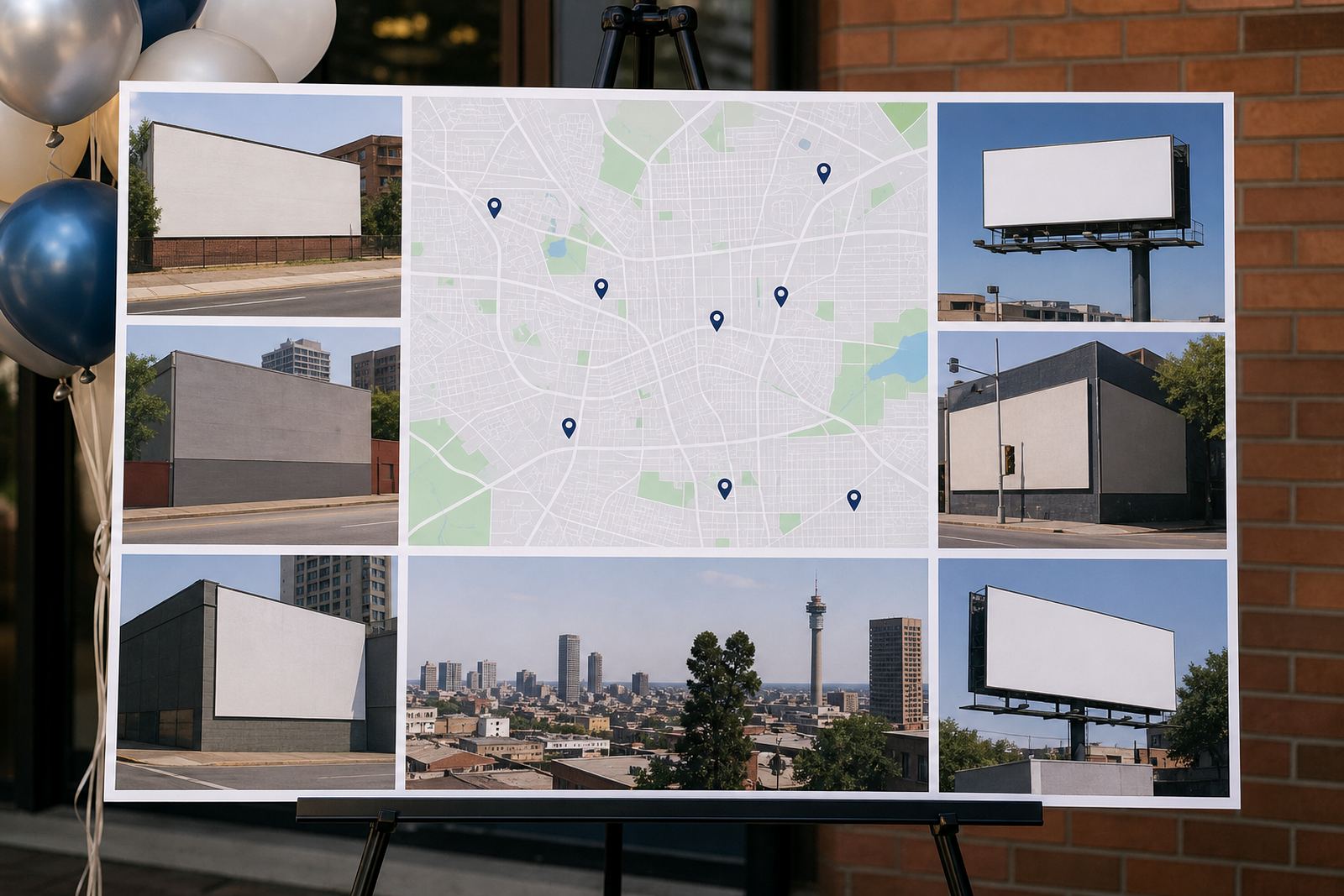
Election-style messaging depends on repetition. The aim is to place the same message across several visible points so it is seen on different trips, at different times of day, and in different parts of a city. In Johannesburg, that can mean Braamfontein and Sandton for dense commuter movement, plus Midrand or Pretoria for wider corridor coverage. In Cape Town, Durban and Bloemfontein the same approach can be scaled to suit local routes, shopping nodes, station areas and busy arterial roads.
This is not about one oversized placement doing all the work. It is about using a group of selected wall faces and billboard sites that support the same line, colour and call to action. For that reason, broad coverage works well when the message is simple, the wording stays consistent, and the campaign needs to stay in front of people for a set period.
Property owner consent and local municipal bylaw approval are part of the process, so the first step is always to confirm that the space can be used lawfully and that the site suits the kind of copy being planned.
The usual site mix for a campaign like this
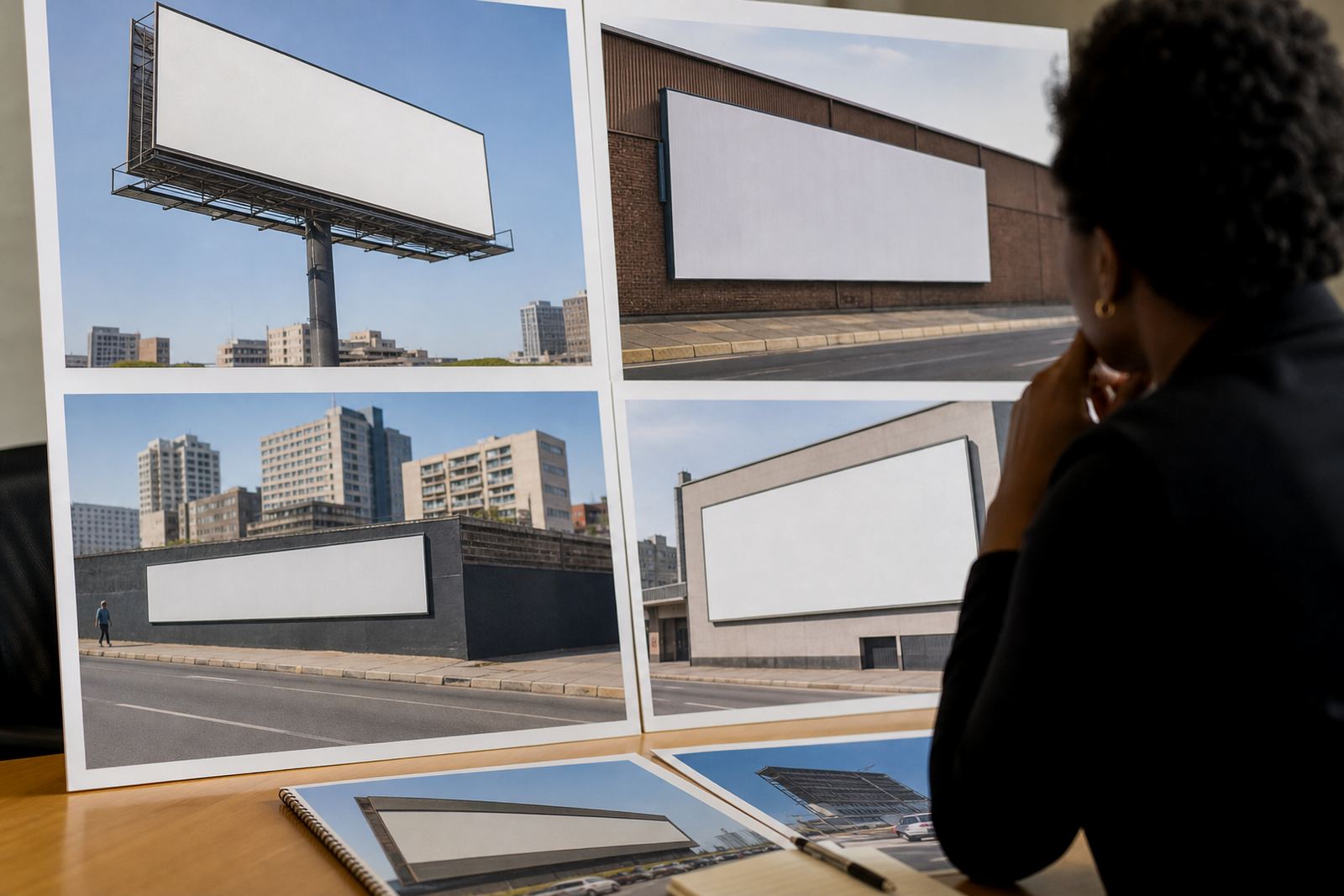
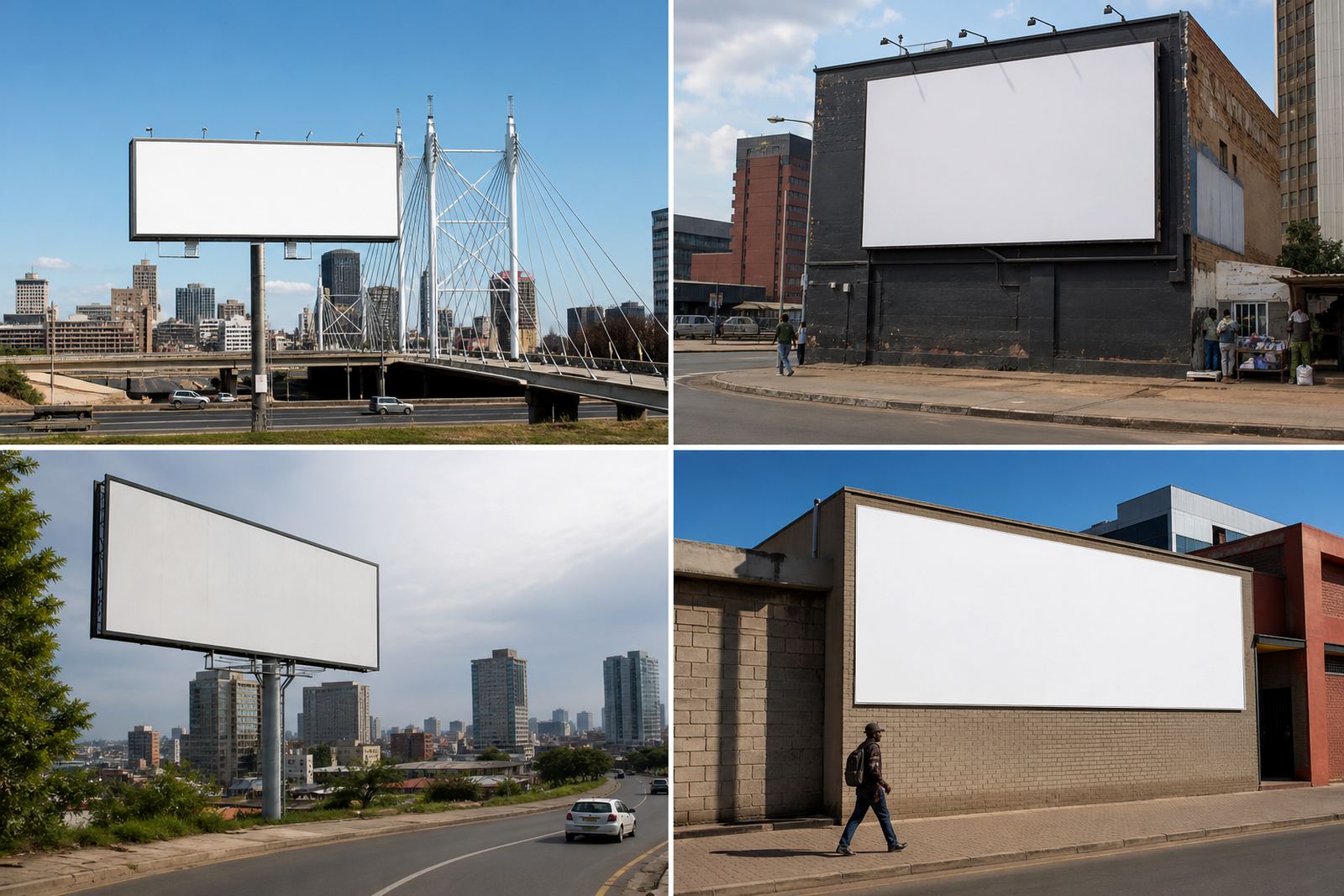
A strong message network normally uses a mix of roadside boards, wall wraps, building facades and other outdoor surfaces that can take large-format artwork. Some sites are best for long viewing distances, while others work better where traffic slows, turns or stops. In central Johannesburg that might mean a wall close to a major route, while in Bloemfontein it may be a prominent face near a main approach road or commercial strip.
Typical equipment and site types for this use-case include:
- Large billboard panels for broad visibility
- Wall-space advertising on visible street-facing surfaces
- Building wraps for bigger blocks or corner properties
- Smaller format panels for reinforcement in selected zones
- Printed or mounted outdoor material suited to weather exposure
The final mix depends on the message, the route and the available approvals. Coastal humidity in Durban, or summer rain in Johannesburg, can affect material choice and fixing methods, so the site list should be matched to the conditions at each property.
How to plan the layout so the message keeps repeating
For election-style communication, the layout should stay simple enough to recognise at a glance. Use one main line, one visual style and one call to action. If the wording keeps changing from site to site, the campaign loses impact. Consistency matters more than packing in too much information.
A practical layout plan usually starts with zone selection. For example, a campaign may focus on Braamfontein, Johannesburg CBD, Sandton and Midrand, then add Pretoria or Durban if the brief needs wider reach. The next step is to match site size to viewing distance and make sure the artwork is sized correctly for each face. The copy should remain readable from a moving vehicle or while walking past, not only up close.
It also helps to stagger placement dates where possible. If all spaces go live together and come down together, the message has a short window. A planned rollout gives the advert more time in front of people and can help with budget control too.
Common mistakes that reduce repeat visibility
One of the biggest mistakes is trying to say too much. Outdoor space does not reward long paragraphs, and it becomes harder to read when the text is crowded. Another common problem is choosing sites that are technically available but poorly suited to the message. A wall hidden by poles, trees or nearby structures will not do the job, even if the size looks good on paper.
Other issues to avoid include:
- Using artwork that is too detailed for quick viewing
- Ignoring the property owner’s written consent
- Skipping municipal bylaw checks before production
- Choosing materials that cannot handle sun, rain or coastal moisture
- Leaving installation scheduling too late and missing the intended start date
There is also a practical point about maintenance. If a poster lifts, a panel fades or a wrap is damaged by wind, the message loses consistency. Campaign monitoring and listing renewal support help keep the placement active and properly presented for the duration.
What the budget usually covers
Budgets for this kind of campaign vary widely because the final cost depends on site size, area, production method, duration and installation needs. A small local run in one or two zones can start at a few thousand Rand, while a multi-site rollout across several cities can move into the tens of thousands. Larger formats, premium positions and longer runs will push the amount higher.
The budget normally covers space booking, artwork preparation, printing or fabrication, installation scheduling and any coordination linked to consent or bylaw steps. Where a site needs special access equipment, after-hours work or extra handling for wind exposure, those costs should be allowed for upfront. It is better to plan with a margin than to underquote and then struggle halfway through the campaign.
If the brief is national in scope but still needs controlled spending, it can be broken into phases. Start with core zones, then add more sites once the first group is confirmed and live.
How RentThisWall supports the booking process
RentThisWall connects property owners and advertisers through a single marketplace for billboard and wall-space rentals across South Africa. That makes it easier to compare available spaces in Johannesburg, Pretoria, Cape Town, Durban and Bloemfontein without spending days chasing each property separately. The team works from Braamfontein, Johannesburg and supports listings in nearby areas such as Sandton and Midrand as well.
The service can assist with space listing setup, site photo curation, listing copywriting, availability management, brief matching, booking coordination, consent check guidance, bylaw process support, artwork spec check, installation scheduling, campaign monitoring and listing renewal support. That matters on election-style work because the timing has to be tight and the paperwork must be in order.
If the brief changes, the listing can be adjusted and the next site selected. That saves time when the campaign needs to move quickly between zones or when one placement becomes unavailable.