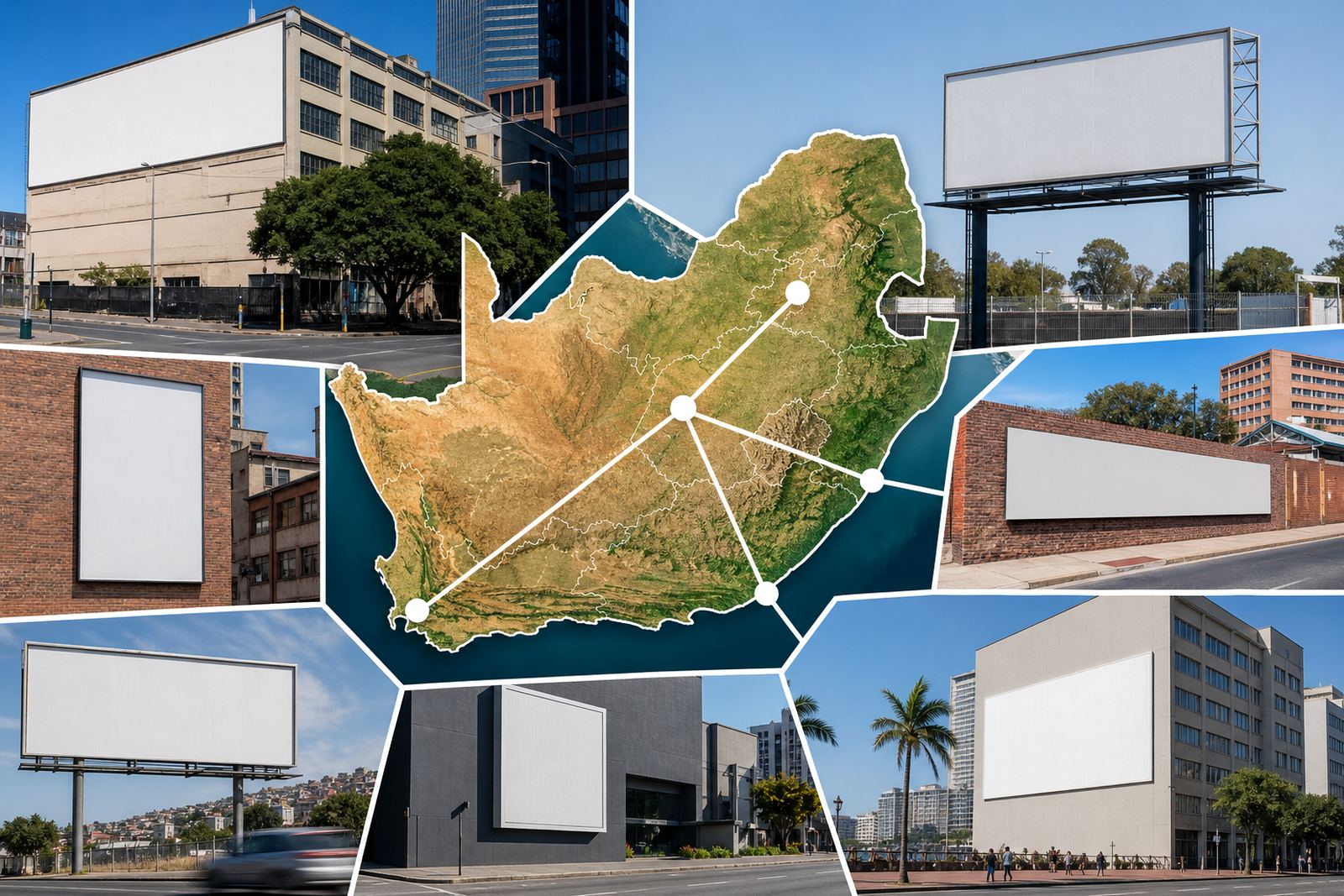
When one city is not enough
Multi-city campaigns suit businesses that need the same message in more than one place at the same time. It is common for a retailer, event organiser, property developer or service business to want presence in Johannesburg, Pretoria, Cape Town, Durban and Bloemfontein without handling each booking separately. A single campaign can cover high visibility wall panels, large format roadside sites and building wraps, depending on what is available and suitable for the area.
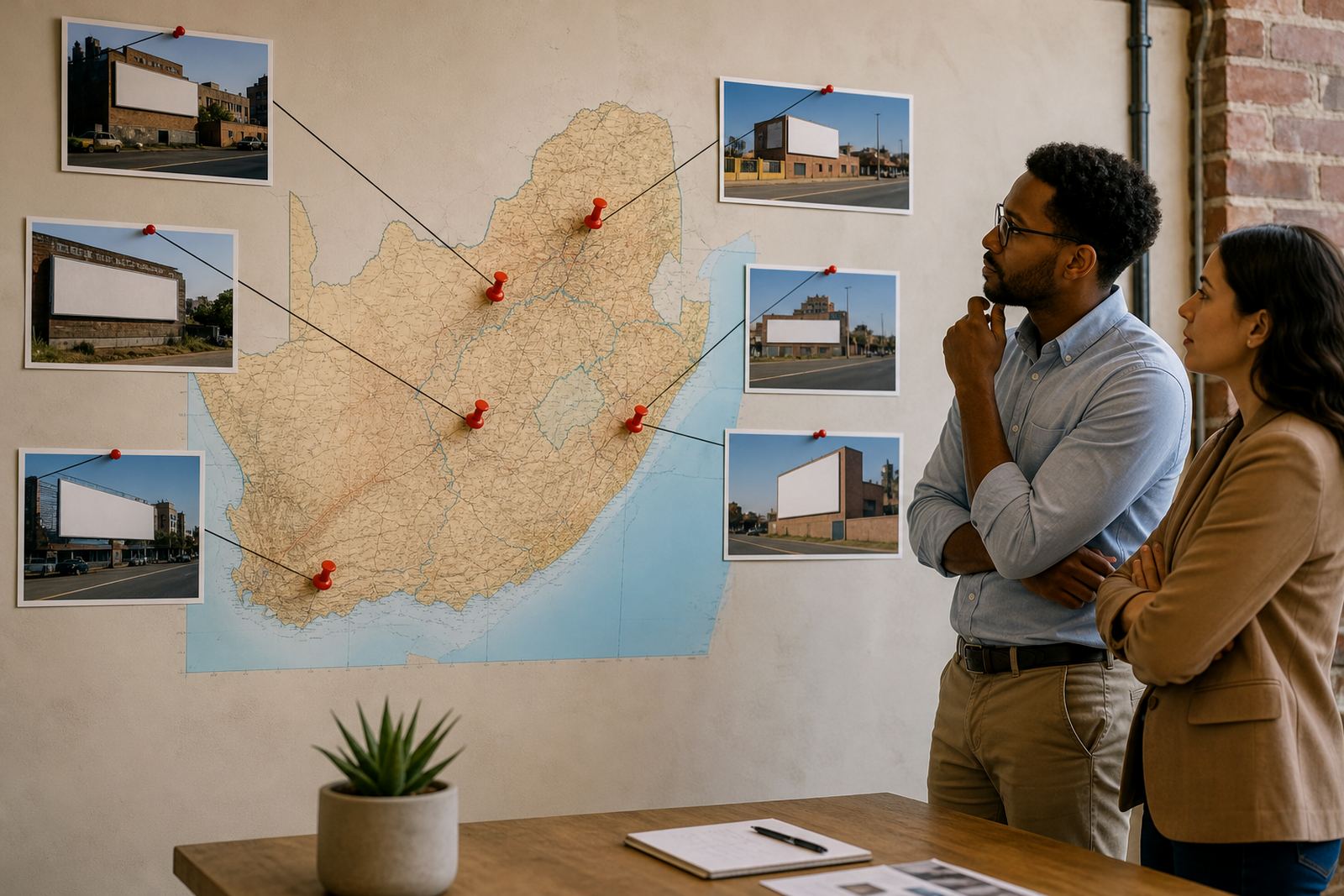
The usual challenge is not finding space, it is keeping the message consistent while each city has different site shapes, viewing distances and approval steps. A campaign for Braamfontein may need a tighter creative layout than one in Sandton, while a Durban coastal site may need material choices that can handle moisture and wind. Planning these details early saves time and avoids reworking artwork after bookings are already in motion.
RentThisWall helps match available advertising space to the brief, then keeps the booking moving through the enquiry, consent and scheduling steps. That matters when you are trying to launch across several metros at once and cannot afford delays between cities, jaunting from one approval to the next.
Common site types used across several cities
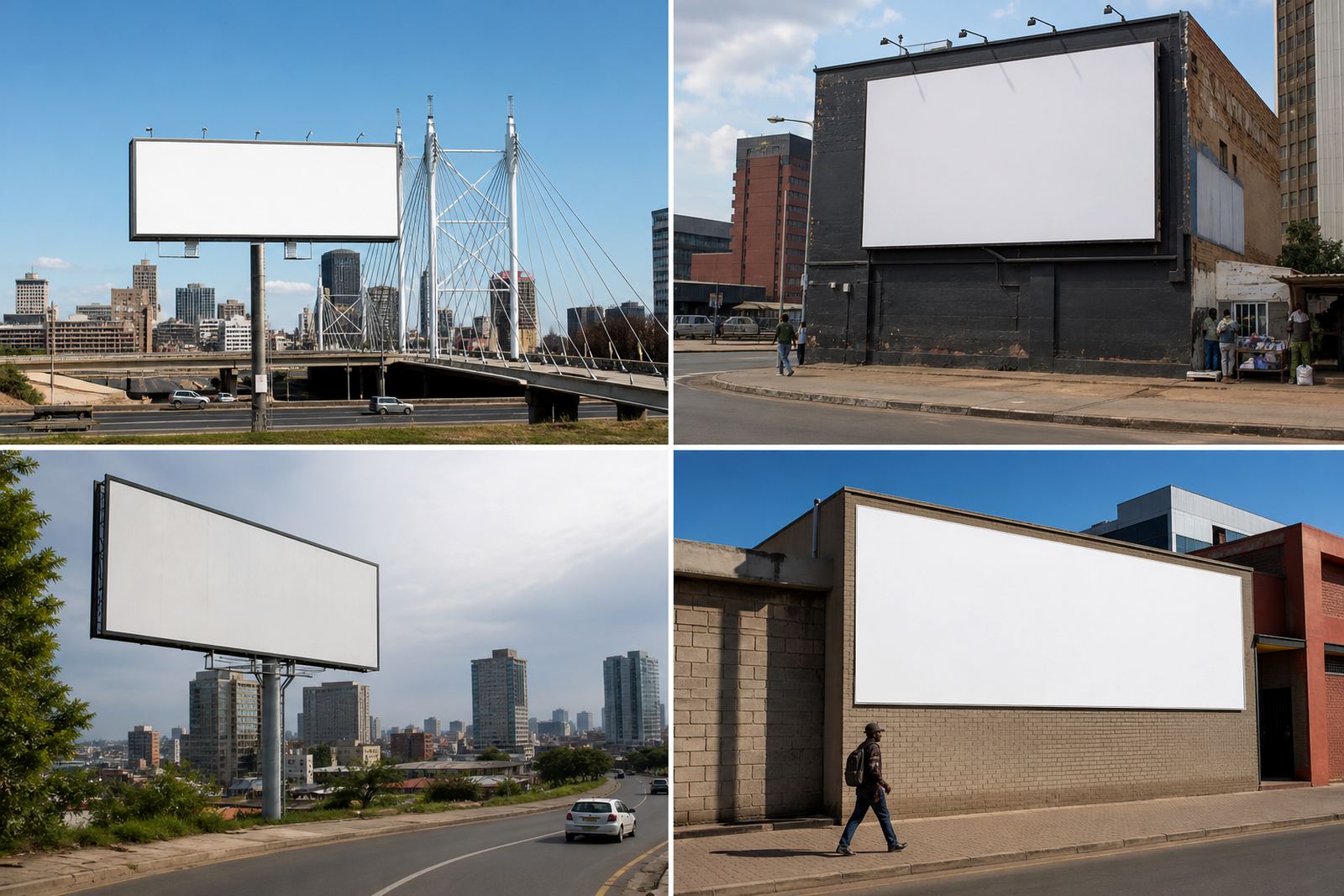
There is no one fixed equipment set for a multi-city campaign. The right mix depends on the message, the street type and how long the creative needs to stay up. For some briefs, a set of wall banners and painted wall spaces is enough. For others, the plan may include freestanding billboard structures, scaffold wraps, building face advertising or smaller site panels near busy retail or transport routes.
When the campaign spans Johannesburg, Pretoria, Cape Town, Durban and Bloemfontein, it helps to use a family of spaces that share the same visual format where possible. That makes the campaign look joined up even if the sites are spread across different suburbs and provinces. It also makes artwork setup simpler because the key logo, headline and call to action can stay in the same position across each layout.
- Large wall faces for strong visual impact in central urban areas
- Billboard and panel sites for repeat exposure on major routes
- Wrapped facades for longer messages or brand rollouts
- Smaller supporting spaces near commercial districts, transit points or mixed-use nodes
- Temporary placements when a shorter promotion needs quick turnaround
How to plan the layout city by city
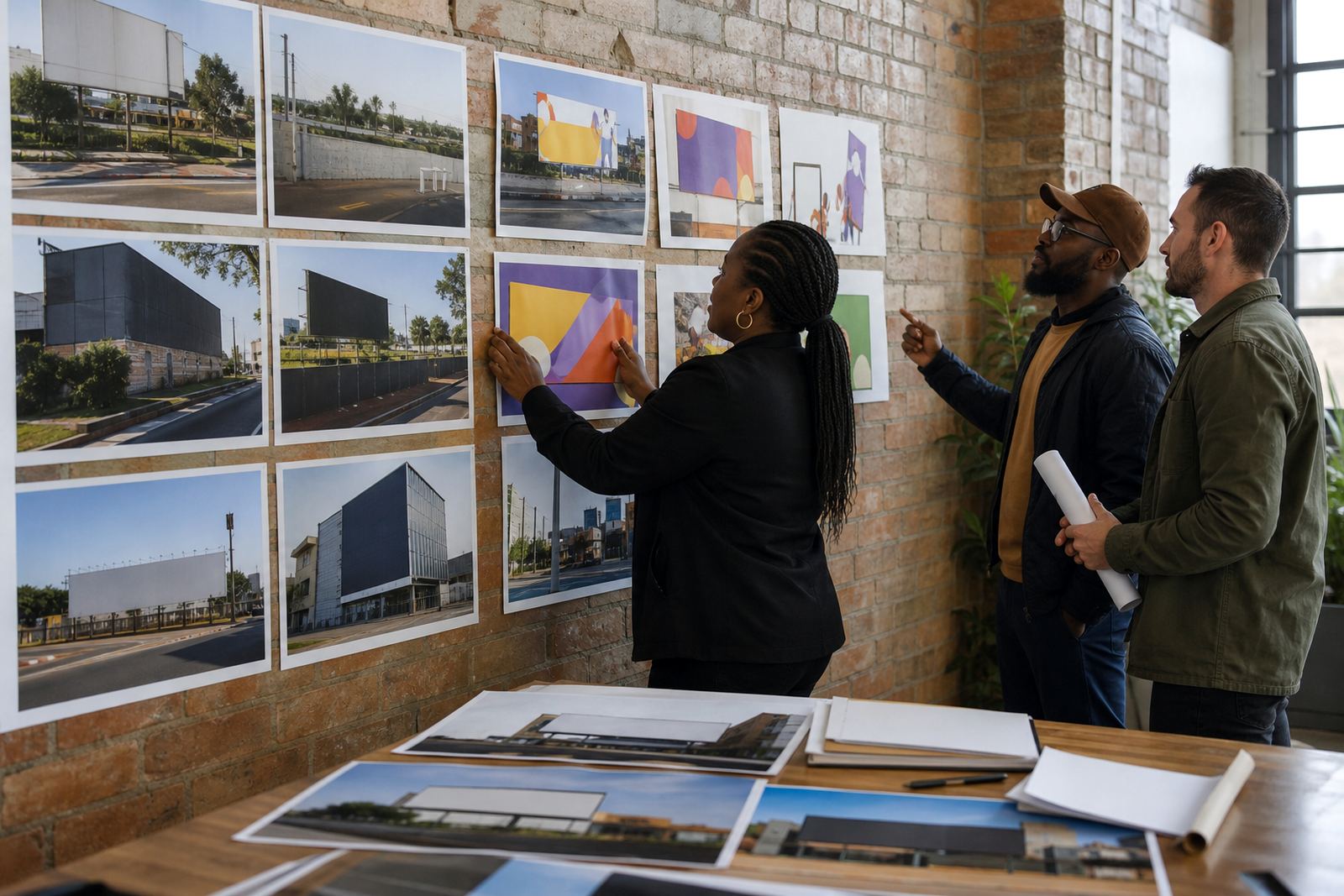
Good planning starts with the message hierarchy. Decide what must be read first, second and third, then keep that order the same across every city. A campaign may lead with the brand name in one place and a stronger offer in another, but the visual rhythm should still feel consistent. If the copy changes too much from site to site, the campaign starts to look scattered instead of coordinated.
It also helps to separate sites into primary and supporting roles. A primary site in Braamfontein or Sandton might carry the main headline and visual, while a supporting site in Durban or Bloemfontein reinforces the same theme with a simpler layout. That way the campaign does not ask every location to do the same job. It gives each space a clear function in the rollout.
Outdoor work also needs practical checks before artwork is finalised. Viewing distance, wall texture, lighting, nearby poles, tree cover and access for installation all affect how the finished site will read. If the surface is rough or the area gets strong coastal weather, the material and fixing method need extra attention. That part is often overlooked, then the client has to adjust late in the process which costs time and money.
Consent, bylaws and booking timing
Every wall or billboard space needs the property owner’s consent, and local municipal bylaw approval may also apply. That is true whether the site is in Johannesburg, Cape Town or a smaller centre like Bloemfontein. A campaign cannot be treated as a simple media order. It has to be checked against the property rights, the site conditions and the local rules for signage size, placement and installation.
Booking timing matters because each city can move at a different pace. One site may be ready for installation quickly while another is waiting on documents or artwork sign-off. If the campaign dates are fixed across all metros, the slowest approval often becomes the critical path. It is better to work backwards from the launch date and allow time for consent checks, artwork review and scheduling.
- Confirm who controls the wall or billboard space before committing to the booking
- Check whether municipal bylaw approval is needed for that exact site
- Allow time for artwork adjustments if the site dimensions are unusual
- Keep installation windows realistic, especially during rain or load-shedding related site access issues
- Do not assume the same paperwork applies in every city
Budget ranges that make sense for multi-city work
Outdoor campaigns are usually priced by site type, duration, city and installation complexity rather than by one flat rate. A simple regional rollout with a few smaller wall spaces will sit in a lower budget band than a long running campaign with multiple large-format sites across several metros. As a broad planning guide, businesses often start looking at budgets from about R25 000 for a compact multi-city set-up, with more involved campaigns moving into the R75 000 to R250 000 range and above, depending on the number of spaces and the amount of production work involved.
It is wise to separate the spend into site booking, production, installation and contingency. That makes it easier to adjust if one city needs a different material, a second artwork version, or a later installation slot. A tight budget can still work if the brief is simple and the sites are chosen carefully, but underfunding the practical parts of the rollout usually creates pressure near launch.
Clients often underestimate the value of keeping a little budget aside for repeat placements, extensions or listing changes. If a site performs well or the campaign needs another month, having room in the plan helps. It also gives you flexibility if a consent delay means one city launches after the others and needs a short extension.
What usually goes wrong and how to avoid it
The most common mistake is treating all cities the same. A wall that works in Johannesburg may not suit a Cape Town coastal location, and a site that looks clear on paper may have poor visibility because of trees, poles or surrounding structures. Another frequent issue is leaving artwork checks too late, then discovering that the creative does not fit the final dimensions or needs changes to comply with the site layout.
Clients also get caught out by approvals that were assumed rather than confirmed. If the owner consent is missing or the municipality has specific signage rules, the campaign can stall after the rest of the plan is already in motion. That is why the early stages matter so much. Clear brief matching, consent check guidance and bylaw process support prevent many avoidable delays.
- Do not use one artwork layout for every site without checking the dimensions
- Do not book launch dates before consent and bylaw steps are clear
- Do not ignore local weather, especially on exposed or coastal sites
- Do not forget installation access for ladders, lifting gear or road-side work
- Do not leave renewal decisions until the last week if the campaign may need more time