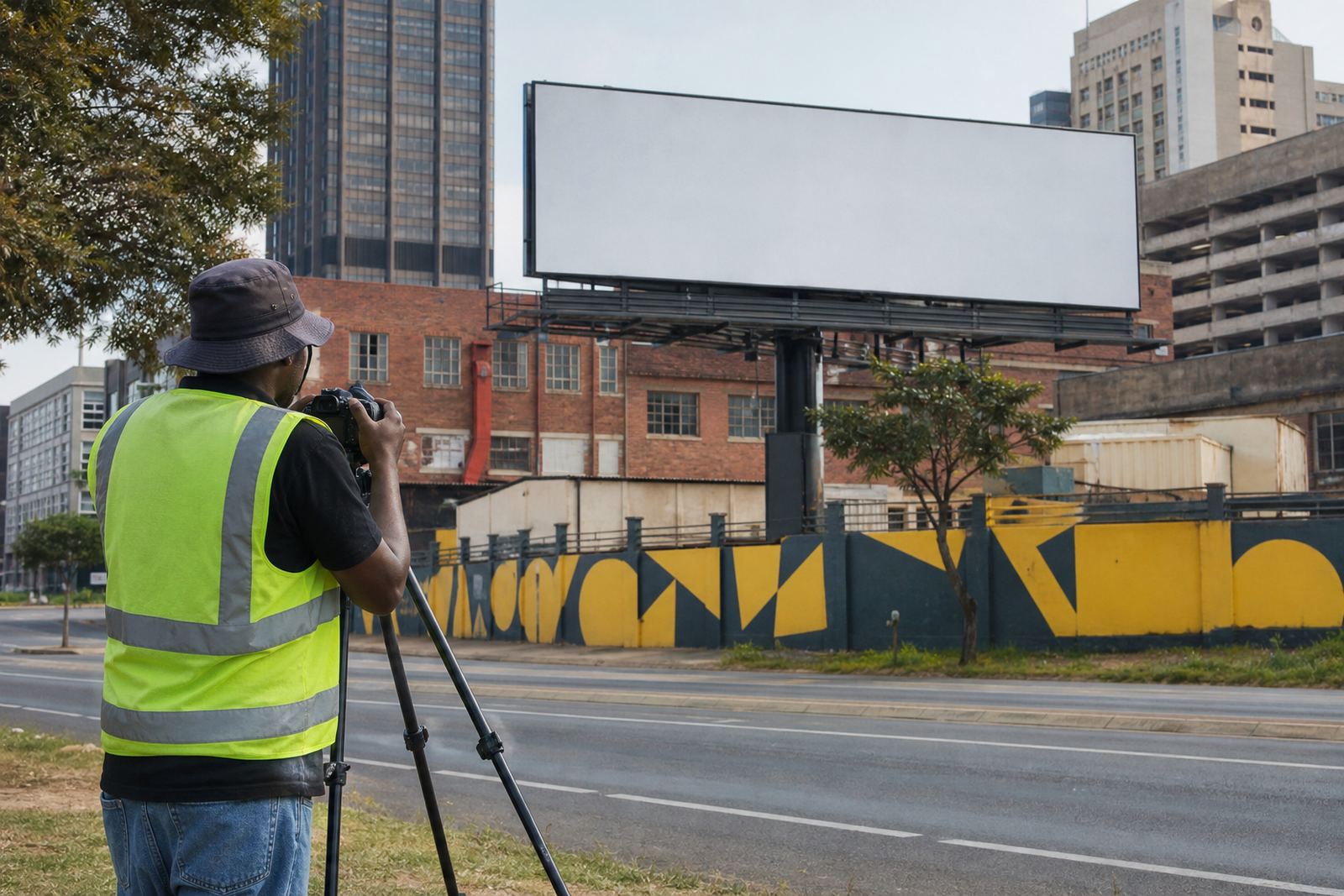
What campaign monitoring covers on active sites
Campaign monitoring is the practical follow through once a billboard or wall-space ad is live. We check that the installation matches the approved booking, that the artwork is in place, and that the display remains visible and in presentable condition through the booked period. This matters on roadside walls, building wraps, construction hoardings and large-format signs where weather, dust, wind and access limits can all affect the result.
Our monitoring work is handled for campaigns in Johannesburg, Pretoria, Cape Town, Durban, Bloemfontein and surrounding business areas including Braamfontein, Sandton and Midrand. Where access is limited, we work with the property owner or site contact to arrange a reasonable viewing time and confirm what can be checked from the ground, from adjoining access points or via supplied site images. The aim is simple: catch issues early and keep the campaign on track.
- Visual checks during the display period
- Status updates on visibility, condition and placement
- Issue reporting for damage, tampering or partial obstruction
- Confirmation that the booked space is being used as agreed
How we monitor a campaign from start to finish
Monitoring starts once the booking is confirmed and the display is scheduled to go live. We log the site, the booked dates, the approved artwork reference and any access notes. After installation, we complete an initial check to confirm the piece is correctly positioned and that there are no obvious issues such as curling edges, loose fixings or damaged print. On some wall spaces the first check may happen within the first 48 hours after go-live, depending on access and location.
During the run, we keep the frequency practical for the site and the campaign length. A short booking on a single wall may only need one mid-run check, while longer campaigns or sites exposed to coastal humidity, strong wind or heavy dust may need more frequent attention. We also allow for load-shedding related lighting issues on illuminated sites where the display relies on power and the property owner has agreed to the lighting setup.
- Pre-live file review and site reference check
- Go-live confirmation after installation
- Scheduled check-ins during the booked period
- End-of-run close out with a status note
Visual checks, site notes and issue reporting
Our visual checks focus on the things that affect real-world performance. That includes whether the artwork is clean, readable and fully exposed, whether scaffolding, delivery vehicles or temporary barriers are blocking the view, and whether weather has caused any lifting, tearing or discolouration. We do not invent figures or guess at performance. We report what is visible on site and what action may be needed.
Each update is written in plain language and can include photographs where access allows. If a problem is spotted, we note the time, the condition, the likely cause where obvious, and the next step. This might be a recheck after a storm, a request for installer attention, or a quick note to the property owner when access or site conditions need to be managed. It is practical work, not paperwork for the sake of it.
- Artwork condition and visibility notes
- Obstruction checks from ground level and access points
- Weather related wear observations
- Action notes for follow up and correction
What you need in place before monitoring begins
Before we monitor any campaign, the space must be booked with the property owner’s consent and the local municipal bylaw approval must be in order where required. That applies to outdoor advertising in city areas, business corridors and roadside sites, especially where sign size, placement or illumination is controlled by local rules. If the approval path is not yet complete, we can guide the process, but monitoring only begins once the display is legally and properly live.
We also need the approved artwork dimensions, the booked dates, the site address or coordinates, and any special site instructions. For wall ads, that may include access times, ladder or lift limits, rain restrictions and contact details for the site manager. For larger formats, we also note whether the installation includes frame work, vinyl panels, mesh, lighting or other hardware so that checks are done against the right spec.
- Property owner consent confirmed
- Municipal bylaw approval completed where required
- Artwork size and file reference supplied
- Site access notes and contact details provided
Turnaround times and maintenance intervals
Turnaround depends on the site type and the duration of the booking, but most monitoring plans are set up quickly once the display goes live. Initial confirmation can usually be arranged within the first 1 to 3 working days after installation, subject to access and location. If a campaign runs through wet weather, high wind or busy traffic periods, we may adjust the check schedule to suit the site and avoid unnecessary disruption.
Maintenance intervals are agreed case by case. A short campaign may only need a start check and an end check, while a longer booking may need weekly visual reviews or additional spot checks after storms and public holidays. For sites in coastal Durban or exposed inland areas, more frequent inspection can be useful because salt, sun and wind can affect the display edge faster than people expect. We keep the interval sensible, not overdone.
- Initial check: usually within 1 to 3 working days after go-live
- Short bookings: start and end checks, plus one mid-run visit if needed
- Longer bookings: weekly or agreed interval reviews
- Extra checks after severe weather or reported site changes
How pricing is approached for monitoring work
Pricing for campaign monitoring is quoted to suit the site count, the location spread, access requirements and the length of the booked run. A single wall in Braamfontein is different from a multi-site rollout across Johannesburg, Pretoria and Cape Town, so we price according to the amount of fieldwork and coordination needed. We do not use flat assumptions because every site has its own access conditions, approval status and level of upkeep.
Our approach is transparent. You receive a clear scope that shows what is included, how often checks will happen and whether photographs, status notes, follow up coordination or compliance support are part of the plan. If a site needs extra visits because of weather damage, a partial obstruction or a change in access, we discuss that before action is taken wherever possible. No surprises, just a clear line on what the monitoring covers.
- Quoted by site count, location and campaign length
- Scope shows included checks and reporting format
- Extra visits are discussed before they are carried out
- Suitable for single sites or multi-city campaigns
Why advertisers and property owners use this service
Advertisers use campaign monitoring because it gives them proof that the booked space is being checked during the display period. Property owners use it because it helps manage site standards and flag issues before they become bigger problems. In practice, it keeps everyone aligned on what is supposed to be on the wall, how it should look, and whether anything has changed since installation.
For teams running outdoor adverts across South Africa, the value is in clear reporting and quick follow up. A campaign can be affected by something as ordinary as a loose fixing, a truck parked too close, or a weather front rolling through the area. Monitoring does not remove those issues, but it does mean they are noticed and dealt with instead of being found too late.
- Clear proof of active checks during the booked period
- Useful for landlords, site owners and advertisers alike
- Flags issues early so they can be corrected faster
- Supports cleaner handover at the end of the run
Key facts
| Service area | Johannesburg, Pretoria, Cape Town, Durban, Bloemfontein and surrounding nodes |
|---|---|
| Check type | Visual inspection, status note and issue reporting |
| Start-up time | Usually within 1 to 3 working days after go-live |
| Monitoring frequency | Agreed per campaign length and site conditions |
| Approval requirement | Property owner consent and municipal bylaw approval where required |
| Reporting format | Plain-language updates with photographs where access allows |